

Destination Guide 14 min read

The North America Guide: Six Regions Worth Booking With Intention

From Alaskan wilderness lodges to Utah desert sanctuaries to Hawaii's most exclusive island — the continent closest to home has more exceptional travel than most people have been told.

The most under-planned travel destination in the world is North America. People who spend months researching a Japan trip — notebooks full of restaurant names, spreadsheets with temple logistics, weeks of forum-reading — book domestic and near-domestic travel in twenty minutes on a search engine. They pick a hotel that looks like a hotel and a city they've heard of and call it done. Then they wonder why the trip felt transactional.

The problem isn't the continent. The problem is the assumption that familiarity and proximity mean the trip doesn't require thought. The travelers who dismiss North America as "too close to home" or "I can go there anytime" are usually the same ones who've never stayed at Amangiri watching a Utah canyon turn from ochre to purple as the sun drops, or watched brown bears fish a glacial Alaskan river from a floatplane-access wilderness lodge with no roads in or out. They've never driven the Going-to-the-Sun Road in Glacier National Park before the tourist season peaks, or sat on a porch at Blackberry Farm as the Great Smoky Mountains disappeared into the morning fog.

The continent covers more genuinely distinct terrain than any comparable landmass on earth — active volcanoes and coral reefs in Hawaii, arctic tundra and temperate rainforest in Alaska, desert canyon country in Utah, alpine lakes in Canada that look implausible in photographs and more so in person, and an Atlantic coastline in New England that does something no Caribbean beach does: it changes with the seasons in ways that reward a return trip. What these destinations share is that they all reward the same thing the best international trips reward — actual intention in the planning.

Why North America Gets Under-Booked

There are two failures that happen repeatedly with domestic and near-domestic travel. The first is defaulting to the same three cities — New York, Los Angeles, Miami — when the geography outside those cities is more compelling than anything inside them. The second is booking a resort without understanding that the resort is not the destination; the landscape is. A property in Jackson Hole that keeps guests inside for three days of spa treatments has failed to deliver what Jackson Hole is, regardless of the thread count.

The right North America trip is structured the way the right international trip is structured: with a clear answer to what terrain, what pace, and what specific experience you're looking for before the first hotel is selected. The six regions below each represent a genuinely distinct version of what the continent offers. The framing question for each is not "should I go?" but "is this the one I'm actually looking for right now?"

"The travelers who dismiss North America as too familiar tend to be the same ones who've never watched bears fish a glacial river at first light or seen a Utah canyon turn purple at sunset. The continent is not the problem. The itinerary is."

Six Regions at a Glance

Below is a breakdown of each region — its honest character, who it suits, when to go, and the specific properties worth knowing. After the region portraits, a timing guide and property reference section cover the continent as a whole.

Region Overview · North America
The Numbers That Frame the Continent
6
Distinct regions covered in this guide
Year-
Round
Something exceptional in every season
0–8 hrs
Flight from major US gateways (incl. Hawaii & Alaska)
Wilderness
Desert
Mountain
Primary experience types this guide covers
Six Regions. Six Different Trips.
01
Hawaii
Top Pick Beach + Landscape Families
Hawaiian Islands · Maui · Lanai · Kauai · Big Island
Hawaii operates like the Caribbean in one important respect: the island you choose shapes the trip more than any single hotel decision. Maui is the most developed — Wailea on the south shore has the best beach infrastructure and the most accomplished resort collection, and it delivers. Kauai is the dramatic one, where the Na Pali coast cliff faces have no road access and the north shore receives more rainfall and more green than any landscape in the state. The Big Island is the one with the most terrain diversity — you can stand in snow at Mauna Kea and swim in 85-degree ocean water the same afternoon, and the active volcanic landscape at Volcano National Park is unlike anything else in the country.

Lanai is the category of its own: two Four Seasons properties, a population of a few thousand, no stoplights, and an access model that keeps crowds away by design. Hulopo'e Bay at the Four Seasons at Manele Bay is the finest beach in Hawaii by most reasonable measures, and the island's remoteness is not a drawback — it is the product.
Best Months: April–May and September–October (shoulder seasons, fewer crowds) Peak: December–March (whales in Maui), June–August (families) Gateway: OGG (Maui), LNY (Lanai), LIH (Kauai), KOA (Big Island) Key Properties: Four Seasons Lanai, Four Seasons Maui at Wailea, Hana-Maui Resort
02
Alaska & Pacific Northwest Coast
Wilderness Off-Grid Once-in-a-Life
Alaska · British Columbia · Kenai Peninsula · Inside Passage
Alaska is not a destination you visit casually. It rewards the trip that is designed around its geography — floatplane access to bear-viewing lodges on rivers with no roads, glacier trekking on the Kenai, kayaking through the Inside Passage in light that lasts until 11 p.m. in midsummer. The properties worth staying at here are not city hotels with mountain views; they are remote wilderness camps and lodges where the access is the first indication of how serious the experience will be.

British Columbia's outer coast — Tofino, Clayoquot Sound, the Haida Gwaii archipelago — offers a version of the same character without Alaska's logistical weight. Clayoquot Wilderness Lodge reaches its site by a 20-minute floatplane from Tofino and operates safari-style, with guides, excursions, and a food program that would hold up in any city restaurant. This is the Pacific Northwest at its most intentional, and it has almost no peer in the lower 48.
Best Months: June – September (peak bear-viewing July–August) Note: Alaska lodge seasons are short — book 9–12 months out Gateway: ANC (Anchorage), then floatplane or small aircraft to remote lodges Key Properties: Clayoquot Wilderness Lodge (BC), Kenai Fjords Glacier Lodge (AK), Winterlake Lodge (AK)
03
Rocky Mountain West
Adventure Guest Ranch National Parks
Wyoming · Montana · Colorado · Grand Teton · Yellowstone · Glacier
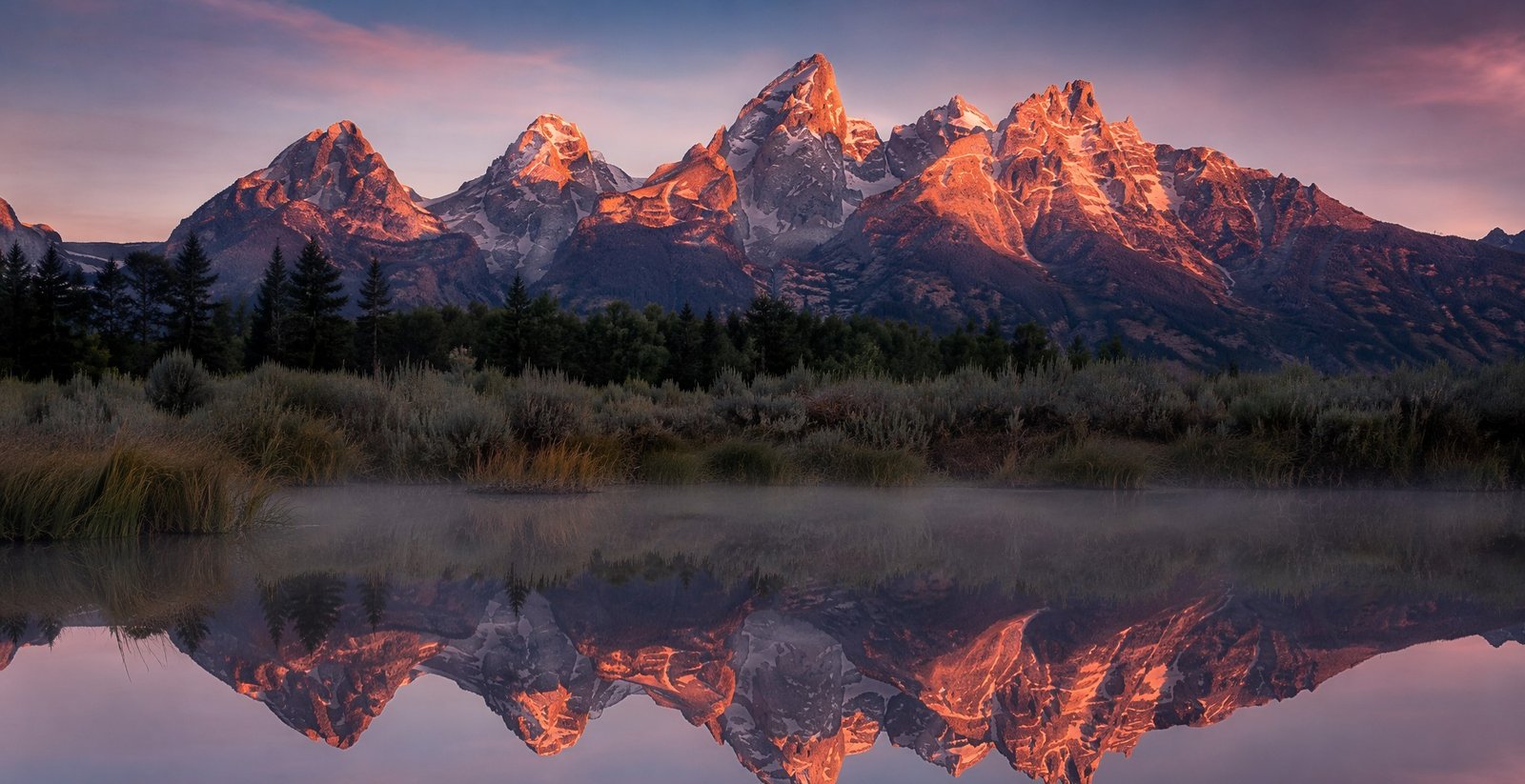
The American West at its most photogenic and its most demanding. The Greater Yellowstone ecosystem — Grand Teton National Park, Yellowstone, the National Elk Refuge — is one of the last intact large-mammal ecosystems on earth. This is where you see wolves, grizzlies, bison herds, and pronghorn antelope in the same morning from the right vehicle with the right guide. The visual scale is not something any photograph prepares you for adequately.

Glacier National Park in Montana has the Going-to-the-Sun Road, which is exactly what it sounds like, and the park's backcountry has trails with so little company in shoulder season that it's difficult to believe you're still in the United States. Jackson Hole functions as the base: a town with a surprising food and arts scene, access to Grand Teton, and a ski mountain in winter that deserves its reputation. The guest ranch format — Brush Creek, C Lazy U, the Hideout — gives families the best version of this terrain with horses, guided excursions, and a level of hospitality that is genuinely western rather than performed.
Summer: June – September (national parks, hiking, wildlife) Winter: December – March (Jackson Hole ski, Aspen, Vail) Gateway: JAC (Jackson), BZN (Bozeman), DEN (Denver) Key Properties: Amangani (Jackson Hole), Brush Creek Ranch (WY), The Cloudveil (Jackson)
04
American Southwest
Iconic Desert Luxury Couples
Utah · Arizona · Nevada · Canyon Country · Sedona
Utah's canyon country — Zion, Bryce, Arches, Canyonlands, Capitol Reef — represents one of the most geologically extraordinary landscapes on earth, and the five national parks sit close enough to each other that a 7–10 day road trip connects all of them without repetition. The terrain shifts so dramatically between parks that each one feels like a different planet: the slot canyons of Zion, the hoodoos of Bryce, the free-standing arches of Arches, the mesa-top panoramas of Canyonlands.

Amangiri at Canyon Point, Utah, is the reference property for desert luxury globally — not just in the Southwest, not just in North America. Designed by Marwan Al-Sayed and Wendell Burnette, it sits in a bowl of Navajo sandstone in a landscape so cinematic it's been used as a film location. The pool is carved into the rock. The rooms open to canyon views. The spa is built around a geological formation. The experience of waking up in that place, looking at that landscape, is something that changes how you think about what a hotel can do. Book it far in advance.
Best Months: October – April (summer heat extreme, especially in canyon floors) Note: Amangiri books 12+ months out for peak dates — plan accordingly Gateway: LAS (Las Vegas) or PHX (Phoenix) for Utah parks; PHX for Sedona Key Properties: Amangiri (Canyon Point, UT), Enchantment Resort (Sedona), Dunton Hot Springs (CO)
05
New England & Eastern Seaboard
Seasonal Understated Old-Money
Maine · Cape Cod · Nantucket · Adirondacks · Hudson Valley
New England in summer and fall is among the most quietly exceptional travel experiences in the country — and one that gets overlooked by the international travel conversation almost entirely. Kennebunkport, Maine, has the White Barn Inn, one of the most technically accomplished small properties in the Northeast, a lobster culture that is genuinely excellent rather than performatively rustic, and a coastline that looks like a Andrew Wyeth painting with better light in the late afternoon.

Nantucket in summer is the compressed version of old-money island culture — grey-shingled houses, a harbor that still works, restaurants that could hold their own in any coastal city, and a bicycle infrastructure that makes the whole island navigable without a car. Cape Cod in September, after Labor Day, when the crowds have cleared and the light goes low and golden and the clam shacks are still open, is the version worth knowing about. The Adirondacks in leaf-peeping season — October, when the hardwoods turn and the Great Camps on the private lakes become available to the right clients — is exceptional in a way that has almost nothing to do with the kind of travel that appears on social media.
Best Months: June–July and September–October (peak foliage in second half of October) Avoid: August in Nantucket/Vineyard unless booked 12 months out Gateway: BOS (Boston), PWM (Portland ME), ACK (Nantucket direct) Key Properties: White Barn Inn (Kennebunkport), Chatham Bars Inn (Cape Cod), The Point (Adirondacks)
06
Canadian Rockies
Mountain Scale Families Ski + Summer
Alberta · British Columbia · Banff · Lake Louise · Jasper · Whistler
The Canadian Rockies deliver mountain scale that competes with the Alps and beats the Rockies on photogenic water — Lake Louise and Moraine Lake are so implausibly turquoise they read as retouched in photographs and remain implausible in person. The Icefields Parkway between Banff and Jasper is 232 kilometers of uninterrupted mountain scenery, and it is genuinely one of the great drives on the continent regardless of what you do when you stop.

Banff is the infrastructure: a mountain town with good restaurants, excellent ski at Lake Louise and Sunshine Village in winter, and enough hiking within a short drive in summer to occupy a week without repetition. The Fairmont Banff Springs — the castle on the mountain above town — has been delivering the Canadian Pacific grand hotel experience since 1888 and continues to do so with sufficient consistency that it earns the landmark status. For smaller properties, the Post Hotel in Lake Louise handles the mountain luxury category at a more intimate scale. Whistler, four hours from Vancouver, is the ski destination for those who want the mountain experience with a more international dining and nightlife profile.
Summer: June – September (turquoise lakes, hiking, Icefields Parkway) Winter: December – March (ski at Banff/Lake Louise, Whistler) Gateway: YYC (Calgary) for Banff; YVR (Vancouver) for Whistler Key Properties: Fairmont Banff Springs, Post Hotel & Spa (Lake Louise), Nita Lake Lodge (Whistler)
When to Go — by Season and by Region
Jun – Aug
Peak Summer
National parks, Alaska wilderness lodges, Canadian Rockies, and coastal New England all operate at their best or near it. Book 9–12 months out for Alaska lodges and Amangiri. National parks hit crowding — go early in the day or visit on weekdays.
Peak Window
Sep – Oct
Shoulder & Fall
The most underrated window in North America. National parks thin out, New England foliage peaks in mid-to-late October, Southwest temperatures become manageable, Hawaii rates drop. This is the smart season for almost every region in this guide.
Best Value
Dec – Mar
Winter / Ski Season
Rocky Mountain ski resorts, Canadian Rockies, and Whistler operate at their best. The Southwest — Sedona, Utah canyon country — is mild and empty relative to summer. Hawaii peaks in December–February with humpback whale season on Maui.
Apr – May
Spring / Wildflowers
The Southwest wildflower bloom peaks in April in good rainfall years. Hawaii shoulder season delivers near-identical conditions to peak at 20–30% lower rates. National parks in the Rockies begin opening trail access. Often overlooked — frequently the most pleasant window.
Eight Properties That Earn Their Rates
Not a comprehensive list — these are the specific properties across North America that consistently deliver what they promise, from desert sanctuaries to wilderness camps to understated New England estates.
Amangiri
Desert Sanctuary
Canyon Point · Utah
The global reference property for desert luxury. Built into a bowl of Navajo sandstone in southern Utah, designed by Marwan Al-Sayed and Wendell Burnette around the geology rather than against it. The pool is carved from rock. The spa is built around a geological formation. The landscape at sunrise and sunset changes the light in the rooms. Book 12+ months in advance for any desirable date.
Four Seasons at Manele Bay
Island Retreat
Lanai · Hawaii
On Hulopo'e Bay — the finest beach in Hawaii by most honest measures — on an island accessible only by a short ferry or a small aircraft. No traffic lights on Lanai, a population of a few thousand, and two Four Seasons properties that make the island feel designed specifically for guests. The Hulopo'e Bay beach has spinner dolphins in the morning and nearly no other guests on it most days.
Amangani
Mountain Lodge
Jackson Hole · Wyoming
The Aman property above Jackson, built into the East Gros Ventre Butte with views directly into the Teton Range. Forty suites, a stone-and-redwood aesthetic that complements the landscape rather than competing with it, and access to both the national park system and the Jackson Hole ski area. The best lunch view in Wyoming is from the pool terrace in summer. The best ski-in access is from the property in winter.
Clayoquot Wilderness Lodge
Wilderness Camp
Tofino · British Columbia
Twenty-minute floatplane from Tofino into Clayoquot Sound — one of the largest intact temperate rainforests remaining on the Pacific coast. Safari-style canvas tents on raised platforms along a river, a guide program with genuine depth (surfing, bear-watching, ancient cedar grove hikes, kayaking), and a kitchen that would be worth the flight alone. The format is the same as an African bush camp, applied to the Pacific Northwest.
Brush Creek Ranch
Guest Ranch
Saratoga · Wyoming
30,000-acre working ranch in the Medicine Bow National Forest, designed for the family or group that wants Wyoming without the production. Horses, fly-fishing, cattle drives, clay shooting, and an off-road program on terrain that isn't accessible any other way. The food is serious — the chef has a culinary background that doesn't match the log-cabin setting, which is exactly what makes it work.
Post Hotel & Spa
Mountain Classic
Lake Louise · Alberta
The boutique alternative to the Fairmont at the other end of the village, with a wine cellar that rivals any urban restaurant in North America and a kitchen that has held its standard for decades. Ski access to Lake Louise in winter, hiking access to Moraine Lake in summer, and the scale — 92 rooms — that lets the staff actually deliver the service they promise.
The White Barn Inn
New England Estate
Kennebunkport · Maine
The most accomplished small property in New England — a restored 19th-century barn and farmhouse on Kennebunk Beach, with a dining room that operates at a level no other property in Maine matches. The rooms are individually furnished, the service is unhurried in the way that small properties can be and large ones cannot, and the Maine coast in summer — with lobster boats in the harbor and the light at 7 p.m. — is one of the quietly extraordinary American travel experiences.
Hana-Maui Resort
Remote Maui
Hana · Maui · Hawaii
At the end of the Road to Hana — 64 miles of switchbacks through rainforest, waterfalls, and one-lane bridges that most Maui visitors make as a day trip and leave. Staying here changes the calculation: the resort has the beach, the agricultural program, the horseback access to otherwise unreachable terrain, and the property-wide quiet that comes from being genuinely remote on an island where most visitors cluster in one corner.
Plan Your Trip

The full destination overview for North America — including sample itineraries and the properties we recommend most often by region — is covered on the North America Destination Page.

If the landscape and activity component of the trip matters more than the resort infrastructure, the Adventure & Active Experiences page covers what to look for when the experience is the point. For trips with multiple generations or children, the Family Travel page covers which formats and properties deliver — and which ones look better in photos than they are in practice.

Tell me which region draws you, when you're thinking of going, and who's traveling. I'll come back with a specific recommendation within one business day.

Plan a North America Trip
That Earns the Journey

Tell me which region draws you — canyon country, wilderness coast, mountain west, island, or something else — and I'll come back with a specific recommendation. Property, timing, room category, and exactly why it fits your trip.

Start Planning
Jun–Aug (peak); Sep–Oct (shoulder, best value)
5 nights (7+ for wilderness lodge itineraries)
All major US hubs; direct to most regions
Multi-region road trip, city add-on, fly-in wilderness
12 months for Amangiri and Alaska lodges
Mark Sole
Founder & Travel Director

Hit Your Mark Travel plans luxury travel for clients who know what they want and need someone who can actually deliver it. The North America properties in this guide are ones I've placed clients in repeatedly — Amangiri, the wilderness lodges, the ranch operations — with outcomes I can stand behind.

About Mark