
Asia

Go Deep
or Go Home.

Asia contains more diversity — in culture, cuisine, landscape, and pace — than any other region in the world. A surface pass produces interesting photographs and a pleasant memory. Going deep produces something else entirely: a private tea ceremony in Kyoto, a pre-dawn market in Osaka, a Balinese healer in a ceremony village, a silk merchant in Hoi An whose family has been weaving for seven generations. The planning work is knowing which version you're getting.

Best Season
March – May & October – November
Best For
Culture
& Cuisine
The Region

The Most Culturally Rich
Region in the World

Asia is not one season. Japan works late March to May and October to November, Southeast Asia's dry season runs November to April, and India and South Asia run October to March. A first trip needs 10–14 days across one or two countries rather than four. Japan and Thailand are the two most common first choices, for opposite reasons.

Japan alone is enough to justify the flight. The shun concept — eating in strict accordance with what the season makes available — runs through every level of Japanese food culture from a ramen shop in Fukuoka to an omakase counter in Tokyo where the chef has bought from the same fish supplier for eighteen years. A private tea ceremony with a practitioner who trained for fifteen years is accessible to a traveler who knows to ask. Fushimi Inari before dawn, when the thousand torii gates are yours alone. These are not secrets — they are simply available only to travelers who planned that way.

The rest of the continent is equally layered. Bali's spiritual geography — the orientation of every temple, every compound, every offering — is comprehensible to a traveler who has a guide who understands Tri Hita Karana. Thailand's hill tribe villages and the Chiang Mai cooking culture that predates the tourist food schools by four hundred years. Vietnam's Hoi An tailors and the Central Highlands coffee country. Bhutan, where a licensed guide is mandatory and the festival calendar moves with the lunar year. India's architecture, its textile traditions, its Ayurvedic pharmacology — a continent in itself.

We plan Asia around depth rather than distance covered. Fewer places, longer stays, specialists instead of generalists, and itineraries built around the specific experiences that produce the kind of travel that stays with a person.
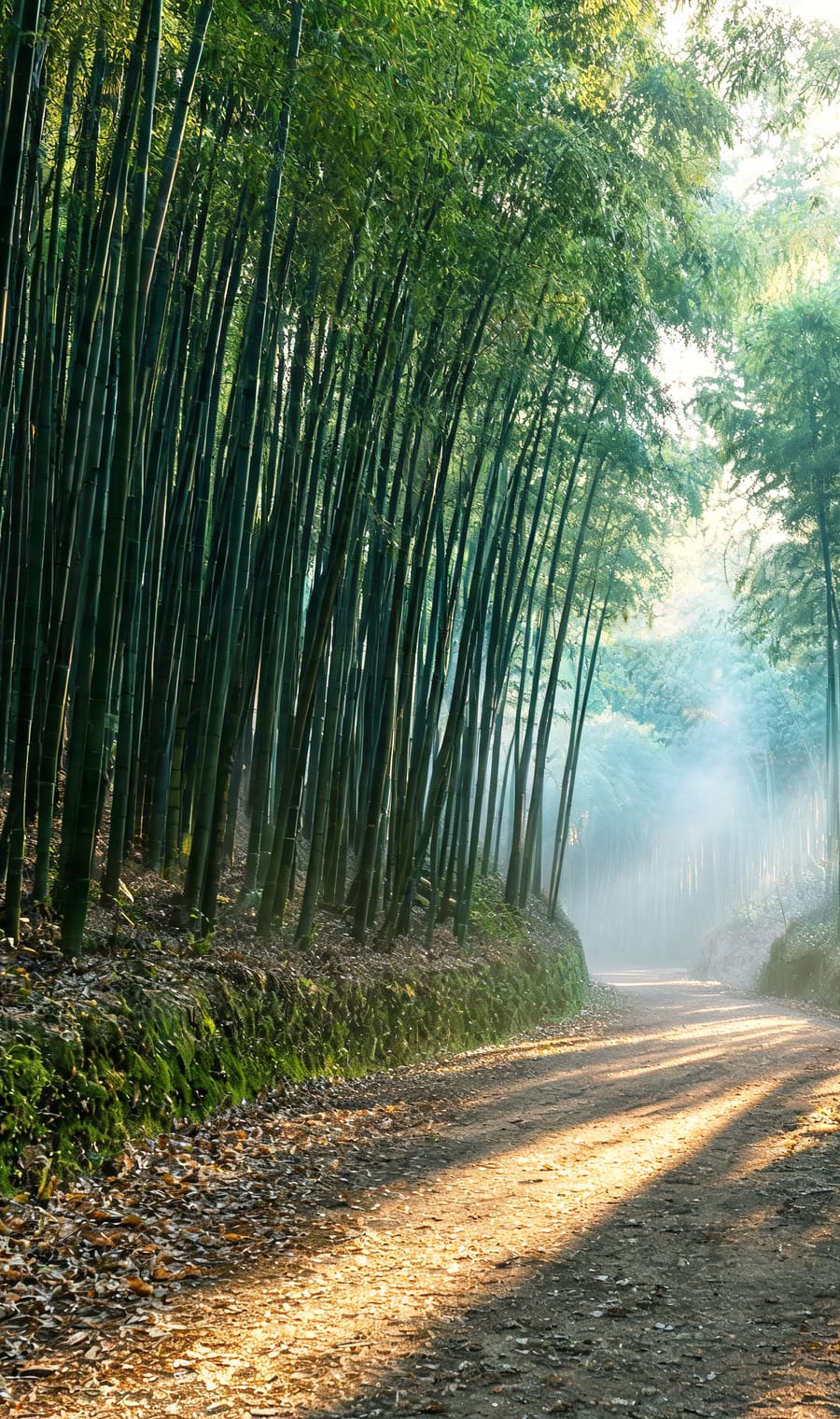
A gravel path running between dense stands of bamboo in a Kyoto grove, lit by low morning sun
Arashiyama · Kyoto, Japan
Where We Send Clients

Six Asian Destinations Worth Planning Properly

Each has a depth that most itineraries never reach — the guides, access, and timing that convert a good Asia trip into one that changes how travelers understand what the continent is.
Japan, East Asia
East Asia
Japan
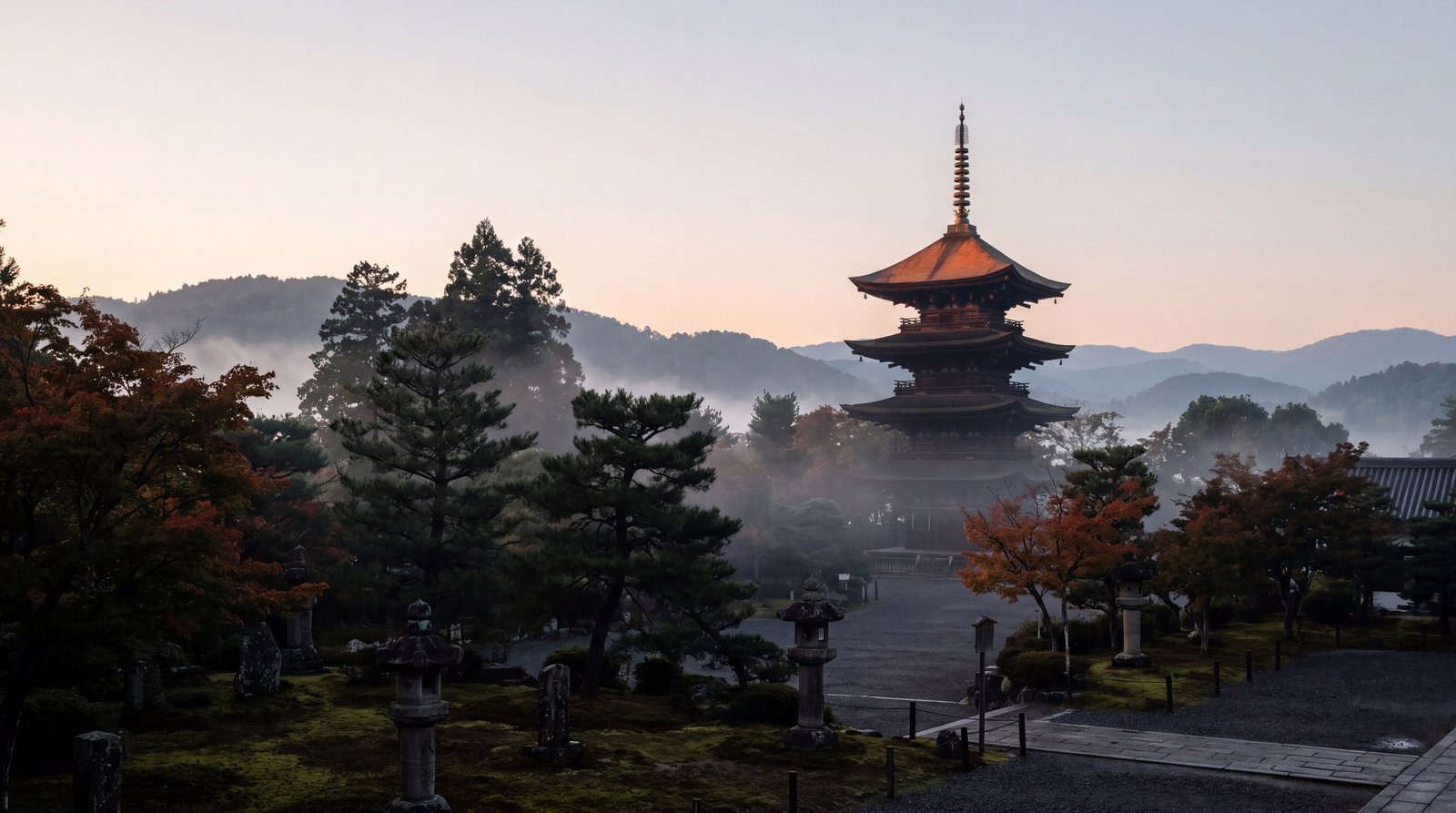
The most complete travel destination in the world — a food culture with no peer, a design sensibility running from temple gardens to station bento boxes, and the ryokan hospitality tradition. Tokyo for an omakase counter that takes a connection, not a booking engine. Kyoto for Fushimi Inari at first light.
Tokyo Kyoto Ryokan Stays
Explore →
Bali & Indonesia, Southeast Asia
Southeast Asia
Bali & Indonesia
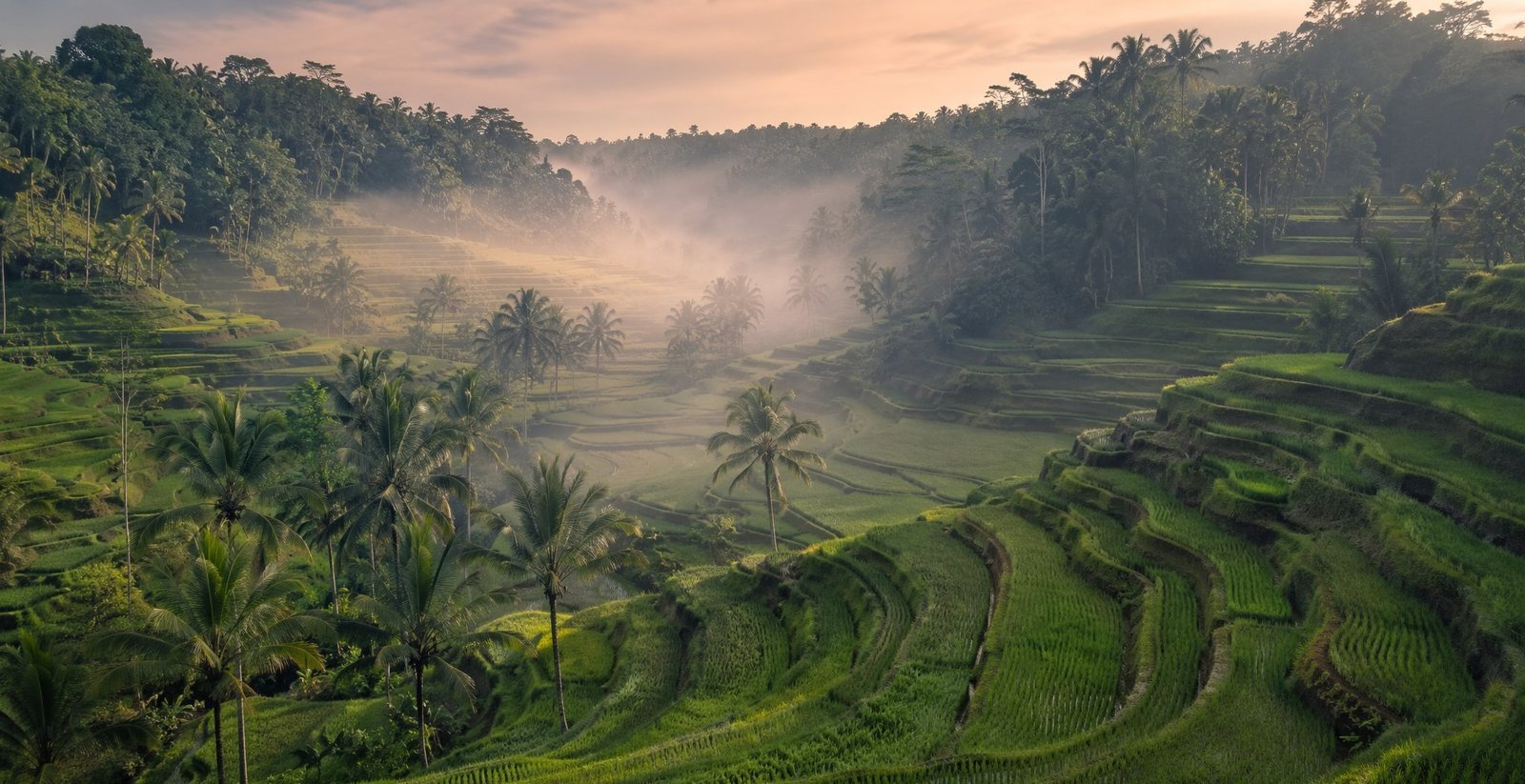
Ubud for the cultural depth — the Tri Hita Karana philosophy behind every element of Balinese design, a water temple ceremony most visitors watch without understanding what it is, and a villa compound with a guide who can explain the offerings. Komodo by liveaboard for dragons and the finest diving here.
UbudCultural ImmersionKomodo
Explore →
Thailand, Southeast Asia
Southeast Asia
Thailand
Bangkok for the markets — not Chatuchak, but the flower market at four in the morning and a canal boat through the klongs with a guide who grew up in the neighborhood. Chiang Mai for the hill tribe villages and a cooking class that starts at the market. The Andaman islands that never went party.
BangkokChiang MaiAndaman Islands
Explore →
Maldives, Indian Ocean
Indian Ocean
Maldives
Twenty-six atolls, one resort per island, and a price range running from comfortable to extraordinary. The work is matching the island to the trip — house reef quality, seaplane time from Malé, and whether the property suits a honeymoon, a family or a diving week. Get it wrong and they all look alike.
House ReefsSeaplane AccessHoneymoon
Plan This Trip →
Vietnam & Southeast Asia
Southeast Asia
Vietnam & Southeast Asia
Hanoi for the Old Quarter at dawn — a bún chả breakfast in a lane with no sign, a cyclo through the 36 streets before the scooters arrive. Ha Long Bay by private junk rather than the mass-market cruise. Hoi An for the tailors and the lantern-lit Ancient Town. Cambodia for Angkor Wat at dawn.
HanoiHoi AnAngkor Wat
Explore →
India, South Asia
South Asia
India
The Golden Triangle done at the depth it deserves — the Taj Mahal at dawn with a guide who understands the Mughal architecture, a block-printing workshop in old Jaipur, a heritage hotel inside a maharaja's palace. Kerala for the backwaters and real Ayurveda. Best October through March, booked early.
Golden TriangleKeralaRajasthan
Explore →
Sri Lanka, South Asia
South Asia
Sri Lanka
The most underrated destination in Asia — archaeological heritage, a tea culture older than the British colonial industry, and a wildlife circuit holding leopard, sloth bear and the largest gathering of Asian elephants on earth. The hill country by train. Best December through April on the west coast.
Cultural TriangleWildlifeTea Country
Explore →
Featured Itineraries

Trips We Plan Often

Asian itineraries built around fewer places, longer stays, and the specialist access that reveals what each destination actually is beneath the obvious layer.
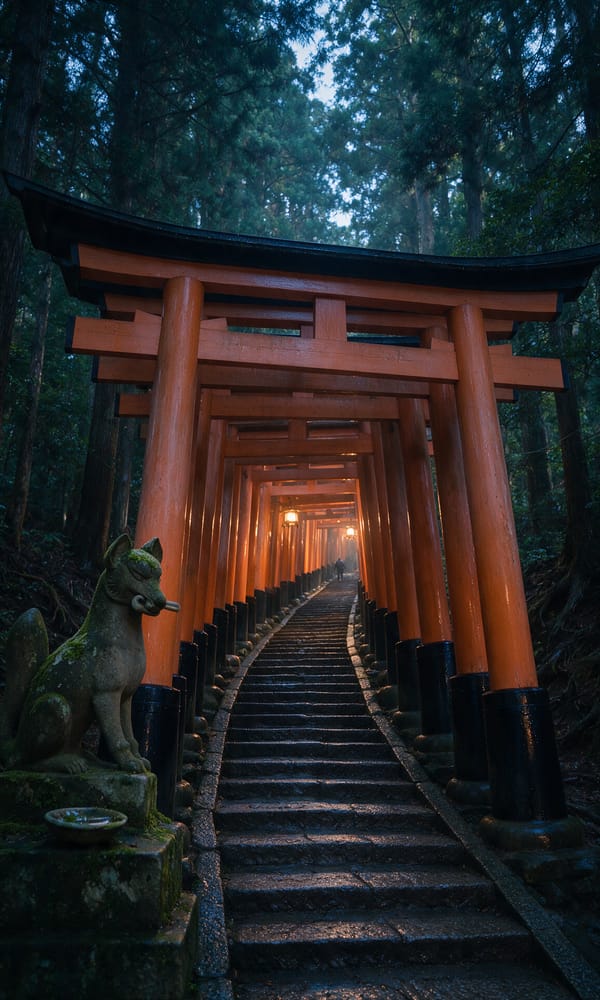
A tunnel of vermilion torii gates climbing a stone stairway at Fushimi Inari before dawn
March – May & October – November · 11–14 days
Japan Cultural Immersion
Four nights in Tokyo — a Tsukiji outer market morning with a food specialist who explains shun, the concept of seasonal eating that governs every element of Japanese cuisine; an omakase dinner at a counter where the eight seats fill two months in advance and the chef has sourced from the same fish market since 1987; a sumo morning practice at a stable where the rikishi train before the public arrives. Shinkansen to Kyoto for four nights — a machiya townhouse stay in Gion, a private tea ceremony with a practitioner whose lineage traces to the Urasenke school, and Fushimi Inari at 5:30 a.m. before the day begins. Nara for the deer park and a soba lunch in the old town. The Inland Sea by ferry for the final two nights and a quiet that Tokyo and Kyoto together cannot provide.
Japan11–14 Days
Plan This Trip
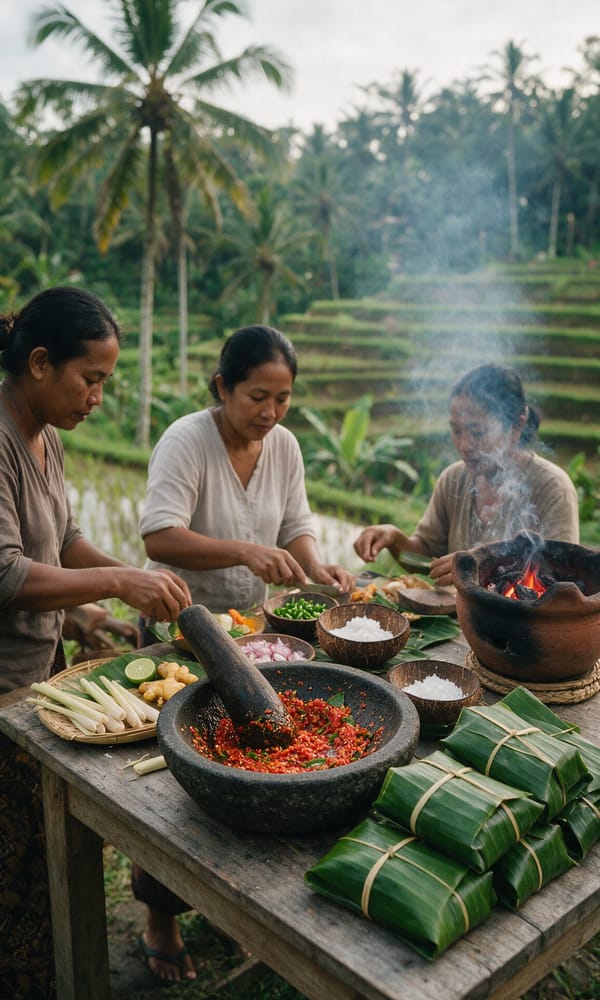
A stone mortar of spice paste and banana-leaf packets on a table above Ubud rice terraces
April – October · 8–10 days
Bali: Ubud Deep Dive & Uluwatu
Five nights in Ubud at a villa compound with a private guide for three full days — a morning at Tirta Empul water temple during a purification ceremony, an afternoon with a balian healer in a village accessible only by a guide who has the relationship, and a cooking class at an organic farm where the owner grows sixty varieties of rice. Drive to the south for three nights on the Bukit Peninsula — the Uluwatu clifftop temple at sunset with a guide who can explain the Kecak fire dance rather than just watch it, and two mornings at breaks that the surf guides know don't appear on any tourist map. The Bali that clients who have been before say they never found on the previous trip.
Bali8–10 Days
Plan This Trip
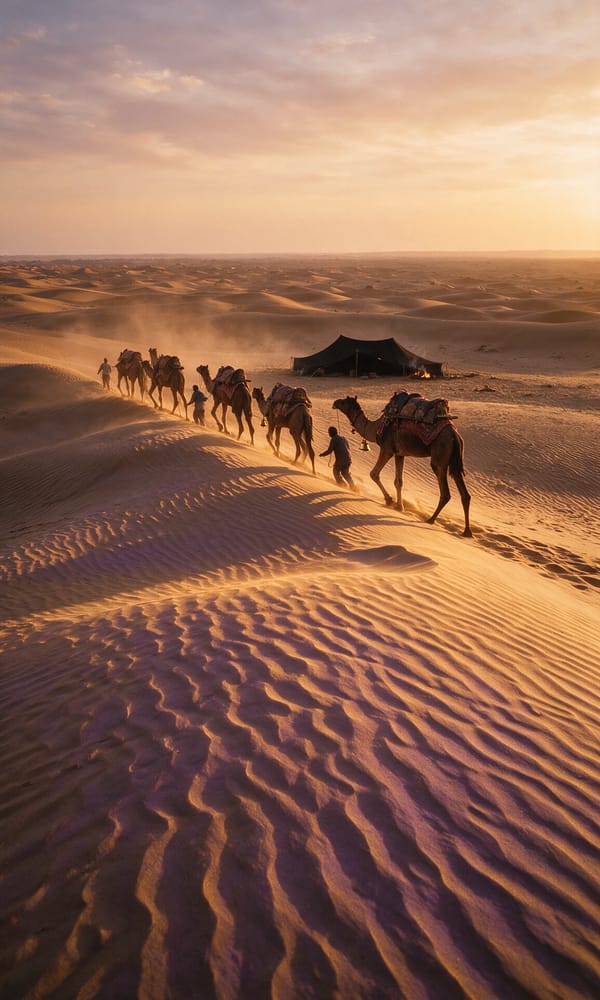
A camel caravan crossing a dune ridge toward a desert camp outside Jaisalmer at dusk
October – March · 12–14 days
India: Rajasthan & Kerala
Delhi for two nights — a dawn walk through Old Delhi's Chandni Chowk market with a food historian who can map the spice trade onto the lane geography, the Red Fort before the tour groups form, and a dinner at a restaurant that serves the Mughal court cuisine that hasn't changed since the 16th century. Fly to Udaipur for the Lake Palace and a morning boat to a private island where a family still maintains a 400-year-old garden. Jaisalmer for the desert fort and a camel journey to a camp that requires two hours on sand to reach. Fly south to Kerala — a houseboat through the Vembanad Lake backwaters, a sunrise yoga class at an Ayurvedic resort where the program is physician-directed, and a spice plantation lunch with a grower who sells directly to three Michelin-starred restaurants in London.
India12–14 Days
Plan This Trip
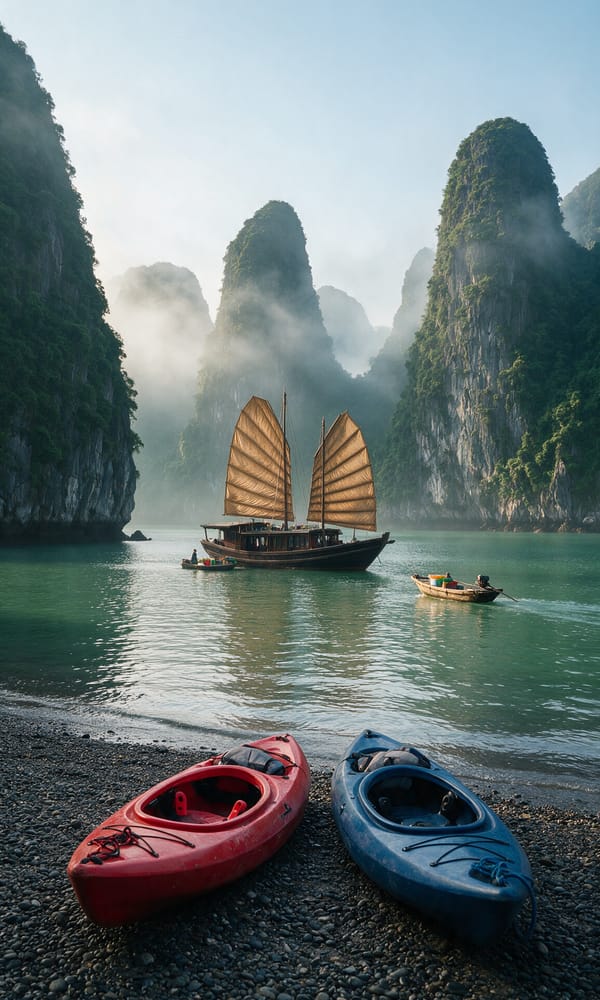
A wooden junk and two kayaks below misty limestone karsts on Ha Long Bay at sunrise
November – April · 10–12 days
Vietnam: North to South
Three nights in Hanoi — a bún chả breakfast at a lane stall that opens at seven and closes when the soup runs out, an Old Quarter walking tour with a historian who grew up in the 36 streets, and an evening at a bia hơi where the draft beer costs forty cents and the table fills with neighbors rather than tourists. Two nights on Ha Long Bay aboard a private junk — kayaking the limestone karst caves, a sunrise tai chi session on the deck, a seafood dinner cooked by the boat's own kitchen from what the morning market provided. Fly to Hoi An for three nights — a tailoring appointment on day one, a fitting on day two, and a final dinner at the ancient town's most serious restaurant. Ho Chi Minh City for two nights and the Cu Chi tunnels done with a veteran guide who carries both sides of the history.
Vietnam10–12 Days
Plan This Trip
Why Plan With Us

What We Add to Asian Travel

Asia is the region that most benefits from specialist planning — where the gap between a surface itinerary and a deep one is widest, and where the guide is the most consequential single variable.

Specialist Guide Access
A tea master in Kyoto who agreed to receive a small private group on a Tuesday morning. A food specialist in Tokyo who maps Tsukiji at dawn and knows which counter to sit at for which fish. A balian in Bali who is not the one every riad recommends. A textile historian in Jaipur who has studied block-printing for thirty years. These guides are not findable through a search engine — they come from relationships built over years.
Depth Over Distance
The most common Asia planning mistake is trying to cover too many countries in a single trip. Bangkok, Siem Reap, Ho Chi Minh City, and Bali in twelve days produces a pleasant blur. Japan for twelve days produces a transformation. We build Asian itineraries around fewer countries with enough time in each to understand what makes them irreplaceable — not because it's philosophically correct, but because it produces the trips clients talk about for twenty years.
Preferred Partner Properties
Virtuoso membership gives clients access to rate programs, upgrades, and amenities at participating Asian hotels — from the Aman Tokyo and Six Senses resorts in Southeast Asia to the Taj properties in India. Because we don't charge a planning fee, that value is entirely yours, and the reservation carries weight in markets where the right introduction matters.
Seasonal & Health Planning
Asia has more complex seasonal variation than any other region — monsoon timing, cherry blossom windows, religious festival calendars, and health considerations including malaria prophylaxis recommendations for specific itineraries. We navigate all of it as part of the planning process — including vaccine requirements, health advisories, and the practical logistics that most travelers encounter as surprises and we handle in advance.
When to Go

Asia by Season

Japan Window
March – May & October – November
The two best Japan windows — cherry blossom season from late March through early April (the single most in-demand travel window in Asia, requiring advance planning) and autumn foliage from late October through November. Both windows produce extraordinary color, ideal temperatures, and a Japan that actively rewards being there. Hotels and ryokans in Kyoto during sakura season sell out four to six months in advance — plan accordingly.
Best Japan Window
Southeast Asia Dry Season
November – April
The primary window for Thailand, Vietnam, Cambodia, Bali, and Sri Lanka — dry, warm, and consistently excellent across the entire region. December through February is peak season with the highest rates. October and November (shoulder into dry season) offer similar conditions with lower occupancy. The wet season from May through October brings rain but also dramatically lower rates and genuinely beautiful landscapes — manageable for experienced travelers with flexibility.
India & South Asia
October – March
The Indian subcontinent in summer is hot and during monsoon season (June through September) genuinely uncomfortable for most travel. October through March is the primary window — cool in the north, manageable in Rajasthan, and still warm in Kerala and the south. The Diwali festival window in October or November is extraordinary for Rajasthan, with fort illuminations and a cultural energy that no other season provides. Avoid April through June in northern India entirely.
Ready When You Are

Plan an Asia Trip
That Goes All the Way In

Tell me which country or countries draw you, when you can travel, and what kind of experience you're after. I'll come back with a specific recommendation — destination, depth, guide, timing — within one business day.

Plan an Asia Trip All Destinations

No booking fees  ·  Response within 24 hours  ·  Fully bespoke

What It Costs

What Asia Actually Costs

$500–$1,400
per person, per day, land only. Ranges, not quotes.
What that includes
  • Five-star or boutique hotels, breakfast included
  • Private transfers between cities and airports
  • Private guiding, core admissions and selected meals
What it does not
  • International airfare to the region
  • Most lunches and dinners, visas and insurance
  • Optional spa treatments, premium experiences and gratuities
The two or three things that move it most
  • Country and city mix — packaged luxury sits at the low end, private bespoke at the top
  • Hotel and suite category
  • How many days carry a private guide, plus domestic flights

Editorial planning bands, not quotes — assembled from published rates and official fee sources, verified . Rates, permit costs and park fees change; confirm before booking. Source: Japan National Tourism Organization.

Common Questions

Asia — FAQ

Questions about planning Asia travel — from first-time destination selection to timing, itinerary depth, and what makes each country worth the long-haul flight.

Japan and Thailand are the two most common answers for different reasons. Japan delivers a consistent, high-quality, safe, and logistically manageable experience with extraordinarily high reward — food, culture, service, and aesthetics all at exceptional levels. Thailand combines beach, temples, food culture, and accessibility at a lower price point. Both are excellent starting points.

Japan as a standalone works in 10–14 days. Southeast Asia combinations — Thailand plus Bali, or Vietnam plus Cambodia — work well in 14–18 days. India deserves at least two weeks for a single-region trip; trying to cover too much produces a rushed experience. The more meaningful question is depth versus breadth — I almost always recommend going deeper into fewer places.

Highly destination-dependent. Japan's cherry blossom season (late March to mid-April) is extraordinary but crowded. Southeast Asia's dry season runs roughly November–April. India is best October–February. Bali's shoulder months — May–June and September–October — are often ideal. I plan timing specifically for each destination to avoid monsoon conditions without paying peak prices.

Japan is the most consistently excellent destination in Asia for service culture, food, aesthetic environment, and ease of travel. The combination of ancient temple culture, contemporary urban design, extraordinary cuisine (the highest density of Michelin-starred restaurants of any city), and a transport system that functions with near-perfect reliability makes it exceptionally rewarding — and it improves with repeat visits.

Less than most people expect. Japan has good English signage in major cities, and local guides handle communication seamlessly. Thailand, Bali, and Vietnam's tourist infrastructure is English-capable in most contexts. India's urban centers have strong English presence. A well-designed itinerary with a local guide removes language friction almost entirely.

You can, though the experiences are dramatically different in character. Some clients combine them on longer trips of 18–22 days. Others prefer to focus one trip on Japan and a separate one on Southeast Asia, getting genuinely deep into each rather than surface-level in both. I advise on the trade-off based on total time available and what each client is most trying to experience.

Yes, with the right structure. India is more logistically complex than Japan or Southeast Asia, but it's extremely rewarding when itinerary and expectations are set correctly. I recommend starting with the Golden Triangle (Delhi, Agra, Jaipur) as a first trip — accessible, historically extraordinary, and manageable in 10 days. The right guide transforms India completely.

In Asia, the gap between standard and luxury is often larger than in Europe or the Americas. Exceptional hotels in Tokyo, Kyoto, Bangkok, and Bali deliver a level of hospitality and design that is world-class. Private guiding makes access to sites and cultural context dramatically richer. Transportation upgrades — private car vs. public, first-class rail vs. standard — meaningfully change the comfort of the travel days.
More questions answered on the Full FAQ Page
From the Journal

Read More on Planning Asia