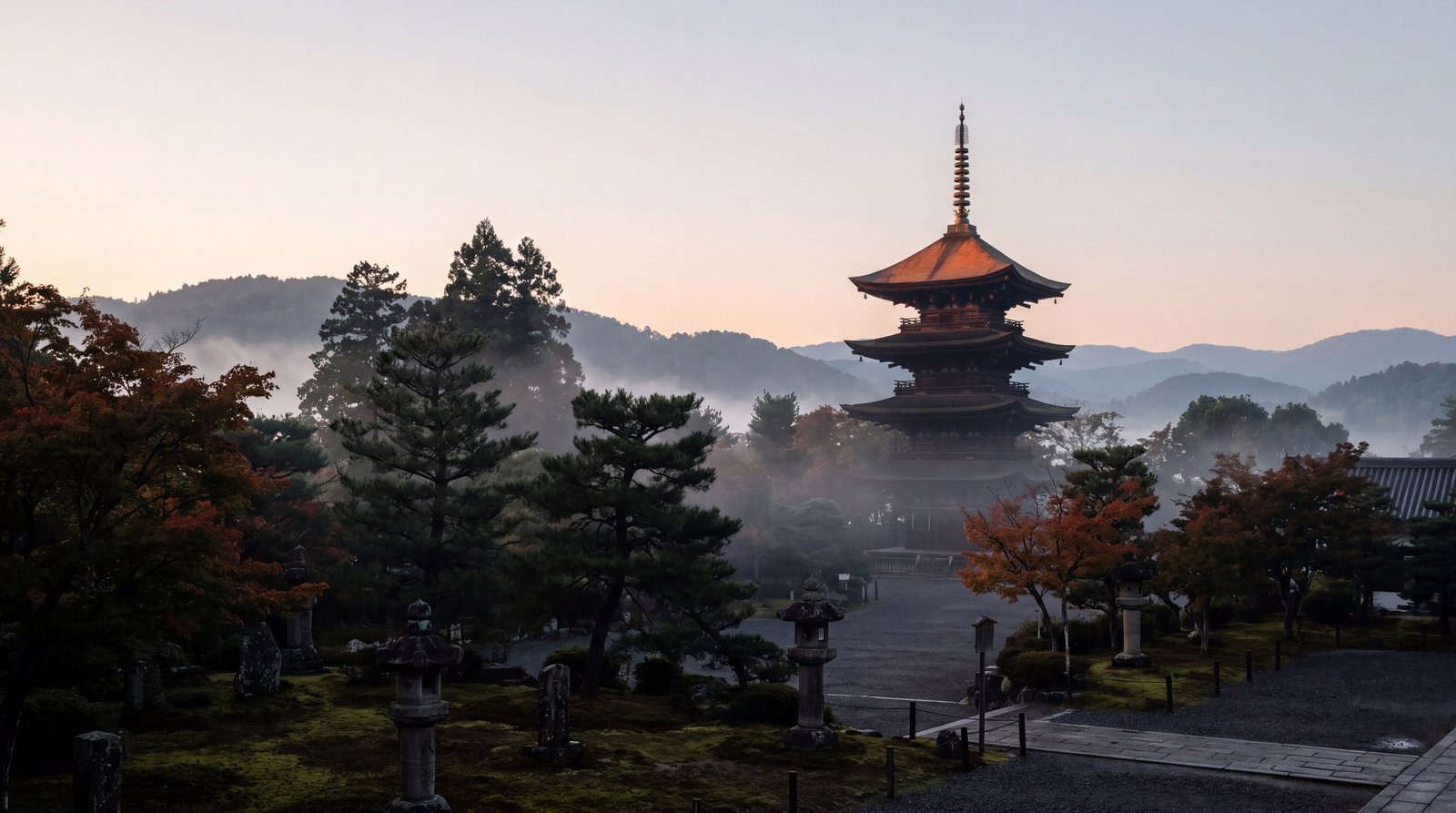
Cherry blossom season is extraordinary. It is also among the most crowded travel experiences on earth. November — the autumn color season — is quieter, equally beautiful, and considerably easier to navigate. Which one is your trip?
Mark SoleFounder & Travel Director, Hit Your Mark Travel
Share
Kyoto has two famous seasons, and almost everyone who asks about Japan asks about one of them. Cherry blossom season gets the magazine covers. The autumn color season gets the second paragraph, if it gets mentioned at all. That imbalance is worth correcting, because for a meaningful share of the travelers who ask us for April, November is the better trip — and most of them have never been told the comparison honestly.
This is that comparison. Not "both are wonderful," which is true and useless. The two seasons differ in what you see, what you pay, how far ahead you must commit, and how much of your day is spent negotiating other people. They reward different travelers, and it is knowable in advance which one you are.
The short answer, before the detail
Book April for the bloom, November for the color — and book them differently. Cherry blossom in Kyoto typically lands in the first week of April and demands the longest lead time in Japanese travel: the best ryokan fill twelve months out. November's foliage peaks in the second half of the month, books on a normal timeline, and delivers Kyoto with meaningfully less competition for it.
"Cherry blossom season is extraordinary. It is also among the most crowded travel experiences on earth. November is quieter, equally beautiful, and considerably easier to actually be in."
What April actually is
The bloom is real. There is no version of this comparison that pretends otherwise: full bloom over the Kamo River, the weeping cherries in Maruyama Park, the tunnel of trees along the Philosopher's Path — for roughly a week, the entire city composes itself around one event, and hanami (blossom viewing) turns every park into a public celebration. If seeing that is the point of the trip, nothing in November substitutes for it, and the rest of this piece will not talk you out of it.
What the photographs do not show is the operating environment. Bloom week is Japan's peak domestic travel event and one of its peak international ones simultaneously. The famous viewing sites draw crowds from first light; the well-known restaurants and the small ryokan are reserved out months ahead; and the city's hotel rates reflect all of it. Kyoto in bloom week is a shared experience in the most literal sense.
There is also the matter of the date itself. The bloom is a forecast, not a fixture — it shifts year to year with the winter's weather, and the Japan National Tourism Organization tracks the blossom front each spring precisely because the window moves. Typically Kyoto reaches full bloom in the first week of April; in a warm year it can run early, in a cold one late. A trip booked twelve months out for a seven-day window is making a weather bet with excellent but not certain odds. Travelers with only five days of leave should understand that bet before placing it.
What November actually is
Autumn color in Kyoto is not a consolation prize. The momiji — the Japanese maples that turn scarlet and amber through the month — are planted exactly where the city's temple builders wanted them: framing gates, lining approach paths, reflected in garden ponds that were designed around this month. Several temples hold evening illuminations in the color season, lighting the maples after dark. Where the bloom is one week of spectacle, the color season is a slower burn across several weeks, peaking in the second half of November.
The operating environment is materially easier. November is a busy month by Kyoto standards — the famous foliage temples on a late-November weekend are genuinely crowded — but it is peak-adjacent, not peak. Ryokan and hotel availability behaves like a normal high-season booking rather than a lottery. Restaurant reservations are gettable on a sane timeline. And the city's kaiseki kitchens are working with the autumn menu, which many food-focused travelers consider the best of the year.
November's weather is also the more reliable partner: crisp, clear days are the pattern, and the color window is wide enough that a trip placed anywhere in the back half of the month lands inside it. You are not betting a year of planning on a seven-day forecast.
Crowds, cost and booking lead — the practical comparison
Booking lead. This is the sharpest difference. For bloom season, the best ryokan fill twelve months out, quality hotels nine months out, and six months is the practical minimum for anything you would want to stay in — those are the lead times we plan around for Japan in peak season. November asks for a fraction of that discipline. If you are reading this less than half a year before you want to travel, that fact alone may make the decision for you.
Crowds. April concentrates its visitors into one week and a handful of famous sites; the crowd is the context of the trip. November spreads its visitors across several weeks and dozens of temples, and the early mornings still belong to whoever shows up for them. The same discipline applies in both seasons — the famous sites at opening time, the famous streets at dawn — but in November the discipline actually works.
Cost. Bloom week sits at the top of Kyoto's rate calendar; November runs below it.
More useful than the percentage: in April you pay peak rates for constrained choice, because you take the room that is left. In November you pay high-season rates for actual choice.
Which one you should book
Book April if the bloom is the reason for the trip — if the picture in your head is specifically the cherry trees, and you have the twelve-month runway to plan for it properly. Done right, with the lead time respected and the itinerary built around early mornings, bloom week delivers something no other travel experience matches. It is on many people's lists for good reason.
Book November if the reason is Kyoto itself — the temples, the gardens, the food, the craft — and the season is meant to flatter the city rather than headline it. You will see Kyoto at nearly its most beautiful and considerably closer to its own pace, with the autumn kaiseki menu in front of you and a booking timeline that does not require a year of your life. This is the trip we recommend more often, because it is the trip more travelers actually described when they first called.
And if the guide matters to you in either month — the difference between walking through a temple and understanding one — that is a separate decision from the season, and it is covered in how we plan culture-first travel.
How we plan Kyoto
The season conversation is the first five minutes of a Japan planning call, and it usually settles itself once the booking-lead reality is on the table. From there the work is the same in either month: the ryokan decision, the guide, the early-morning site plan, and the two or three reservations that must be made long before the flight is. Tell us which picture is in your head and when you can travel, and we will tell you honestly which season it points to.
Planning Japan
The full country picture — regions, seasons, routing and the ryokan question — is on the Japan destination page.
The Kyoto season question comes up in almost every Japan planning conversation, and the honest comparison is the one thing the magazine features never provide. This piece is the version I walk clients through before we look at a single property.