

Destination Guide 15 min read

The Asia Guide: Six Regions That Require Six Different Planning Frameworks

Japan, Bhutan, Southeast Asia, Indonesia, the Indian Subcontinent, and the Maldives — why Asia can't be planned as a single category, what the right season does to each destination, and the properties that consistently deliver on what the continent promises.

The most common mistake in Asia travel is treating the continent as a category. "We're thinking about Asia" is not a planning framework — it is a geographic gesture that spans more cultural distance than exists between the United States and Western Europe, multiplied several times over. Japan and Bali are not similar decisions. India and Thailand share a hemisphere but almost nothing else. Bhutan and the Maldives are different enough that they shouldn't appear in the same planning conversation except by coincidence of region. The traveler who approaches Asia as an interchangeable set of options will book the wrong destination for the wrong reasons in the wrong season and arrive wondering why the reality doesn't match the expectation.

The framework that produces a good Asia trip starts with a different question than most people ask. Not "where in Asia?" but "what kind of trip?" Asia is the only continent where a single answer to that question — sensory immersion, complete detachment, spiritual depth, culinary obsession, wildlife, beach, cultural density — maps almost precisely to a single destination. Japan is the right answer to culinary obsession and ritual beauty. Bhutan is the right answer to spiritual depth and deliberate slowness. The Maldives is the right answer to complete detachment from everything. India is the right answer to sensory intensity and historic scale. None of them substitute for the others, and choosing between them is not a matter of preference between similar options but of being honest about what you actually want from a trip.

Season is the second planning question, and in Asia it is more consequential than almost anywhere else. The same destination in a different month can be a completely different trip — not marginally different, but fundamentally different in comfort, crowd density, accessibility, and the quality of what you can see and do. This guide covers the seasonal logic region by region, because getting the timing right is as important as getting the destination right.

The Planning Framework

The six regions in this guide were selected because each represents a travel experience that doesn't overlap with the others. Three of them — Japan, Bhutan, and India — are destinations where cultural and historical depth is the primary driver and where preparation meaningfully changes the quality of the experience. Two of them — Indonesia and Southeast Asia — reward a slower pace and respond well to the traveler who is willing to move less and stay longer in fewer places. One of them — the Maldives — is the correct answer when the goal is the most complete form of detachment available within a reasonable flight schedule, and almost nothing else.

What these regions share is that all of them reward a longer stay than most itineraries allocate. The traveler who spends seven days in Japan will leave certain that Japan requires three weeks. The traveler who spends four days in Bhutan will correctly understand that five valleys in four days is not the same as one valley in four days. Asia is the continent where the right decision is almost always to go deeper into fewer places — and where the cost of trying to cover too much is not just fatigue but the specific regret of having been physically present in extraordinary places without actually being there.

"In Asia more than anywhere else, the same destination in a different month can be a completely different trip. Timing is not a footnote to the itinerary — it is the itinerary."

Six Regions at a Glance

Below is a breakdown of each region — its character, who it's right for, when to go, and the specific properties worth knowing. A timing guide and property reference section follow.

Region Overview · Asia
The Numbers That Frame the Continent
6
Distinct regions covered in this guide
Nov–Apr
Primary travel window across most of the region
14–22 hrs
Flight from major US gateways via connecting hub
Temples
Reef
Jungle
Primary experience types this guide covers
Six Regions. Six Different Asias.
01
Japan
Culinary Depth Ritual & Season Ryokan
Tokyo · Kyoto · Hakone · Osaka · Kanazawa · Rural Ryokan Circuit
Japan is the destination that most consistently outperforms expectations and simultaneously makes travelers feel that they arrived with the wrong frame of reference. The country operates on a precision that reads, to the uninitiated traveler, as formal — and what reveals itself over days is that the formality is actually the expression of extraordinary care about the quality of each interaction. The best ryokans, the kaiseki meals, the carefully raked rock gardens: these are not aesthetic performances, they are working philosophies about what it means to host another person well, applied to every detail without exception.

The standard itinerary — Tokyo for three nights, Shinkansen to Kyoto, one night in Hakone for Fuji views — works because the infrastructure supports it and the cities reward the time. The ryokan circuit that takes guests through smaller inns in the mountains of Hakone, Nikko, or the Kii Peninsula is the version that stays with travelers for years afterward: sleeping on tatami, bathing in private onsen, and eating fifteen courses of seasonal cuisine that has no equivalent anywhere else in the world. Japan is a destination where the traveler who prepares — learning the etiquette, the seasonal significance, the district logic of Kyoto's neighborhoods — receives a demonstrably different experience than the one who arrives without that preparation.
Cherry Blossom: Late March – mid-April (book 10–12 months ahead) Autumn Foliage: Mid-October – mid-November (Kyoto peaks early November) Best Overall: March–May and October–November; avoid Golden Week (late April–early May) Gateway: NRT or HND (Tokyo); KIX (Osaka/Kyoto); direct from LAX, JFK, SFO, ORD Key Properties: Aman Tokyo, Amanemu (Shima Peninsula), The Ritz-Carlton Kyoto, Gora Kadan (Hakone)
02
Bhutan & the Himalayan Kingdoms
Most Distinctive High Value Low Volume
Paro · Thimphu · Punakha · Gangtey · Bumthang
Bhutan is the most deliberately protected travel destination in the world. The government's high-value, low-impact tourism policy — a Sustainable Development Fee of USD $100 per person per night, on top of accommodation and guide costs — is not a barrier to entry designed to feel exclusive, but a functioning conservation mechanism that has allowed the country to maintain 72% forest cover, a constitutionally mandated floor. Bhutan has been carbon-negative since before that phrase entered the environmental lexicon. The country absorbs more carbon than it produces, protects its forests as a national priority, and limits tourist arrivals not because it wants to appear scarce but because it has made a deliberate decision about what kind of country it wants to be.

What the traveler receives in exchange for the cost and the planning is the last intact example of a Himalayan Buddhist kingdom operating largely on its own terms. The dzong fortresses — white-and-ochre buildings of such visual weight that they seem to predate the valleys they anchor — house both administrative and religious functions, as they have for centuries. The Tiger's Nest Monastery at Paro Taktsang, built into a cliffside above a 3,000-foot vertical drop, is not the most hyped destination in Asia that underdelivers; it is exactly what the photographs suggest and materially better, because no photograph captures the silence or the prayer flags moving in the wind above the clouds. Five valleys in ten days is a coherent Bhutan circuit. One valley in five days is a deeper one.
Spring Festival Season: March – May (Paro Tsechu; rhododendrons; best trekking) Autumn: September – November (clear skies, Thimphu Tsechu; Himalayan views) Development Fee: USD $100 per person per night (plus guide, accommodation, transport) Gateway: PBH (Paro) — Drukair and Bhutan Airlines from Bangkok, Delhi, Singapore, Kathmandu Key Properties: Amankora (5 lodges across Bhutan), COMO Uma Paro, Zhiwa Ling Heritage (Paro)
03
Southeast Asia — Thailand, Laos & Vietnam
Most Accessible River Culture First-Timer
Bangkok · Chiang Mai · Luang Prabang · Hanoi · Hội An · Halong Bay
Southeast Asia is the most accessible Asia entry point — flight infrastructure is dense, infrastructure within the region is well-developed, and the cultural distance between destination and daily life is legible enough on arrival that first-time Asia travelers don't feel immediately disoriented. Bangkok functions as the hub that makes everything else available: connecting flights to Chiang Mai, Luang Prabang, and Hanoi are under two hours from Suvarnabhumi, and the city itself rewards two to three nights before the domestic connections.

Luang Prabang in Laos is the most underappreciated city in Southeast Asia — a UNESCO-listed town at the confluence of the Mekong and Nam Khan rivers, where the morning monk procession (alms-giving) has occurred at dawn every day for centuries and continues without staging or performance for the benefit of visitors. The French colonial architecture overlaid on Lao Buddhist temple culture produces a density of visual beauty per block that is unusual anywhere. Vietnam's Hội An — lantern-lit streets, tailor shops, a market and cooking culture that locals will argue confidently is the finest in the country — rewards the slow traveler. The mistake in Southeast Asia is the same mistake as everywhere: too many cities, not enough time in any of them.
Best Season: November – March (dry, cooler, less humidity across the region) Avoid: April–May (hottest months); June–October (monsoon in most areas) Gateway: BKK (Bangkok) direct from LAX, JFK; connections to LPQ (Luang Prabang), HAN (Hanoi), DAD (Da Nang) Key Properties: Four Seasons Tented Camp (Golden Triangle, Thailand), Rosewood Luang Prabang, The Nam Hai (Hội An)
04
Indonesia — Bali & Beyond
Wellness Surf Remote Islands
Ubud · Seminyak · Nusa Penida · Sumba · Komodo · Raja Ampat
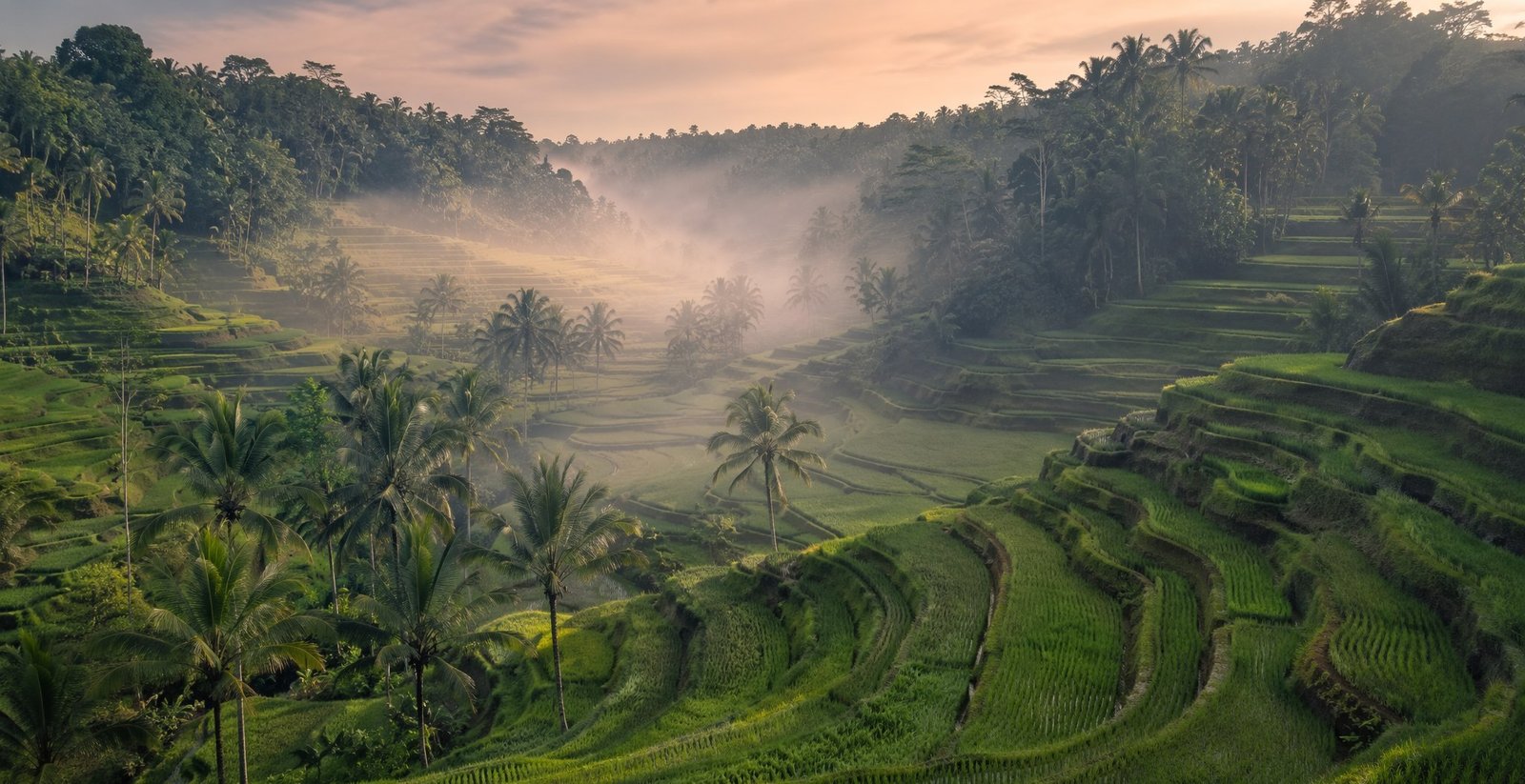
Indonesia is 17,000 islands spread across an ocean distance equivalent to the continental United States. Bali is the entry point and the most visited — deservedly, because the combination of rice terrace landscape, Hindu temple culture, surf coast, and a villa-and-wellness infrastructure that has been refined over thirty years is genuinely difficult to replicate anywhere else. Ubud, in the island's central highlands, has become the global reference point for boutique wellness travel: the cooking schools, the morning yoga, the private plunge pools over terraced valleys. Seminyak and Canggu deliver a different Bali — the beach clubs, the sunset temple, the surf schools. Both are legitimate versions of the same island.

The traveler who has done Bali and wants the next layer turns to the outer islands. Sumba — two hours by light aircraft — is raw, culturally distinct, and home to Nihi Sumba, a property built into a cliff above one of the finest surf breaks in the world, with a horse culture and a spa program that functions as a destination in itself. Komodo delivers Jurassic Park realities: forty-meter komodo dragons, pink sand beaches, and reef systems that dive operators rank among the best accessible diving on earth. Raja Ampat, in West Papua, is the most biodiverse marine ecosystem on the planet and requires a significant journey to reach — which is, entirely, the point.
Bali Best: May – September (dry season; clear skies; best surf on Bukit Peninsula) Komodo Best: April – December (calm seas; avoid January–March monsoon) Gateway: DPS (Bali/Denpasar) — connections from Singapore, Hong Kong, Tokyo; Garuda from SYD Key Properties: Nihi Sumba (Sumba Island), Amankila (East Bali), COMO Uma Ubud, Capella Ubud
05
Indian Subcontinent — India & Sri Lanka
Sensory Intensity Tiger Safari Historic Scale
Rajasthan · Delhi · Agra · Kerala · Ranthambore · Udaipur · Galle
India is the destination that produces the most polarized reactions of any country in the world — travelers who find it overwhelming and don't return, and travelers who find it overwhelming and can't stop returning. Both responses are correct, because the country operates at a sensory register that has no precedent in most Western travel experience, and whether that register reads as extraordinary or as too much is largely a function of expectation and preparation rather than the destination's objective qualities. The traveler who arrives in India knowing that the chaos is the texture rather than the obstacle will find more beauty per day than almost anywhere on earth. The traveler who arrives expecting the efficiency of Japan or the comfort of the French Riviera will be disappointed.

The Golden Triangle — Delhi, Agra, Jaipur — is the standard entry circuit, and it works for first-time visitors because the infrastructure supports it and the sites justify the journey: the Taj Mahal at sunrise, seen once, changes the scale of what architecture can communicate. Rajasthan extends the circuit into Udaipur and Jodhpur, where the lake palace hotels and blue-walled medinas deliver a visual density that photography has never quite captured. Ranthambore National Park, in Rajasthan, is the finest accessible tiger safari in India — not the Masai Mara of big cat encounters, but a functioning wild population in a landscape of dry deciduous forest and ancient fort ruins that makes every sighting feel earned. Sri Lanka appends naturally to an India trip: Galle's colonial fort, the hill country tea estates, and a beach coast that remains dramatically underdeveloped compared to its quality.
Best Season: October – March (dry and cool; Rajasthan at its finest) Avoid: April – June (extreme heat across the north; 45°C+ in Rajasthan) Ranthambore Tigers: October – June; peak sightings February – May (dry season concentrates at water) Gateway: DEL (Delhi) or BOM (Mumbai) direct from JFK, EWR, ORD, SFO; CMB (Colombo) for Sri Lanka Key Properties: Aman-i-Khas (Ranthambore), Taj Lake Palace (Udaipur), Oberoi Amarvilas (Agra), Amangalla (Galle)
06
The Maldives
Complete Detachment Overwater Reef
North Malé Atoll · Baa Atoll · Lhaviyani Atoll · Addu Atoll · Outer Atolls
The Maldives is the correct answer to a specific question: where do I go when the goal is the most complete form of disconnection available within a reasonable flight? It is not the right answer to cultural immersion, culinary depth, historic architecture, wildlife, or activity. It is the right answer to doing nothing in the most beautiful physical setting a relatively accessible destination offers — and it executes that single function at a level nothing else in the world matches.

The 1,200 coral islands spread across 26 atolls in the Indian Ocean produce a version of ocean color — the graduated aquamarine of a shallow atoll lagoon transitioning to deep blue — that no photograph accurately represents, and which reads as artificial to the newly arrived guest before the eye adjusts. The overwater villa, a format the Maldives created and that has been replicated elsewhere with diminishing success, works here because the architecture is literally built over the reef: the glass floor panels in the better villas look directly into an active ecosystem. Selecting the right atoll and the right resort within it matters significantly — transfer times from Malé range from 20 minutes by speedboat to 90 minutes by seaplane, and the outer atolls deliver a degree of remoteness that the inner ring resorts, however beautiful, cannot match. The Maldives also warrants its own guide, and we've written one.
Best Season: November – April (dry northeast monsoon; calm seas; best visibility) Avoid: May – October (southwest monsoon; rougher seas; some resorts reduce rates significantly) Whale Shark Season: June – November (South Ari Atoll; consistent sightings) Gateway: MLE (Malé) — connections from Dubai, Singapore, Doha, Colombo; seaplane or speedboat to resort Key Properties: Soneva Jani (North Malé Atoll), One&Only Reethi Rah, Cheval Blanc Randheli, Patina Maldives
When to Go — by Season and by Region
Nov – Mar
Dry Season Window
The primary travel window across most of Asia — comfortable temperatures across Southeast Asia, India, and Sri Lanka; the Maldives at its clearest; and the shoulder season for Japan before cherry blossom crowds arrive. The widest range of destinations are accessible and at their best. Book 6–9 months ahead for the best properties in India and Southeast Asia.
Best Window
Mar – May
Spring Peak
Japan's cherry blossom season (late March – mid-April) is the most booked window in Asia travel — ryokans and top hotels require 10–12 months advance notice. Bhutan's spring festival season (Paro Tsechu, March–April) runs parallel. Nepal and the Himalayan trekking regions are at peak accessibility. Book early or plan for the autumn alternative.
Japan & Bhutan
Sep – Nov
Autumn
Japan's autumn foliage — Kyoto in early November, Nikko and Hakone through mid-November — is the equal of cherry blossom season in visual intensity and marginally less crowded. Bhutan's autumn festivals (Thimphu Tsechu in September) offer the second major religious calendar event. India begins to cool into its best season. Maldives is entering its dry window.
Jun – Aug
Monsoon / Summer
Southeast Asia and India enter monsoon season. Bali's wet season peaks December–March; the dry season (May–September) makes summer Bali the best Bali. Japan's summer is hot and humid but functional, with a distinct festival calendar. Bhutan's high passes are clear for trekking July–August. The Maldives is in its southwest monsoon — rougher, cheaper, and the outer atolls become significantly more remote.
Eight Properties That Earn Their Rates
Not a comprehensive list — these are the specific hotels, lodges, and resorts across Asia that consistently deliver what they promise, from a Tokyo tower suite to an outer-atoll water villa to a Himalayan lodge inside a Bhutanese valley.
Aman Tokyo
Urban Sanctuary
Otemachi · Tokyo · Japan
Eighty-four rooms on the top six floors of the Otemachi Tower, above the old Edo Castle moat, with floor-to-ceiling views across the Imperial Palace gardens and the Tokyo skyline. The lobby — a soaring double-height space with washi paper screens and a stone lantern the size of a small car — is among the finest hotel arrivals in Asia. The onsen spa occupies two floors and is anchored by a 30-meter indoor pool. The rooms have the spatial generosity typical of the Aman brand applied to a vertical urban setting. The correct base for Tokyo before or after the bullet-train journey south to Kyoto and Hakone.
Amankora
Kingdom Exclusive
Five Lodges Across Bhutan · Paro · Punakha · Gangtey · Bumthang · Thimphu
Five intimate lodges — eight to sixteen rooms each — positioned across the five main Bhutanese valleys, designed so that a single itinerary can move between lodges by road or helicopter as the circuit progresses. Each lodge is built in traditional rammed-earth and slate architecture that fits into its valley with the unobtrusiveness of a structure that has always been there. The Paro lodge is the closest to the airport and the Tiger's Nest trailhead; the Gangtey lodge sits above a glacial valley where the endangered black-necked crane winters. The Aman guides who lead excursions from each lodge have spent years in these valleys. Book the full circuit if the budget allows.
Four Seasons Tented Camp
Jungle Camp
Golden Triangle · Chiang Rai · Thailand
Fifteen tents in the forest at the intersection of Thailand, Myanmar, and Laos — the ancient opium-producing region that has reinvented itself as conservation and adventure territory. The camp is built around an Asian elephant program that partners with the Golden Triangle Asian Elephant Foundation on rescue and rehabilitation. Guests have close, unstructured time with elephants in jungle terrain that no other camp in Southeast Asia can replicate. The tents are large enough to feel absurd — full soaking tubs, hand-carved furniture, mahogany floors — in a context that feels genuinely remote. The most distinctive single-property experience in all of Southeast Asia.
Aman-i-Khas
Tiger Reserve
Ranthambore · Rajasthan · India
Ten tents on the edge of Ranthambore National Park — one of the most important tiger conservation areas in India and the reserve with the most consistently reliable big cat sightings on the subcontinent. The camp opens October and closes April, aligned with the park's prime wildlife season. Aman-i-Khas organizes private morning and afternoon game drives in open vehicles, and the guide and naturalist team has been working this terrain long enough to know the individual tigers by territory and behavior. The Mughal-inspired tent design — carved marble, silk, full bathtubs — is luxurious enough that guests consistently remark that it feels inconsistent with a jungle camp, until it doesn't.
Nihi Sumba
Wild Island
Sumba Island · East Nusa Tenggara · Indonesia
Twenty-seven villas built into a forested clifftop above Nihiwatu Beach, a surf break that the original property owners discovered in the 1980s and that World Surf Journal ranked as the best wave in the world for several consecutive years. The surf rights for Nihiwatu are exclusive to hotel guests — one wave, one guest at a time, controlled by schedule. The Sumba Foundation, funded by a levy on each guest stay, runs community health, education, and malaria programs across the island. The horses that graze on the clifftops and can be ridden at dawn along the beach are not a marketing detail — Sumba is one of the world's great equestrian cultures, and the island's traditional horsemanship is visible in ceremonies throughout the year.
Amanemu
Onsen Retreat
Shima Peninsula · Mie Prefecture · Japan
Twenty-four suites and four two-bedroom villas in a forest above Ago Bay, two hours from Kyoto and forty-five minutes from Ise — the site of Japan's most sacred Shinto shrine complex, rebuilt every twenty years as an act of ritual renewal and closed to non-worshippers beyond the outer torii. Each suite at Amanemu has a private indoor onsen fed by naturally occurring hot spring water, and the spa complex includes the largest traditional Japanese bath facility of any resort in the country. The combination of Ise pilgrimages, fresh seafood from Ago Bay (the Ama free-divers who harvest the oysters are visible from the shore), and a level of cultural isolation that even Japan rarely delivers makes Amanemu the finest single-property Japan experience available.
Soneva Jani
Overwater Icon
Noonu Atoll · Maldives
Fifty-one water villas and beach houses on a private lagoon in the Noonu Atoll — one of the furthest atolls from Malé, accessible by a ninety-minute seaplane flight that is itself an experience worth arriving early for. The water villas here are among the largest in the Maldives, with retractable roofs above the master bedroom for direct stargazing and private pools that extend over the lagoon. The resident marine biologist leads guided snorkel sessions through reef systems that include manta ray cleaning stations and a healthy resident shark population. The Soneva philosophy — deliberately no shoes, plastic-free, a Friday Night Cinema on a sandbank — produces a specific kind of ease that the more formal five-star Maldives resorts don't replicate.
Taj Lake Palace
Palace Hotel
Lake Pichola · Udaipur · Rajasthan · India
A 18th-century white marble palace built on a four-acre island in the middle of Lake Pichola, accessible only by boat from the Taj jetty on the city shore. The property was built in 1746 as a royal summer palace and has operated as a hotel since 1963. The arrival — a five-minute boat crossing as the island palace grows larger and the city of Udaipur recedes behind you — is one of the great hotel arrivals in the world. The best rooms face directly onto the lake and the Aravalli Hills beyond; the Jharokha suite's stone lattice window frames a view of the City Palace that reads like a formal portrait. Udaipur's old city is one of the finest in Rajasthan to walk through, and the lake palace provides the best vantage point for it from every direction.
Plan Your Trip

The full destination overview for Asia — including region-by-region itineraries and the properties we recommend most often by travel style — is on the Asia Destination Page.

If you're building a Japan-focused itinerary and want to understand the ryokan circuit, the seasonal timing, or the balance between Tokyo's urban intensity and the quieter temple towns, the Culture & History experience page covers how we approach Japan planning in depth. For wellness-focused Asia travel — Bali, Thailand, Sri Lanka — the Wellness & Retreats page outlines the properties and programs worth building a trip around.

Tell me which region draws you — or which travel experience you're actually after — and I'll come back with a specific itinerary, property recommendation, and timing guidance within one business day.

Plan an Asia Trip
Built Around the Right Framework

Tell me what kind of trip you actually want — cultural depth, detachment, wildlife, food, spiritual travel, beach — and I'll match it to the right Asia destination, the right season, and the specific properties worth knowing in that region.

Start Planning
November – April (dry season across most of the region)
7 nights (the flight justifies the time); 10–14 for multi-region
NRT/HND (Tokyo), BKK (Bangkok), DPS (Bali), DEL (Delhi), MLE (Malé)
USD $100 per person per night — included in all quotes
10–12 months for Japan cherry blossom; 6 months for most other windows
Mark Sole
Founder & Travel Director

Asia is the continent where getting the framework right before the first hotel is booked changes everything. Japan in the wrong season, India without context, Bhutan rushed — these are trips that technically happened and didn't really. The properties and regions in this guide are ones I've spent years planning into. The opinions are mine.

About Mark