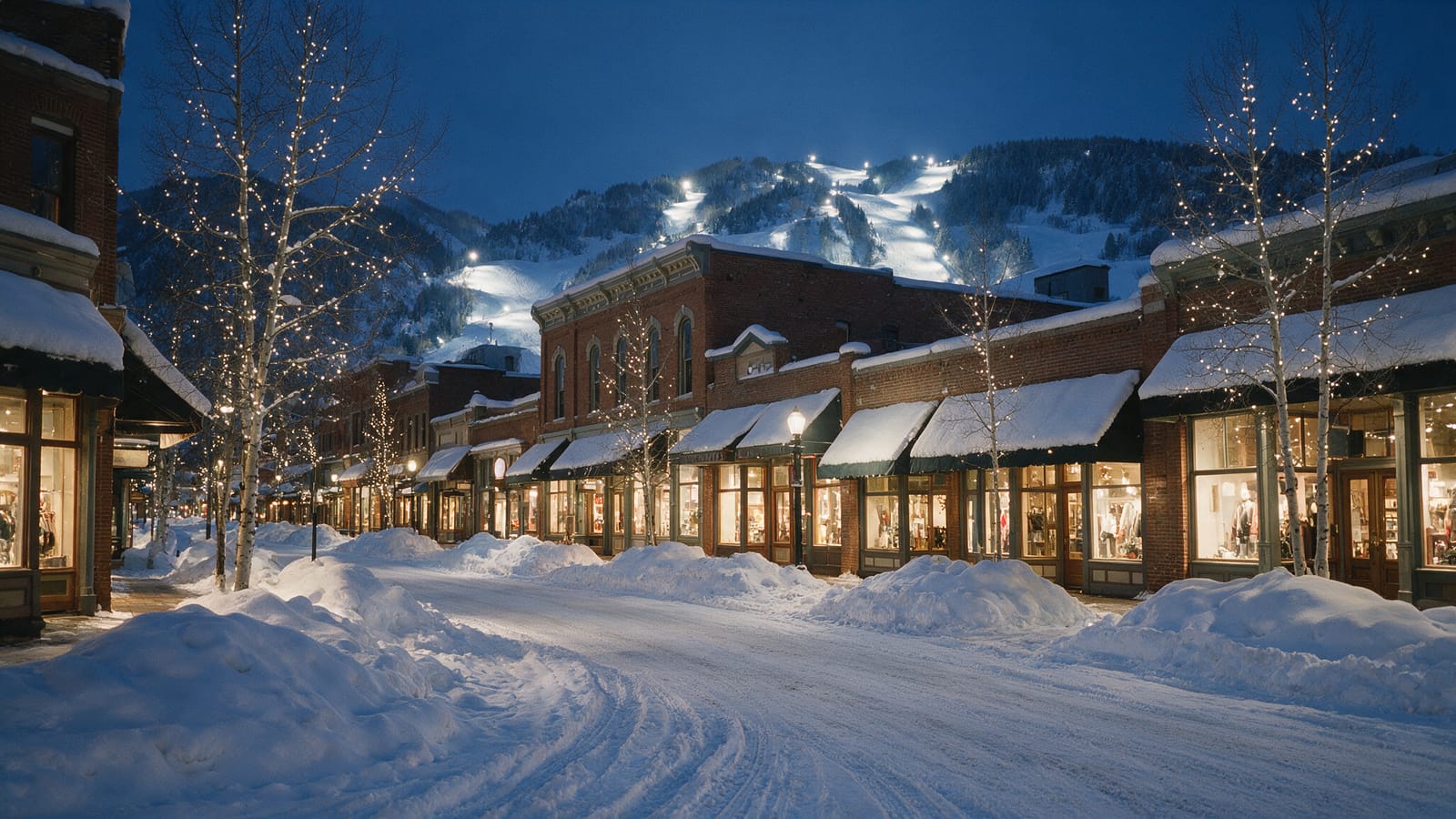
Why We Always Book Aspen Early — and What That Actually Gets You
The mountain is the same whether you book three months out or three weeks out. The chalet, the restaurant table, and the private ski instructor are not. What the early-booking discipline actually buys, and who genuinely needs it.
Mark SoleFounder & Travel Director, Hit Your Mark Travel
Share
There is a category of destination where booking late costs you the trip, and a category where it merely costs you money. Aspen is a third thing: booking late costs you neither the trip nor, necessarily, more money. It costs you the version of the trip you were imagining — quietly, invisibly, and in ways that don't show up until you are standing in them.
The mountain does not care when you booked. The snow is the same in December whether you committed in March or last Tuesday. Everything around the mountain cares enormously, because almost everything around the mountain is a small, finite pool of exactly the things people go to Aspen for. This piece is about what that pool contains, when it drains, and what booking early actually buys — which is not what most people assume.
The short answer, before the detail
Aspen is four mountains on one lift ticket, a season that runs roughly late November to mid-April, and two weeks — Christmas–New Year and Presidents' week — where demand outruns everything else on the calendar. Booking early does not buy you the mountain. It buys the specific chalet, the instructor who fits your family, and the dinner table — the finite things.
"The mountain is the same whether you book three months out or three weeks out. The chalet, the restaurant table, and the private ski instructor are not."
What sells out first — and why it is never lift tickets
Aspen's supply problem is specific. The skiing itself is abundant: four mountains — Aspen Mountain, Aspen Highlands, Buttermilk and Snowmass — share one ticket, and the hill will absorb another family without noticing. What is scarce is everything that turns a ski trip into the trip people mean when they say "Aspen": the slopeside and near-core lodging, which is a genuinely small inventory in a town hemmed in by its own geography; the private instructors, whose best names are rebooked by returning families before the season opens; and the tables at the restaurants everyone has read about, which at peak operate on reservation horizons closer to a city's than a mountain town's.
None of this shows up as "sold out" when you search late. Aspen will always sell you something. What disappears is the first-choice version of each piece — and because each piece degrades separately, the late-booked trip is usually a stack of second choices rather than one visible failure. The lodging is four blocks further from the gondola. The instructor is competent and a stranger. The table is at 5:30 or 9:45. Individually, shrugs. Together, a different trip.
The two weeks that behave differently
Christmas–New Year and Presidents' week are their own market. These are the weeks when the families who return every year — and Aspen runs on returning families — are all present at once, holding the inventory they rebooked on the way out the door last season. What reaches the open market for those weeks is what the annual migration left behind, and it goes first, at the year's highest rates.
For those two windows the honest advice is blunt: decide early or choose different dates.
The rest of the season is more forgiving — January outside the holiday tail and X Games week, and the long March run into closing in mid-April, when the light stretches and the mountain relaxes — and it rewards flexibility rather than punishing it.
What booking early actually gets you
The specific place, not a place. Slopeside inventory is the clearest case: the difference between ski-in/ski-out and a shuttle is the difference between children who ski all day and children who negotiate about boots in a parking structure. Book early and you choose where you live for the week. Book late and the town chooses.
The instructor, as a person rather than a category. A private instructor matched to your family — the one who gets a nervous seven-year-old down her first blue, or finds the terrain a strong teenager actually wants — is the single highest-leverage line on a family ski booking. The best of them are known quantities with loyal rebooking clients. Early is how you get a name; late is how you get whoever is left on the schedule.
The evenings. Aspen's après and dining scene is half the destination, and at peak it books like theatre. The trip where dinner is a decision made at 4pm is a different trip from the one where the week's tables were set before you flew. This is a small thing exactly the way the instructor is a small thing — which is to say, it is not.
The flight. Aspen's own airport sits minutes from town, is small, and is the kind of mountain field where winter weather rearranges schedules. The early booker takes the well-timed nonstops and builds the sensible buffer; the late booker connects, arrives at dusk, and meets the weather with no slack. A missed connection into a ski week costs a day of the thing you came for.
Who this discipline is actually for
Not everyone. A confident couple who ski hard, eat where the locals eat and are happy anywhere clean within a shuttle ride can book Aspen late forever and do fine — flexibility is its own currency, and the town rewards it outside the holiday weeks. The early-booking discipline is for trips with more moving parts than snow: three generations, young skiers who need the right instructor, a specific residence that is the point of the week, a celebration with a dinner that matters. The more of those parts your trip has, the more the calendar is the plan.
That is the same logic that governs active and ski travel generally — the activity is rarely the scarce part — and it is why the multi-household version of this trip belongs with the planning discipline covered under family travel. And if what you want is the big-mountain week without the town economy attached, the heli-ski operations covered from the Canadian Rockies are the other end of this exact trade.
How we book ski weeks
The Aspen conversation starts with dates and party shape, because those two facts decide everything else. Holiday weeks get the early-commitment treatment: lodging, instructor and the anchor dinners locked in one pass, flights with a weather buffer built in. Off-peak weeks get the opposite — we hold flexibility as long as the inventory allows and buy the trip when the picture is clear. Both are strategies; the mistake is running the off-peak strategy in a holiday week.
Planning a Mountain Week
For the fitness-honest side of ski and mountain trips, see adventure and active travel; for the multi-generation version, family travel covers the parts that fail first.
The no-lifts alternative — a week of heli-skiing out of British Columbia — is covered in the heli-ski field report.
About the Author
Mark Sole
Founder & Travel Director
Ski weeks are where booking discipline pays most visibly, and Aspen is the clearest case I know. This piece is the conversation I have with every family who calls about the holiday weeks — ideally months before they call.