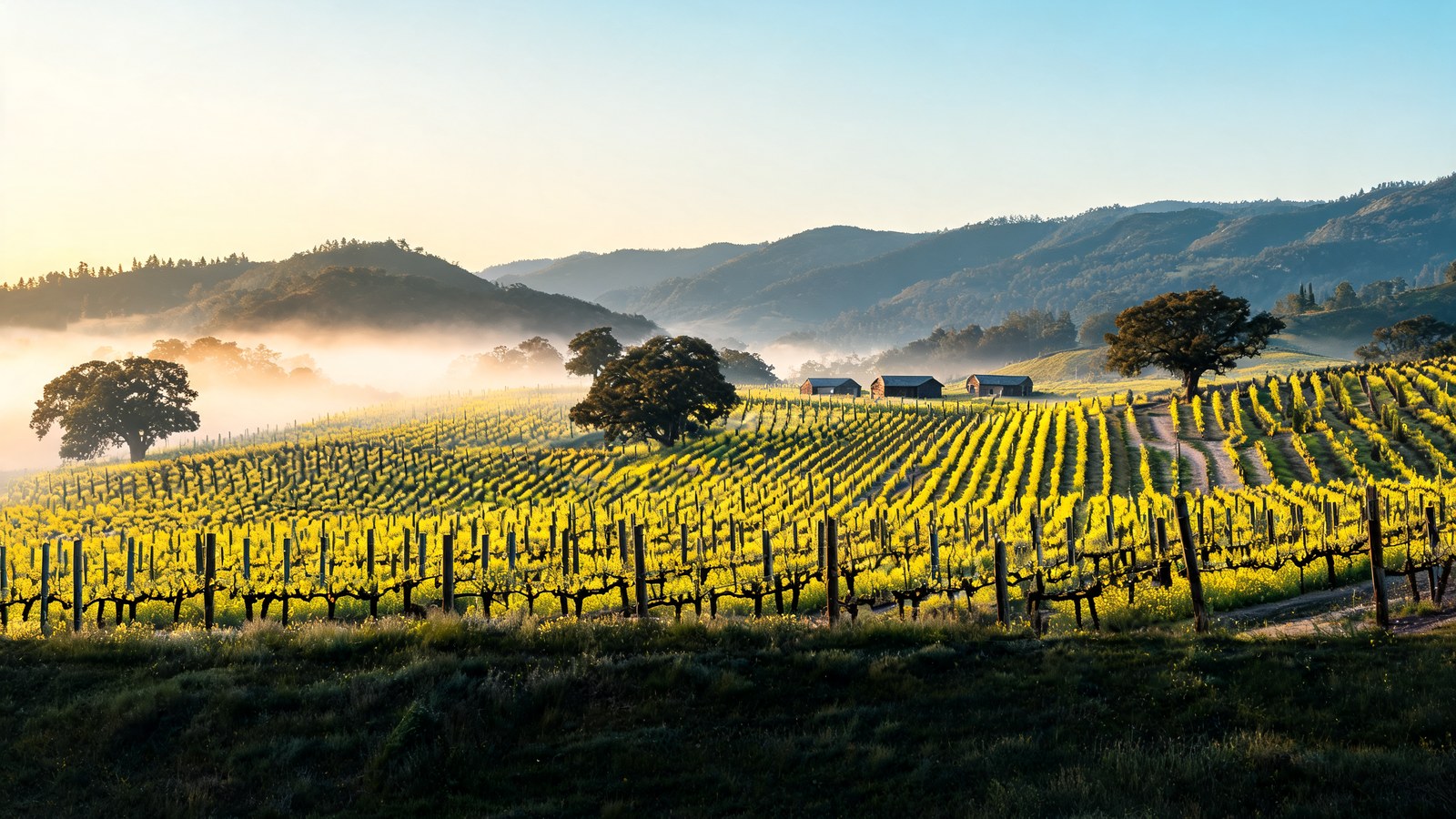


Most people who visit Napa Valley have the same trip. They drive Highway 29, stop at whichever tasting room has a sign out front, wait in a walk-up line for forty minutes, pay thirty dollars a person for four pours, and go home having spent two thousand dollars on a weekend that felt vaguely like an airport lounge with better scenery. They call it a wine trip. It isn't, really.
The wine country trip worth having — the one where you're eating lunch under a pergola at a working estate that doesn't advertise, tasting a barrel-aged Cab directly from the winemaker who made it, watching the afternoon light change over the Mayacamas mountains — that trip requires a little more than a GPS and a willingness to day-drink. It requires knowing which doors exist.
This is the route I'd give someone flying into SFO with two or three days and a genuine interest in drinking well. Not the most famous names. Not the most Instagrammed labels. The ones that deliver a real experience — the properties, the appointments, the timing, and the honest difference between Napa and Sonoma that most people conflate until they've been to both.
Napa vs. Sonoma: You Need to Understand the Difference First
People say "Napa/Sonoma" as though they're interchangeable. They're not. They share a county border and a general association with California wine, and that's roughly where the similarity ends.
Napa Valley is concentrated, prestigious, and built for the wine experience. The valley is thirty miles long and five miles wide at its widest point. Everything — the grand estates, the Michelin-starred restaurants, the wine country hotels — is stacked along Highway 29 and the Silverado Trail, which run parallel the length of the valley. Napa is where the world's most expensive California Cabernet Sauvignon comes from. It is structured, accessible, and serious about what it does. It is also, in peak season, crowded in a way that requires planning to navigate around.
Sonoma County is larger, more varied, and considerably less manicured. It covers seventeen distinct American Viticultural Areas — from the cool, fog-influenced Sonoma Coast where Pinot Noir and Chardonnay thrive, to the warmer Dry Creek Valley known for Zinfandel, to the Russian River Valley, which produces some of the finest Pinot Noir in the world. Sonoma feels less curated. The roads are slower, the tasting rooms less polished, the overall experience more agricultural and less theatrical. That's not a criticism — for many travelers, it's exactly the appeal.
The short version: if you want world-class Cabernet Sauvignon and a polished luxury experience, Napa is the answer. If you want a wider range of varietals, a more relaxed pace, and a setting that still feels like actual wine country rather than wine country theme park, Sonoma rewards the extra navigation.
A well-constructed 3-day trip does both. A 2-day trip should pick one and go deep rather than trying to cover both at a skim.