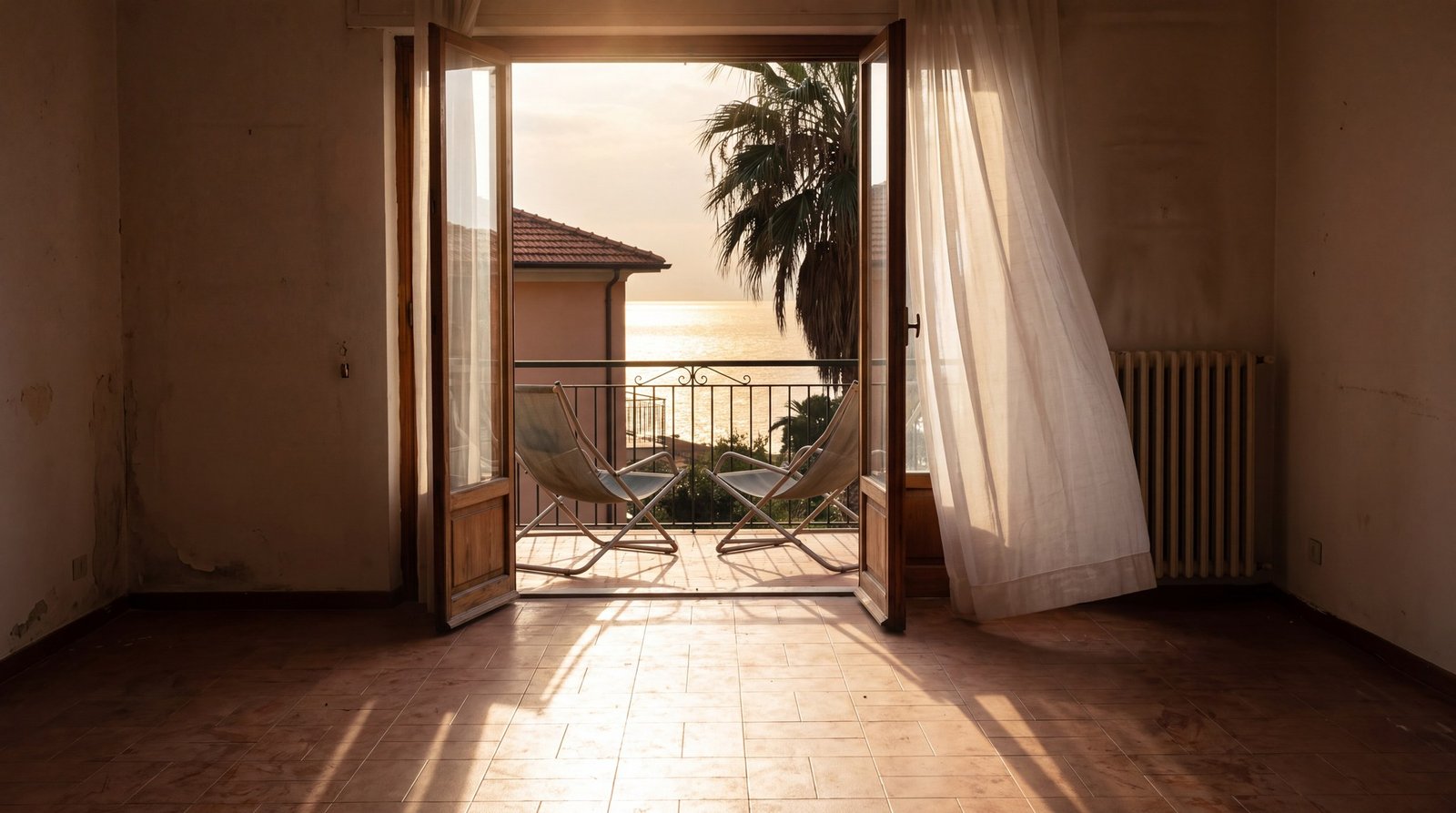
"Partial ocean view," "garden view," "newly renovated," "intimate property" — a translation guide for the language hotels use, what it signals, and the three questions worth asking before you book any room.
Mark SoleFounder & Travel Director, Hit Your Mark Travel
Share
Hotel room descriptions are written by marketing departments. This is not a criticism — it is a useful fact to keep in mind when you are reading them. The goal of a room description is to make you want to book the room, not to give you an accurate and complete picture of what you will actually experience when you open the door. The gap between those two things varies by property, but it is almost always present.
Understanding the language — what specific terms signal, what they reliably obscure, and what they deliberately leave ambiguous — is one of the more practical things a traveler can learn. The difference between "ocean view" and "ocean front" at a beachside resort can be the difference between waking up to water and waking up to the car park. The difference between "newly renovated" and "recently refreshed" can be the difference between a genuinely updated room and one with new curtains over the same 2007 infrastructure. These distinctions are worth knowing before you book.
"A room description is written to make you want to book the room, not to give you a complete picture of what you'll find when you open the door. The gap between those two things varies by property but is almost always present."
The view hierarchy — and where it breaks down
View descriptions are the most consequential and most abused category in hotel marketing. Here is how to read them, from the most reliable to the most elastic:
Oceanfront
The room faces the ocean directly, usually with no significant obstruction between the window and the water. At well-run properties, this is exactly what it says. At over-built resorts, "oceanfront" can mean the room faces a strip of beach 40 meters wide with significant cross-building sightlines. Worth verifying by checking the property map if the resort is large.
Ocean View
The room has a view of the ocean from the window or balcony, but it may be angled, partial, or require standing at a specific position to see it clearly. "Ocean view" is a genuine category at most properties — better than garden or city view — but significantly different from oceanfront. The view can be excellent or it can be the corner of a swimming pool and, behind it, the ocean. Photos are essential.
Partial Ocean View
A sliver of water is visible. Possibly through a gap between two buildings. Possibly from one corner of the balcony if you lean. "Partial ocean view" is a marketing category that exists to extract a small premium over "no view" while delivering approximately no view. If the partial ocean view rate is meaningfully higher than the garden view rate, the garden view is almost always the better value.
Garden View
The room faces the hotel grounds — typically a pool, garden, or interior courtyard. At many properties, garden view rooms are the quietest on the property (no road noise, no beach noise), often the best for sleep, and genuinely pleasant. The category is under-valued relative to ocean view and frequently a better room for travelers who aren't spending significant time on the balcony.
Resort View / Pool View
The room faces the pool or main resort amenities. Scenic during the day; potentially loud until 10pm. At family resorts, avoid. At adult-oriented properties, the views can be genuinely appealing. The noise variable is the one to verify — it is never mentioned in the description.
City View
The room faces the city skyline. At urban towers where the view is genuinely dramatic — Manhattan from a high floor, Hong Kong harbour, the Dubai city grid at night — this is a premium category that delivers. At mid-rise urban hotels where "city view" means the building across the street, it is the polite alternative to "no view."
Renovation language and what it doesn't tell you
Renovation descriptions are the second-most misleading category in hotel marketing, because they signal improvement without specifying scope, date, or what was actually changed. A few translations:
"Newly renovated" means the renovation happened recently — but "recently" is not defined and the scope is unspecified. A newly renovated room might have a completely replaced bathroom, new flooring, new furniture, and current HVAC. It might also have new soft furnishings over the original 2009 bones. Ask what specifically was renovated and when. A good property will tell you. An evasive answer tells you something.
"Recently refreshed" means soft furnishings, artwork, and possibly paint. The structure and systems are the same. This is not a renovation; it is cosmetic maintenance. It is not necessarily bad — a well-kept older room can be excellent — but "refreshed" should not be read as "renovated."
"Phased renovation" means some rooms have been renovated and some haven't. If you're booking a property mid-renovation, ask specifically whether the room you're booking has been completed. The answer determines whether you're in a new room or in the old inventory waiting for its turn.
"Classic rooms" at a property that also has "deluxe" or "superior" categories often means unrenovated. This is not universal — some properties use "classic" as a genuine design category — but when it appears alongside newer-sounding categories at the same property, it frequently means the rooms that haven't been touched yet.
Property descriptor words worth decoding
Beyond individual room descriptions, the language used to describe a property itself carries information:
"Intimate" means small — typically fewer than 40 rooms. This is often a genuine selling point: more personalized service, quieter atmosphere, less institutional feel. It can also mean limited amenities, one restaurant with no alternative, and a pool that fits six people comfortably. Whether "intimate" is an asset depends entirely on what you want from the stay.
"Boutique" is the most overused word in hotel marketing and has no consistent meaning. It signals an aspiration toward distinctive design and personal service. Whether it delivers either requires verification. Every independent hotel with fewer than 100 rooms calls itself boutique. Most aren't.
"Steps from the beach" can mean 30 steps or 300. At a property that is genuinely beachfront, they don't need to say "steps from" — they say "on the beach." The phrase "steps from" is the hedge. Ask for the actual distance, and ask whether there is a road to cross.
"Vibrant neighborhood" means busy, potentially loud, and almost certainly urban. At a city hotel, this is information rather than a warning. At a beach or resort property that uses this language, read it as a note about noise and activity level.
"Convenient to attractions" is the hotel telling you that the location is not the selling point. What they mean is that you can get to where you actually want to be in a reasonable amount of time, possibly with a taxi. This is not necessarily a problem — many excellent hotels are not in prime locations — but it should be read as a concession rather than a feature.
"When a property doesn't lead with location, they're telling you the location isn't the point. That's not always a problem. But it should be read as a concession, not a selling point."
The three questions worth asking before booking any room
Most booking platforms don't give you a way to ask questions — which is one of the reasons most travelers book the wrong room. When you have the ability to communicate with a property before booking (through an advisor, through a direct phone call, or through a pre-booking inquiry), three questions resolve most of the uncertainty:
Can you tell me specifically what the view from this room looks like? Not the category — the actual view from the specific room type. What direction does it face? What is between the window and whatever you're looking at? Is there a balcony, and is it usable? This question, asked directly, produces useful information that the description doesn't contain.
What floor are these rooms typically on, and is there an option to request higher? Floor affects view, noise, and light. An ocean view room on the second floor is a fundamentally different experience from the same category on the eighth floor. Most properties will accommodate floor preference requests with advance notice — but you have to know to ask.
Has this specific room type been renovated, and when? Not the property in general — this room type. If the property is mid-renovation, confirm that the room you're booking is on the completed side of that work. This is the question most travelers don't think to ask and the one that prevents the most significant disappointments.
The answers to these three questions give you more useful information about what you're booking than any description on any platform. A property that answers them directly and specifically is demonstrating the quality of its service before you've even arrived. A property that deflects, equivocates, or answers with marketing language instead of facts is demonstrating something as well.
How we handle this for clients
Part of the value of booking through an advisor is that these questions have already been answered before the reservation is made. We know the floor plans, the renovation history, and the specific room positions at the properties we recommend most often — because we correspond with their management and collect feedback from every client who stays. When we recommend a room category, we're recommending a specific experience, not a marketing description.
Where the Wording Costs the Most
Room-category language does the most damage where the categories genuinely differ. In the Maldives, "overwater" covers villas at opposite ends of both the price range and the lagoon.
Beach and island planning covers the questions worth asking before a category is booked sight unseen.
About the Author
Mark Sole
Founder & Travel Director
Mark maintains direct relationships with the general managers at the majority of the properties he recommends. The translation guide here reflects two decades of reading room descriptions against what clients actually found when they arrived — and the patterns that repeat.