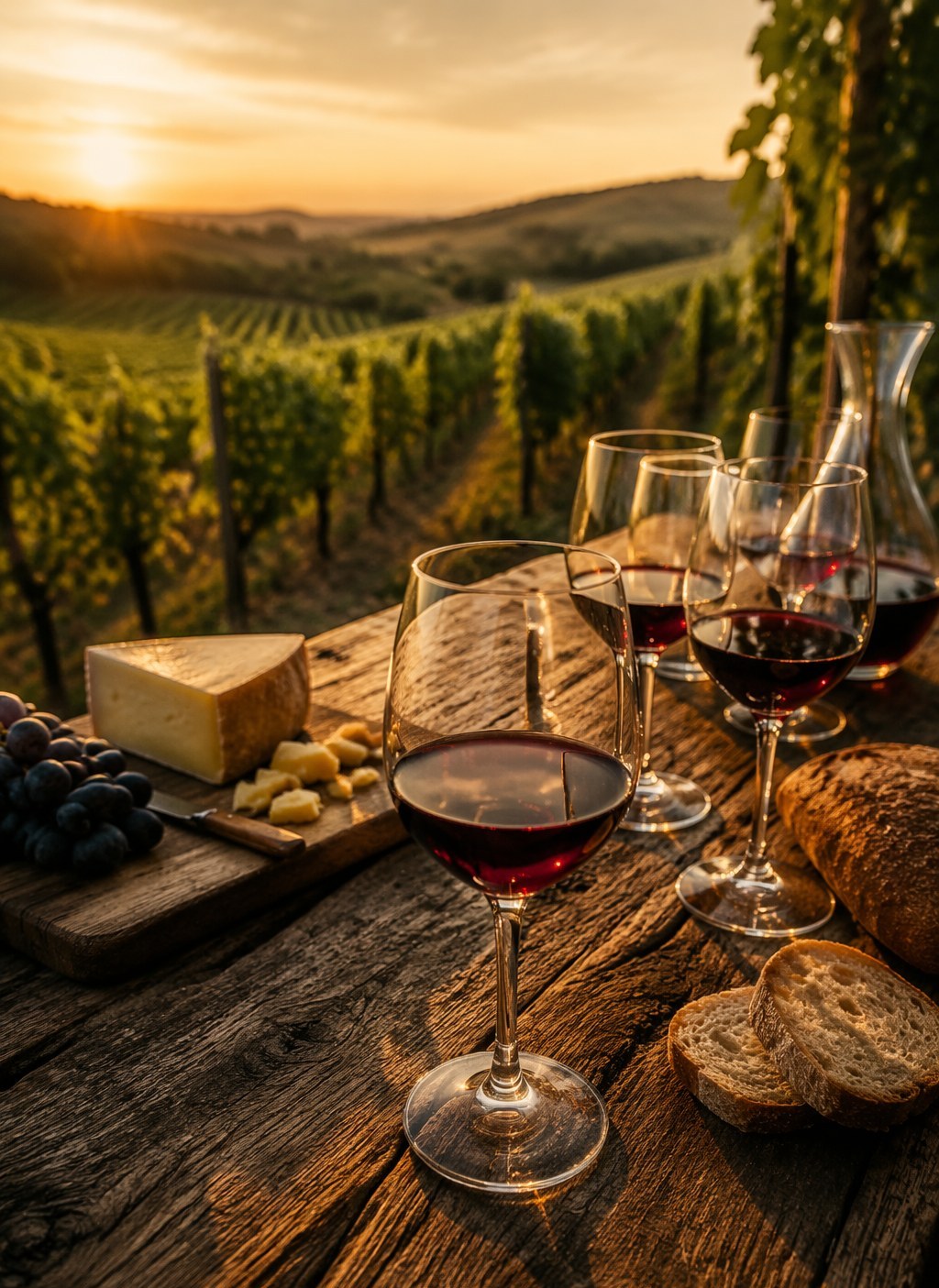


In 1979, a French wine writer in Paris — tasting blind — confused an Oregon Pinot Noir from a tiny winery called Eyrie Vineyards for a top Burgundy. He reportedly asked to re-taste it. The second result confirmed the first. The story circulated. Joseph Drouhin, one of Burgundy's most respected négociants, flew to Oregon to investigate. He bought land. He planted Pinot Noir. He eventually built a winery — Domaine Drouhin Oregon — that still produces some of the most elegant Pinot Noir in the Western Hemisphere.
That story is now fifty years old. The Willamette Valley has spent those fifty years quietly becoming one of the world's significant Pinot Noir regions, and most American wine travelers still haven't been. They've done Napa. They've done Sonoma. The Willamette Valley remains, for now, the thing serious wine drinkers know about and most vacation planners don't.
It won't stay that way much longer. This is the route worth doing while it still feels like a discovery.
Why Willamette Produces the Pinot It Does
Understanding what makes the Willamette Valley distinctive doesn't require a viticulture degree, but one climate fact matters: the valley sits at roughly the same latitude as Burgundy, France, and experiences a similar maritime climate — cool summers, moderate rainfall, and a long, slow growing season that Pinot Noir requires to develop complexity rather than just ripeness.
Pinot Noir is a notoriously difficult grape. It's thin-skinned, prone to disease, sensitive to heat spikes, and quick to become jammy and overripe in warmer climates. The varieties that thrive in Napa — Cabernet Sauvignon, Zinfandel, Merlot — would overpower Pinot. The Willamette Valley's relative coolness is not a limitation. It is the point.
The soils add a second layer of distinction. The Dundee Hills are dominated by ancient volcanic Jory soil — deep red, well-drained, nutrient-poor in a way that stresses vines and concentrates flavor. The Chehalem Mountains and Ribbon Ridge have more marine sedimentary soils. Eola-Amity Hills are influenced by the Van Duzer Corridor, a gap in the Coast Range that funnels cool Pacific winds into the valley each afternoon and drops temperatures dramatically during ripening. Each sub-AVA produces a distinctly different expression of Pinot Noir from the same grape. That variation — the ability to taste what a place is doing to a wine — is what makes the Willamette Valley genuinely interesting to spend time in.
What you will not find here is Napa's Cabernet Sauvignon, its grand château architecture, or its luxury resort infrastructure. What you will find is something that feels more like the French countryside than any wine region in the United States: small family estates, working vineyards, winemakers who are often also the people pouring for you, and a scale of hospitality that hasn't yet been organized around tour buses.