The case for staying longer, covering less ground, and returning from a trip with something more than a list of places visited. Why slower travel almost always produces the better experience — and costs less than most people assume.
Mark SoleFounder & Travel Director, Hit Your Mark Travel
Share
Slow travel is a phrase that has been used long enough to accumulate a certain kind of lifestyle baggage — images of freelancers working from Bali, digital nomads on month-long residencies, gap-year travelers staying in one place until the money gets thin. This association has obscured the underlying argument, which is straightforward and applies regardless of how much time or money you have: within any given trip, spending more time in fewer places almost always produces a better experience than spending less time in more places.
This is not a fringe position. Most travelers who have done both versions of the same destination arrive at it independently, without prompting. Ask someone who spent three nights in Kyoto and someone who spent eight. Ask someone who did a week in Rome and someone who spent two days in Rome before moving on to Florence. The longer stay almost always produces the memory. The shorter stay almost always produces the photograph.
"The experiences that stay with you twenty years later were almost never the things you planned. They were the second afternoon when you had nothing scheduled, the wrong turn that led somewhere better, the conversation that started because you had been in the same café for long enough to become a regular."
What time actually buys
The first day in any new place is orientation. You find your bearings, you navigate the immediate geography around where you're staying, you do the obvious things because they're obvious and you haven't found the less obvious ones yet. This is not wasted time — it's necessary — but it is not the time that produces the memories.
The second day is when a place starts to become legible. You know which way is north. You've been to the market and eaten one meal that wasn't near your hotel. You have a rough sense of the neighborhood. On a two-night stay, this is your last day, and you leave before using what you just learned.
The third and fourth days are when travel becomes something different from tourism. You return to the restaurant you liked. You know the name of the person behind the bar. You walk somewhere without the phone because you have a rough map in your head now. An unscheduled afternoon doesn't produce anxiety because you're not trying to optimize a short window — you can simply walk until something interests you. The encounters that happen in this condition are the ones you still talk about.
The experiences that stay with you twenty years later were almost never the things you planned. They were the second afternoon when you had nothing on the schedule, the wrong turn that led somewhere better, the conversation that started because you had been in the same café long enough to be recognized. These things require time to accumulate. They cannot be scheduled into a forty-eight-hour stop.
The financial argument — which is not what most people expect
The instinct is that covering more places must cost more than covering fewer, because you are doing more. This is not consistently true. Transit is expensive: flights, trains, taxis, transfer hotels, the logistical cost of packing and unpacking and orienting to new locations. A trip that visits six destinations in two weeks has six sets of airport transfers and six orientation costs. A trip that visits two destinations in the same period has two.
Weekly and extended-stay rates at hotels are often meaningfully lower than the per-night rate — a property that costs $500 per night at two nights may be $380 per night at seven. At the luxury end of the market, where weekly rates can represent savings of 25 to 35 percent over the nightly rack rate, this effect is substantial. A traveler who stays at one excellent property for a week may spend less than a traveler who stays at three properties for two nights each in the same quality tier.
The food spending pattern also shifts. On short stays, most travelers eat every meal outside — there's no kitchen, no market, no rhythm to the day that accommodates anything else. On longer stays, you naturally find a café where you have breakfast, a market where you buy fruit, a bar where you drink wine in the late afternoon before deciding where to eat. These rhythms cost less than three-restaurant-meals-per-day tourism, and they produce the actual texture of being in a place rather than visiting it.
The access argument
At the better end of the market — the hotels, restaurants, and experiences that require booking, relationships, or introduction — duration of stay changes what becomes available to you.
A hotel concierge's most useful relationships are not deployed for the guest arriving tonight and leaving in two days. They go to the guest staying a week, because the concierge has time to understand what they actually want and to make a recommendation worth making. The chef who sometimes comes out to speak with guests at a Michelin-starred restaurant in a small Italian town does it for the table that has been at the property for five days and eaten at the restaurant three times — not for the table that found the place on TripAdvisor for one night.
This applies further down the quality scale as well. The shop owner in a market town in Provence who opens a private room in the back for people worth showing is not opening it for the tour bus stop. They are opening it for the person who has been wandering the market for an hour, asked an intelligent question about something, and is clearly here because they actually care. That person is more likely to be a slow traveler than a fast one.
What you give up — honestly
Slower travel means seeing fewer places on any given trip. This is the real cost, and it is not trivial. If you have always wanted to see the Colosseum and the Sagrada Família and the Eiffel Tower, a slow travel approach means you may have to choose among them for a given trip rather than hitting all three in two weeks. For travelers with a specific list — a bucket list in the literal sense — this can feel like the wrong tradeoff.
I would argue that the list itself is worth examining. The Colosseum is extraordinary. It is also one of the most crowded tourist sites in Europe. Seeing it as a single-day stop in a Rome sprint is a specific kind of experience — a check next to an item — that is genuinely different from seeing it as the second or third time you've walked past it, on a morning when you've already oriented to the neighborhood and know where you want to sit with coffee afterward. One version produces a photograph. The other produces a relationship with a place.
The counter I hear most often is: "I can come back." This is true, and it is also the most powerful argument for the slow travel approach. If you go to Rome once and cover it at speed, you have seen it once. If you go to Rome once and stay for a week and leave before you're ready to go, you will almost certainly return — and on the second visit, you start from a baseline of already knowing the place. The return trip is worth more than the first trip done quickly, because you arrive with a foundation.
The practical version
Slow travel doesn't require a month. It requires an honest reckoning with what a given trip is for, and a willingness to measure it differently than by destinations covered.
A two-week trip to Tuscany and Rome — four nights in Florence, four nights in a hill town, four nights in Rome — is a slow-travel itinerary. It covers two cities and one region. It also produces, consistently, the kind of trip that people come back from and immediately start planning the return.
The test I use is simple: at the end of the trip, do you feel like you left too early? If the answer is yes, the trip was the right length in the right place. If the answer is that you're glad you moved on when you did — that you were ready — then you probably stayed the right amount of time, but the next question is whether the next place also got enough. Most people, given honest reflection, can identify the stops in a past trip where they stayed too briefly and the stop where they finally exhaled. Slow travel is just building more of the exhale into the plan.
How this shapes the itineraries we build
When we plan a trip, the first question about pacing is always: what's the minimum number of moves required to see what this client actually wants to see? Every transit is a cost in time, money, and energy. We work to reduce the number of moves and increase the time at each stop — not for aesthetic reasons, but because the evidence from clients we've worked with for years is consistent: the trips they remember were the slower ones.
Destinations That Reward Staying Put
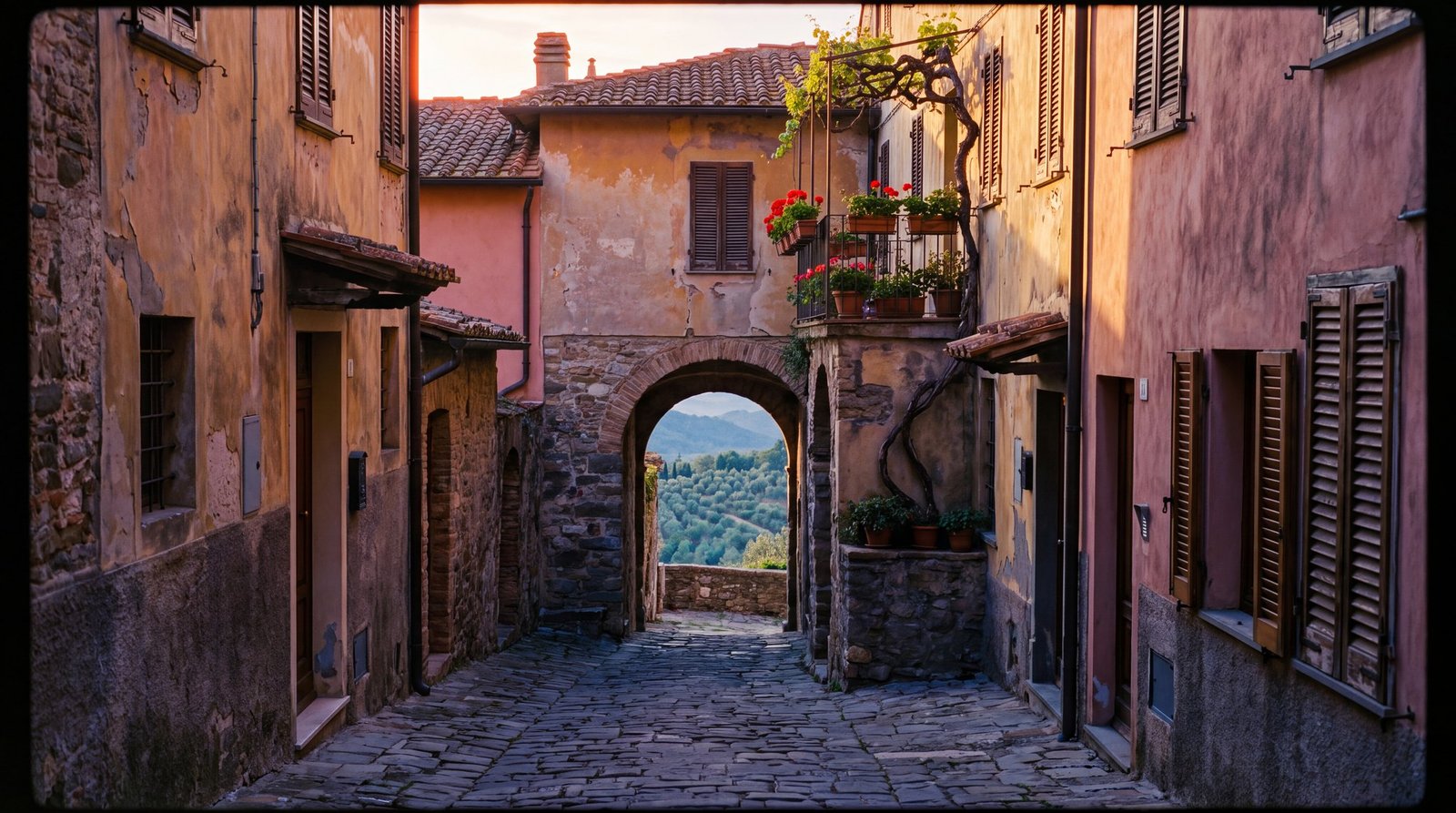
Tuscany and the rest of Italy is the clearest case: two or three nights in one agriturismo beats six one-night stops, and it costs less to do.
Portugal rewards the same approach at a smaller scale, and culture and history travel covers the guide side of staying somewhere long enough to want one twice.
About the Author
Mark Sole
Founder & Travel Director
The slow travel argument is the one I make most consistently and have to make least forcefully — most clients have already figured it out from their own past trips. What I mostly do is give them permission to act on what they already know.