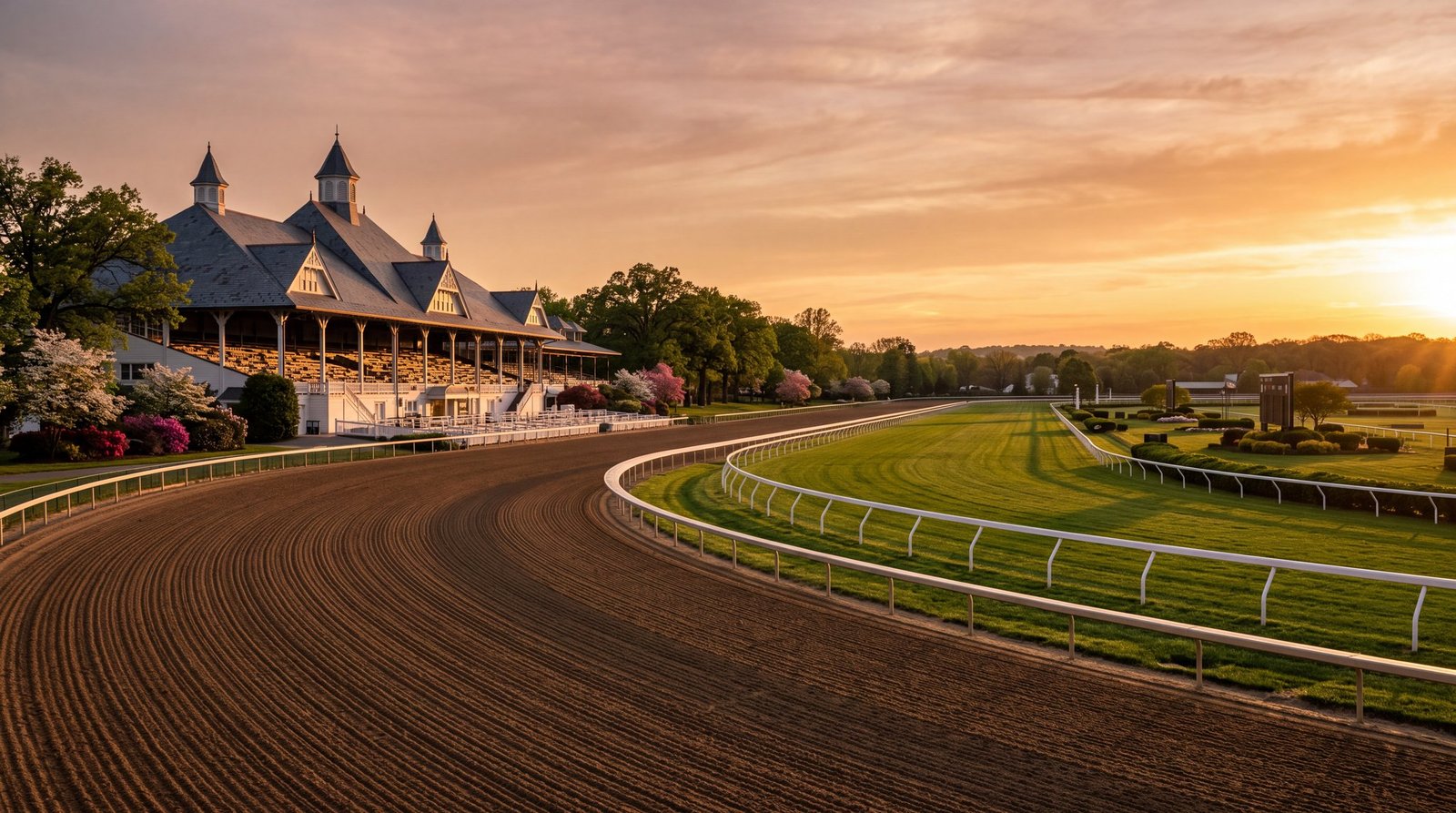
The first thing to understand about the Kentucky Derby is that the race is not the point. The race is two minutes long — roughly the time it takes to read this paragraph — and it happens at approximately 6:57pm on a day that began well before the gates opened. If you came for the horses, you came for the right reason. But if you came only for the horses, you have misread the event.
The Derby is a full-day American pageant that happens to have a horse race at its center. It is the hats and the mint juleps and the impossible traffic and the "My Old Kentucky Home" playing over 150,000 people going quiet in a way that a crowd that size rarely does. It is the barnstable morning before the gates open and the Stakes races building the afternoon toward the one that matters. It is the specific electricity of a crowd that has been building toward a single moment for six hours finally feeling that moment arrive — and then being over before you've entirely registered that it began.
Done well, it is one of the great sporting and social events in the world. Done poorly — wrong ticket tier, wrong logistics, wrong expectations — it is an expensive, crowded, hot Saturday in Louisville that leaves you wondering what the fuss was about.
The tier question — which ticket actually matters
Churchill Downs runs a tiered access system that produces genuinely different experiences at each level, and the choice of tier is the single most consequential planning decision for the Derby.
The Infield is general admission standing access to the grass inside the track. It is attended by approximately 80,000 people, most of whom arrive early, drink continuously, and see very little of the actual racing because the sightlines from the infield to the track are poor. The infield is a party. It is a specific kind of American party — enormous, enthusiastic, chaotic — and some people find it exactly what they wanted. If you know you want the party and not the race, the infield is the right call. If you have any interest in the horses, the infield is the wrong tier.
The Grandstand is assigned outdoor seating with track views. This is where the race becomes watchable as a race. The seats vary significantly by position — the finish-line sections are the ones worth having — and the outdoor exposure means heat and sun throughout the afternoon. Better than the infield for the actual experience of the sport; still an outdoor environment in May Kentucky, which means temperatures in the high 20s Celsius with significant humidity.
The Turf Club is indoor climate-controlled access on the fourth floor of the grandstand with reserved seating, a full bar and catering service, and an excellent view of the track. This is the pivot point. Below this tier, the Derby is a crowd event with a race in it. At the Turf Club and above, it becomes a hospitality event that happens to include the crowd.
Stakes Suites are private enclosed boxes at track level, each accommodating between eight and twenty guests, with dedicated host service, premium catering, and a direct sight line to the track that is among the best views available anywhere on the grounds. This is the tier we use for client groups, and it is where the Derby experience — the combination of proximity to the track, the quality of the hospitality, and the social structure of a private space — becomes what the event is capable of being.
Millionaires Row is the historic clubhouse level at the top of the grandstand — the most prestigious address at Churchill Downs, with the iconic twin spires directly above and the finishing stretch directly below. It is the tier that photographs as "the Derby." Entry is by membership or invitation; access for general purchase is limited and substantially priced. For a first Derby attendance, Stakes Suites deliver the comparable experience with more reliable availability.
The morning and the buildup
Gates at Churchill Downs open at 9am on Derby Day, and there is a genuine reason to arrive early that goes beyond beating the crowds. The barns open for public access in the morning hours, and watching the Derby horses being walked, groomed, and prepared in the hours before post time is a part of the experience that the crowd-focused coverage of the event almost never captures. The horses are magnificent animals — seventeen hands or taller, muscled in a way that photographs don't adequately communicate — and seeing them at close range in the barn area before the day escalates into its afternoon pitch is one of the specific things that separates the Derby from watching it on television.
The Stakes races on the undercard begin mid-morning and continue through the afternoon, building the day in a structured way that keeps the racing narrative moving while the crowd assembles. By 2pm, the track is running at full pace. By 4pm, the atmosphere has shifted into something pre-electric. The hour before post time for the Derby is the hour when the day converts from a very well-organized outdoor party into something specific and irreplaceable.
"My Old Kentucky Home" — the Stephen Foster song that has been played before the Derby since 1921 — is performed by the University of Louisville Marching Band in the post parade, with the horses on the track and 150,000 people in the stands. The crowd sings. Even people who have never heard the song and don't know the words find themselves quiet in a way that is not manufactured and cannot be fully anticipated. This is one of those moments in event attendance that cannot be conveyed secondhand; it simply happens, and if you are there for it, you understand what the Derby is that you could not understand from the outside.
The race
Twenty horses, a 1¼-mile track, and a time between two minutes flat and two minutes four seconds for any winner worth remembering. The field loads into the starting gate in a process that takes several minutes — each horse managed into its numbered stall, the gate crew visible at each position — and then the bell rings and the gate opens and two minutes of compressed, improbable athleticism unfolds down the front stretch, around both turns, and up the final straight to the wire.
The sound is the thing that surprises first-time attendees. The crowd builds from the moment the gates open, reaching a volume that is physically felt rather than simply heard, and beneath it — if you are at track level — is the sound of the horses themselves: the hoofbeats accelerating past the grandstand, a rhythm that is both mechanical and alive, unlike anything else in sport. It is gone before you have entirely registered it. The crowd holds its breath for the photo finish or breaks into noise at a wire-clear winner, and then it's over, and the Derby has happened, and the day has done the thing it was designed to do.
The two minutes feel both too fast and exactly right. You've been waiting for them all day, and when they're over, the day has been worth it — which is not a thing that can be designed or guaranteed by any ticket tier or itinerary. It either happens or it doesn't. At the Derby, it happens.
Louisville before and after
Louisville is a better city than its profile suggests, and Derby weekend is a reasonable excuse to spend two or three nights rather than flying in and out on race day. The infrastructure for visitors has improved significantly over the past decade, and several aspects of the city are worth knowing about.
The Brown Hotel is the historic property in downtown Louisville — opened in 1923, renovated to a high standard, and the home of the Hot Brown: an open-faced turkey sandwich with bacon and Mornay sauce that was invented in the hotel's kitchen in the 1920s and remains one of the specific things you should eat in Kentucky. Book the Brown early for Derby weekend; it fills months in advance and carries the kind of social history that the chain properties around it do not.
21c Museum Hotel is the contemporary option — a boutique hotel built around a rotating contemporary art collection, with one of the better restaurant programs in the city. For travelers who find the Brown's historical atmosphere less compelling than its history, 21c is the alternative that doesn't sacrifice quality.
Bourbon Row on Main Street has consolidated the city's distillery visitor experience into a walkable stretch that includes Angel's Envy, Rabbit Hole, Michter's Fort Nelson, and others. This is worth a half-day before or after the race. The distilleries in the downtown core are urban production facilities designed for visitor experience — different from the rural distilleries of the Bourbon Trail proper, but accessible without a car and high-quality in execution.
For the full Kentucky Bourbon Trail — Maker's Mark, Wild Turkey, Four Roses, Buffalo Trace, Woodford Reserve — plan a separate day or a pre-Derby morning that involves a car and a designated driver. Woodford Reserve in Versailles (roughly an hour from Louisville) is the one most worth prioritizing if you're choosing a single stop: the distillery is on a horse farm on Glenn's Creek, the production tour is genuinely informative, and the setting is the idealized version of Kentucky that the Derby's imagery is trading on.
The logistics worth knowing
Traffic around Churchill Downs on Derby Day is genuinely bad. The area around the track is residential and the road network was not designed for 150,000 people arriving simultaneously. Rideshare drop-off is managed through designated zones, and pickup after the race — when 150,000 people are simultaneously requesting cars — can take an hour or more. The practical solutions: arrive early enough to miss the worst of the pre-race traffic, and either have a planned post-race dinner reservation within walking distance of the track to let the crowds thin before you attempt to leave, or arrange private car service with a specific pickup time and location in advance.
The dress code at the premium tiers is enforced. Derby fashion at the better ticket levels is not optional atmosphere — it is part of the event, and arriving underdressed is conspicuous in a way that affects the experience. The convention for women is a dress or tailored suit and a hat; the more ambitious the hat, the more correct. For men: a suit or sport coat with dress pants, no jeans, no sneakers. The infield has no meaningful dress code. The Turf Club, Stakes Suites, and Millionaires Row do.
The mint julep — bourbon, simple syrup, and fresh mint over crushed ice in a silver cup — is the Derby drink and worth having once for the ceremony of it. Churchill Downs sells approximately 120,000 of them on Derby Day. The official version is made with Early Times bourbon; the premium versions at the Suite level use better bourbon and are the more considered product.
Kentucky Oaks — the Friday race worth adding
The Kentucky Oaks, run the Friday before the Derby, is a Grade I Stakes race for three-year-old fillies and is, by any measure of horsemanship, a race as compelling as the Derby itself. The crowd is smaller — roughly 100,000, compared to the Derby's 150,000 — which means the experience is less compressed, the sightlines are better in comparable ticket tiers, and the logistics are easier throughout. Serious racing fans often prefer Oaks Day to Derby Day. For a first-time visit with a two-night stay, Friday for the Oaks and Saturday for the Derby is the complete experience.