Singita Grumeti: What the Western Corridor Delivers in July
The migration crosses the Western Corridor in July. Here's what the camp delivers in that window — the drives, the animals, the distances, and what separates Grumeti from the other properties in the ecosystem.
Mark SoleFounder & Travel Director, Hit Your Mark Travel
Share
PropertySingita Grumeti — Faru Faru Lodge
LocationWestern Corridor, Serengeti, Tanzania
When to GoJuly — peak migration through the Western Corridor
Nights We BookThree to four
Room to BookCottage Suite — eleven at the lodge, each with a private plunge pool
Best ForMigration, large cats, serious wildlife photography
Not Right ForFirst-time safari travelers; families with very young children
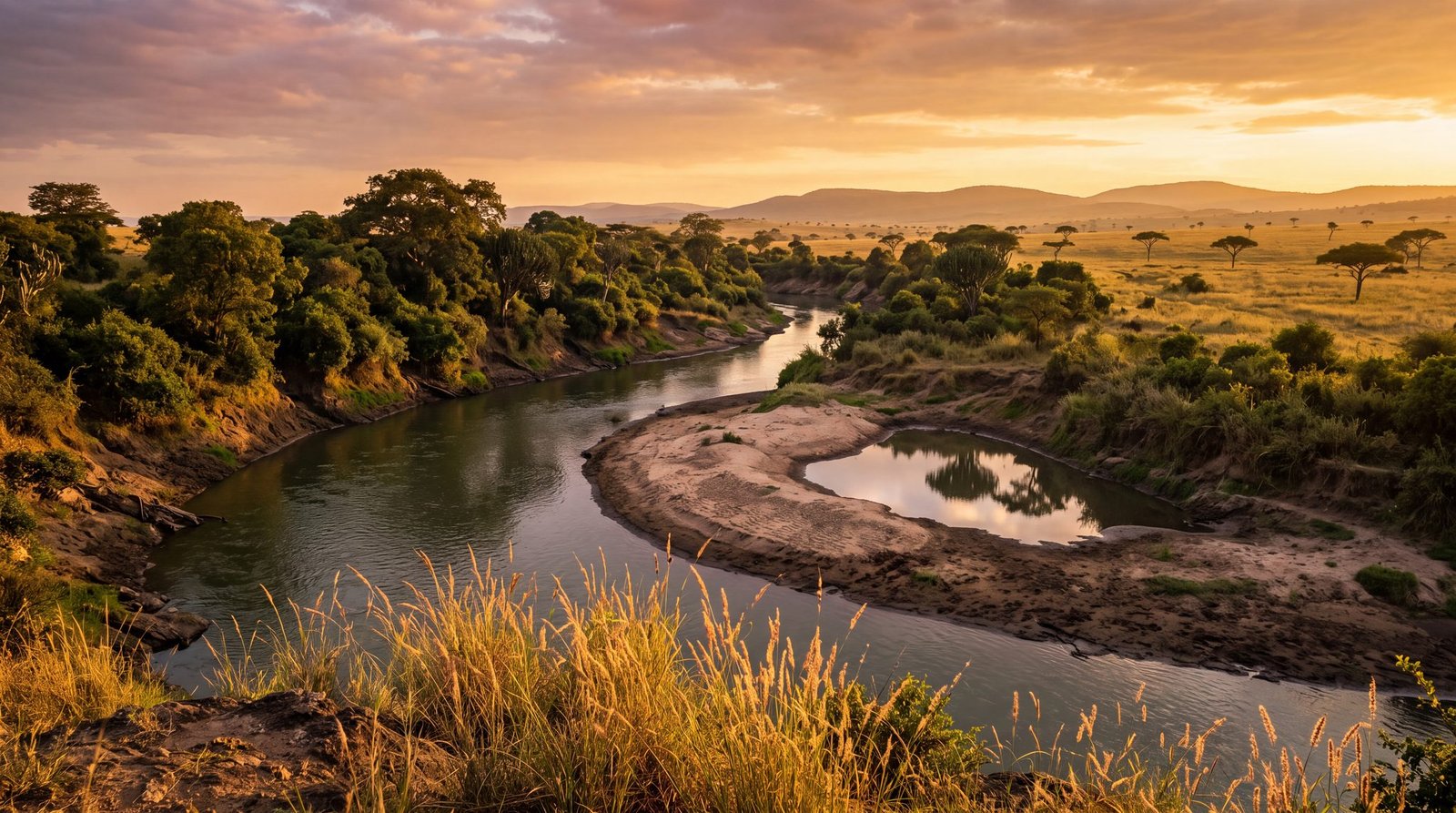
Most Serengeti questions eventually become camp questions. The ecosystem is vast — 14,750 square kilometers — and where you stay determines what you see, when you see it, and how you experience it. The migration doesn't read like a timetable; it moves in response to rain, grass, and predator pressure, and different corridors of the Serengeti hold the herds at different points in the year. July is the Western Corridor. That is where Singita Grumeti sits.
Faru Faru Lodge is the most accessible of the three Singita properties on the Grumeti concession — a 350,000-acre private conservancy that borders the western edge of the national park. "Accessible" here means a short runway landing from the Arusha or Kilimanjaro charter flight, not road access. There are no roads from the main Serengeti camps that you'd choose to drive. You arrive by small aircraft, which delivers you directly into the concession and, for most clients, is the moment the trip becomes real.
"There is a moment on the second morning — the light flat and gold, a pride of lions draped across a termite mound forty meters from the vehicle, not moving, not concerned, not performing — when you understand why people come back to this place year after year and why the photographs never quite replicate it."
Why Grumeti specifically
The Singita name carries weight in safari circles, and it's worth understanding what that weight represents. Singita operates eleven properties across Africa, all of them at the top end of the market — but the Grumeti concession is different from the others because it is genuinely private. The 350,000-acre concession means that every vehicle you encounter in the bush is another Singita vehicle. There are no tourist vans from competing lodges parked around a sighting, no competitive scramble at a kill, no negotiated position among a dozen operators. The concession model changes the quality of each encounter in ways that are difficult to describe without having experienced the alternative.
The second differentiator is the conservation program. Singita runs a substantive anti-poaching and wildlife management operation on the concession — one of the reasons predator numbers are notably high here compared to parts of the national park. The lion population in the Western Corridor Grumeti area is dense and well-studied. The guides know specific prides by name and track record, and that translates directly into the quality of sightings: clients routinely report sitting with a coalition of four male lions for the better part of an hour because the guide knew where they had been sleeping two days earlier.
Arrival and the camp
The flight from Arusha takes roughly an hour on a Cessna Caravan charter. The Grumeti airstrip is a grass strip in the middle of the concession — you step off the aircraft and you are immediately in the bush. The vehicle transfer to Faru Faru takes twenty minutes through open savanna and you will almost certainly see wildlife on the transfer.
Faru Faru itself is built on and around a rocky kopje overlooking a seasonal river. The architecture is low and horizontal — the eleven suites are scattered below the main lodge structure, each with its own private plunge pool and unobstructed views of the riverbed below. The design philosophy is consistent with what Singita does throughout the portfolio: quality materials, minimal visual noise, spaces designed to frame the landscape rather than compete with it.
The main lodge has a lounge, bar, wine cellar, and open dining room. The food at Grumeti consistently surprises clients — genuinely good cooking at a genuinely remote location, not the buffet-in-the-bush that properties at the same price point sometimes produce. The wine program is taken seriously. The cellar has age on it.
The drives
Drives run twice daily: morning departure at 6am, back by 10am for breakfast and rest, afternoon departure at 4pm, sundowner in the field, return after dark. This is the standard safari structure, and Grumeti follows it. What deviates from the standard structure is the flexibility: guides can stop anywhere, follow anything, and there are no roads in the conventional sense — you drive on established tracks but leave them freely when something warrants it.
Guide tenure at Grumeti runs long — a decade or more is not unusual, and that is the kind of tenure that matters. The senior guides know every watercourse, every kopje, every shade tree the lions favor in the heat of the day. One of our clients spent an afternoon tracking a cheetah mother with three sub-adult cubs for ninety minutes across open grassland — not following them, but staying ahead of the direction the guide had predicted. They watched the hunt. The cubs ate. Theirs was the only vehicle there.
The migration in the Western Corridor in July is not the river crossing drama of the Mara — that happens further north, later in the season. What the Western Corridor delivers in July is movement: the columns of wildebeest and zebra pushing north through the grass, the predators following the trailing edges, the landscape visibly alive in a way that still photographs fundamentally underrepresent. Clients come back describing herds that stretched across the entire field of view for several kilometers. The scale is genuinely difficult to process.
What the brochure doesn't tell you
The Serengeti in July is dusty, dry, and warm. The grass has been grazed down to savanna-short in many areas, which is actually better for game viewing — you can see further — but the visual isn't the lush green of the green season brochure photographs. Midday temperatures reach 28–32°C and the vehicles have no air conditioning, because open-sided safari vehicles don't. The heat between 11am and 3pm is real, and the midday rest period isn't optional atmosphere — it's functional.
The nighttime noise at Grumeti is worth knowing about in advance. Hippos work the riverbed below the lodge at night with remarkable volume. Hyenas vocalize near the camp perimeter. This is not a problem — it is, for most guests, one of the better parts of the experience — but if you are a light sleeper or traveling with someone who needs silence to sleep, note it. The insect screens on the suite windows keep everything out. The sounds come through.
Early morning starts are non-negotiable for serious game viewing. A 6am departure in July means leaving before sunrise, which means a temperature drop significant enough to require a fleece or light jacket. Most guests are warned and arrive with one. Some don't. Faru Faru provides ponchos for the cold, which are functional but not the same thing.
Who it's right for
Grumeti rewards travelers who already understand the rhythm of a safari day — early starts, midday rest, the patience required to let an encounter develop on its own timeline. First-time safari travelers sometimes find that the repetition of the daily structure takes half the trip to calibrate to; at Grumeti's price point, that calibration period is an expensive learning curve. I recommend Grumeti for second or third safaris, or for first-timers who have been specifically briefed on what to expect and are traveling for wildlife photography rather than a general Africa experience.
For the right traveler — wildlife-focused, patient, comfortable in remote conditions, interested in conservation as context — Grumeti is among the finest experiences in African safari. The combination of private concession, exceptional guiding, and high predator density produces sightings that are simply not available in the same quality on the shared-vehicle, mixed-access parts of the ecosystem. The premium is real. So is what it buys.
Advisor Note
Singita Grumeti is in our preferred partner network. When we book clients into the property, reservations arrive flagged with preferences gathered during planning — dietary requirements, mobility considerations, photography interests, specific wildlife priorities. Rates, room-category assignments, and add-on activities (bush walks, night drives, conservation experiences) are handled through that relationship. Contact us to discuss availability and the right window for your travel dates.
Grumeti in a Wider Itinerary
The Western Corridor is one chapter of a longer route. Kenya and Tanzania safari planning covers how the Serengeti sections connect across the July–October window.
For the camp-evaluation questions that separate a private concession from a public one, see safari and wildlife travel.
About the Author
Mark Sole
Founder & Travel Director
The Serengeti is the ecosystem I plan into most often, across different seasons and different camps. Grumeti in July remains the benchmark for what a private concession in the migration corridor can produce. This assessment is drawn from our operator relationship with Singita and from the clients we have placed at the property.