
High Arctic

You Are Buying Nights,
Not a Guarantee.

Tromsø, Alta and the Lofoten Islands all sit under the auroral oval, so the sun is rarely the problem. Cloud is. What decides whether you see the northern lights is how many nights you booked and whether the person driving will go two hours inland to find a gap in the sky.

Best Season
Late Sep – March
Best For
Northern Lights
& Winter Coast
The Coast

The Aurora Is a Probability,
Not an Itinerary.

Aurora season in Arctic Norway runs late September to late March, when the nights are dark enough to see one. Tromsø sits at 69°N, directly under the auroral oval, so the limiting factor is cloud rather than solar activity. Five nights is the minimum worth booking; three is a coin toss. Summer is a different trip: midnight sun from late May to late July.

What you buy on an aurora trip is nights under the oval and the ability to move when the sky closes. Nothing else is for sale. Tromsø, Alta and the Lofoten Islands all sit inside the band where the aurora appears on geomagnetically quiet nights, so the question is rarely whether the sun is cooperating, because it usually is. The question is whether the cloud over your particular fjord will break, and whether the person driving has somewhere better to be by nine o'clock.

Tromsø is the default base and earns it: the flight connections, the deepest bench of chase operators, and enough to do on a clouded-out afternoon. It is also a city of around 78,000 people, per Statistics Norway, with the light pollution that implies, which is why a serious aurora night starts by leaving it. Lofoten is the better photograph and the worse odds, sitting in open Atlantic weather. Alta and the Finnmark plateau are drier, colder and quieter in every sense.

The second trip to this coast has no aurora in it at all. From late May to late July the sun does not set on Tromsø, and the same fjords that read as a dark-sky destination in January turn into hiking, sea-kayaking and island-driving country with light that never runs out. People book the two interchangeably and should not. Decide which trip you want, then the month, then the base, in that order — reversing it is how a February week ends up in the wrong valley.
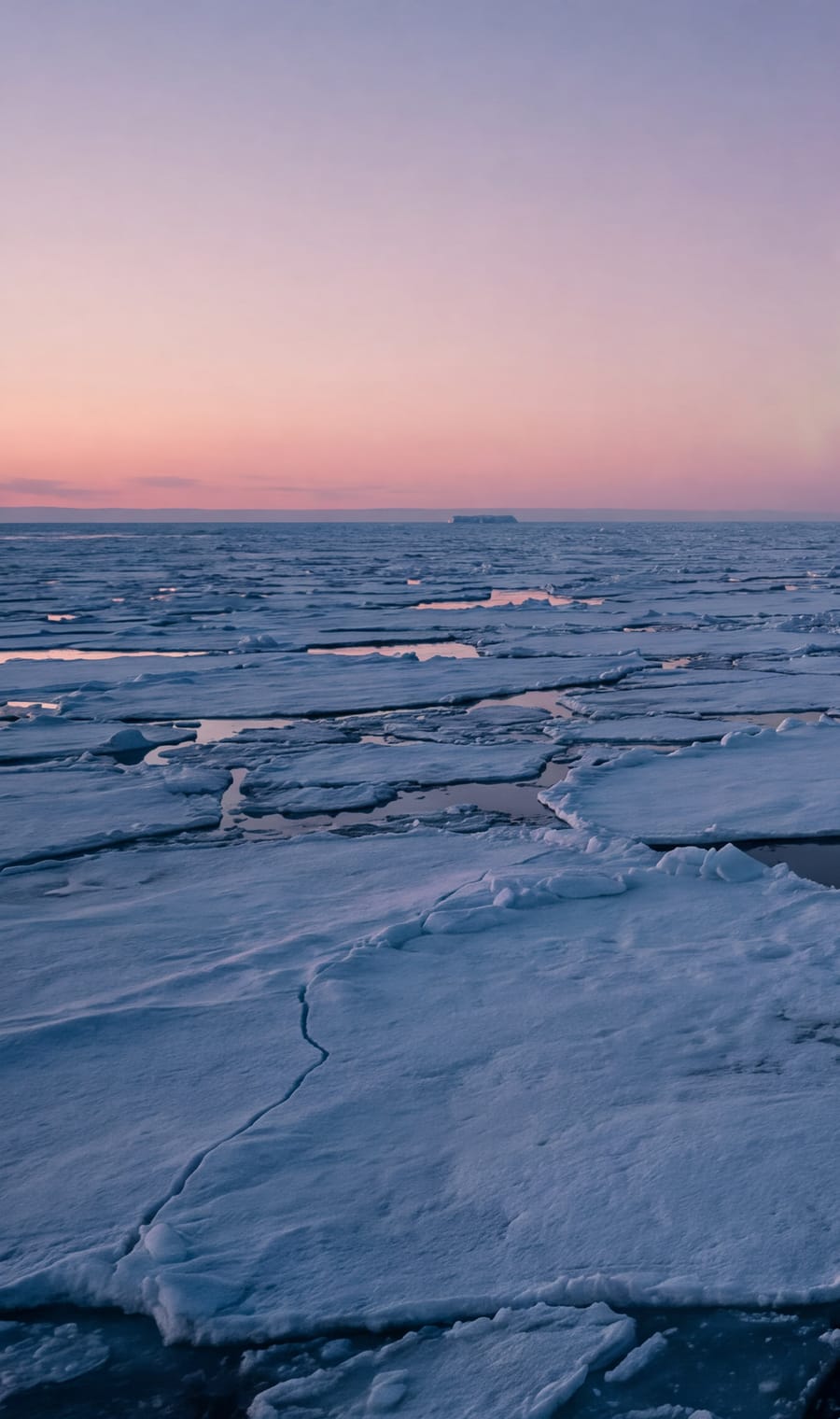
Broken sea ice stretching to the horizon under a pale Arctic twilight
Arctic Twilight · Northern Norway
Where We Send Clients

Six Bases on One Arctic Coast

Arctic Norway is a coastline, not a town. The stretch above the Arctic Circle runs from Bodø to the Russian border, and the base you pick sets your odds, your driving days and what the trip is about on the nights the sky is shut.
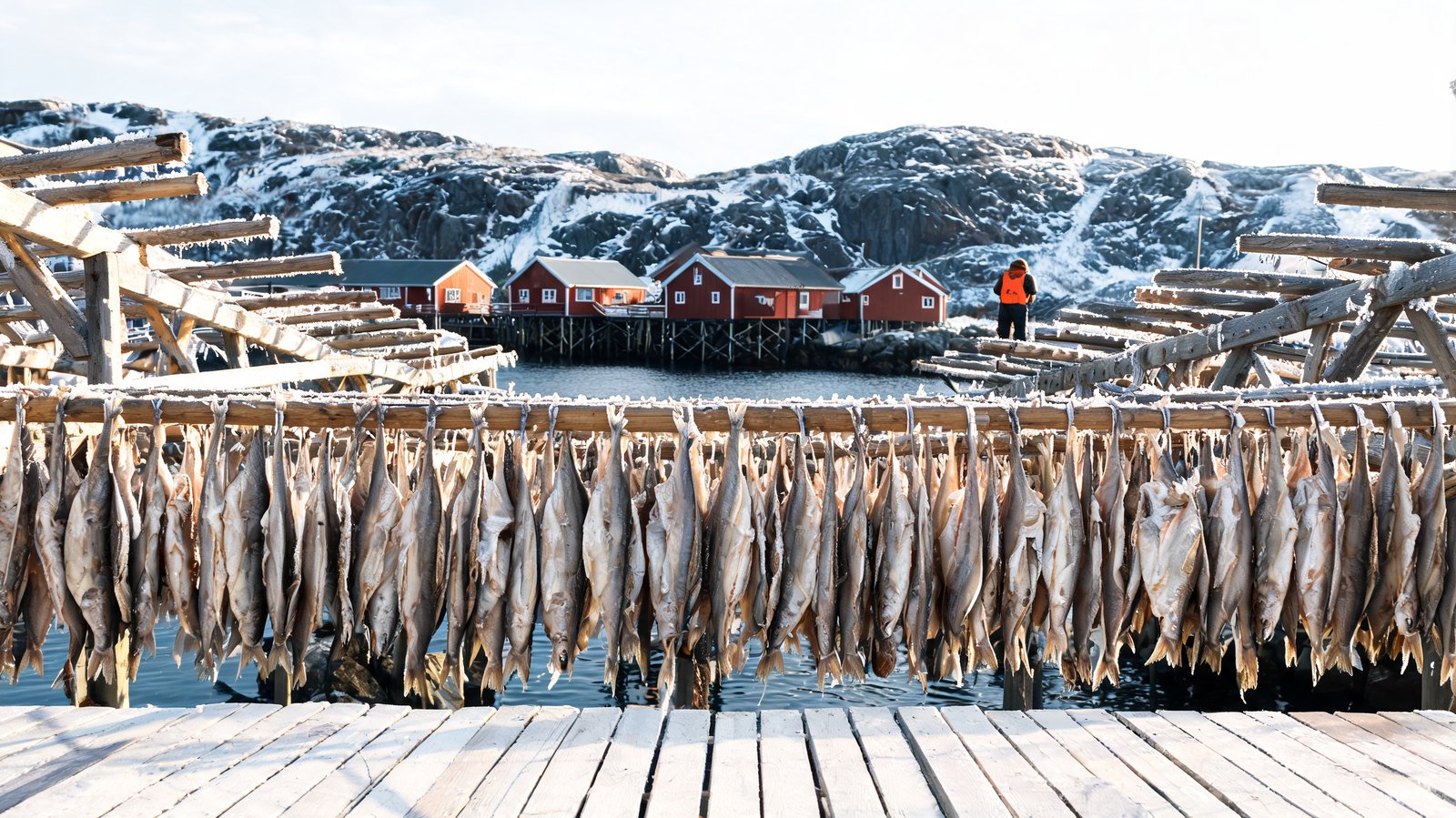
Tromsø
Troms
Tromsø
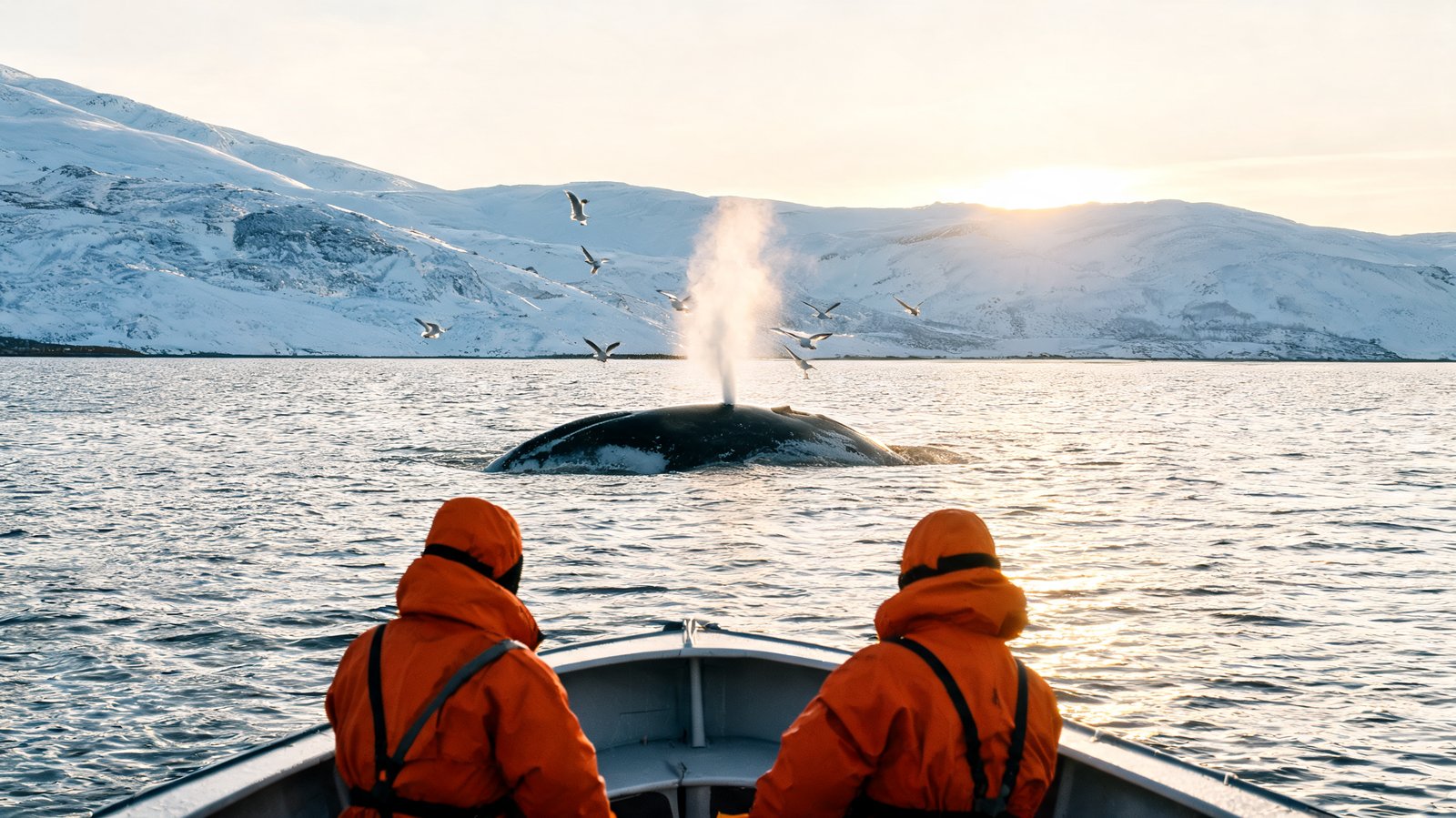
The default base, and the right one for a first aurora trip. It sits at 69°N under the oval, with the best air connections north of Bodø and the largest pool of chase operators. Wintering herring pull humpbacks and orca into the fjords from November into January.
Aurora Base Whales Nov – Jan 69°N
Explore →
The Lofoten Islands, Nordland
Nordland
The Lofoten Islands
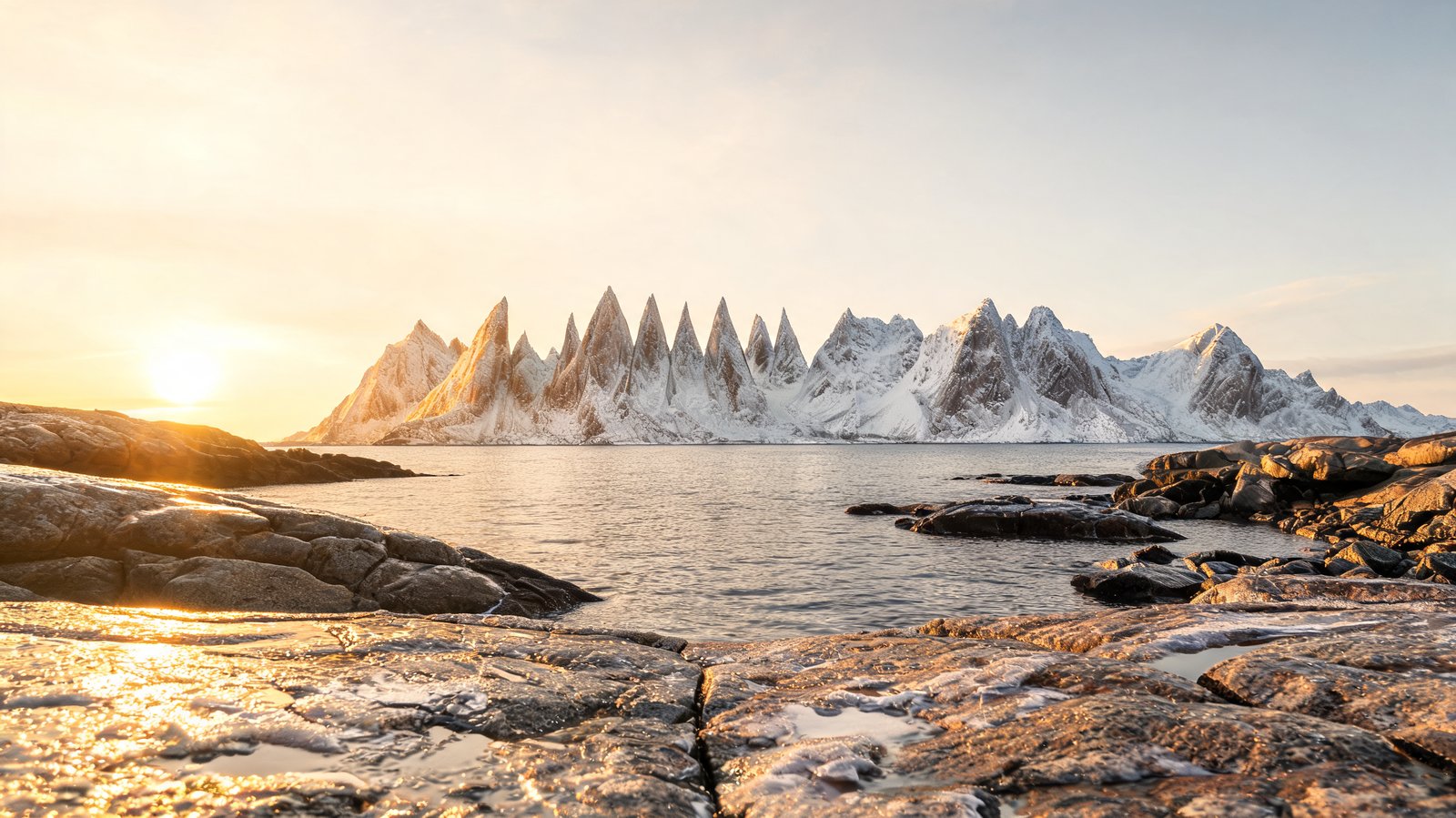
Granite peaks standing straight out of the sea with fishing villages at their feet. The E10 runs the chain: Svolvær to Reine is roughly 130 km, about two hours without stops. Better photographs than Tromsø and worse aurora odds, because open Atlantic weather closes more nights here.
E10 Road Trip Reine Fishing Cabins
Explore →
Senja, Troms
Troms
Senja
Norway's second-largest island, about two and a half hours south of Tromsø by road, carrying a fraction of Lofoten's traffic. Segla and the Tungeneset boardwalk give you the same vertical coastline. Fewer beds, fewer restaurants, and almost no coach groups in winter — plan meals ahead.
Segla Quiet Coast Self-Drive
Explore →
Alta & the Finnmark Plateau
Finnmark
Alta & the Finnmark Plateau
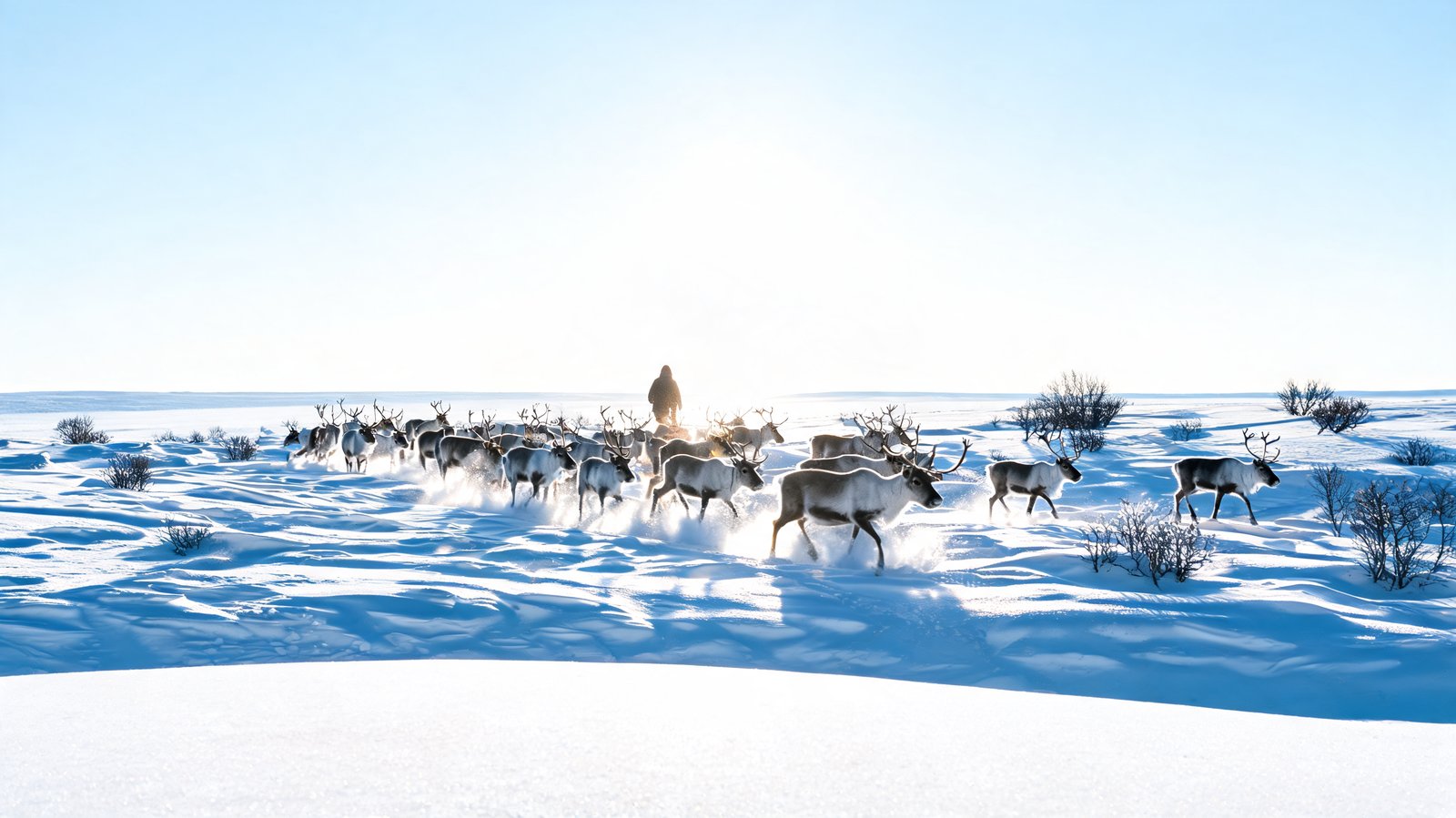
Inland, colder and drier than the coast, which in aurora terms means more clear nights. The rock carvings at Alta have been UNESCO World Heritage since 1985, and the plateau behind the town is dog-sledding and Sámi reindeer country rather than fjord scenery.
Dog Sledding Rock Art Dry Sky
Explore →
Lyngen & the Skibotn Valley, Troms
Troms
Lyngen & the Skibotn Valley
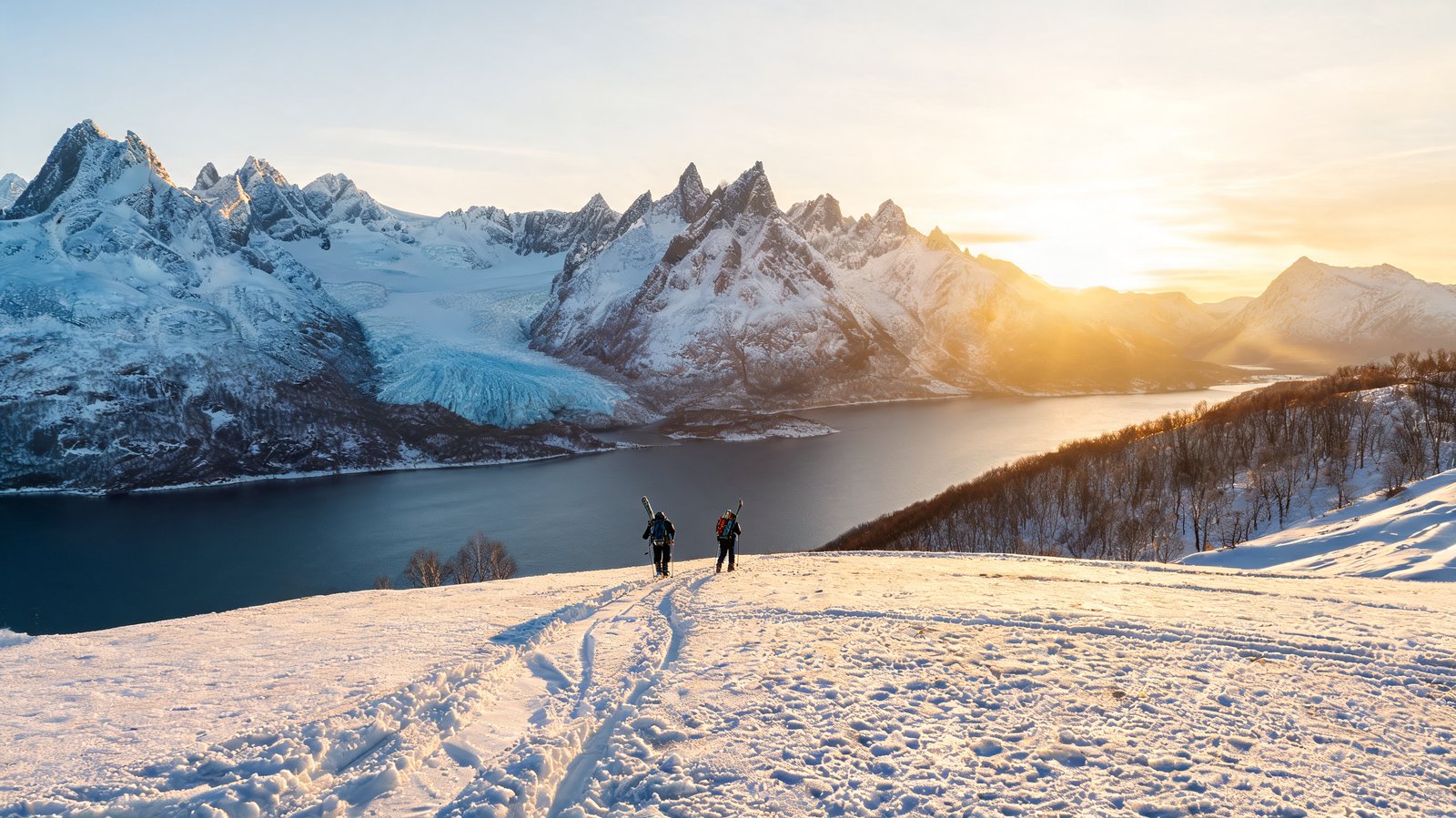
Where Tromsø guides drive when the coast is shut. Skibotn sits in a rain shadow and is among the driest inhabited places in Norway, which is why the chase vehicles head inland rather than out to sea. The Lyngen Alps behind it are the ski-touring range that fills the same lodges in April.
Rain Shadow Ski Touring Chase Country
Explore →
The Coastal Route, Bergen – Kirkenes
Bergen – Kirkenes
The Coastal Route
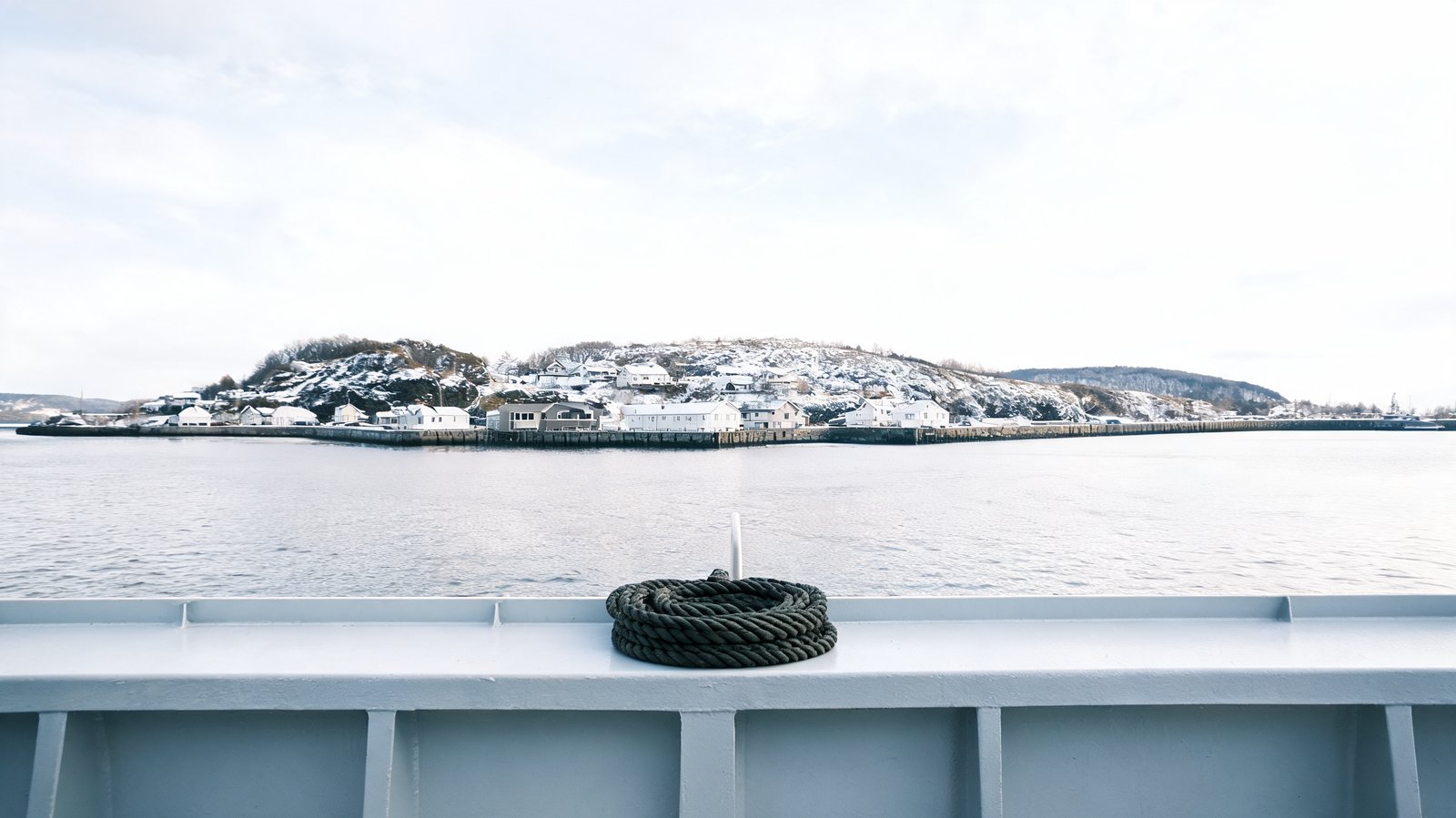
Hurtigruten and Havila run the state-contracted coastal service, calling at 34 ports on a route that has carried mail and freight since 1893. Treat it as transport with a cabin rather than a cruise: it docks at three in the morning, stops for twenty minutes, and never waits for the sky.
34 Ports Since 1893 One Leg Only
Explore →
Featured Itineraries

Trips We Plan Often

Four ways to spend a week on this coast, built around how many nights you can give the sky and whether the landscape or the aurora is the reason you are going.
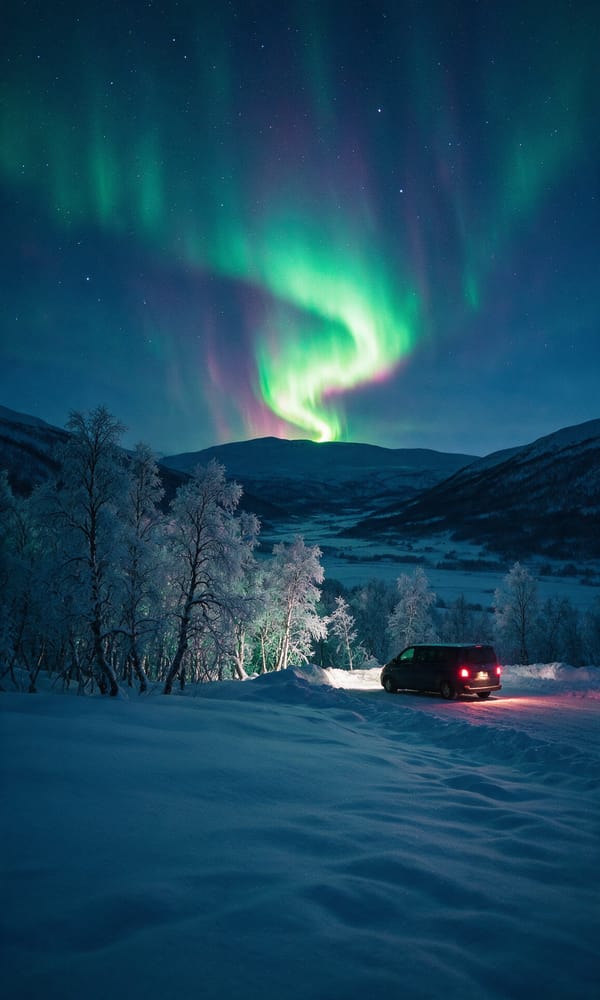
A green aurora twisting over snow-covered birch and a parked minibus in the Skibotn valley
Late September – March · 6–7 Days
Five Nights Under the Oval
The trip built to win a probability rather than hope through one evening. Tromsø for the whole stay, five consecutive aurora nights, and a small-group chase each night with an operator who commits to driving inland when the coastal cloud sits low — Skibotn, the Lyngen side, or across to the Finnish border if that is where the break is. Days stay deliberately light: the cable car for the town and the strait, the Arctic Cathedral, a fjord boat in the blue hour, and one afternoon held empty because a chase that ends at two in the morning costs the next day. Add a whale day in November or December, when the herring are in.
Arctic Norway6–7 Days
Plan This Trip
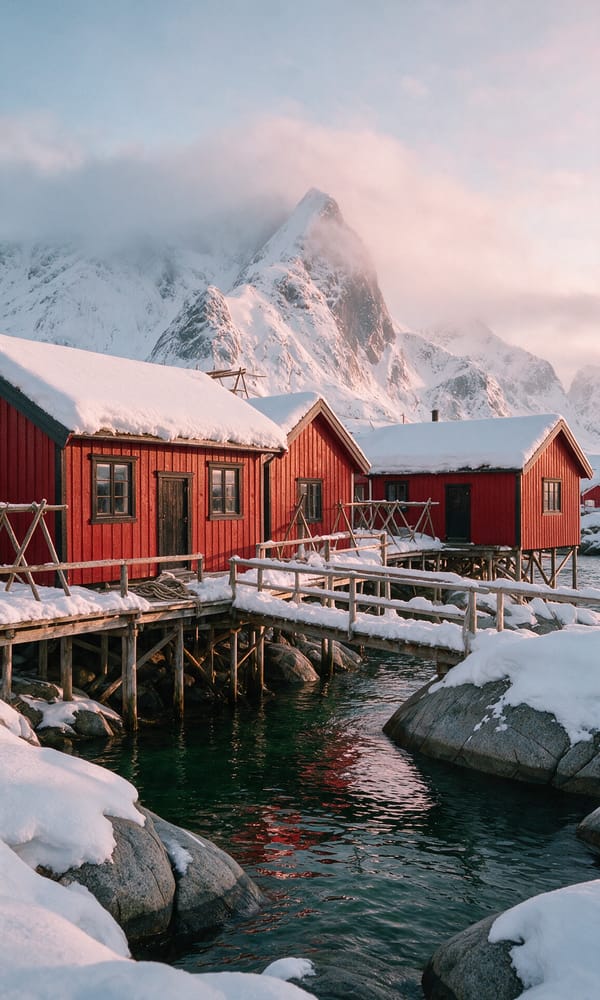
Red fishermen's cabins on stilts at Hamnoy below a snow-plastered Lofoten peak in winter light
January – March · 8–9 Days
Tromsø and Lofoten in Winter Light
The only honest way to have both, and it needs eight nights rather than five. Four nights in Tromsø first, with the aurora chasing done from the base that has the most escape routes. Then south to Lofoten for four nights in a restored fisherman's cabin at Reine or Hamnøy, with the E10 as the spine and Henningsvær, Nusfjord and Unstad within an hour of each other. February and March bring the light back to five or six usable hours, the peaks hold snow to the waterline, and aurora season still has weeks left. Lofoten's beds are few and the good ones commit early, so this is booked further ahead than the Tromsø-only version.
Arctic Norway8–9 Days
Plan This Trip
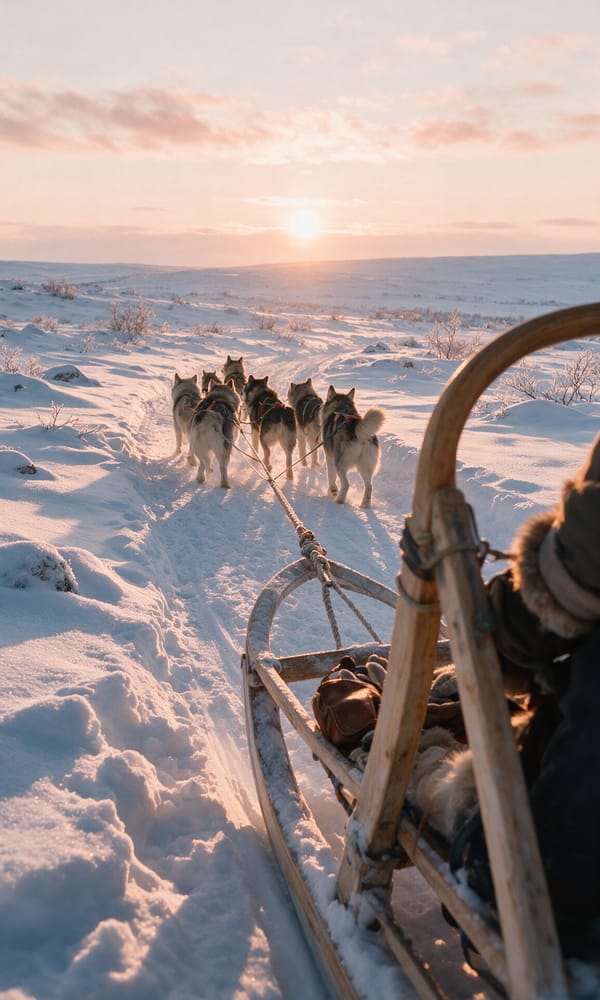
A husky team pulling a wooden sled along a snow trail on the Finnmark plateau above Alta
December – March · 7–8 Days
Alta, Finnmark and the Dry Sky
For travellers who want the interior rather than the fjords, and who care more about clear nights than about scenery in the daylight. Alta for four nights: the UNESCO rock carvings, a full day of dog sledding with a kennel that lets you drive your own team, and a visit to a working Sámi reindeer herd rather than a staged one. The plateau's continental climate delivers more cloudless nights than the coast, at the cost of genuine cold. Then two or three nights on the coast at Tromsø to finish, which puts the flights, the restaurants and a fallback aurora window back within reach. Not the trip for anyone who wants a town to walk around.
Arctic Norway7–8 Days
Plan This Trip
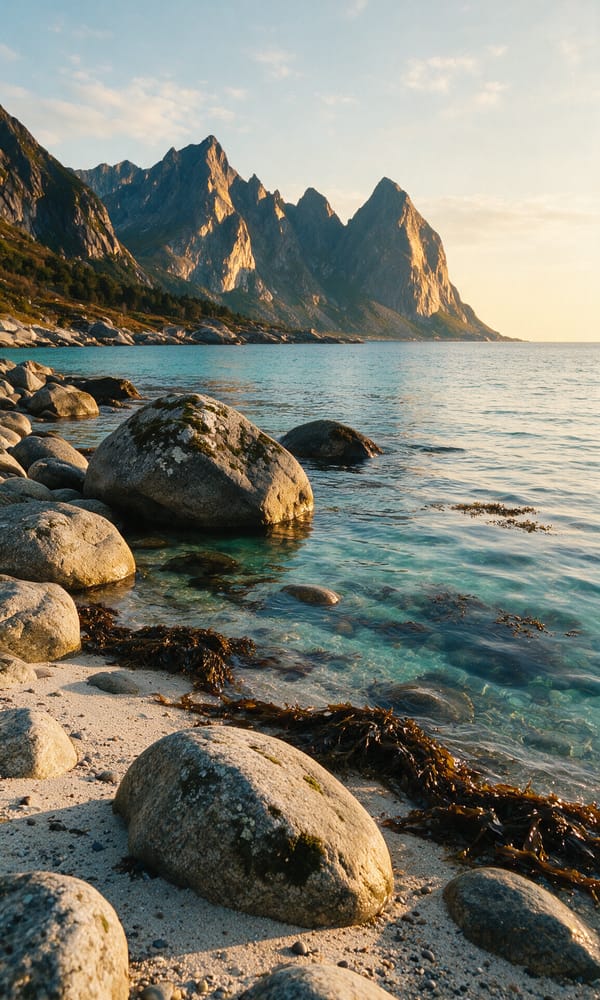
Granite boulders and turquoise shallows on an empty Senja beach under the midnight sun
Late May – July · 8–9 Days
The Midnight Sun Coast
The same coastline with none of the same rules. Two nights Tromsø to land and reset, then a self-drive south through Senja for three nights — Tungeneset, Bergsbotn, and the beaches on the outer side that almost nobody reaches. Ferry and road on to Lofoten for four nights, with Reinebringen or Ryten in the evening rather than the middle of the day, since the light does not fade and the trails empty after nine. Sea kayaking out of Hamnøy, a boat into Trollfjord, and dinner at eleven with the sun still up. There is no aurora on this trip and there is no point pretending otherwise, which is precisely why it suits families and walkers.
Arctic Norway8–9 Days
Plan This Trip
Why Plan With Us

What We Add to an Arctic Norway Trip

Almost every decision on this trip is a bet against cloud. The planning either improves those odds or quietly ignores them, and the brochure gives you no way to tell which you bought.

Mobility, Not Promises
Anyone selling a guaranteed aurora is selling a refund policy. What actually changes the outcome is a vehicle, a driver and a willingness to use them: an operator who reads the cloud model in the afternoon, ranks three valleys, and drives two hours inland or across the Finnish border when the coast is closed. The difference between a minibus that parks at the first layby and a guide who is still moving at midnight is the whole trip. We book the second kind and we ask the question in writing before you pay.
The Right Number of Nights
Each night is an independent roll, and the weather here changes on a three-hour cycle rather than a daily one. Three nights is a coin toss dressed up as an itinerary. Five is the point at which a normal week produces at least one clear window, and seven turns it into a strong bet. That is not a number a supplier will volunteer, because a three-night package sells more easily. It is the single most useful thing we say to anyone planning this trip, and it usually costs less than adding an activity to a shorter one.
Choosing the Base
Tromsø, Lofoten, Senja and Alta are not four versions of the same holiday. Tromsø gives you the most escape routes and the most to do when the sky fails. Lofoten gives you the landscape and takes back the odds. Alta trades scenery for a drier sky. Senja gives you Lofoten's coastline without Lofoten's traffic and without its restaurants. Which one is right depends on your month, your tolerance for driving in the dark, and whether the photographs you want are of mountains or of sky. That question comes first, before a single hotel is discussed.
Winter Ground Logistics
The failures on this coast are logistical, not scenic. A rental car without studded tyres. A Lofoten transfer scheduled on the one weekly connection that cancels in wind. A ferry leg booked without checking that it runs in February. A cabin at Hamnøy that is beautiful and forty minutes from anywhere serving dinner after eight. Live road conditions come from the Norwegian Public Roads Administration, and we build around them rather than meeting them on the night. Nothing here is difficult. It is simply unforgiving of a schedule with no slack in it.
When to Go

Arctic Norway by Season

Aurora Season
Late September – March
Dark enough for the aurora from late September, though the strongest weeks run November through February when the nights are longest. Late September and early October keep some autumn colour, open roads and reflections in unfrozen water, and are underrated for it. December and January add the polar night: no sun above the horizon in Tromsø, a few hours of blue twilight at midday, and the deepest cold. February and March return usable daylight while keeping full snow cover and a long aurora window, which is why they are the months we book most often for a first visit.
Best Aurora Window
Midnight Sun
Late May – Late July
The sun stays above the horizon around the clock in Tromsø from roughly 20 May to 22 July, and there is no aurora to be seen in any of it. What replaces it is a coastline you can walk, paddle and drive at any hour, with the Lofoten trails quiet after nine in the evening and the light holding all night for photography. Sea temperatures stay cold and the weather is still Atlantic, so pack for rain rather than for warmth. July is the busiest month on the E10 and the one where Lofoten beds run out first.
The Shoulders
April – May & August – September
April is the quiet favourite: snow still deep in the Lyngen Alps for ski touring, daylight back to a normal length, and aurora still possible in the first half of the month before the nights go light. August and early September bring hiking without the July traffic, and by the middle of September the sky is dark enough for the first displays alongside genuinely warm-toned autumn light. Both shoulders trade the certainty of a season for lower rates and far fewer people, and both are the wrong choice if one specific thing is the entire reason for the trip.
Ready When You Are

Plan an Arctic Norway Trip
Around Nights, Not Hopes.

Tell me which month you can travel, how many nights you can give the sky, and whether the landscape or the aurora is the point. I'll come back with a base, an operator I trust to keep driving, and a night-by-night plan within one business day.

Plan an Arctic Norway Trip All Polar Regions Destinations

No booking fees  ·  Response within 24 hours  ·  Fully bespoke

What It Costs

What Arctic Norway Actually Costs

$550–$1,400
per person, per day, land only. Ranges, not quotes.
What that includes
  • Half of a Tromsø, Lofoten or Alta room at the top of the local stock, with breakfast
  • Norway's 12% VAT on the room and on passenger transport
  • A small-group aurora chase on each dark night, published at NOK 2,200 a person
What it does not
  • International airfare and the domestic connection to Tromsø, Evenes or Alta
  • Most dinners, and the rental car with studded tyres on a self-drive week
  • Dog sledding, whale days and a private chase vehicle, plus gratuities
The two or three things that move it most
  • How many nights you give the sky — five usually produces a clear window; three is a coin toss
  • Shared chase or private — a vehicle that keeps driving inland at midnight is the biggest line after the room
  • Base — a Tromsø city hotel holds the floor, a Lofoten rorbu or a Finnmark lodge sets the ceiling

Editorial planning bands, not quotes — assembled from published rates and official fee sources, verified . Rates, permit costs and park fees change; confirm before booking. Source: Norway's VAT rates.

Common Questions

Arctic Norway — FAQ

The questions that come up most when planning a northern lights trip — how long the season is, how many nights the odds need, where to base, and what the coast is like in summer.

Late September to late March, with the most reliable stretch running November through February. The aurora is present year-round, but it cannot be seen against a lit sky, and between late May and late July there is no night in Tromsø at all. Solar activity matters less than most people expect this far north: Tromsø, Alta and Lofoten sit under the auroral oval, where displays appear on geomagnetically quiet nights. NOAA's Space Weather Prediction Center publishes the forecast, but the screen that matters on the night is the cloud map at yr.no, run by the Norwegian Meteorological Institute.

Five is the minimum worth booking, and seven if the aurora is the whole reason for the trip. Each night is an independent roll against cloud, and coastal weather here turns on a three-hour cycle rather than a daily one. Three nights is a coin toss; plenty of people win it, and the ones who lose it tell everybody. Five nights, with a guide willing to drive inland or over the Finnish border to find a gap, turns an even bet into a strong one. Nobody honest will quote you a percentage, because it depends entirely on the week of weather you happen to draw.

Tromsø for the aurora odds, Lofoten for the landscape, and both only with eight nights or more. Tromsø has the air connections, the largest pool of chase operators, and inland valleys within a two-hour drive that are drier than the coast. Lofoten is the more photogenic place by a distance, and it sits in open Atlantic weather that closes more nights while leaving you less room to escape. Split a five-night trip between the two and you lose the better part of a day to the transfer and arrive with three usable nights in each. Pick one, knowingly.

You can drive yourself, and on most nights a good guide is still the better buy. The value is not company. It is somebody who read the cloud model at four in the afternoon, has three fallback valleys ranked in order, knows which mountain passes close in wind, and will keep going until two in the morning. Winter driving here means studded tyres, black ice and unlit single-lane tunnels. Live conditions are published by the Norwegian Public Roads Administration. If you do self-drive, insist on winter tyres in the rental contract and plan a route you would still be comfortable on at minus fifteen.

In Tromsø the sun stays below the horizon from late November to mid-January, but the middle of the day is not black. You get several hours of blue twilight around noon, a flat soft light that photographers travel for, and a town that runs on lamps and window light. What you lose is a normal daylight schedule: activities compress into the middle of the day and the pace slows. Some people find it restorative and some find it heavy by day four. If the second sounds like you, come in February or March instead, when daylight has returned and the aurora season still has weeks to run.

It is a working coastal service with cabins rather than a cruise, and the difference shows up in the timetable. Two operators, Hurtigruten and Havila Voyages, run the state-contracted route between Bergen and Kirkenes, calling at 34 ports on a schedule that has carried mail and freight since 1893. Ships dock at three in the morning, stop for twenty minutes at small ports, and sail whether or not the sky is clear. As a way to move between two bases it is excellent. As an aurora strategy it is poor, because you cannot steer a scheduled ship to a hole in the cloud.

Yes, as a completely different trip: the midnight sun runs from around 20 May to 22 July in Tromsø. The sun does not set, the E10 through Lofoten is open and dry, and the hiking, sea kayaking and island driving run at whatever hour you like — the Reinebringen steps are far quieter at ten in the evening. There is no aurora to be seen and no point pretending otherwise. Summer suits travellers who want to be outdoors all day, families with children who will not thrive on a midnight chase, and anyone whose photographs are of mountains rather than sky. Book early; Lofoten's bed stock is small and July fills months ahead.

Norway is in the Schengen Area, so US, UK, Canadian and Australian visitors travel visa-free for up to 90 days in any 180. Your passport needs to be valid for at least three months beyond your intended departure from the Schengen Area and issued within the previous ten years. The EU is phasing in an Entry/Exit System that registers biometrics at the border, with a separate ETIAS authorisation to follow, and both change what happens on arrival rather than whether you can travel. Entry rules verified . Confirm with the Norwegian Directorate of Immigration and your own government's current advice before booking.
More questions answered on the Full FAQ Page
From the Journal

Read More on Planning Polar Regions