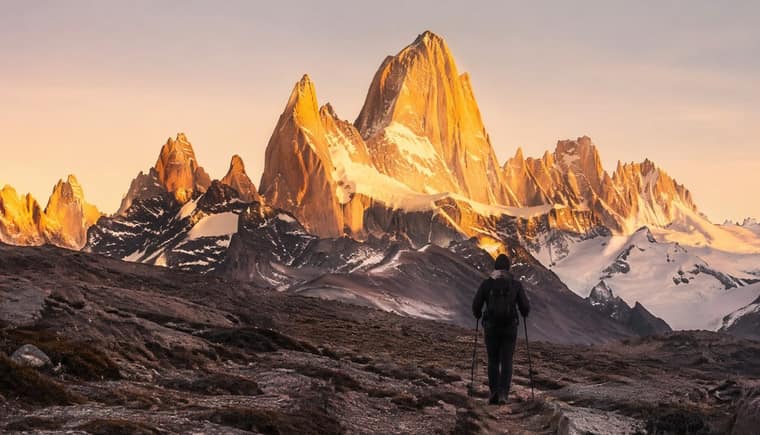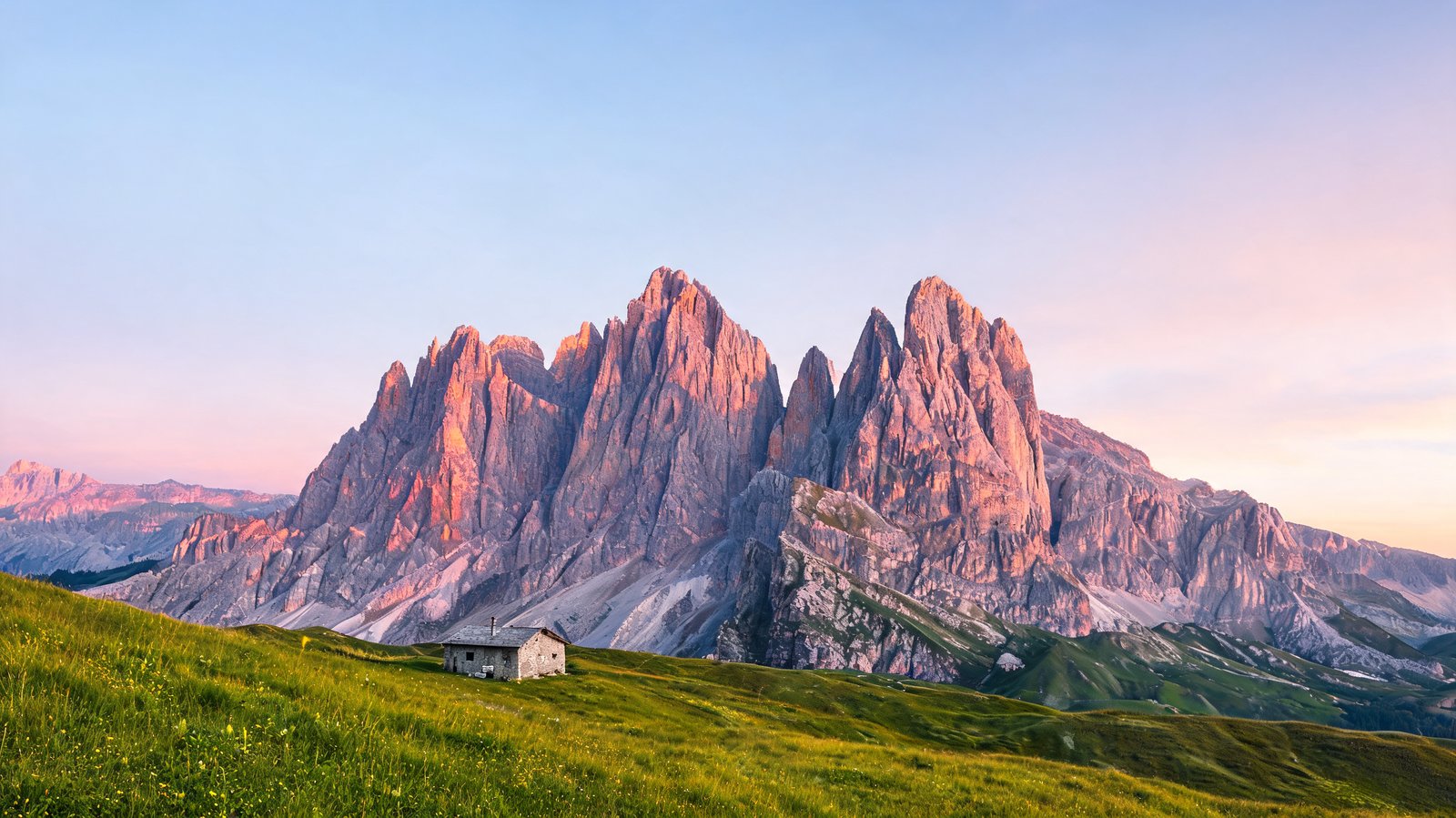

Italian Alps · South Tyrol, Belluno & Trentino

Walk Hut to Hut.
Eat Like It Matters.
Sleep at 2,000 Metres.

The Dolomites are walked hut to hut, with dinner, a bunk and breakfast waiting at a staffed rifugio at the end of each stage. The first decision is the format: the classic Alta Via 1, the harder Alta Via 2, or a week in one valley base with lift-assisted day hikes instead.

Best Season
Late June – September
Best For
Hut-to-Hut
Trekking
The Range

One Range, Two High Routes,
and a Short Summer

The Dolomites are best walked hut to hut on the Alta Via 1, a 125 km, 12-stage high route from Lago di Braies south to Belluno, or on the longer, more exposed Alta Via 2. The huts open from June to September, and the end of June to the end of September is the recommended window. Most walkers arrive through Innsbruck or Venice and leave through Venice.

The Dolomites are a UNESCO World Heritage Site, inscribed in 2009 as nine separate mountain systems covering 141,903 hectares, with 18 peaks above 3,000 metres (UNESCO World Heritage Centre, listing 1237). Ten signposted high routes, the Alte Vie, cross them. Two matter for a first trek. The Alta Via 1 is the classic: the Cortina tourism board measures it at about 125 km and 7,300 m of climbing in 12 stages, walked in 10 to 15 days end to end. South Tyrol's tourism board, which counts the variants, puts it at 150 km in 13 days and calls it the less strenuous of the two, with only short via ferrata sections. The Alta Via 2, from Bressanone to Feltre, is 185 km in 15 days by the same board's count, with grade III scrambling and a glacier stage on the Marmolada.

A night in a rifugio, a staffed mountain hut, is the reason the format works. Dinner, bed and breakfast are sold together as half board, so a walker carries clothing and water rather than a stove and food. The Club Alpino Italiano's rules for its own huts make a personal sheet sleeping bag compulsory (CAI hut regulations), and its 2025 tariff circular gives members of CAI and reciprocal alpine clubs a guaranteed minimum 20% discount on half board (CAI tariff circular 2025). Many huts on the routes are privately run and set their own terms.

The season is short because the huts are high. The Alta Via 1's opening stage climbs 900 m from Lago di Braies (1,494 m) to Rifugio Biella at 2,327 m (stage 1, Cortina tourism board), and South Tyrol describes the main line at an average height of 2,000 m. Infodolomiti, the Belluno Dolomites tourism portal, gives the hut opening period as June to September and recommends the end of June to the end of September. Checked .
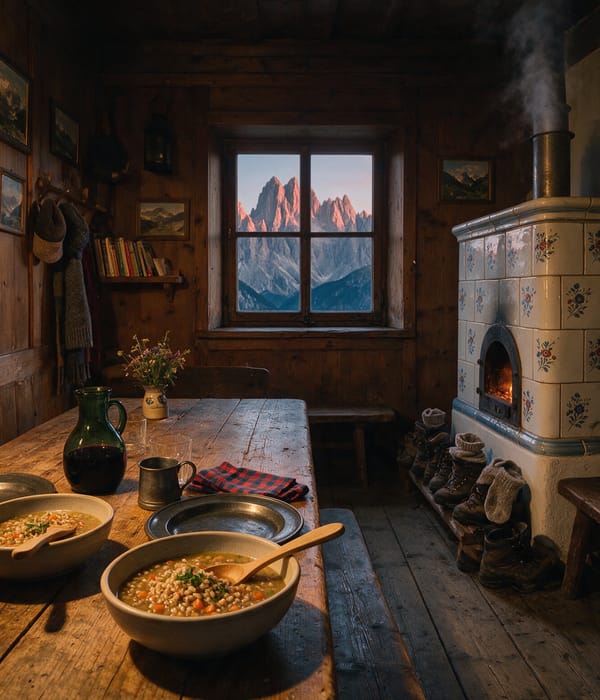
Bowls of barley soup and a jug of red wine on a pine table in a mountain hut, with limestone spires framed in the window
Rifugio Dinner · Dolomites
Routes & Bases

Where to Walk in the Dolomites

Two long routes that change huts every night, one short loop that most itineraries include, and two valley bases for travellers who would rather sleep in the same bed all week. Tre Cime figures are from Auronzo tourism; Olympic venues from Olympics.com, checked .
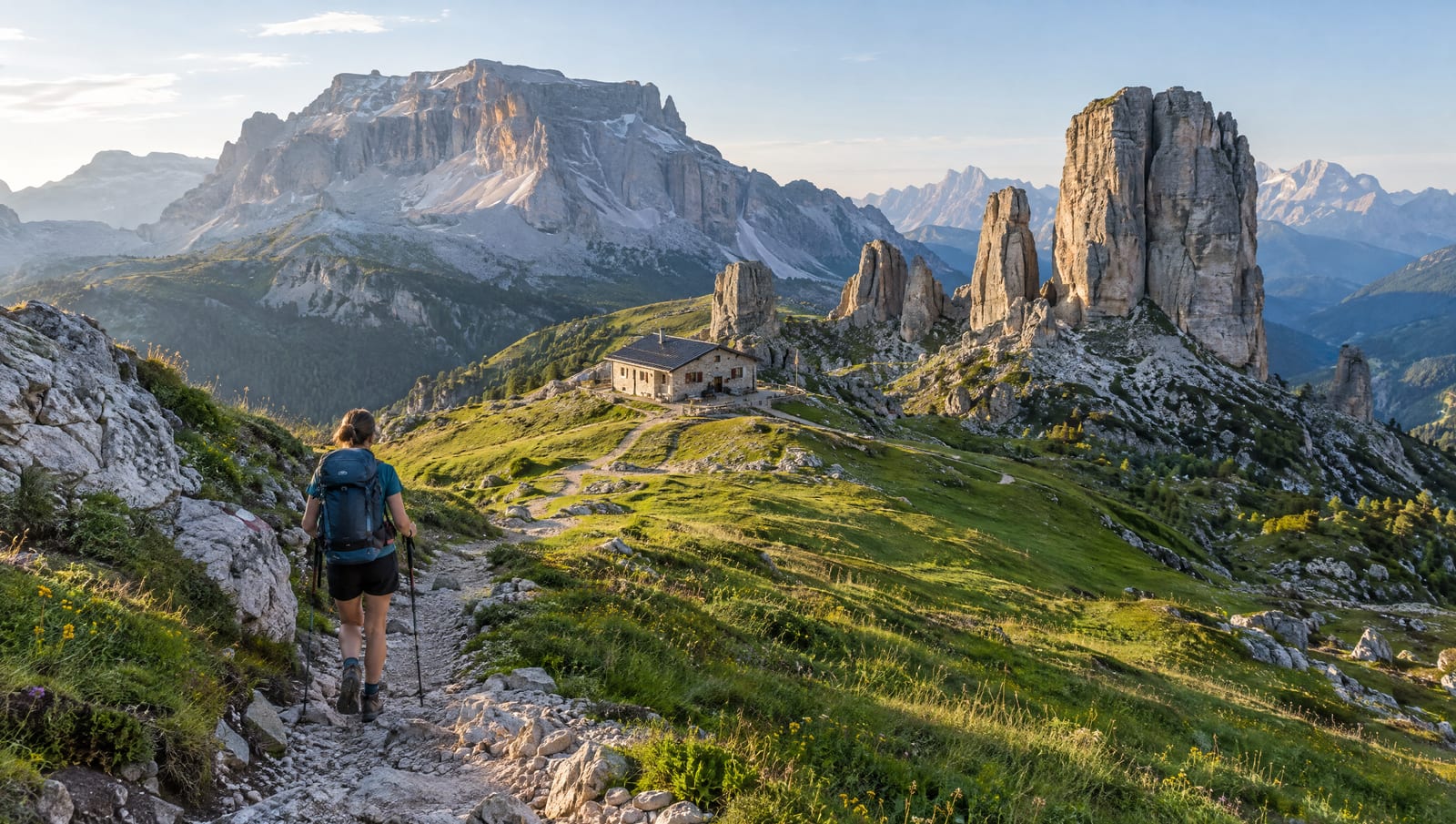
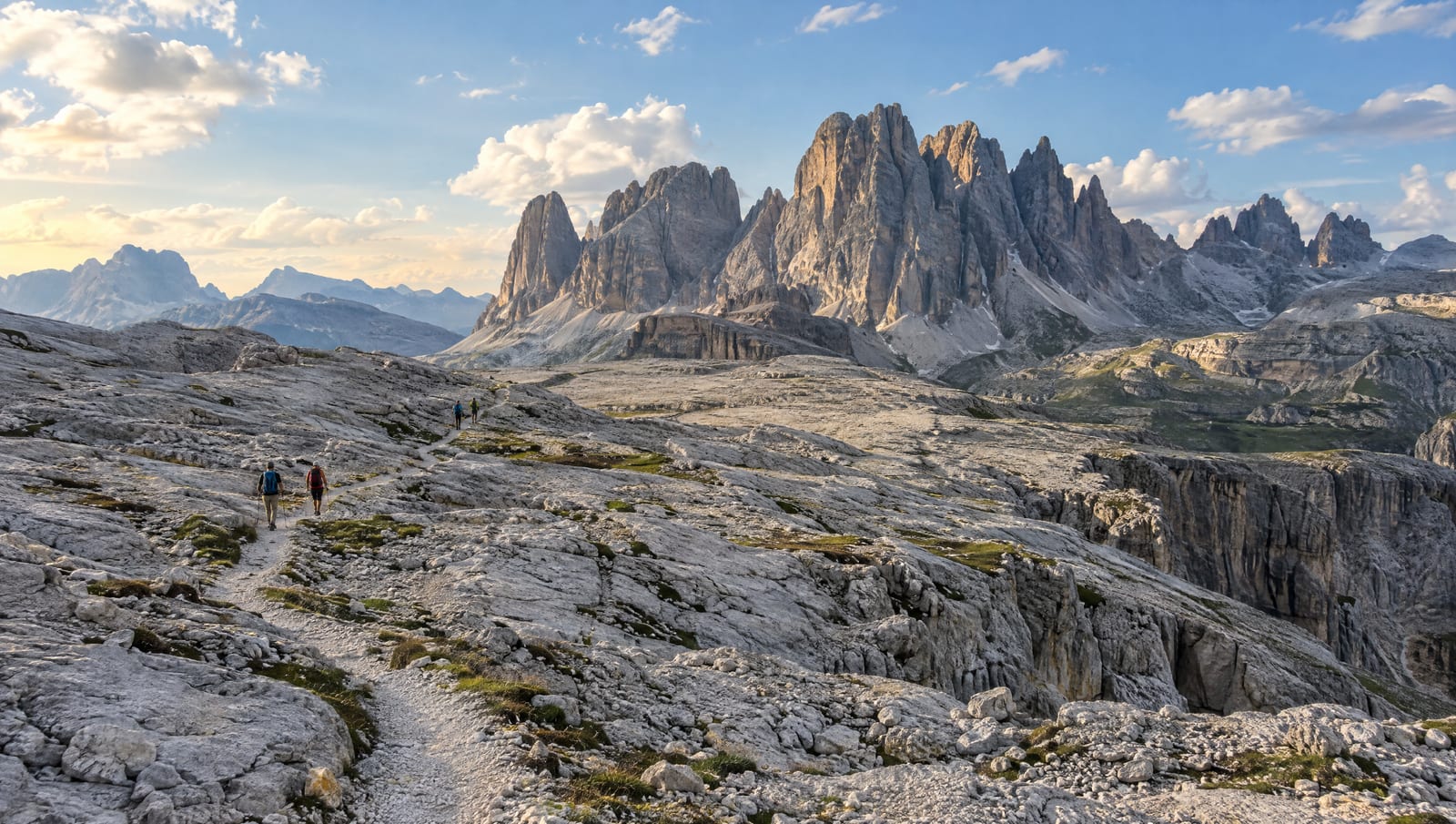
A hiker on a rocky trail toward a stone hut on a grassy saddle below tall limestone towers
Braies to Belluno
Alta Via 1
The classic north-to-south line in three sections: Braies to the Tofane through the Fanes plateau, the Tofane to the Civetta past Nuvolau and Croda da Lago, then the quieter southern groups down to Belluno. Most first-time trekkers walk the northern half.
12 Stages Lagazuoi Short Ferrata
Compare the routes →
Two hikers crossing a vast pale limestone plateau toward a ridge of jagged peaks
Bressanone to Feltre
Alta Via 2
Longer, higher and more exposed. It crosses three provinces and ten mountain groups, among them the Puez-Odle, the Sella, the Marmolada and the Pale di San Martino, with cabled passages and a glacier stage. It suits walkers who already have hut-to-hut and scrambling experience.
185 km Sella Pale di San Martino
Compare the routes →
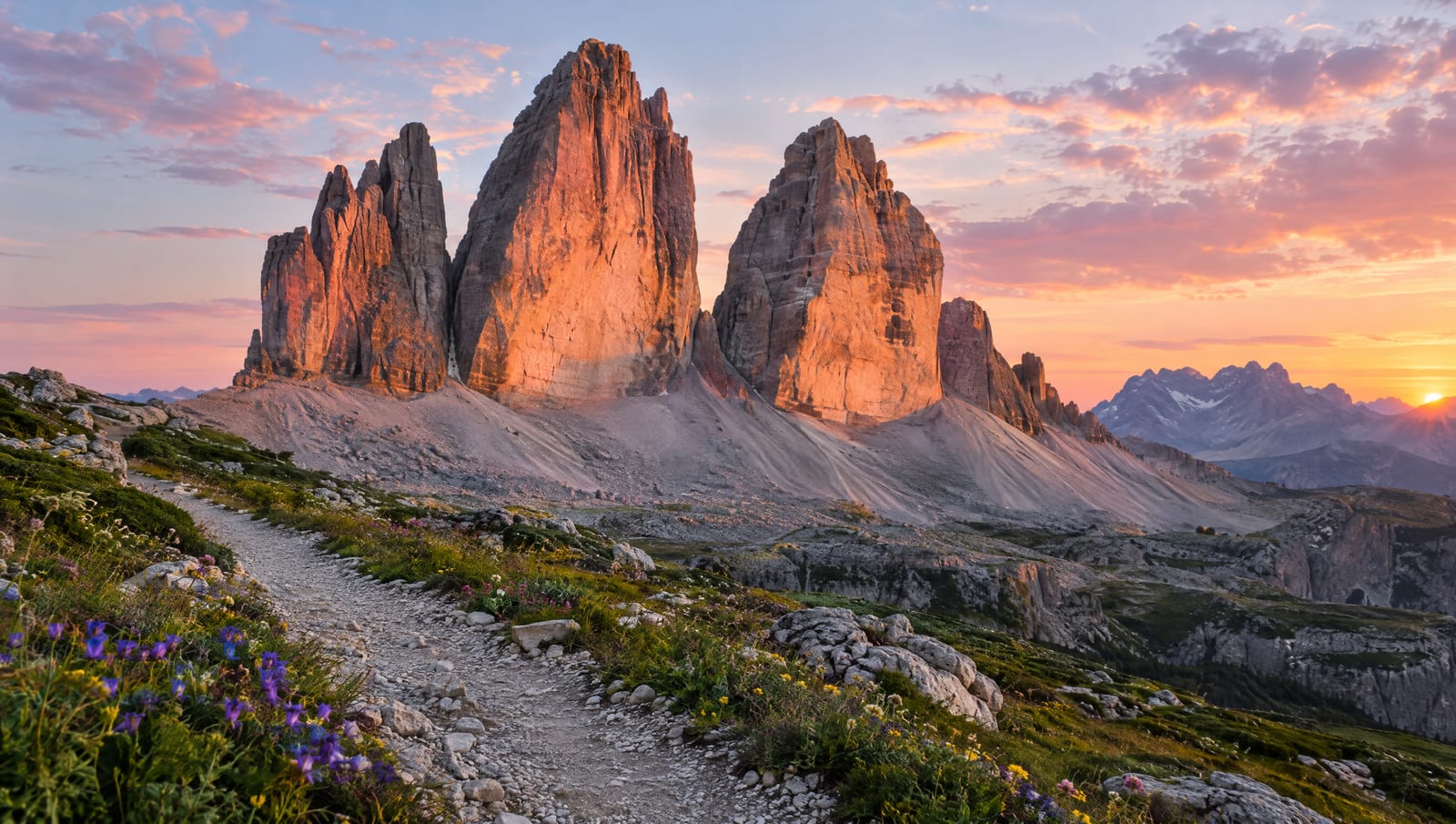
Three vertical rock towers glowing pink at sunrise above a gravel path and wildflowers
Sexten Dolomites
Tre Cime di Lavaredo
The three north faces that stand for the whole range. A toll road climbs from Misurina to Rifugio Auronzo, and the circuit of the peaks past Forcella Lavaredo and Rifugio Locatelli takes 3 to 4 hours, with roughly 400 m of climbing over 9 to 10 km.
Day Loop Rifugio Locatelli North Faces
Explore →
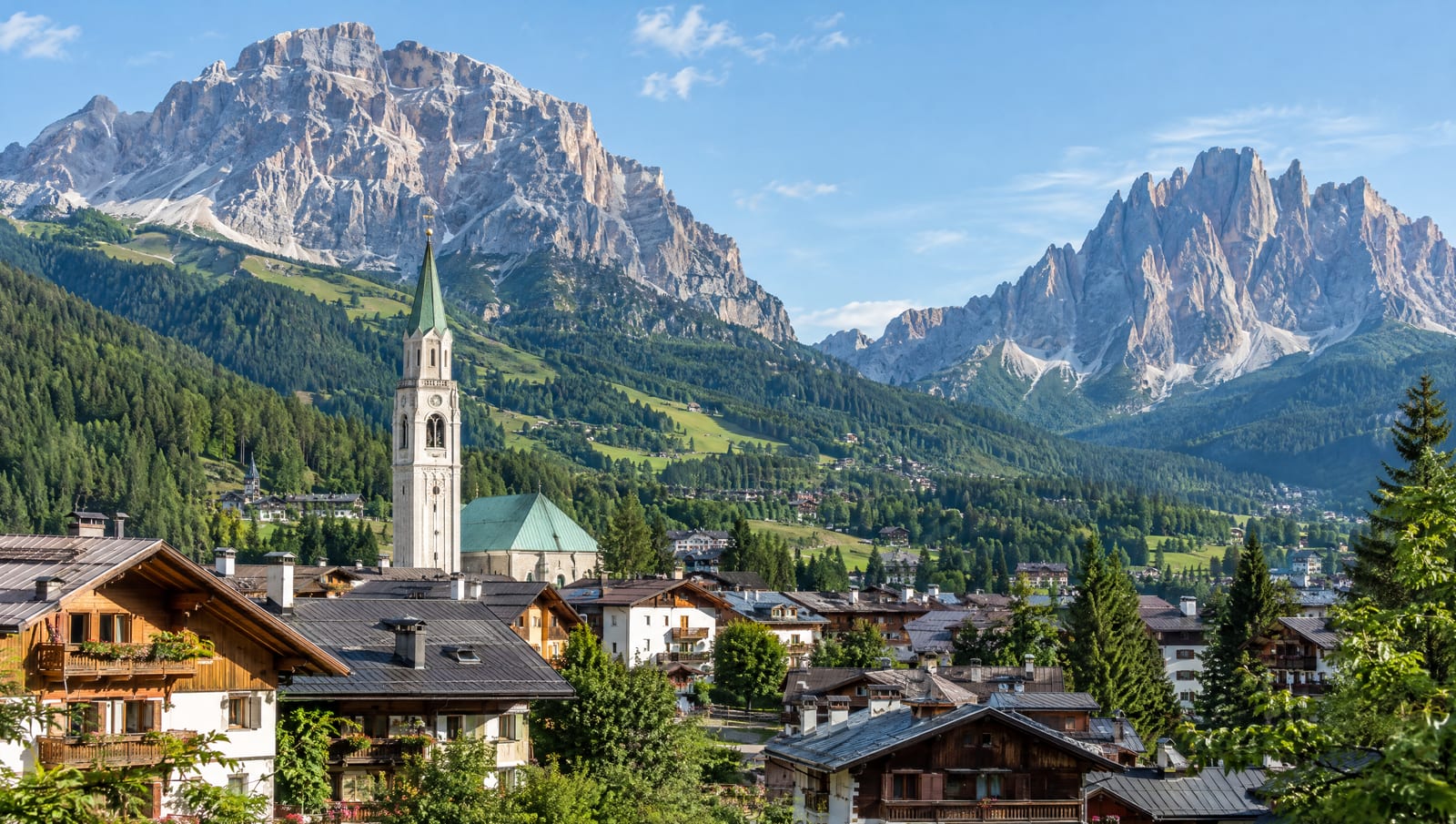
A mountain town with a tall bell tower and chalet roofs beneath grey limestone peaks
Ampezzo Valley
Cortina d'Ampezzo
The largest town on the Alta Via 1 corridor and a two-time Olympic host: 1956, then the women's alpine, sliding and curling events of Milano Cortina 2026. In summer its lifts climb toward the Tofane, and a direct bus runs to Venice airport.
Base Town Tofane Cinque Torri
Explore →
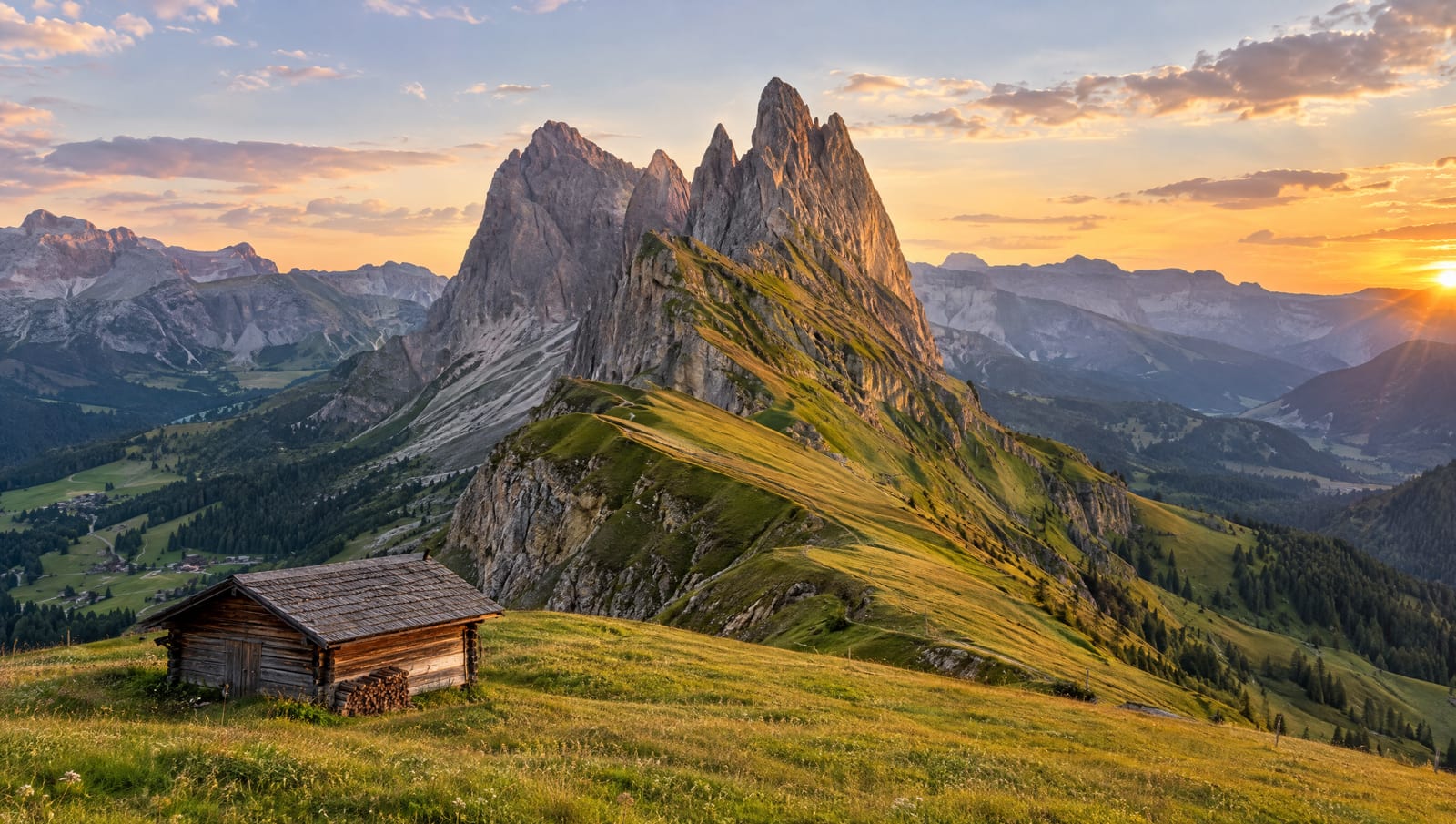
A wooden hay hut on a steep meadow below a row of sharp limestone spires at sunset
South Tyrol
Val Gardena & Alta Badia
Two neighbouring Ladin valleys either side of the Sella group, and the natural base for a week of lift-assisted day hikes instead of a hut-to-hut trek. Val Gardena's lifts reach the Seceda ridge under the Odle peaks; Alta Badia sits below the Fanes and Puez plateaus.
Seceda Sella Day Hikes
Explore →
The Two High Routes

Alta Via 1 or Alta Via 2

Distances differ between official sources because each counts variants differently. Figures below are from the Cortina and South Tyrol tourism boards, checked .

Alta Via 1 · The Classic

  • StartLago di Braies, Puster Valley (South Tyrol)
  • FinishBelluno (Veneto)
  • LengthAbout 125 km (Cortina) to 150 km (South Tyrol)
  • Stages12 stages; 10–15 days end to end
  • ClimbingAbout 7,300 m in total
  • CharacterWell-marked paths, frequent huts, short via ferrata only

Alta Via 2 · The Demanding One

  • StartBressanone/Brixen, Isarco Valley (South Tyrol)
  • FinishFeltre (Veneto)
  • LengthAbout 185 km (South Tyrol)
  • DaysAbout 15
  • ProvincesBolzano, Trento and Belluno
  • CharacterGrade III scrambles, cabled passages, a Marmolada glacier stage
Trip Formats

Three Ways to Plan a Dolomites Trip

The choice is between moving every night and staying put. All three formats run inside the same hut season, from late June to September.

Late June – September · 6–7 Nights
Hut to Hut: The Northern Alta Via 1
The section most trekkers choose, walked north to south as the route is signed. The Cortina tourism board's day plan runs Braies to Rifugio Biella, then Rifugio Fanes, Rifugio Lagazuoi, Rifugio Nuvolau and Rifugio Croda da Lago, before the line continues toward the Civetta. A typical stage is 3.5 to 6 hours of walking. Arrive through Innsbruck or Venice and the Puster Valley; leave from Cortina, a two-hour direct bus from Venice airport, or carry on south toward Belluno.
Rifugi Nightly Half Board North to South
Late June – September · 7 Nights
Base-Camp Week: Val Gardena & Alta Badia
One or two valley hotels and a different day hike each morning, using lifts to start high: the Seceda ridge, the Puez plateau, the Sella and a lunch at a hut instead of a night in one. A day on a via ferrata with a certified mountain guide fits in midweek. The format suits mixed-fitness groups and anyone who wants the scenery without changing beds nightly.
One Base Lift-Assisted Guided Ferrata
Late June – September · 9–10 Nights
Dolomites, Then Venice
A shorter hut-to-hut section or a Cortina base, then down to the lagoon for the last nights, since Venice is the usual departure airport anyway. For the city half, see the Italy guide to Venice, Tuscany and Rome; for why fewer stops make the better trip, read the European grand tour mistake.
Mountains + City Venice Two Halves
Planning Decisions

What Planning Changes on a Dolomites Trek

A hut-to-hut trek is a chain of bookings that each depend on the one before. Four decisions shape it.

⬡

Booking the Hut Chain

Every night is a separate booking with a separate hut, and one full hut breaks the sequence. CAI huts take reservations through the club's hut booking portal; privately run huts take them directly. July and August, the heart of the season, are when the popular huts fill first, so the order of work is dates, then the hardest hut to get, then the rest of the chain around it.
⬡

Pack or Transfer

Most of the high route is reached only on foot, so the standard plan is a light pack carried the whole way: clothing, a sheet sleeping bag, rain shell and water. Where a hut sits near a road or lift, a bag can sometimes be moved by vehicle, but that is arranged hut by hut and is not something to assume. The base-camp week removes the question entirely.
⬡

Via Ferrata, Properly Equipped

A via ferrata is a cabled climbing route. Cortina's tourism board lists the kit as helmet, harness, gloves and a via ferrata set, asks for excellent fitness, and recommends going with an expert mountain guide. For a first ferrata, a guided day is the sensible format, and what a good private guide adds is most obvious on exposed ground.
⬡

Matching Format to Fitness

South Tyrol's tourism board advises being fit for 4 to 7 hours of walking a day on any of the high routes. The northern Alta Via 1 suits regular hikers new to hut-to-hut; the Alta Via 2 suits walkers comfortable with exposure and scrambling; the base-camp week suits groups whose fitness varies, because each person can choose the day's length.
When to Go

Dolomites by Season

Early Season
June
Huts open through June, many around the 20th, the start of the traditional CAI season. Snow can linger on north-facing passes and some huts are not yet staffed, so early-June departures need hut-by-hut checks.
Hut Season
Late June – September
The window Infodolomiti recommends for the Alta Via 1, with the route's huts open. July and August are the busiest months and bring afternoon thunderstorms, so stages start early. September is quieter, and the case for it is in the case for shoulder season.
Best Overall Window
Closing
Late September – October
The traditional season ends around 20 September. CAI's magazine Lo Scarpone reports more huts now opening from late May and closing in October, but dates vary by hut, so each one needs confirming.
Winter
December – April
Ski season. Dolomiti Superski covers 12 ski areas, about 450 lifts and 1,200 km of slopes on one pass, including Cortina, Val Gardena and Alta Badia. The summer trekking huts are closed.
Common Questions

Dolomites — FAQ

Hut season, which Alta Via to choose, how many days, airports, via ferrata and luggage. Sources checked .

Alta Via 1 huts open from June to September, and the recommended trekking window is the end of June to the end of September. That is Infodolomiti's guidance for the route. The traditional CAI season runs 20 June to 20 September, and some huts now open earlier or close later. Each hut publishes its own dates, and early-season snow can delay an opening.

Walk the Alta Via 1 for a first hut-to-hut trek; choose the Alta Via 2 only with scrambling and exposure experience. South Tyrol's tourism board describes the Alta Via 1 as the less strenuous route with short via ferrata, and the Alta Via 2 as 185 km with grade III scrambles and a glacier stage on the Marmolada.

The full route takes 10 to 15 days in 12 stages; the popular northern half takes about 5 to 7. The Cortina tourism board's day plan reaches Rifugio Croda da Lago on day 5, from where walkers either continue south toward the Civetta and Belluno or descend to Cortina.

Fly into Innsbruck or Venice for the start of the Alta Via 1, and out of Venice at the end. The route runs north to south from Lago di Braies in the Puster Valley, which Innsbruck reaches over the Brenner Pass. From Cortina, Dolomiti Bus runs a direct service to Venice Marco Polo airport in about two hours. Verona, Treviso and Bolzano also serve the range. From 1 July to 15 September 2026 the road to Lago di Braies was closed to cars from 9:00 to 16:00 without a reservation (Braies valley), which shapes the first morning.

A first via ferrata is best done with a certified mountain guide, and everyone needs a helmet, harness, gloves and a via ferrata set. That is the kit list and the recommendation on Cortina's via ferrata page, which also asks for excellent fitness. Local guides can supply the equipment. The Alta Via 1 has only short cabled sections; the Alta Via 2 has more.

Plan as though it cannot, because most huts on the high routes are reached only on foot. A light pack for the whole trek is the standard approach. Where a hut sits near a road or a lift, moving a bag by vehicle is sometimes possible, but it has to be arranged hut by hut. Travellers who want to walk without a pack are better suited to the base-camp week in Val Gardena or Alta Badia.

Book as soon as the dates are fixed, starting with the hardest hut to get, because one full night breaks the whole chain. July and August are the busiest months, and private rooms are the first to go. CAI huts take bookings through the CAI hut booking portal; privately run huts take them by phone, email or their own websites.

A rifugio night means dinner, a bunk or small room, and breakfast, usually sold as half board. Rooms range from shared dormitories to a few private doubles, and showers may be limited or cost extra. CAI's hut regulations make a personal sheet sleeping bag compulsory, and CAI members and members of reciprocal alpine clubs get at least 20% off half board under CAI's 2025 tariff rules.

Yes: base yourself in Val Gardena, Alta Badia or Cortina and use summer lifts for day hikes. The Seceda ridge, the Puez plateau and the Tre Cime loop, which takes 3 to 4 hours from Rifugio Auronzo, are all day walks. Lunch at a hut gives the rifugio meal without the overnight.

The northern Alta Via 1 suits fit families and first-time trekkers who already hike regularly. Its first stage climbs 900 m in about 3.5 hours, and South Tyrol's tourism board advises fitness for 4 to 7 hours of walking a day. For younger children or mixed fitness, the base-camp week is usually the better fit. More options are on the adventure and active travel page.
More questions answered on the Full FAQ Page
Ready When You Are

Plan a Dolomites Trek
Around the Hut Season

Send your dates within the late-June to September window, how many nights you have, and whether you want to change huts nightly or keep one base. The reply is a specific route, hut sequence and arrival plan within one business day.

Plan a Dolomites Trek All Europe

No booking fees  ·  Response within one business day  ·  Fully bespoke
From the Journal

Read More Before a Dolomites Trek