
Sub-Antarctic

The Week That Turns a Voyage
Into the One People Remember.

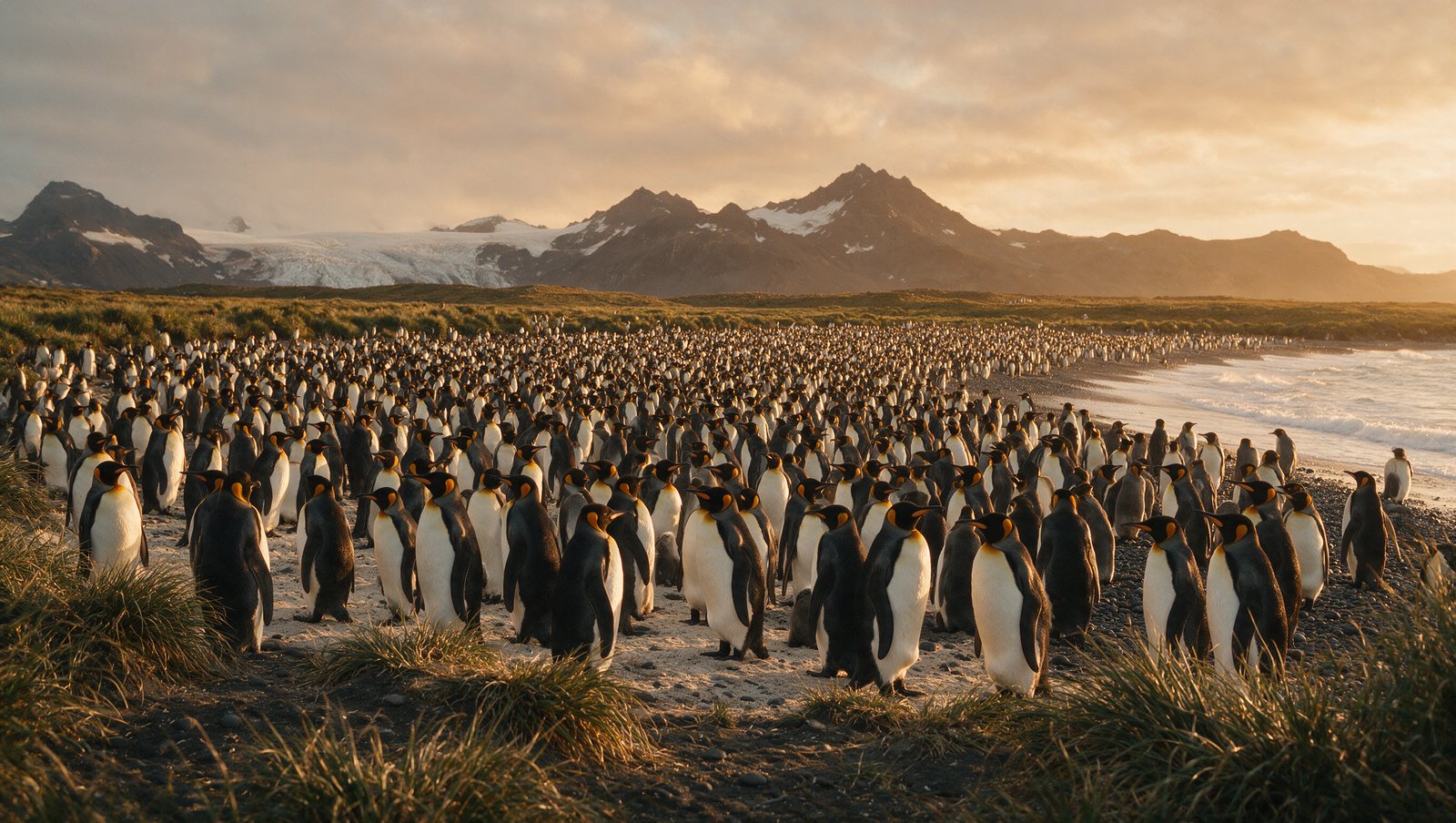
A Peninsula crossing takes ten to twelve days. Adding the Falklands and South Georgia takes eighteen to twenty-two, and the extra week is where the king penguin beaches, the fur seal colonies and the wandering albatross are. South Georgia has no airstrip, no hotel and no road, so every hour ashore is a Zodiac landing that the weather can take away. How many of those you get is decided at booking, not on the day.

Best Season
Oct – March
Best For
King Penguins
& Albatross
The Voyage

South Georgia Is Why
You Take the Long Version.

The Falklands and South Georgia are what turn a 10-day Antarctic voyage into an 18–22 day one. The season runs October to March. South Georgia's king penguin beaches hold birds in the hundreds of thousands, and every one of those beaches is reached by Zodiac and cancelled by weather. The Falklands also work as a separate land trip, reached by scheduled air service.

Most people who book Antarctica mean the Peninsula: ten to twelve days out of Ushuaia, two Drake crossings, daily landings among gentoo and chinstrap colonies. That trip is set out on the Antarctica planning page, and for a first polar voyage it is usually the right one. This page is about the other version — the eighteen to twenty-two day itinerary that adds the Falklands and South Georgia before the ice. It costs another week and a great deal more money, and the people who have done both rarely name the Peninsula as the part they still talk about.

South Georgia is the reason. It is a mountain range with beaches attached, roughly 170 km long, rising to Mount Paget at 2,934 m, and it has no airstrip, no hotel and no road — every visitor arrives by ship and steps ashore from a Zodiac. Its beaches carry king penguin colonies counted in the hundreds of thousands of birds, most of the world's Antarctic fur seals, and wandering albatross nesting on offshore islets. Every visit is managed under a published visitor plan by the Government of South Georgia and the South Sandwich Islands.

The Falklands are a different proposition and deserve to be separated from the ship. They are an inhabited archipelago of more than 700 islands with a resident population of roughly 3,700, scheduled air links, farm lodges on the outer islands and a government air service flying between them. Five penguin species breed there, along with around 70% of the world's black-browed albatross, according to Falklands Conservation. You can go for a week without ever boarding an expedition vessel, for a fraction of what a voyage costs.
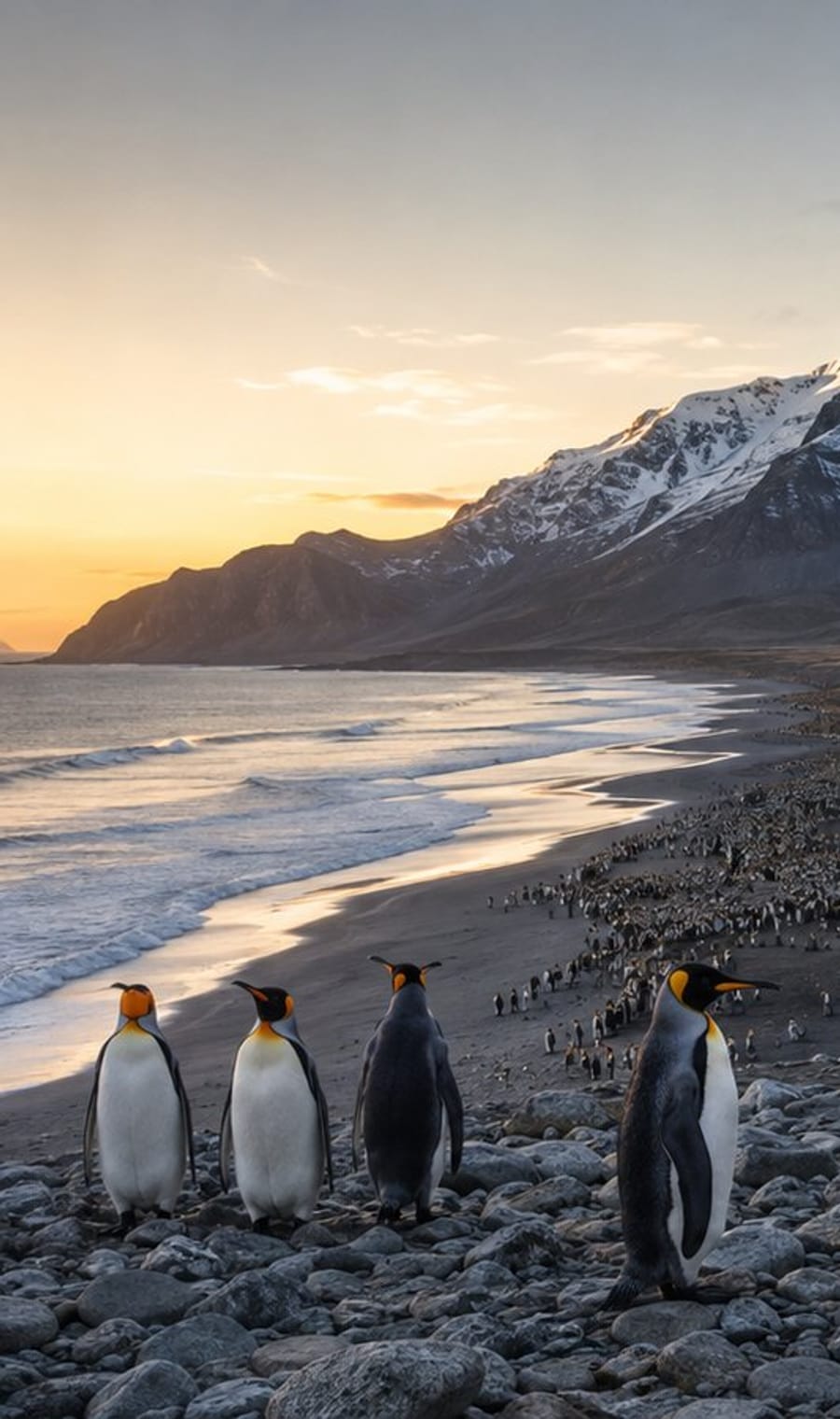
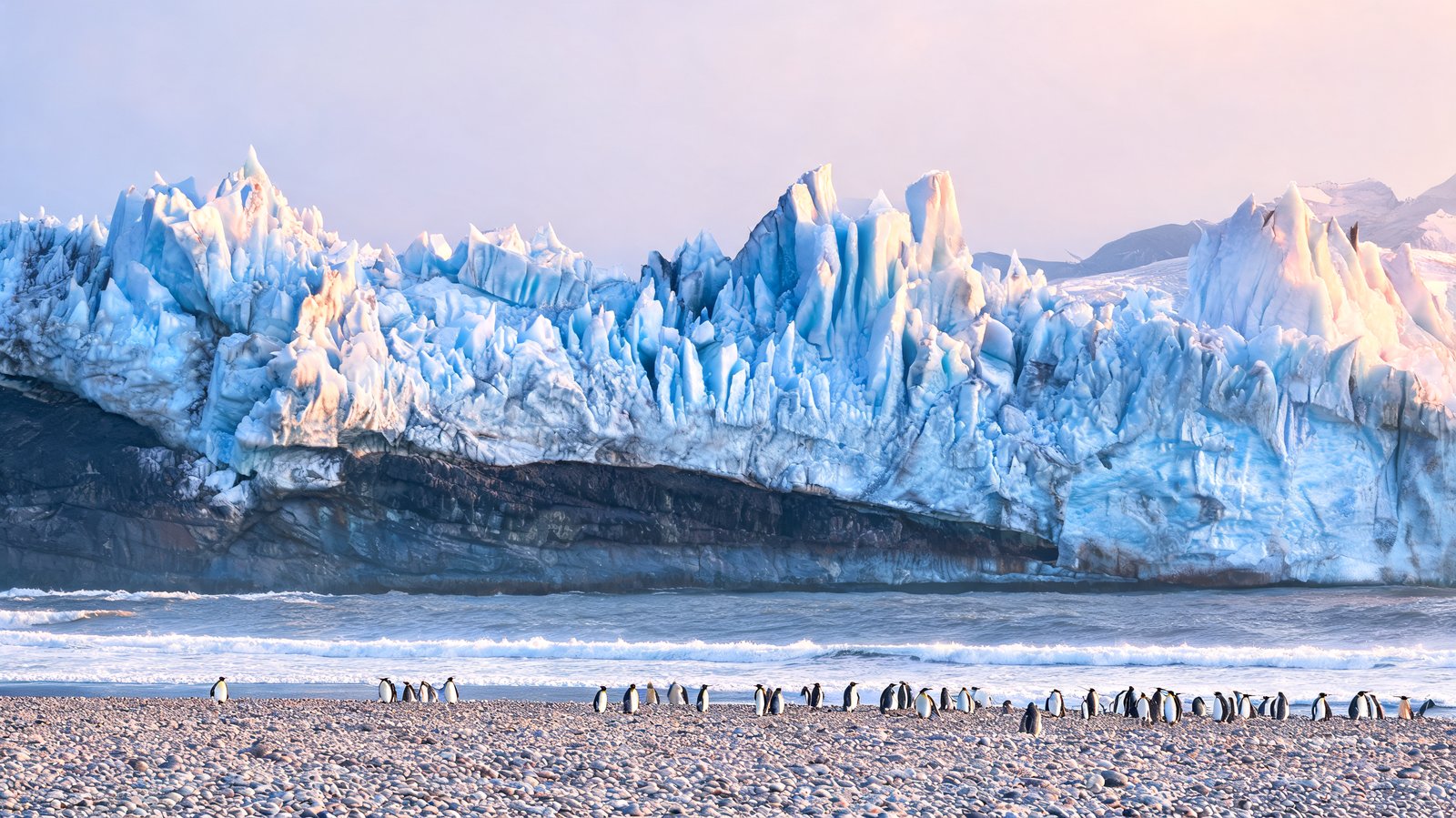
King penguins gathered on a stony South Georgia beach below snow-covered peaks
South Georgia · Southern Ocean
Where You Actually Land

Six Landings Worth the Voyage

South Georgia carries most of this itinerary and the Falklands carry the front of it. Every site below is a Zodiac landing, subject to swell, wind and a cap on people ashore. No voyage gets all six.
St Andrews Bay, South Georgia
South Georgia
St Andrews Bay
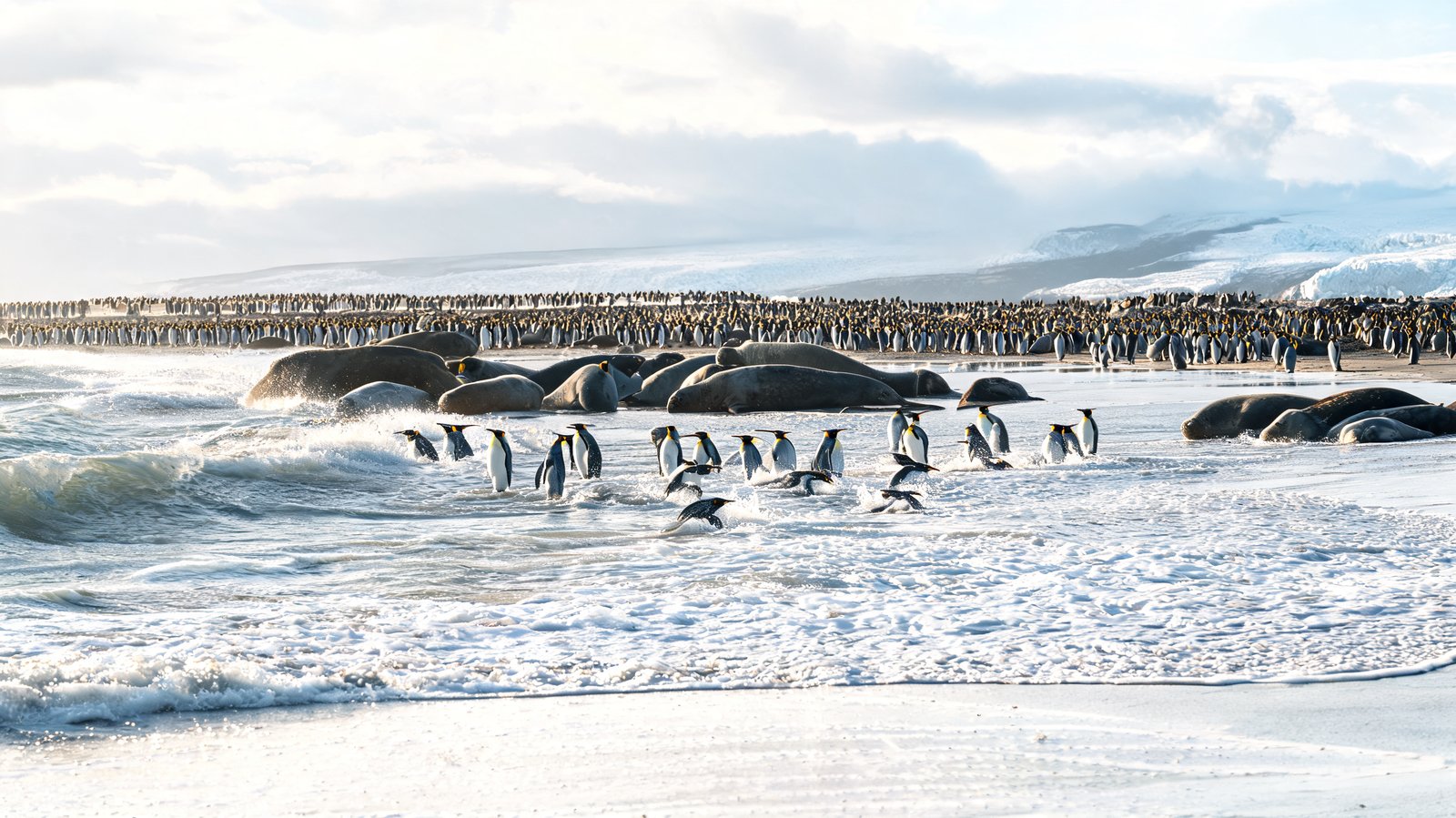
The largest king penguin colony on the island and the landing every other one is measured against. Birds spread across a glacial outwash plain in the hundreds of thousands, with elephant seals hauled out in front of them. Surf on this beach cancels more landings than any other site on the route.
King Penguins Outwash Plain Surf Landing
Explore →
Salisbury Plain & the Bay of Isles, South Georgia
South Georgia
Salisbury Plain & the Bay of Isles
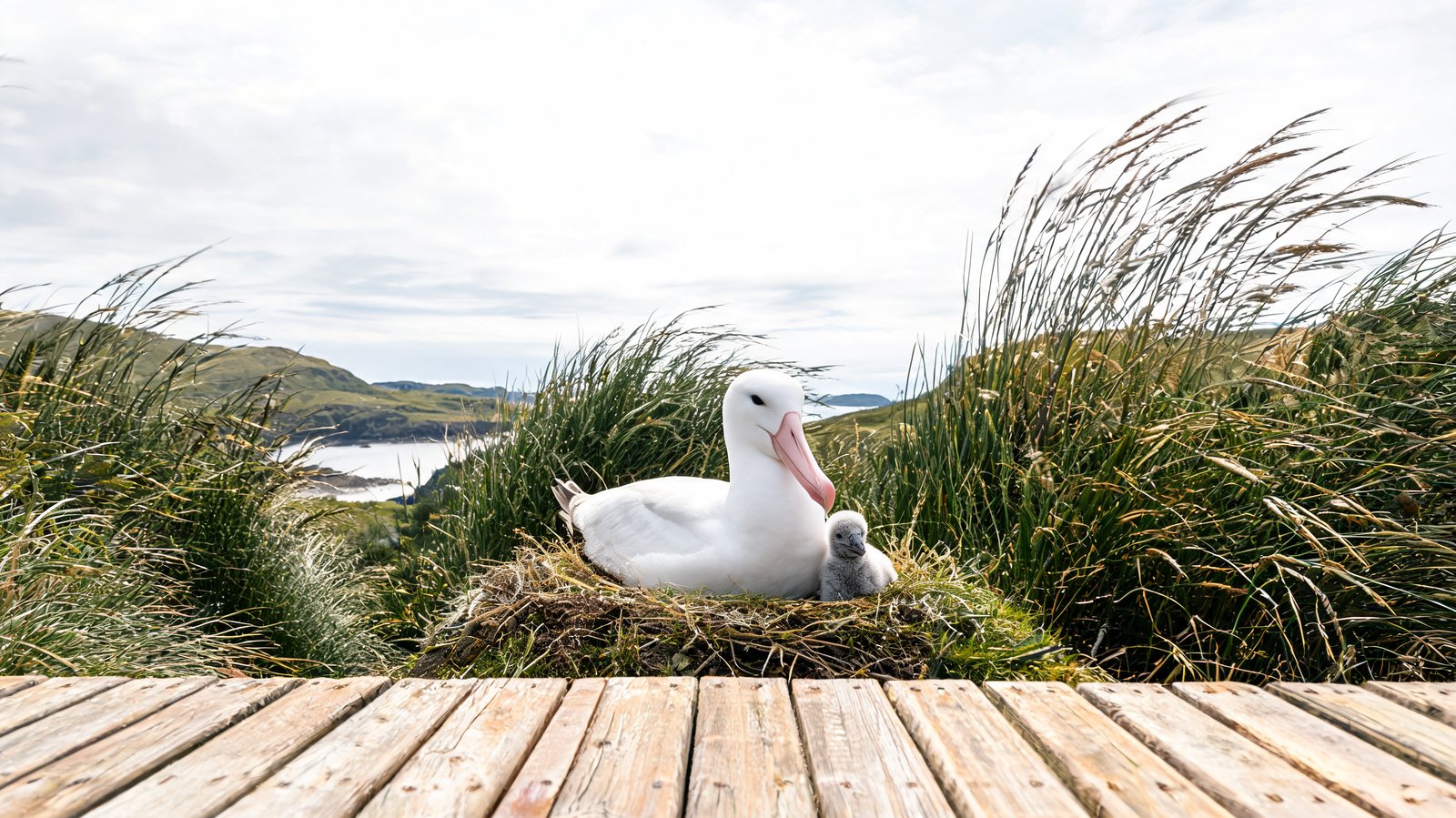
The other great king colony, on flat ground that is easier to land on and far easier to walk than St Andrews. Prion Island sits in the same bay and is the one accessible place to stand near a wandering albatross on the nest, from a boardwalk with a hard visitor cap and a seasonal closure.
Wandering Albatross Prion Island Boardwalk
Explore →
Grytviken & Cumberland Bay, South Georgia
South Georgia
Grytviken & Cumberland Bay
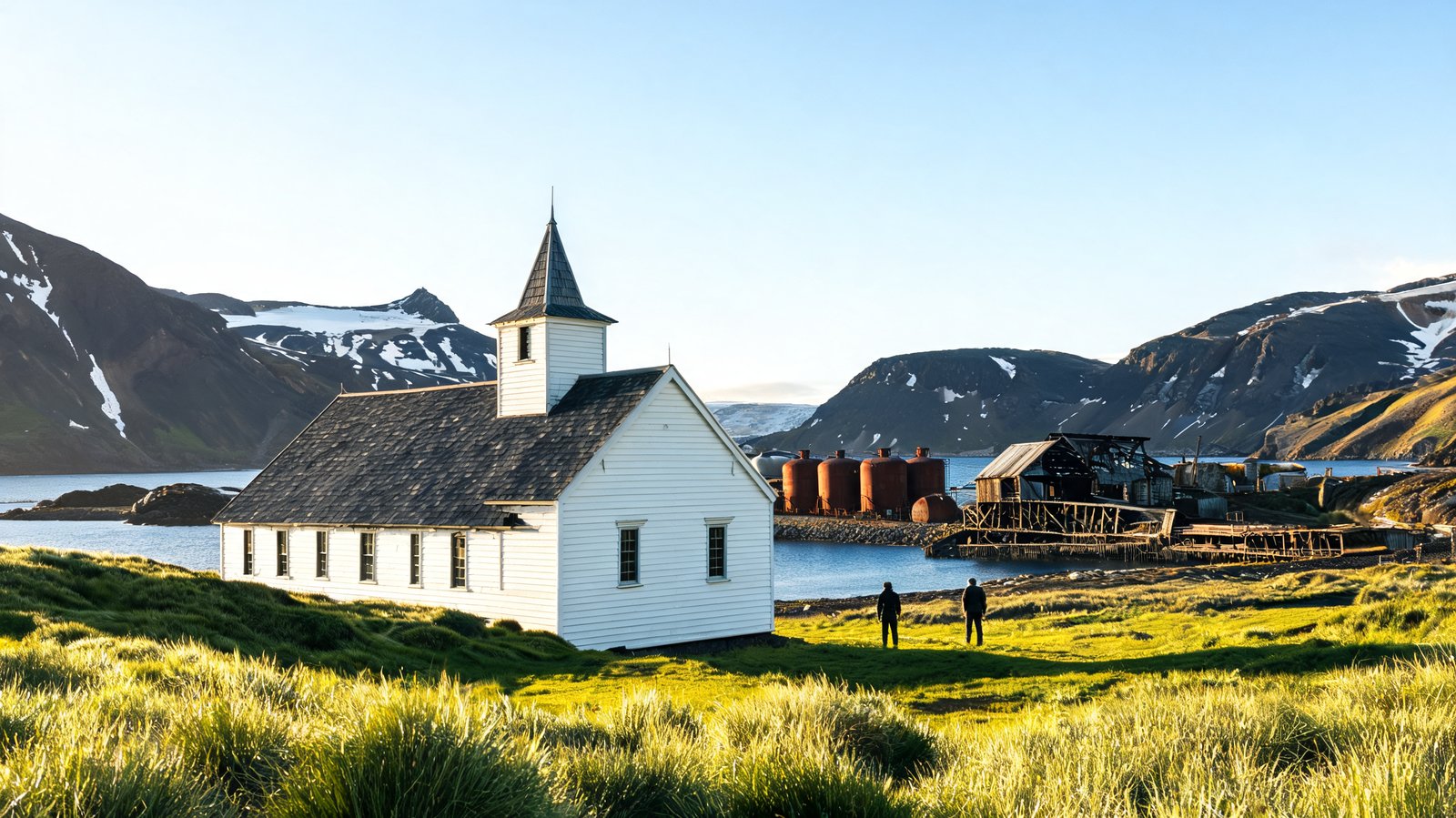
The only settlement, the only port of entry, and the single landing that is about people rather than animals. The whaling station, the museum, the white church, and Shackleton's grave in the whalers' cemetery where he was buried in 1922. It is also the only post office on the island.
Shackleton's Grave Whaling Station Museum
Explore →
Gold Harbour & Drygalski Fjord, South Georgia
South Georgia
Gold Harbour & Drygalski Fjord
The south-east end, and usually the last morning before the ship turns for the Peninsula. Gold Harbour compresses kings, elephant seals and a hanging glacier into one small amphitheatre of a beach. Drygalski Fjord is ship cruising rather than a landing, and it is where the rock stops looking sub-Antarctic.
Hanging Glacier Elephant Seals Ship Cruising
Explore →
Stanley & Volunteer Point, East Falkland
East Falkland
Stanley & Volunteer Point
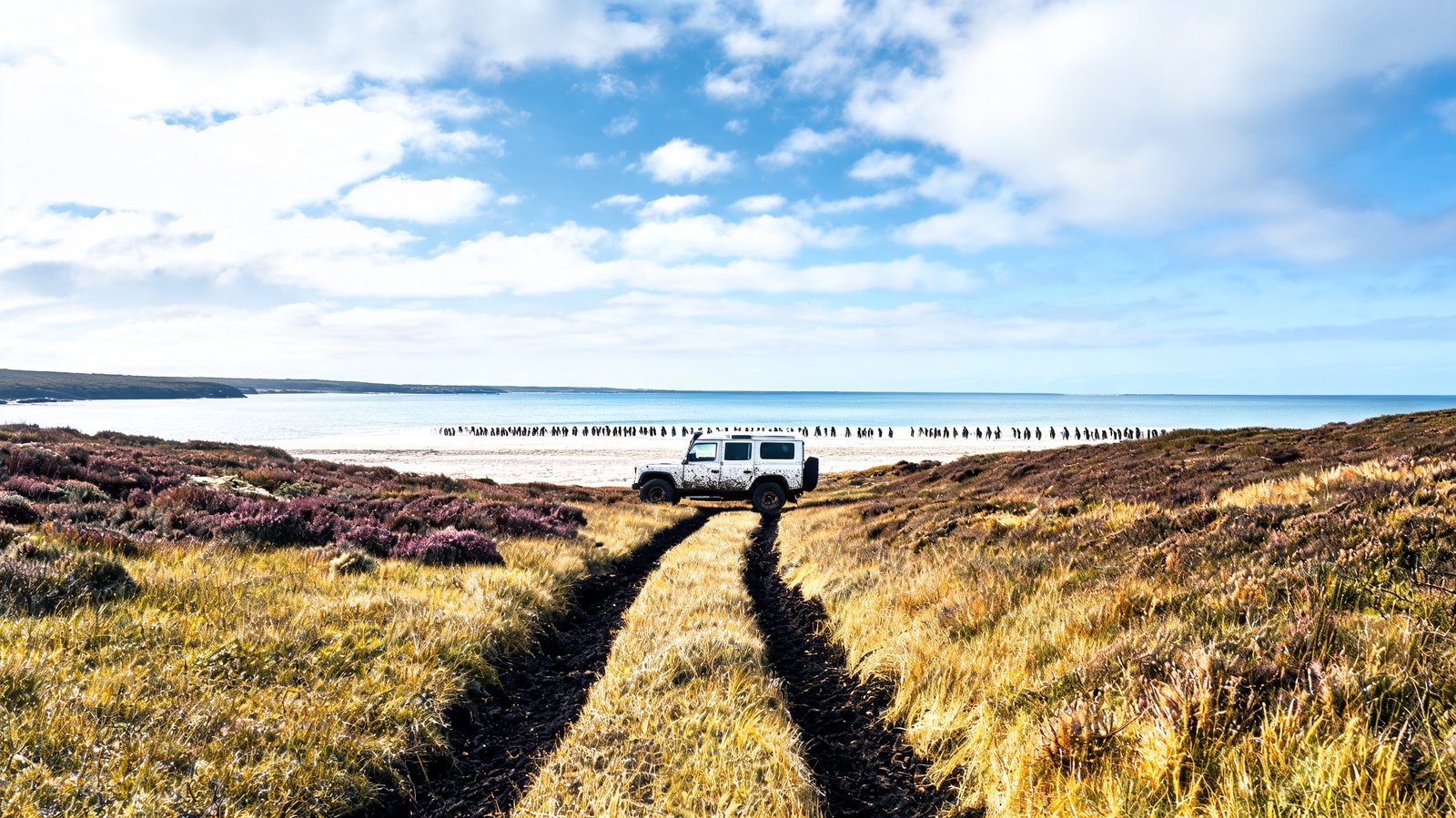
The capital, and the king penguin colony you reach by land instead of by ship. Volunteer Point is roughly two hours from Stanley in a 4x4, most of it off-road across open camp, and it is the only mainland king colony in the Falklands. Book the vehicle and the driver, not a bus seat.
Volunteer Point Off-Road Track Stanley
Explore →
Carcass, Saunders & Sea Lion, Outer Falklands
Outer Falklands
Carcass, Saunders & Sea Lion
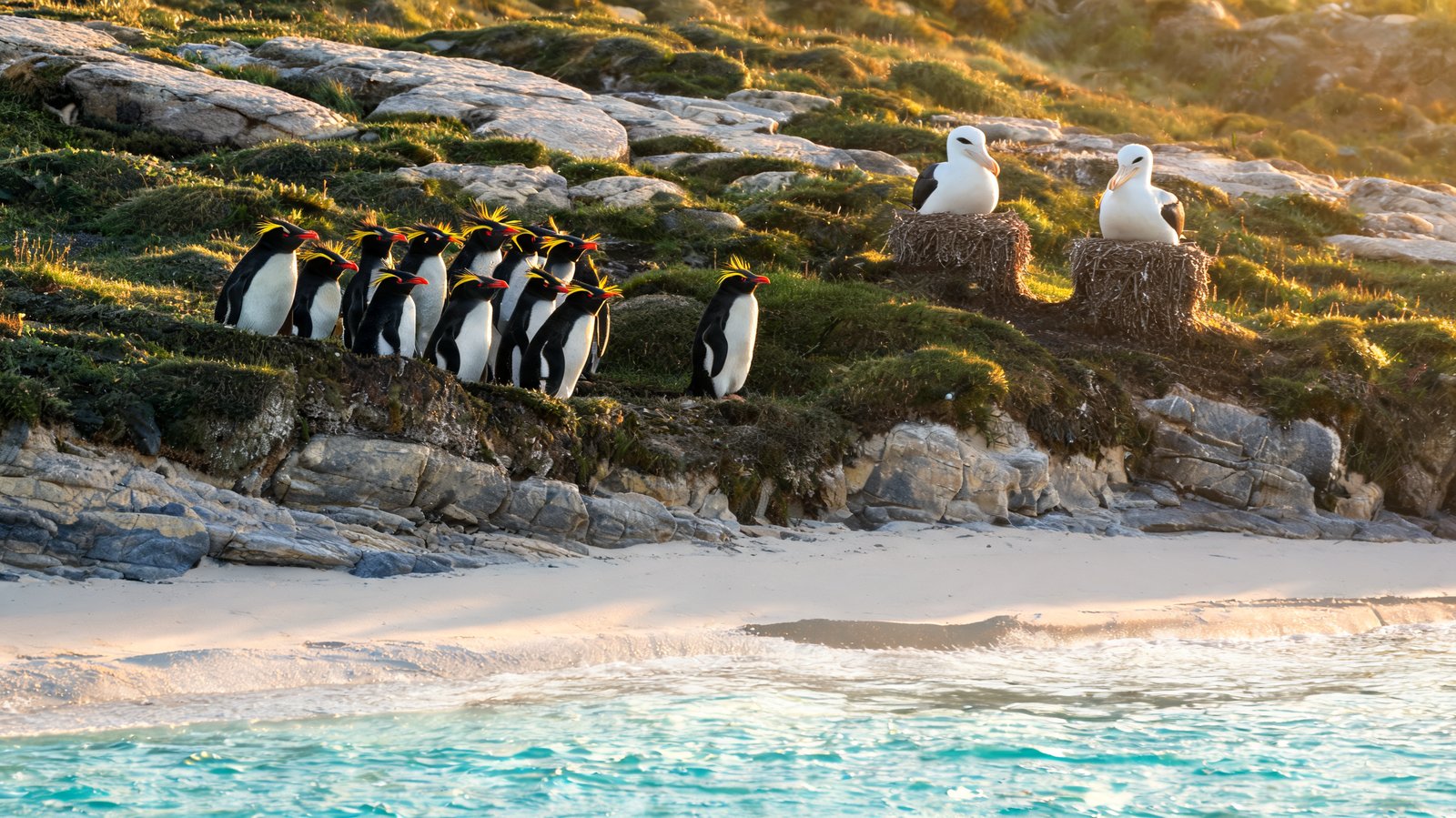
Where the Falklands stop being a cruise stop. These islands have small farm lodges, a grass airstrip each and the government air service between them. Rockhopper colonies on the cliffs, black-browed albatross nesting an arm's length from the path, and no ship's schedule deciding when you leave.
Rockhoppers Albatross Colonies Island Lodges
Explore →
Featured Itineraries

Trips We Plan Often

Four shapes, and the choice between them is really a choice about days and about whether the ice matters more to you than the birds.
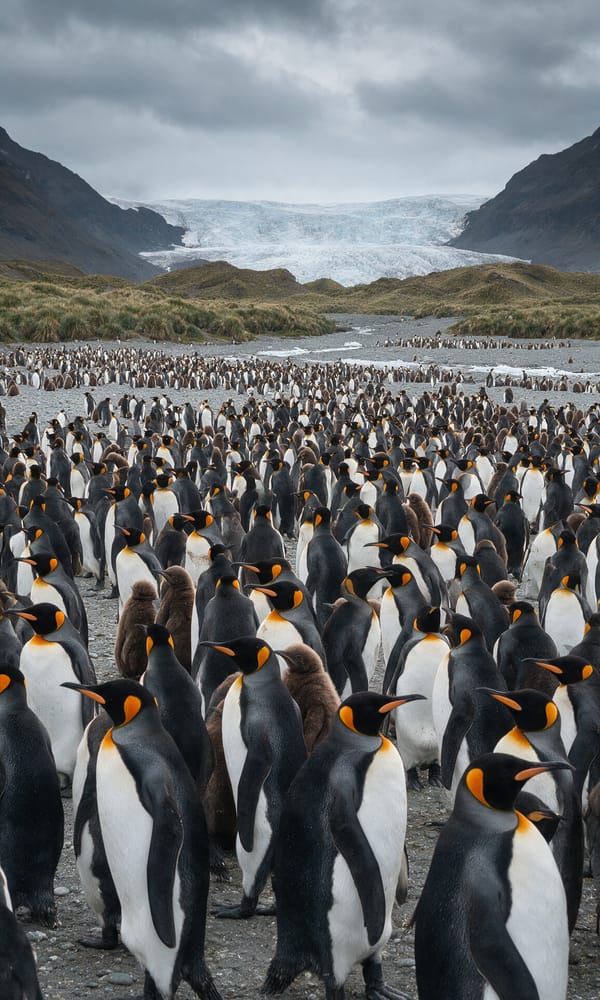
King penguins and brown chicks massed across the Salisbury Plain outwash below a South Georgia glacier
October – March · 18–22 Days
The Full Southern Ocean Circuit
Ushuaia to the Falklands first, for two days of landings that work as an introduction rather than a highlight — gentoos in the tussock, rockhoppers on the cliffs, and the first black-browed albatross most people have stood near. Then two days at sea to South Georgia and four or five days working the north coast: Salisbury Plain, Grytviken, St Andrews Bay, Gold Harbour, and whatever the weather allows in between. Two more sea days to the South Orkneys and the Peninsula for six or seven days of ice, then the Drake home. It is a long time on a ship and it is the itinerary experienced polar travellers rate above every other.
Falklands · South Georgia · Antarctica18–22 Days
Plan This Trip
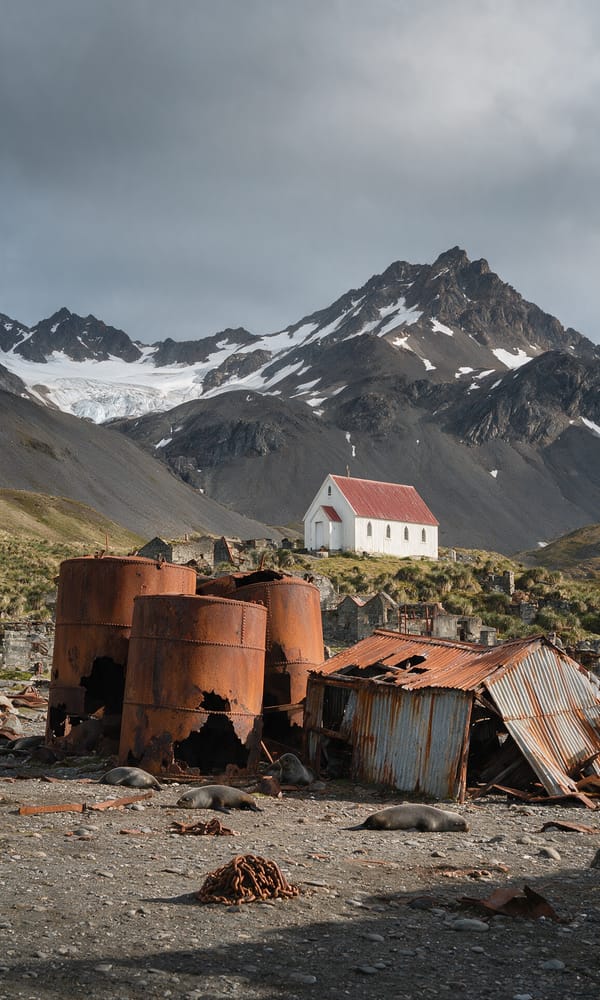
Rusted oil tanks and fur seals among the ruins of Grytviken whaling station below the white church
October – March · 14–16 Days
South Georgia Without the Peninsula
The itinerary almost nobody asks for and the one I recommend most often to people who have already been to the Peninsula. Cut Antarctica out and you buy days rather than lose them: six or seven days at South Georgia instead of four, which is the difference between racing the weather and being able to absorb a bad morning. Departures are fewer and they sell earlier, because the ships that run them are the small ones. If you have never been south at all, take the full circuit instead — the ice deserves its week and this version does not include it.
Falklands · South Georgia14–16 Days
Plan This Trip
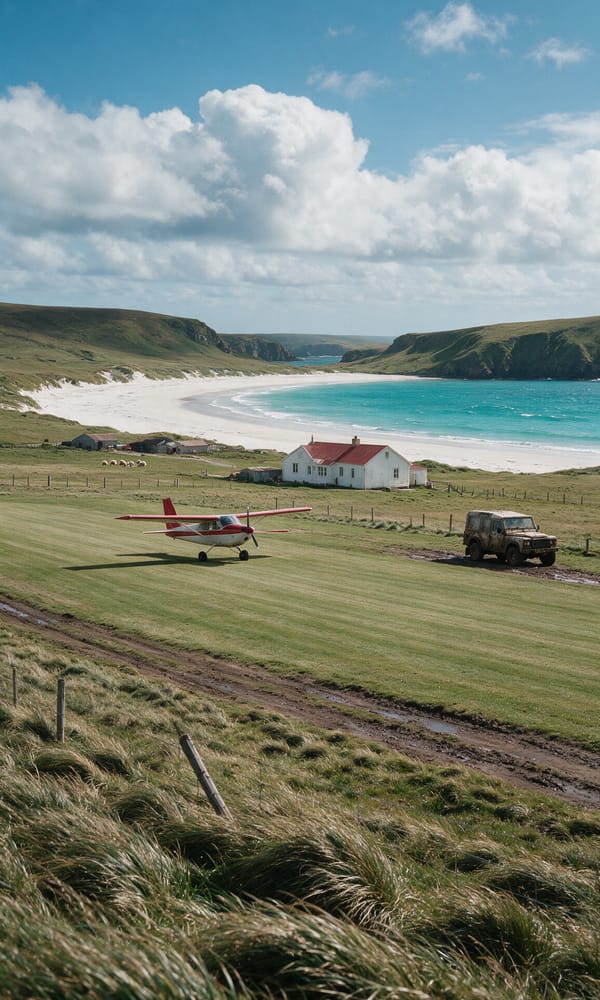
A small propeller aircraft on a grass airstrip above a white-sand Falklands bay, farm lodge beyond
November – February · 8–10 Days
The Falklands by Air, No Ship
A land trip, and by a wide margin the cheapest way to stand in a penguin colony in the South Atlantic. Two nights in Stanley with a 4x4 day out to Volunteer Point for the king colony, then the government air service out to two outer islands for three nights each — Carcass or Pebble for the passerines and the beaches, Saunders or Sea Lion for the rockhopper cliffs and the black-browed albatross. Farm lodges, full board, no formal programme and no ship's tannoy. Aircraft are small, seats are limited and baggage allowances are strict, so island order is booked well ahead.
Falkland Islands8–10 Days
Plan This Trip
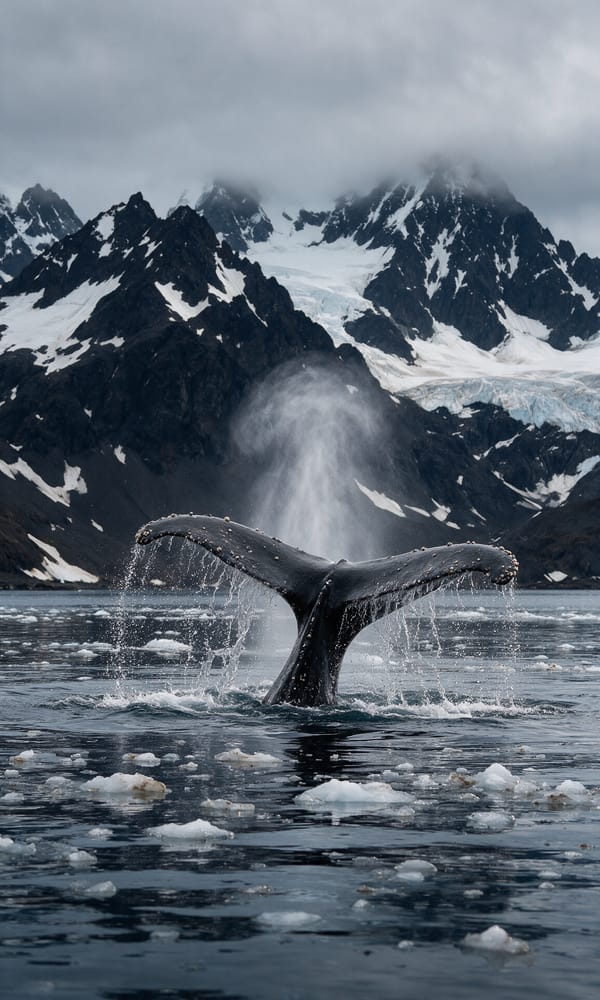
A humpback whale's tail lifting from a brash-ice channel below snow-streaked South Georgia mountains
February – March · 18–21 Days
Late Season, for Whales and Albatross
The same circuit taken at the far end of the season, for a specific set of reasons. Humpback and fin whales are feeding in numbers off South Georgia and in the Peninsula channels by February. Fur seal pups have dispersed off the landing beaches, which reopens sites that were unusable in December. Prion Island is open again after its pupping closure, so the wandering albatross boardwalk goes back on the table. King penguin chicks are in full brown down and unmissable. The trade is colder, darker evenings and a rougher average sea state — take it if wildlife, not weather, is what you are optimising for.
South Georgia · Antarctica18–21 Days
Plan This Trip
Why Plan With Us

What We Add to South Georgia Planning

This is a trip where the decisions made at booking determine how many hours you spend ashore, and almost none of them are visible in a brochure.

Passenger Count Is Landing Time
Under IAATO operating procedures no more than 100 passengers are ashore at one site at any moment, and vessels carrying over 500 passengers do not land at all. On a 100-berth ship everyone is ashore for the whole window. On a 200-berth ship the same window is split in two and your morning at St Andrews Bay halves. That single number decides more about this voyage than the cabin, the food or the brand on the hull, and it is the first thing we look at.
Landings Are Weather, Not Itinerary
Every published South Georgia itinerary is a list of intentions. Katabatic wind off the icefields and swell running onto open beaches cancel landings routinely, and St Andrews Bay in particular is lost to surf more often than operators advertise. The honest planning response is not a better brochure but more days at the island: five gives you slack, three does not. We also build the trip so a lost morning is disappointing rather than ruinous, which mostly means not hanging the whole voyage on one site.
Biosecurity Is Part of the Day
South Georgia was cleared of rats, mice and reindeer over a decade of work, and the South Georgia Heritage Trust declared the island rodent-free in 2018. Keeping it that way is why every visitor vacuums pockets, seams and Velcro, scrubs boot treads and washes tripods and camera bags before the first landing and between sites. It takes real hours out of a sea day and nobody mentions it before you board. Pack for it: fewer Velcro closures, no field kit that has been in grassland since it was last cleaned.
The Falklands Half Nobody Plans
On a voyage the Falklands get a day and a half and are treated as a warm-up. As a standalone trip they are a genuine birding destination with lodges, and the two versions barely overlap. The land version runs on the government air service, which flies small aircraft on schedules set the day before, with strict baggage limits and limited seats. That is a planning problem, not a booking one, and it is the reason most people who intended to add the outer islands end up seeing only Stanley. Lodges are small, often a single house taking eight or ten guests, and in December and January they are committed a year out. We treat the island order and the flights as the fixed points and fit the rest around them.
When to Go

South Georgia by Season

Early Season
October – November
The strongest window if South Georgia rather than the ice is the point. Snow still lies on the beaches and behind the colonies, which is what makes the photographs from this end of the season look different from everyone else's. Elephant seals are still on the breeding beaches, king colonies hold last season's brown-downed chicks alongside new eggs, and the fur seals that later carpet the landing sites have not yet arrived in force. Prion Island's albatross boardwalk is open until its pupping closure on 20 November. Fewer ships are running, and the Peninsula end of a combined voyage is colder and icier.
Best for South Georgia
High Summer
December – January
The longest days, the warmest air and the busiest departures. It is the easiest window for a first polar trip and the hardest one for South Georgia landings: fur seal pupping peaks in early December, and territorial bulls make some beaches genuinely unworkable for weeks. Prion Island closes from 20 November to 7 January for that reason. Penguin chicks are growing, the light runs almost around the clock, and the Peninsula half of a combined voyage is at its most reliable. If you are going once and want everything to be as straightforward as it can be, this is the window — book it eighteen months out.
Late Season
February – March
Whale season, and the quietest end of the calendar. Humpback and fin whales are feeding off South Georgia and through the Peninsula channels, in numbers that late-season travellers talk about for years afterwards. Fur seal pups have moved off the beaches, so landing sites that were blocked in December come back. Prion Island is open again. King penguin chicks are in full brown down, and the colonies are at their loudest. Against that: shorter days, a colder ship, and an average sea state that is worse than December. Departures are fewer and the ships are less full.
Ready When You Are

Plan the Long Version
With Enough Days at the Island

Tell me which season you can travel, whether you have already been to the Peninsula, and how many people you are willing to share a landing window with. I'll come back with the specific ships and departures that fit, and what each one gives up, within one business day.

Plan a Falklands & South Georgia Trip All Polar Regions Destinations

No booking fees  ·  Response within 24 hours  ·  Fully bespoke

What It Costs

What the Falklands and South Georgia Actually Cost

Priced per cabin category, per departure
Pricing here is set by cabin category on a single 18 to 22 day departure, and the Falklands also work as an air-and-lodge week costing a fraction of a berth, so no nightly figure covers both.
What actually sets the number
  • Cabin category — the same departure prices several ways on one hull
  • Passenger count — no more than 100 people are ashore at one site at a time
  • The government visitor permit — £250 a head from 1 July 2026, £275 from 2027, £300 from 2028

Tell me the dates and the party and you get a real quote, not a range. Source: South Georgia visitor permit fees.

Common Questions

Falklands & South Georgia — FAQ

The questions that come up most when someone is weighing the long voyage against a Peninsula crossing — days, months, landings, biosecurity, and whether the Falklands stand on their own.

Yes, if wildlife rather than ice is what you came for, or if this is a second polar trip. The Peninsula gives you the landscape — the icebergs, the channels, the sense of a continent. South Georgia gives you density: king penguin colonies in the hundreds of thousands on one beach, elephant seals, fur seals and albatross, at a scale nothing on the Peninsula approaches. The cost is another eight to ten days and four extra days at sea. For a first trip on a fixed budget the Peninsula voyage is still the better buy.

Eighteen to twenty-two days from Ushuaia with the Peninsula included, and fourteen to sixteen without it. Roughly a third of that is sea days: two to the Falklands, two more to South Georgia, two back toward the Antarctic, and the Drake at the end. Book twelve to eighteen months ahead. These itineraries run on the smallest ships in the fleet, there are far fewer departures than for the Peninsula, and the cabins worth having on them go first. Late availability exists and it is rarely on the vessels you would want.

Late October and November, if the island rather than the ice is your priority. Snow still lies on the beaches, elephant seals are still ashore, and the fur seals that later block landing sites have not arrived in numbers. December and January are warmer, longer-lit and much busier, and fur seal pupping makes some beaches unusable. February and March bring the whales back and reopen the beaches. There is no bad month here, but the three windows are genuinely different trips and most people book the middle one by default.

Because introduced rodents nearly wiped out the island's ground-nesting birds, and one stowaway would undo a decade of eradication work. The South Georgia Heritage Trust declared the island rodent-free in 2018 after the largest project of its kind attempted anywhere. In practice you vacuum pockets, seams and Velcro, scrub boot treads, and have bags, tripods and walking poles inspected before the first landing and washed between sites. Nothing organic goes ashore. Requirements are set by the Government of South Georgia and the South Sandwich Islands and change; confirm current rules before booking. Checked .

None of them are, and marketing rarely says so plainly. Every South Georgia landing depends on swell, wind and whether the beach is clear of territorial fur seals, and St Andrews Bay is lost to surf more often than any other site on the route. A published itinerary is a list of intentions the expedition leader rewrites daily. The protection is days rather than promises: five days at the island absorbs two bad mornings, three days does not. Ask what the operator's contingency sites are before you book, not after, and ask how many separate days the ship holds at South Georgia rather than how many landings the brochure lists. The two numbers are not the same and only the first one is a commitment.

Yes, and for birders it is usually the better trip. Scheduled air links reach Stanley, and the government air service flies on from there to grass strips on the outer islands, where small farm lodges take guests on full board. A week gets you Volunteer Point's king colony from Stanley and three nights each on two outer islands, which is enough time to sit with a rockhopper colony rather than photograph it in the ninety minutes a ship allows. Five penguin species breed in the islands, per Falklands Conservation. It costs a fraction of a voyage.

They are separate jurisdictions with separate requirements, and on a voyage the operator handles the South Georgia side. For the Falklands, expect the standard set: a valid passport, onward or return travel, confirmed accommodation and adequate travel insurance, published by the Falkland Islands Government. South Georgia has no independent access at all — visits are made through permitted vessels under GSGSSI permits. Requirements change, so check your own government's current travel advice, such as the UK FCDO advisory, and confirm before booking. Checked .

Less demanding than it sounds, though Zodiac transfers and wet beach landings need reasonable balance and steady footing on loose ground. Landings are walks, not hikes. What the trip genuinely asks for is tolerance: three weeks on a small ship, four or more open-ocean sea days, and a schedule that changes daily. It is the wrong trip for anyone who needs a fixed plan, for a short holiday window, or for a first-time polar traveller on a tight budget. It is the right one for people who will happily spend six hours a day on a beach in the wind.
More questions answered on the Full FAQ Page
From the Journal

Read More on Planning Polar Regions