
Arabian Gulf

The Best Stopover
in Aviation.

Three nights in Dubai on the way to somewhere else is the highest-value trip in this region, and a two-week Gulf-only holiday is not. The architecture is genuinely extraordinary, Abu Dhabi and Doha hold the museums, and the desert starts an hour out of the city. But the material runs out faster than the brochures admit, and from May to September the outdoors closes entirely.

Best Season
Nov – March
Best For
Stopovers
& Architecture
The Region

Three Nights Is the Trip.
Two Weeks Is a Stretch.

The Gulf works from November to March, when Dubai and Abu Dhabi sit in the mid-twenties and everything outdoors is possible. From May to September daily highs pass 40°C and the whole day moves inside. Three or four days covers Dubai properly; a two-week Gulf-only holiday runs out of material. Abu Dhabi to Dubai is about 140 km.

The highest-value version of this region is three nights on the way to somewhere else. Dubai and Doha were built as connecting hubs and they are extremely good at it — a long-haul journey that would otherwise be twenty hours of airports becomes two nights of hotel, a morning of architecture and a dinner, and you arrive in Asia or Africa having slept. That is not a consolation prize. It is the single best use of the Gulf, and the reason I book more UAE nights than almost any other destination while recommending very few two-week Gulf holidays.

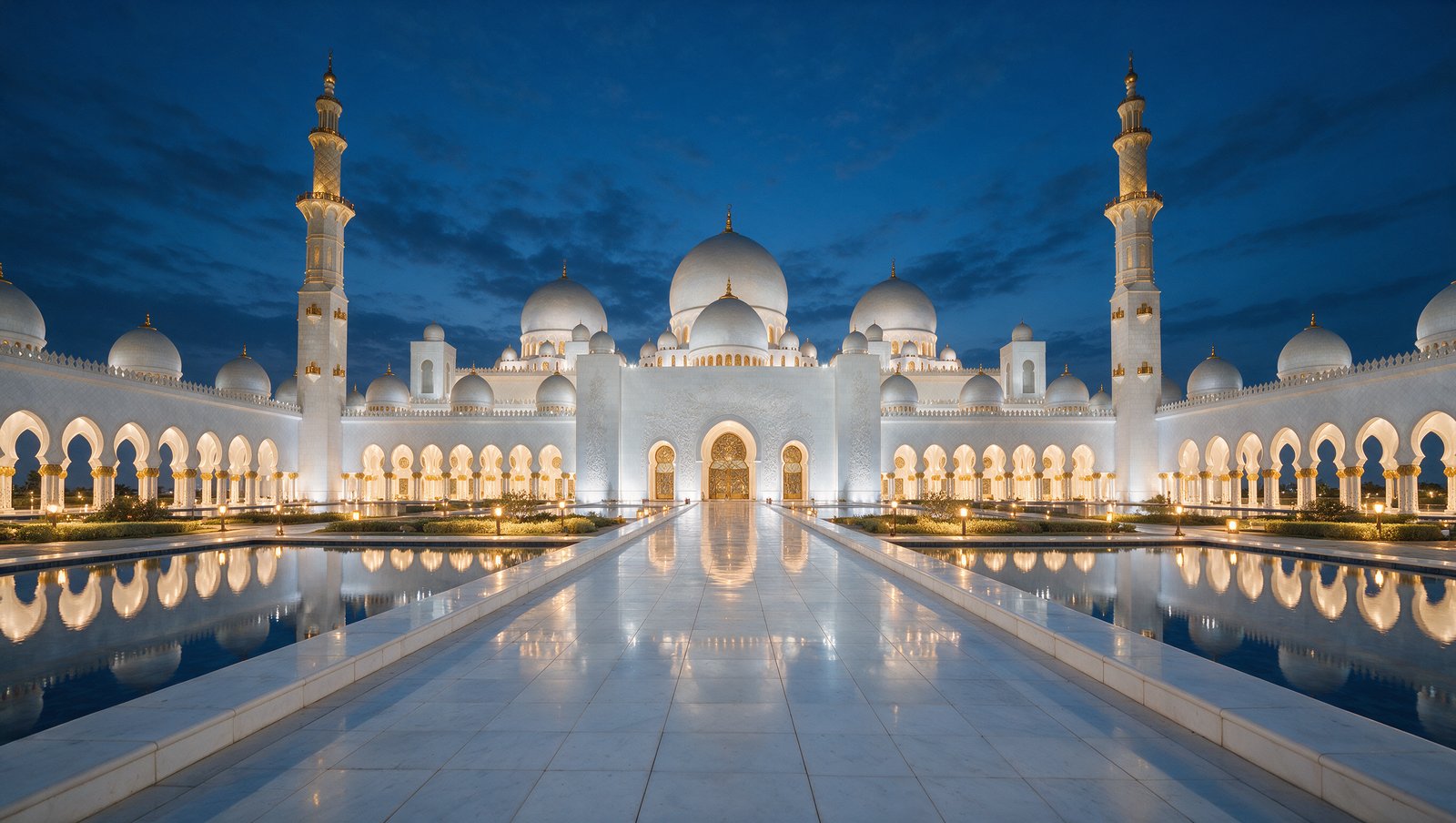
The three cities are not interchangeable. Dubai does scale and appetite — the Council on Tall Buildings and Urban Habitat lists the Burj Khalifa at 828 metres — plus the best restaurant depth in the region and a creek where trading dhows still load by hand. Abu Dhabi does culture and calm: the Sheikh Zayed Grand Mosque and Louvre Abu Dhabi on Saadiyat, and beaches that are not a construction site. Doha does museums, and it does them at a level Dubai has not matched.

Who it is wrong for: anyone who wants old towns, mountain villages and archaeology within a short drive. That trip exists on the same peninsula and it is Oman — wadis, forts, a fjord coastline and a road network built for it. Anyone travelling between May and September should also reconsider. The heat is not an inconvenience to be worked around with early starts; it is a wall, and the honest planning answer is a different month or a different country.
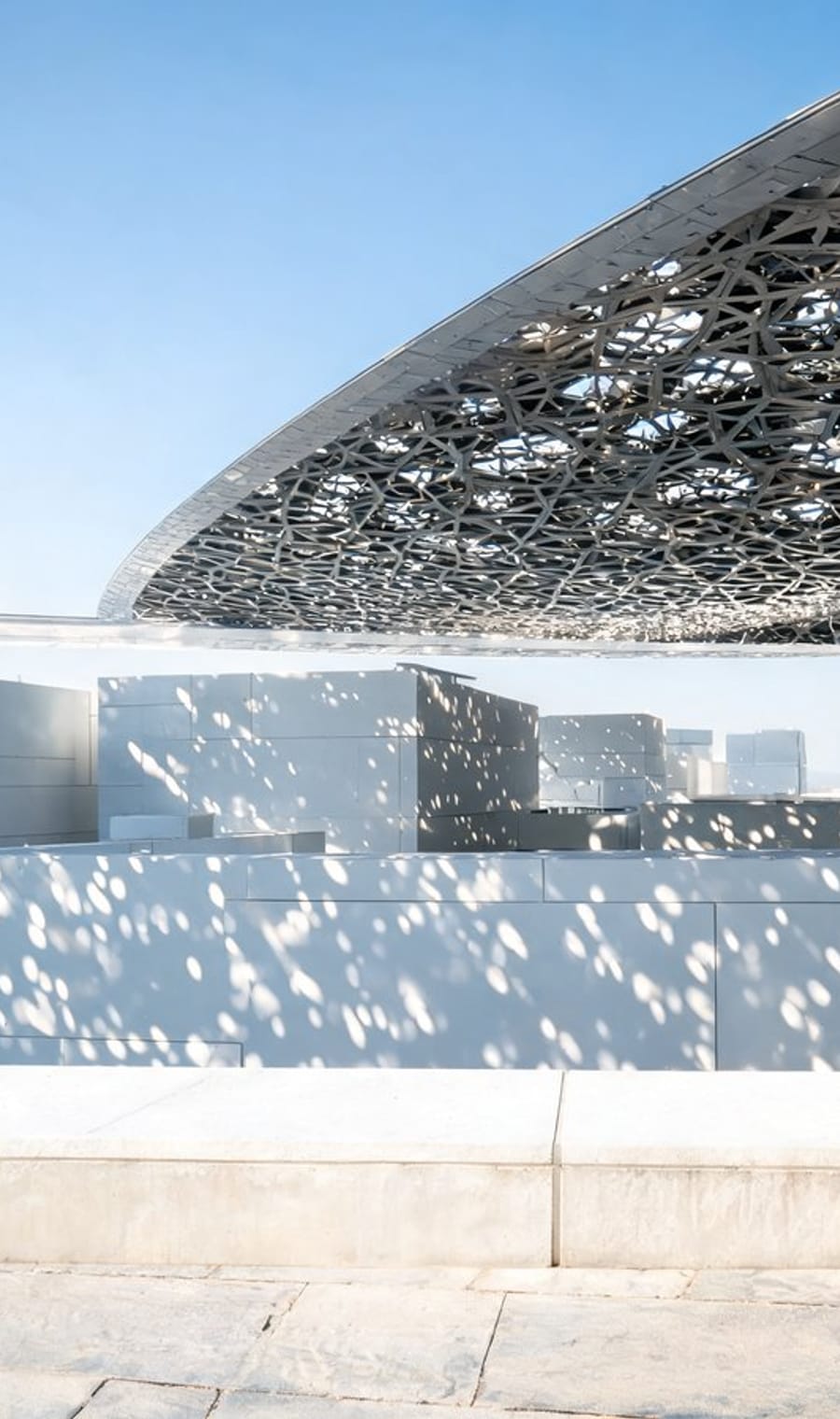
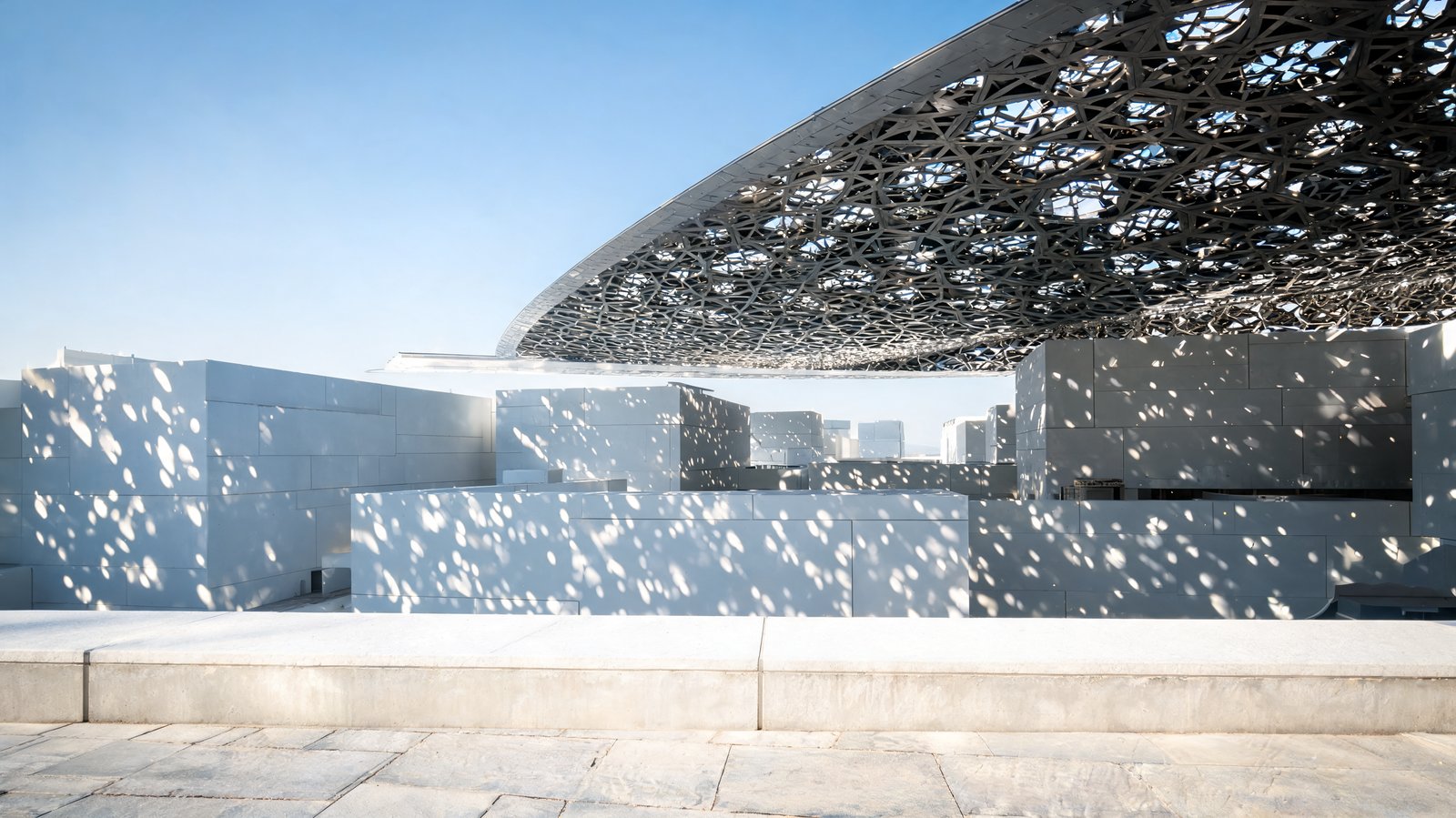
The perforated dome of the Louvre Abu Dhabi over its waterside courtyard
Louvre Abu Dhabi · UAE
Where We Send Clients

Six Places Worth the Days

The Gulf is a short list, honestly assembled. Two cities carry most itineraries, two deserts carry the nights people remember, and two of these are worth a border crossing rather than a day trip.
Dubai
Emirate of Dubai
Dubai
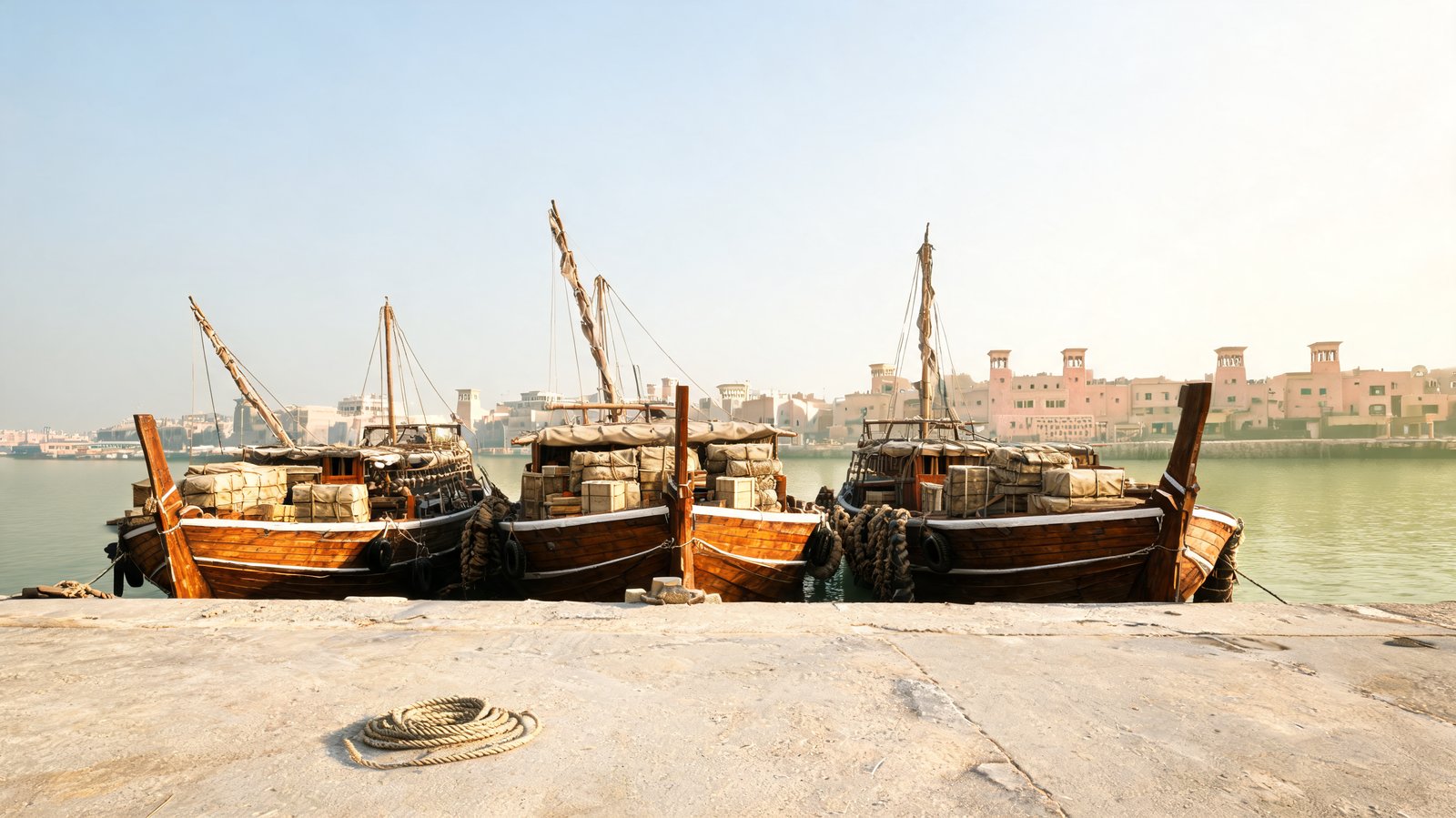
Three eras within twenty minutes of each other: the Burj Khalifa and the Downtown towers, the creek where dhows still load cargo by hand for Iran and East Africa, and the Al Fahidi quarter's wind-tower houses. Take the abra across the creek. It costs almost nothing and it is the best half hour in the city.
Burj Khalifa Dubai Creek Al Fahidi
Explore →
Abu Dhabi
Emirate of Abu Dhabi
Abu Dhabi
The quieter capital, and the better second base. The Sheikh Zayed Grand Mosque at the last hour of daylight, Louvre Abu Dhabi under Jean Nouvel's perforated dome on Saadiyat Island, and a corniche you can actually walk. Slower than Dubai, and the beaches are not fronting a building site.
Grand Mosque Louvre Abu Dhabi Saadiyat
Explore →
Liwa & the Empty Quarter, Al Dhafra
Al Dhafra
Liwa & the Empty Quarter
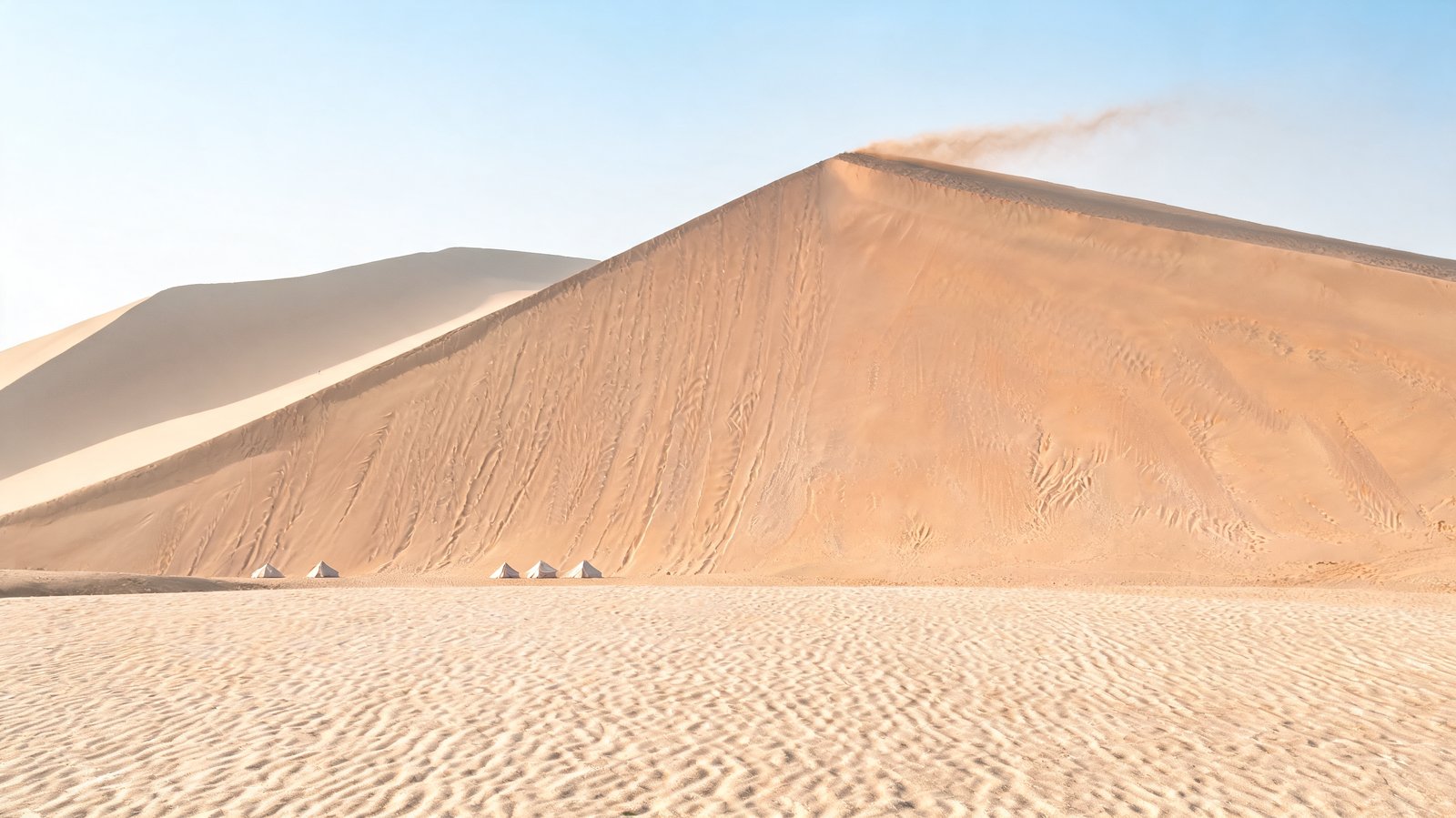
Roughly 240 km southwest of Abu Dhabi, where the oasis strip ends and the Rub' al Khali begins. Dunes measured in hundreds of metres, a horizon with nothing built on it, and silence of a kind the coast does not have. Two nights, not one — the first is spent recovering from the drive.
Rub' al Khali Desert Camp Two Nights
Explore →
Doha, Qatar
Qatar
Doha
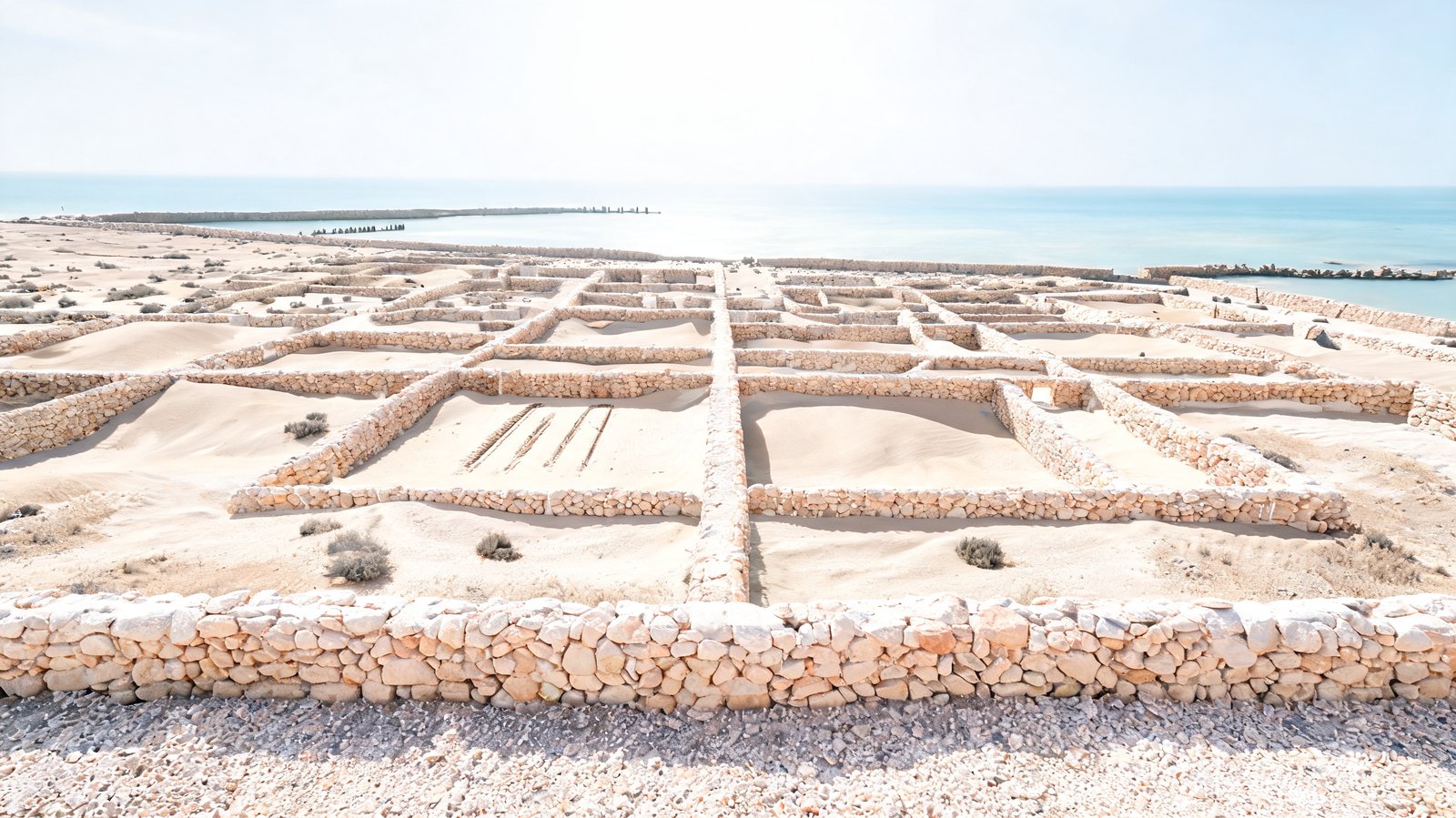
The museum city, and the reason to route home the other way. I. M. Pei's Museum of Islamic Art is the finest building in the Gulf and the collection justifies it. Add the National Museum, the restored Souq Waqif in the evening, and Al Zubarah on the northwest coast for the pearling-era ruins.
Museum of Islamic Art Souq Waqif Al Zubarah
Explore →
Al Ain, Emirate of Abu Dhabi
Emirate of Abu Dhabi
Al Ain
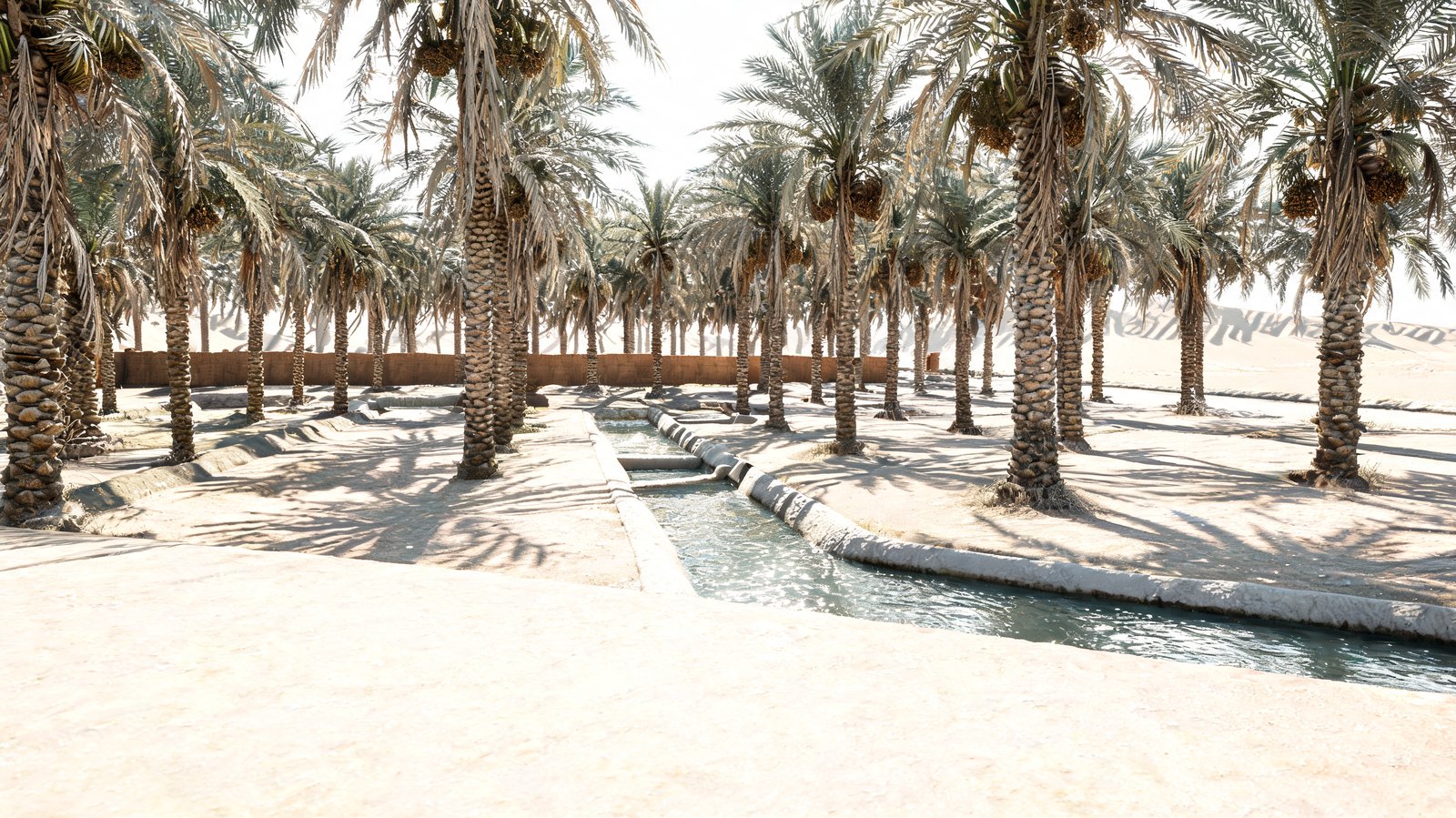
The UAE's only UNESCO World Heritage listing, and the answer to anyone who says the country has no history. Bronze Age tombs at Hafit and Hili, oases still watered by falaj channels, and a camel market. Inland and higher, so it runs a few degrees cooler than the coast.
UNESCO Falaj Oases Hili Tombs
Explore →
Ras Al Khaimah, Northern Emirates
Northern Emirates
Ras Al Khaimah
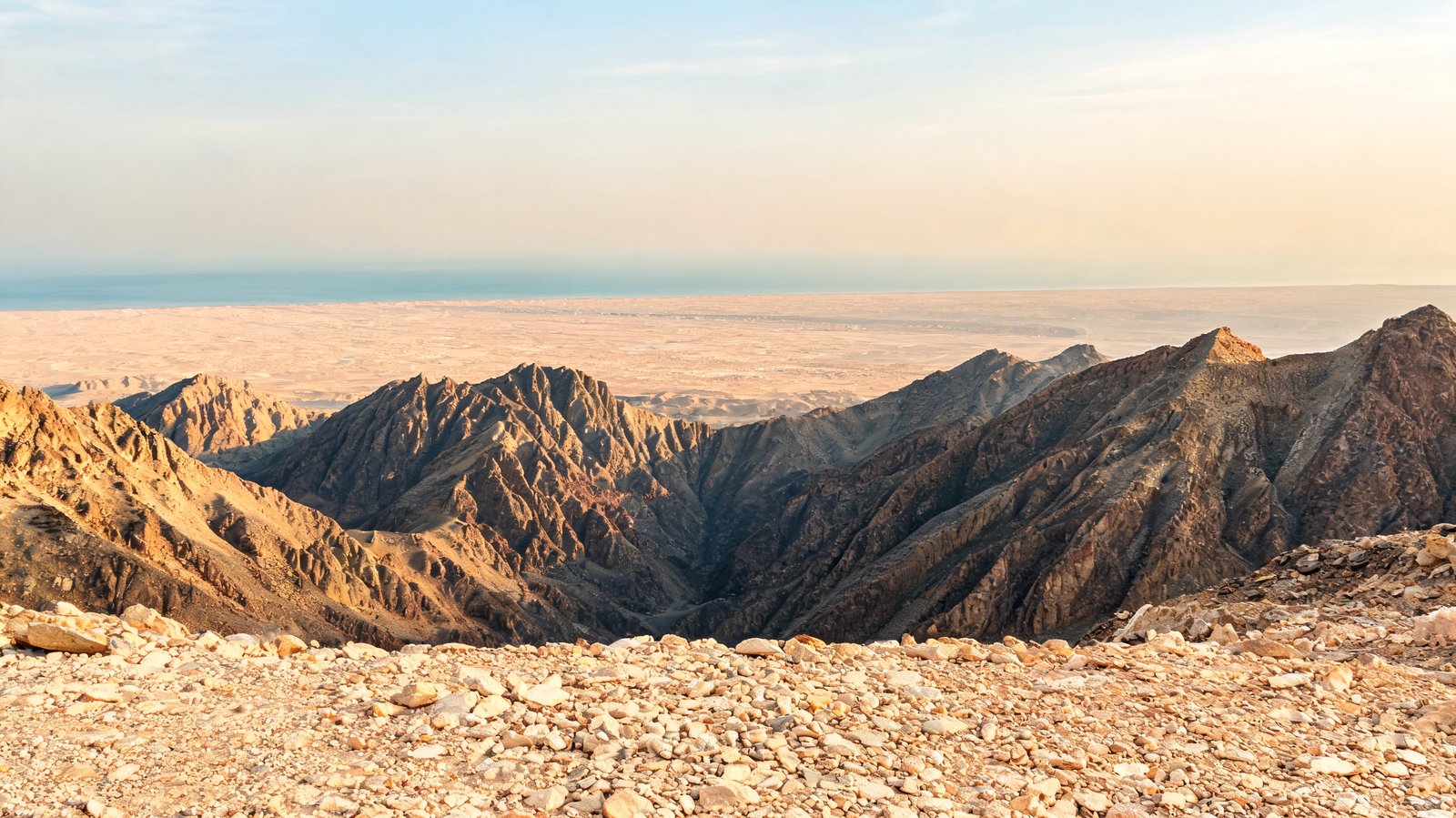
Where the Hajar Mountains reach the UAE and the road up Jebel Jais climbs past 1,900 metres, the highest in the country. Ten degrees cooler at the top, hiking that works in winter, and a coastline without the Dubai density. The nearest thing in the Emirates to an Oman landscape day.
Jebel Jais Hajar Mountains Quiet Coast
Explore →
Featured Itineraries

Trips We Plan Often

Gulf itineraries built around the honest length of the place — a short one that earns its keep, two that fill a week well, and one that crosses the border to where the landscape is.
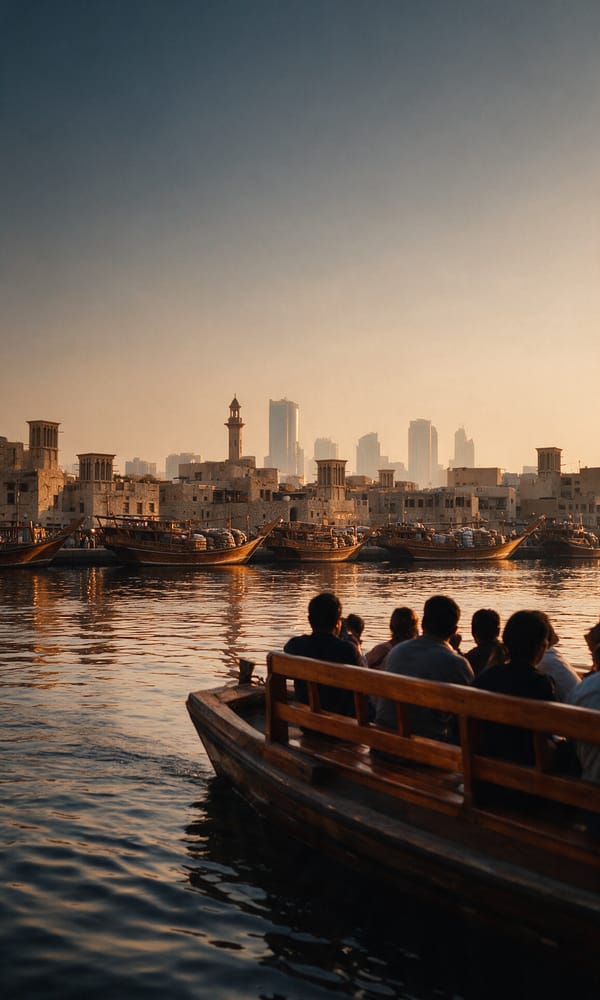
A wooden abra crossing Dubai Creek at dusk past moored dhows and Al Fahidi wind towers
November – March · 3–4 Days
The Stopover, Done Properly
The version of the Gulf I book most, and the one that returns the most per night. Break a long-haul routing with three nights rather than a connection: a hotel chosen for the arrival hour rather than the brochure, a first morning kept deliberately light, and an afternoon on the creek — the abra crossing, the spice and gold souks, the Al Fahidi wind-tower houses. One evening for the observation deck or a dinner worth the flight, one full day held for the beach or the pool, and a mosque visit in Abu Dhabi if the schedule allows the round trip. You land at the real destination rested instead of wrecked, which is the entire argument.
Dubai3–4 Days
Plan This Trip
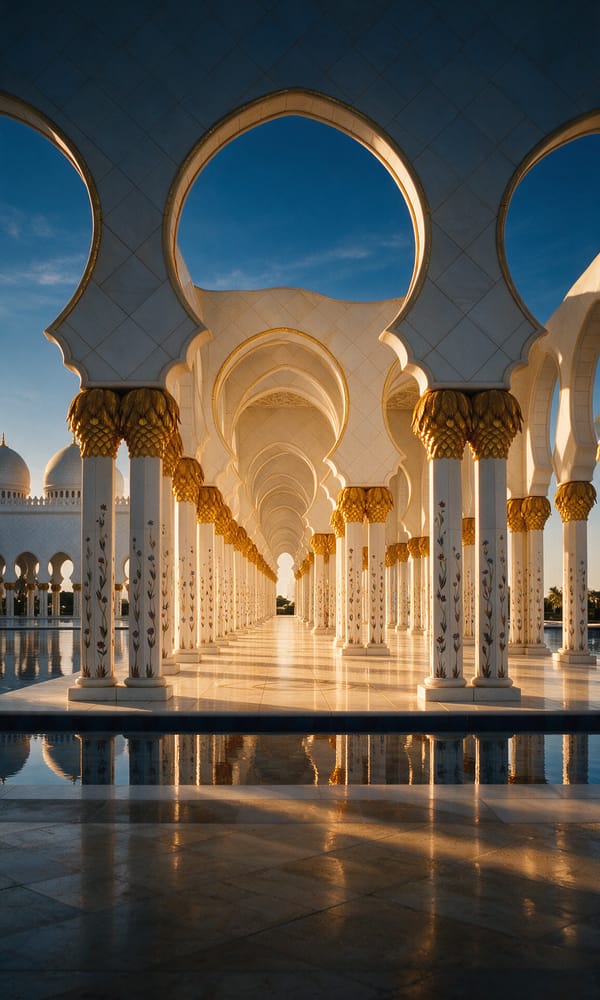
Inlaid white marble columns along the Sheikh Zayed Grand Mosque arcade in late afternoon light
November – March · 7–8 Days
Dubai and Abu Dhabi, One Week
Four nights Dubai, three or four Abu Dhabi, and one road transfer of about 140 km between them rather than two. Dubai first, while the appetite for scale is fresh: Downtown and the creek, a desert night inside a conservation reserve rather than a dune-bashing convoy, and a day with nothing scheduled. Then south to Abu Dhabi, where the pace drops. The Grand Mosque in the last hour of daylight, Louvre Abu Dhabi with a guide who can read a gallery arranged by chronology rather than by nation, and a day inland at Al Ain for the oases and the Bronze Age tombs. Beach days sit at the Abu Dhabi end, where the sand is quieter.
UAE7–8 Days
Plan This Trip
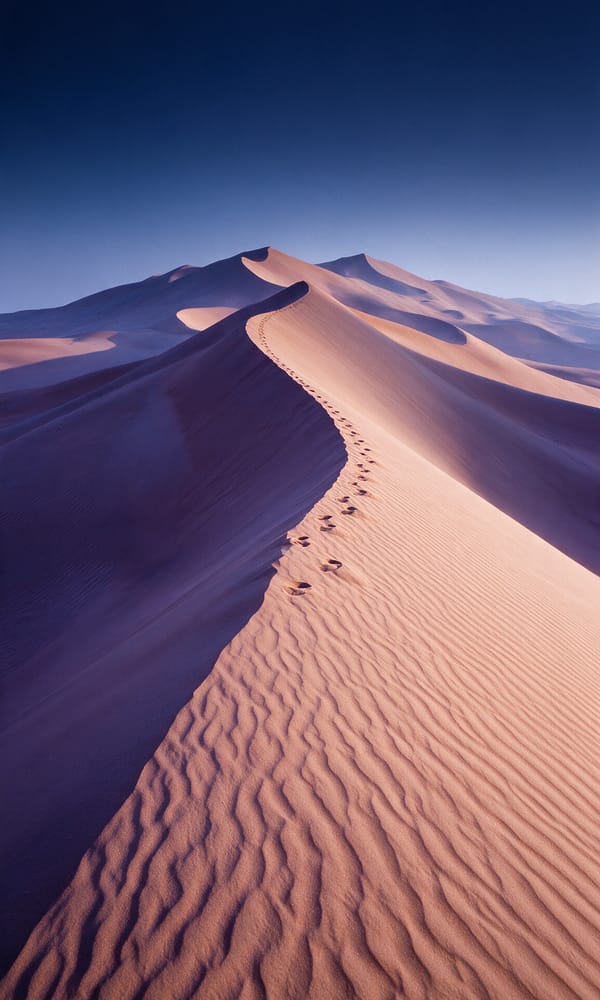
A sharp ridge climbing a vast Liwa dune at sunrise with footprints along the crest
November – February · 9–10 Days
The Gulf and the Empty Quarter
The week above with the desert taken seriously instead of sampled. Three nights Dubai, then Abu Dhabi for three, then roughly 240 km southwest to the Liwa for two nights on the edge of the Rub' al Khali — dunes in the hundreds of metres, a night sky the coast cannot offer, and mornings cool enough to walk a ridge. Add a night in Ras Al Khaimah on the way back for the Jebel Jais road and the Hajar escarpment. November to February only: this itinerary depends on being outdoors at midday, and from March onward it stops working. Two desert nights, never one, or the drive eats the experience it was meant to deliver.
UAE9–10 Days
Plan This Trip
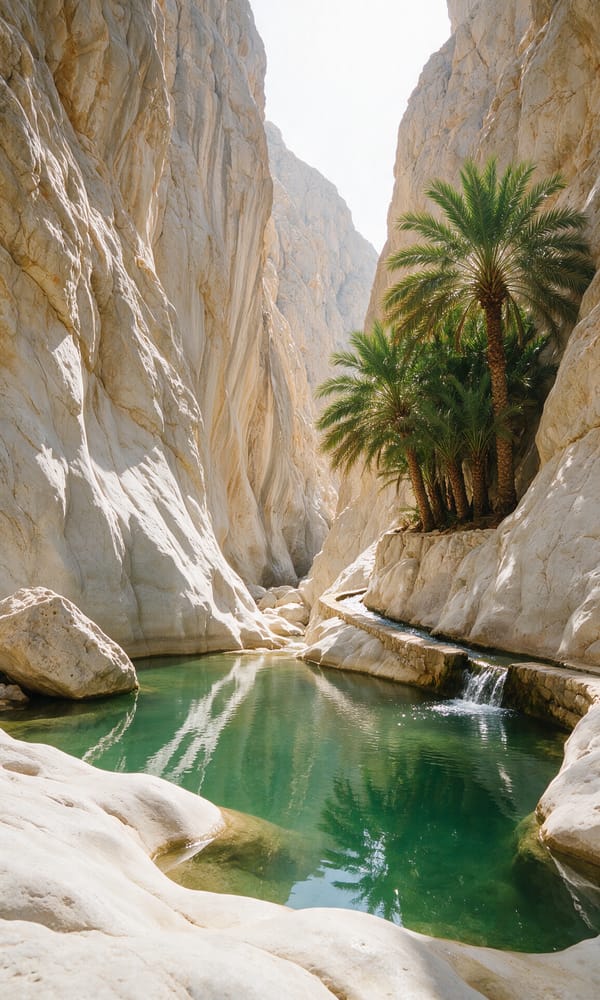
An emerald pool between sheer limestone walls with date palms in an Omani wadi
October – March · 11–13 Days
The Gulf Into Oman
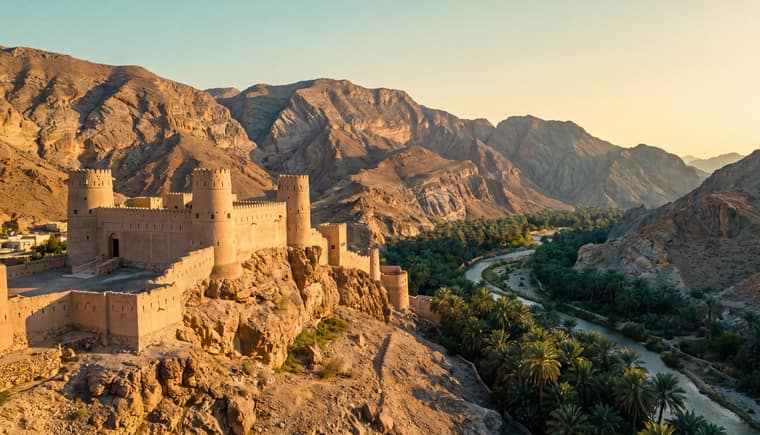
For travellers who wanted the Gulf to have landscape and history, this is the fix, and it is a border crossing rather than a compromise. Three nights Dubai and two Abu Dhabi for the architecture and the museums, then cross into Oman for six or seven: Muscat's souq and the Grand Mosque, the mountain road to Nizwa and Jabreen for the forts, a wadi day, and two nights in the Wahiba Sands. The contrast is the point — the Emirates show you what was built in fifty years, Oman shows you what was there before. Book the crossing and the vehicle properly; the paperwork is routine but it is not something to improvise at the border.
UAE & Oman11–13 Days
Plan This Trip
Why Plan With Us

What We Add to Gulf Planning

The Gulf is the destination where the brochure and the experience diverge fastest, and where the four decisions below account for almost all of the difference.

Which Address You Sleep At
Dubai is a forty-kilometre strip, not a city centre, and the address decides the trip. Downtown puts you at the tower and the restaurants and nowhere near a swimmable beach. The Marina and Jumeirah beach strip put you in the water and forty minutes from the old town in traffic. Al Fahidi and the creek side is where the history is and where the hotel stock is thinnest. Pick wrong and the week is spent in a car. Most of what a booking site describes as central is not central to anything you came for.
The Stopover, Engineered
A stopover is a scheduling problem before it is a hotel problem. It turns on which carrier's routing gives you a civilised arrival hour rather than a 3am landing, whether a day room or a late checkout is the cheaper fix for a night departure, and how far the hotel sits from the terminal you actually leave from — a detail that changes with the airline, not the city. The second night is what converts the exercise, because one night is a shower and a nap. Get those decisions right and a stopover reads as a short holiday. Get them wrong and you have paid for a hotel to sleep through jet lag in.
Desert Camps, Sorted Honestly
There are three products sold under one word. The coach-park version is an afternoon of dune bashing, a buffet under floodlights and a bus home, and it is what most people book. The second is a permanent camp inside the Dubai Desert Conservation Reserve, 225 km² of protected dune within an hour of the city, where the vehicle numbers are capped. The third is two nights out in the Liwa on the Empty Quarter's edge, which is the real thing and costs a full day of driving. We say which is which before you book, not after.
The Calendar Nobody Checks
Four things move Gulf dates and none of them appear on a booking engine. Ramadan shifts about eleven days earlier each Gregorian year and changes daytime hours everywhere; the UAE Government portal publishes current guidance. Eid fills domestic hotels. The Abu Dhabi Grand Prix at Yas Marina takes late-season rates vertical across both emirates. And the trade-fair calendar can double a Dubai room rate on a Tuesday in February for reasons no leisure traveller ever sees coming. We check all four before proposing dates.
When to Go

The Gulf by Season

Cool Season
November – March
The only window in which the outdoor half of the region exists. Daytime sits in the mid-twenties, evenings on a terrace are pleasant rather than survivable, and the desert nights turn genuinely cold — a jacket in the Liwa in January is not optional. Everything else follows from that: the mosque at golden hour, the corniche walk, the Jebel Jais road, two nights on a dune. It is also peak season, so the good desert camps and the beach properties in Abu Dhabi commit months ahead, and Christmas and New Year sit at the top of the rate card.
Best Overall Window
Shoulder
April & October
Two useful months either side, and they are not equivalent. April is the safer bet: the heat builds through the month, and the first half still supports a morning outdoors before it becomes an indoor day. October is the harder call, because the sea has absorbed a summer and the humidity lingers well after the air temperature drops. Take either for a city-and-hotel trip, where a pool and a museum carry the day. Do not take either for a desert itinerary — that is a November-to-February trip and pushing it costs you the thing you came for.
Summer
May – September
Genuinely unusable outdoors, and I would rather say so than sell it. Dubai and Doha run daily highs above 40°C for months at a stretch, with Gulf humidity on top; climate normals are published by the WMO World Weather Information Service. The city functions entirely indoors — malls, museums, hotel interiors — and the rates fall accordingly, which is the only argument for going. If a summer trip is fixed by school dates, it is a hotel holiday with air conditioning between destinations, and it should be planned as one rather than dressed up as sightseeing.
Ready When You Are

Plan a UAE & the Gulf Trip
At the Length It Deserves

Tell me whether this is a stopover or the whole holiday, which month you are tied to, and whether anyone in the party wants a desert night. I'll come back with a routing, the right side of Dubai to sleep on, and a straight answer about adding Oman within one business day.

Plan a UAE Trip All Middle East Destinations

No booking fees  ·  Response within 24 hours  ·  Fully bespoke

What It Costs

What the Gulf Actually Costs

$400–$1,500
per person, per day, land only. Ranges, not quotes.
What that includes
  • Half of a Dubai, Abu Dhabi or Doha five-star room with breakfast
  • The AED 20 a night Tourism Dirham on a five-star Dubai room, plus the charges that add 22–25% to a quoted rate
  • Airport transfers, a car on touring days and admissions like the observation deck and Louvre Abu Dhabi
What it does not
  • International airfare and the Oman crossing
  • Most meals — Dubai dining is where a Gulf budget actually goes
  • Desert camps in the Liwa, private aviation and gratuities
The two or three things that move it most
  • Dates — the Abu Dhabi Grand Prix and February trade-fair weeks can double a room rate
  • Address — a Downtown tower, a Jumeirah beach resort and a Saadiyat resort are three different price levels
  • Season — cool-season rates run well above the April and October shoulder, and collapse by June

Editorial planning bands, not quotes — assembled from published rates and official fee sources, verified . Rates, permit costs and park fees change; confirm before booking. Source: UAE Government hotel fees.

Common Questions

UAE & the Gulf — FAQ

The questions that come up most when planning a Gulf trip — how long it is really worth, which city to base in, what Ramadan changes, and whether the desert night is worth booking.

November through March, and it is not a close call. That window holds daytime temperatures in the mid-twenties, which is the difference between a region you walk and a region you drive between air-conditioned buildings. April and October are workable for a city trip built around a pool and a museum, but not for a desert itinerary. From May to September, daily highs run above 40°C with heavy coastal humidity — see the WMO World Weather Information Service for the climate normals. December and January are peak: Abu Dhabi beach properties and the good desert camps commit months ahead.

For three or four days, yes; as a two-week holiday on its own, it does not hold up. Dubai's core sights — the tower, the creek and old town, one desert night, one long lunch — are a genuinely good three days, and the restaurant depth will hold a fourth. Past that the city starts repeating itself, and people fill the gap with malls and theme parks they would not cross a road for at home. The honest fix is either to make it a stopover on a longer journey or to add Abu Dhabi, the Liwa and Oman until there is a real itinerary underneath it.

Dubai for a first trip, Abu Dhabi for a second, and both on anything over five nights. Dubai has the scale, the flight options and the eating; it also has traffic, construction and a forty-kilometre spread that makes the address you book more important than the brand. Abu Dhabi is calmer, greener and better for a beach week, and it holds the region's two strongest buildings in the Sheikh Zayed Grand Mosque, finished in 2007 for more than 40,000 worshippers, and Louvre Abu Dhabi, open since November 2017. They are about 140 km apart.

Not necessarily, but go in knowing the day runs on a different clock. Many restaurants outside hotels close during daylight, live music and bar service are limited, museum and mall hours shift, and eating or drinking in public during fasting hours is not done. In exchange, the evenings are the best of the year: iftar is a genuine event and the city stays up. Ramadan moves roughly eleven days earlier each Gregorian year, so it drifts through the good season — check your own year's dates against the UAE Government portal before fixing travel. Confirmed .

Most US, UK, EU, Canadian and Australian passport holders are issued an entry permit on arrival. Check your own nationality rather than what a friend was granted last year: eligibility, the length of stay it buys and the passport validity required all vary, and Qatar operates a separate set of rules again, so a two-country trip needs both checked. The authoritative source is the UAE Government portal, and the US State Department's UAE page carries current entry, exit and safety information for American travellers. Check your own government's current advice, and confirm before booking flights. Verified .

The shared dune-bashing afternoon is not; a permanent camp inside a conservation reserve or out in the Liwa is. The mass-market version puts forty vehicles on the same dune, serves a buffet under floodlights and returns you by ten, and it is what most people mean by the phrase. The alternative is an overnight at a fixed camp in the Dubai Desert Conservation Reserve, 225 km² of protected dune with capped vehicle access, or two nights in the Liwa on the Empty Quarter's edge. Different product, different price, same word on the booking page. Ask which one you are being sold.

Cover shoulders and knees in public buildings, dress as you like inside hotels and resorts, and follow the posted rules at mosques. Malls and souks expect modest dress from everyone; beaches and hotel pools do not. Women visiting the Sheikh Zayed Grand Mosque need a headscarf and full-length sleeves, and abayas are lent at the entrance. Alcohol is served in licensed hotels and restaurants across Dubai, Abu Dhabi and Doha, but Sharjah is dry. Public displays of affection and photographing people without asking both cause problems. None of this is onerous; it is simply not guesswork, and the current rules sit on the UAE Government portal.

Oman, if you want landscape and history; Qatar, if you want museums and a short second city. Oman is the substantial addition and the one I recommend most: forts, wadis, mountain villages and the Wahiba Sands, and six or seven nights is the minimum that does it justice. Qatar earns two or three nights on the strength of the Museum of Islamic Art, Souq Waqif in the evening and the pearling-era ruins at Al Zubarah, a UNESCO World Heritage Site since 2013. Inside the Emirates, Al Ain is the country's only World Heritage listing.
More questions answered on the Full FAQ Page
From the Journal

Read More on Planning Middle East