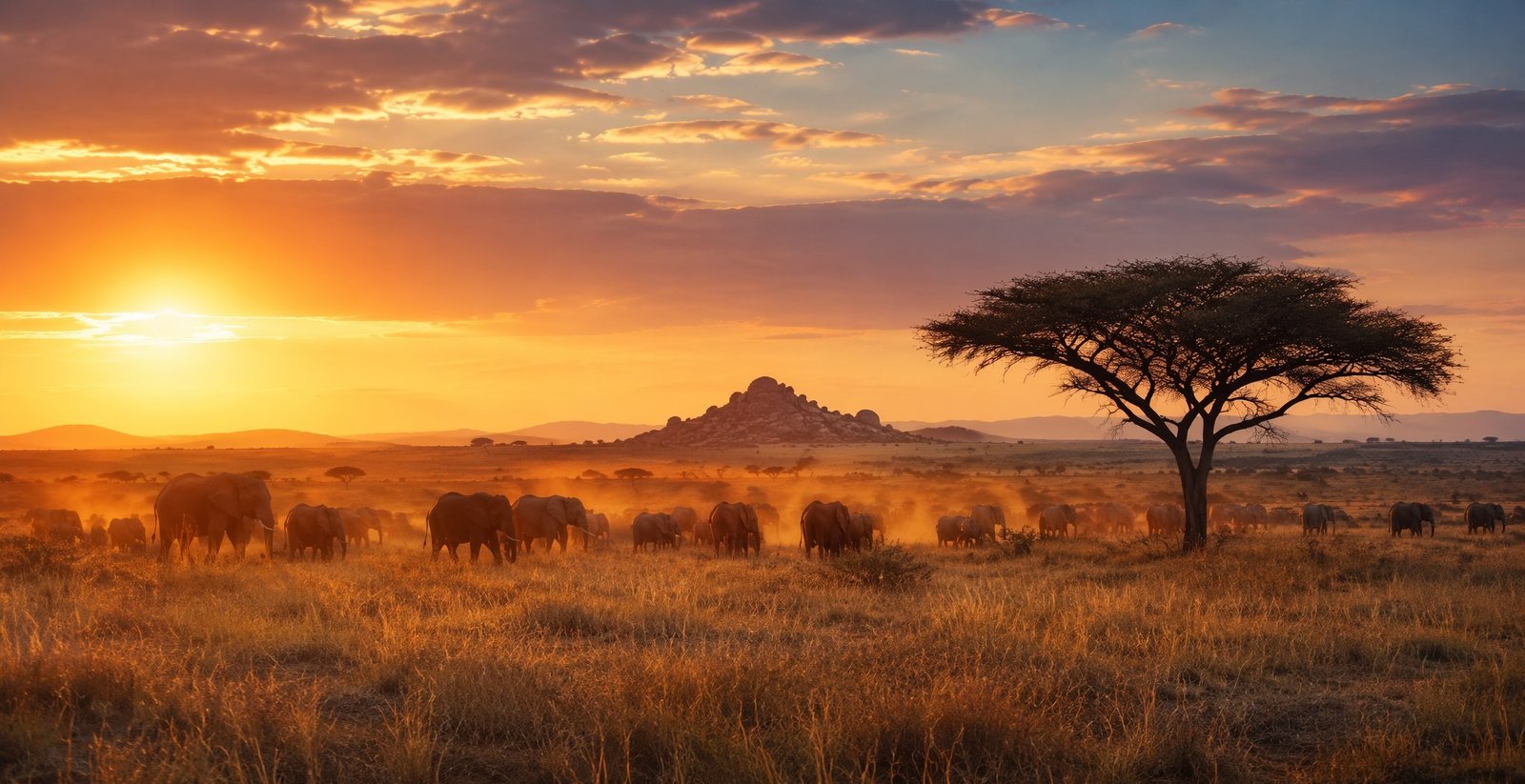
No destination in the world is planned worse than Africa. This is a continent of 54 countries and more distinct ecosystems than any other landmass on earth — and most people approach it as if it were a single product called "safari" with a few options to select from a dropdown menu. Country. Season. Budget. Click. The result is a significant number of trips that don't deliver what was imagined, not because Africa failed but because the wrong version of it was booked for the wrong reasons.
The single most consequential decision in planning an African safari is not the country, not the season, and not the budget tier. It is the camp. More specifically, it is the guide. A talented, deeply experienced guide at a mid-tier camp in a good ecosystem will produce a better safari experience than a disengaged guide at the most expensive camp on the continent. The guide is the person who reads the sand at 5 a.m. and knows that a leopard passed here less than an hour ago. The guide is the one who stops the vehicle and says nothing for forty minutes while a pride of lions makes a kill, because they understand that narration is the wrong choice. The guide is the difference between watching wildlife and understanding it — and that difference is the difference between a good trip and one you'll spend the rest of your life trying to replicate.
This guide covers six African regions that each represent a fundamentally different travel experience. Two of them — Morocco and the Indian Ocean islands — have nothing to do with game drives. The remaining four each deliver a distinct version of the safari experience that doesn't substitute for the others. The goal is to give you the framework to select the right region, the right season, and the right camp before the first conversation with a travel advisor begins.
The Camp Selection Question
The best camps in Africa share a small number of qualities that are easy to ask about and surprisingly often not asked. The first is guide tenure — specifically, how long the current senior guides have been at that camp, in that specific ecosystem. An experienced guide who has spent eight years tracking animals in the Okavango Delta knows those waterways in a way that a newer guide does not, regardless of their general competence. The second is vehicle policy: how many vehicles go out at a time, and how many vehicles are permitted at a single sighting? Camps that limit vehicles per sighting deliver a fundamentally quieter, more immersive encounter with wildlife. The third is camp size. The best camps are small — typically six to twelve tents. The intimacy of a small camp changes the quality of every meal, every sundowner, every morning debrief.
A large camp with bus transfers to game drives is not a safari in the same category as a small camp with dedicated vehicles and guides who have been in that ecosystem for years. Both can be marketed identically. Both can look similar in photographs. The experience on the ground is not the same.