Botswana Before the Crowd: Why Shoulder Season Changes Everything
The advice you'll find online is almost always the same: go in peak season, book well in advance, stay near the Okavango Delta. It's not wrong. But it's not complete, either.
Mark SoleFounder & Travel Director, Hit Your Mark Travel
Share
There is a version of a Botswana safari that most people know. July and August in the Okavango Delta — peak dry season, maximum wildlife concentration, camps running at full occupancy, prices at their highest. It's a well-earned reputation. The game viewing in peak season is extraordinary, and if that's the trip you want, it will deliver.
But there's another version that doesn't get written about as much, and I think that's because most of the people writing about Botswana safaris haven't actually been in May or June. I have. More than once. And the experience is different in ways that matter more than the calendar date on the booking.
This piece is about why shoulder season — specifically May and June — can produce a better trip for certain travelers than the peak months that everyone fights over. Not for every traveler. But for the right one, it's the version worth knowing about.
"The Okavango is one of the few places on earth where the best wildlife viewing and the lowest camp occupancy happen at almost exactly the same time."
First, the thing almost everyone gets wrong about the Okavango
The most common misconception about the Okavango Delta is that the flooding follows the local rains. It doesn't. Botswana's rainy season runs roughly November through March — but the floodwaters that fill the delta originate in the highlands of Angola, nearly a thousand kilometers to the north. By the time that water travels south through the Okavango River and fans out into the delta, months have passed.
The result is that the delta floods at precisely the time you'd least expect: the dry season. Peak flooding in the Okavango typically arrives between June and August — the same months that are considered prime safari season for every other reason. This is not a coincidence. It's why the delta works as an ecosystem at all: when the surrounding Kalahari is at its driest and most inhospitable, the delta is at its most expansive and most full of life.
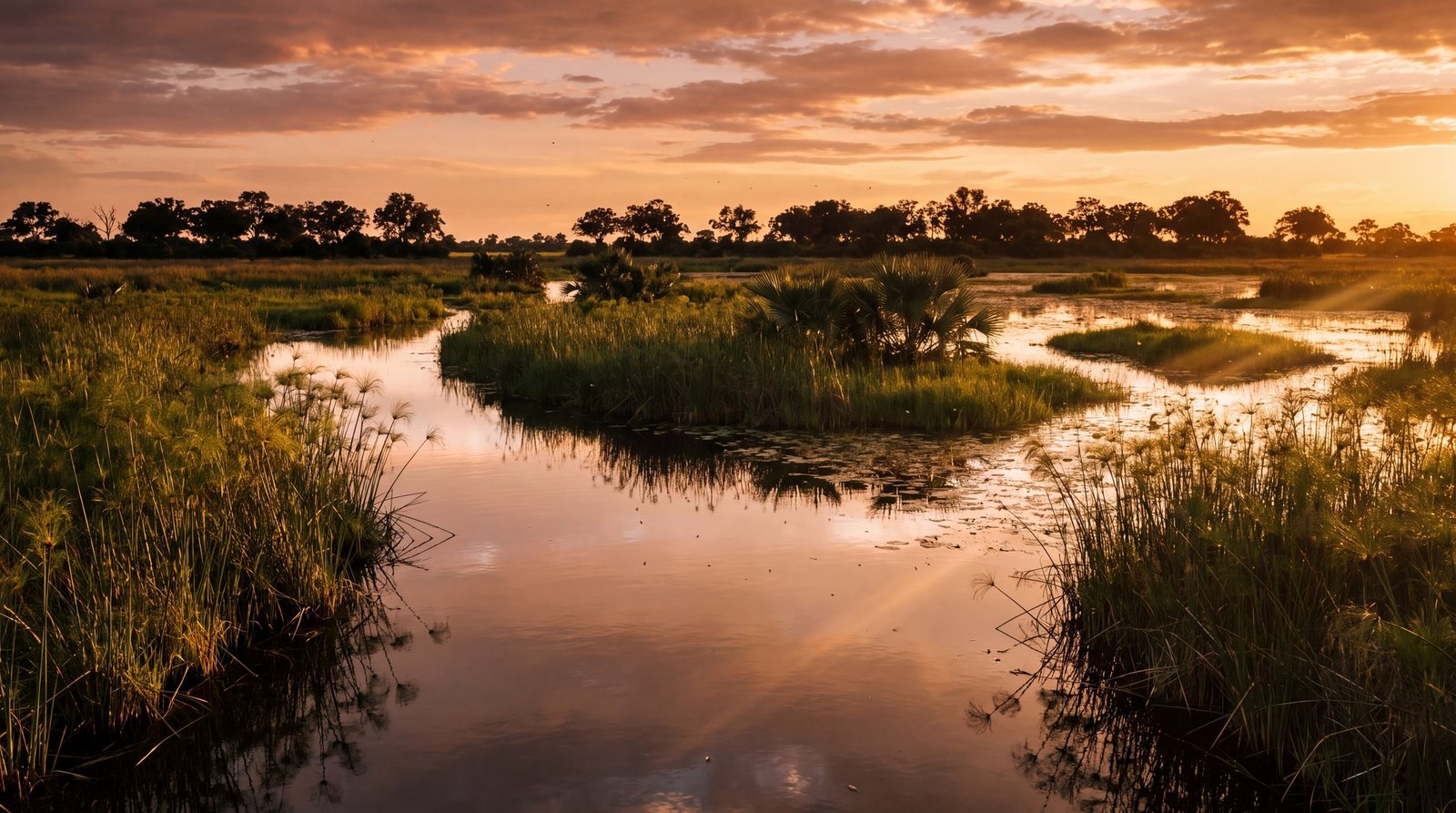
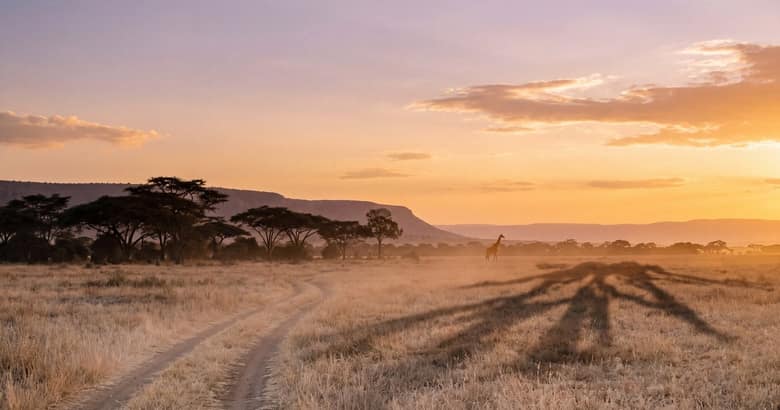
May sits at the beginning of that flood pulse. The water is rising. The landscape is transitioning from the green of the rainy season to the gold of the dry. The air is cooling. And the animals — which spent the wet months dispersed across a much larger range — are beginning to consolidate around permanent water sources. That consolidation is the thing you're there to see.
The Okavango floods counterintuitively — peak water arrives in the dry season, driven by rains that fell months earlier in the Angolan highlands.
What Moremi looks like in May
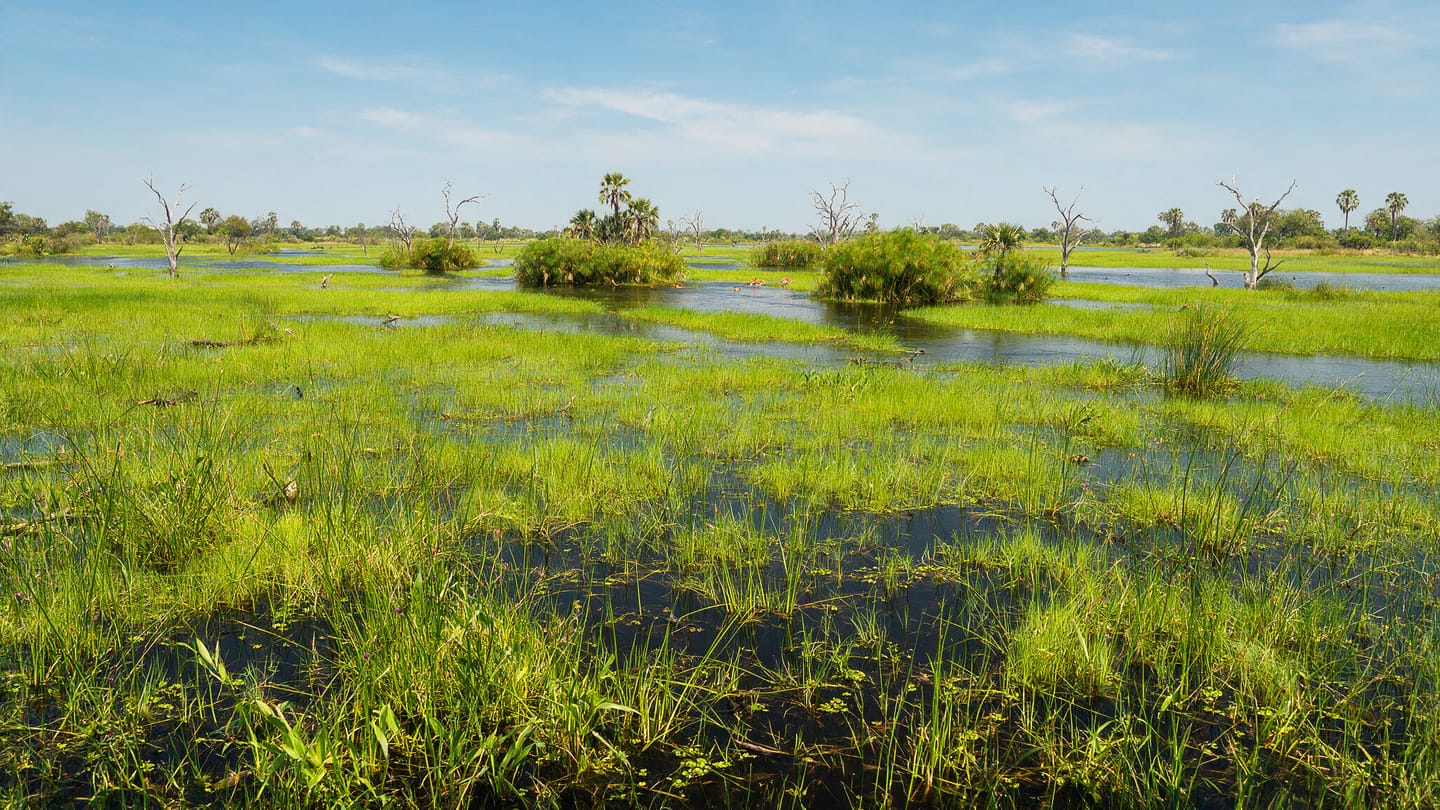
Moremi Game Reserve covers roughly 5,000 square kilometers of the eastern Okavango Delta — a mix of floodplains, mopane woodland, lagoons, and seasonal islands that shifts character depending on where the water is. It's one of the most ecologically productive areas on the continent, and it rewards the kind of slow, attentive game viewing that shoulder season makes possible.
In May, the reserve is still largely green from the rains, which gives it a different visual quality than the bleached ochre of peak dry season. Visibility through the bush is somewhat lower than it will be in August, when the vegetation dries back and thins out. That's a genuine trade-off, and it's worth acknowledging honestly. But it's a narrower disadvantage than most people assume, for a simple reason: in May, the animals are already moving toward the water. They're on the floodplain edges and at the lagoons, not deep in the bush. You don't need to see through the vegetation when the wildlife is in the open.
By early June, the flood pulse has typically pushed enough water into the reserve to begin the mokoro season — the flat-bottomed canoe excursions through the shallower channels that are one of Moremi's signature experiences. In peak season, these fill up fast and feel organized. In shoulder season, you're often the only mokoro on a channel for as far as you can see. That difference is not a small thing.
The occupancy question — and why it changes the guide dynamic
Camps in peak Botswana safari season — July through October — typically run at or near full capacity. That's not inherently a problem. The camps are well run, the guiding is good, and the experience is designed to work at maximum occupancy. But there's something that changes when a camp drops from twelve guests to four or five.
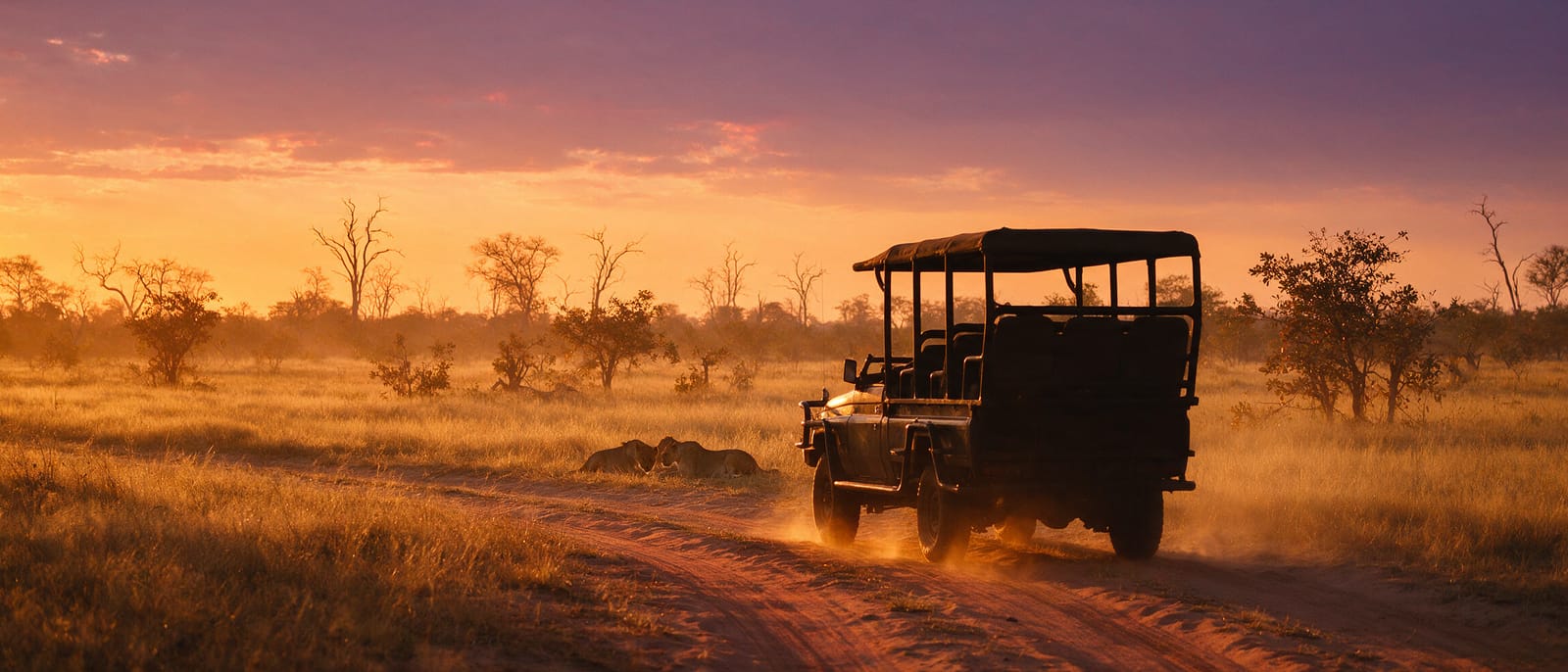
Guides have more time. Game drives that would ordinarily stick to a schedule become conversations. A sighting that would normally command a vehicle limit gets extended because there's no one waiting back at camp. A guide who would usually cover a set circuit to hit the key spots can instead follow the animal — the lion that moved west overnight, the pack of wild dogs that crossed into a different section of the reserve at dawn. The itinerary becomes reactive rather than prescribed, and that's where the best sightings come from.
Clients describe the peak-season version of this the same way every time: six vehicles arranged in a semi-circle around a leopard. The leopard was magnificent. The experience was not. The May version comes back differently — a camp at a third of its capacity, one other vehicle at the sighting, the guide cutting the engine. The leopard moved, hunted, disappeared into the reeds. They watched the whole thing. Nobody had anywhere else to be.
"In peak season I watched a leopard surrounded by six vehicles. In May, with one other truck and a guide who cut the engine and waited, we saw the whole hunt. Nobody had anywhere else to be."
Shoulder season game drives benefit from a guide with time — fewer vehicles at sightings, more flexibility to follow the animal rather than keep to a circuit.
What you'll actually see — and what you might miss
Honesty first: there are things peak season does better. The Great Migration, which brings massive herds of wildebeest and zebra sweeping across the Savute and Chobe areas, is at its most dramatic in the dry months. Elephant concentrations at Chobe in September and October are genuinely staggering in a way May doesn't replicate. And pure vegetation-free visibility — the kind that makes long-distance photography easier — peaks in September and October when the bush has fully dried back.
What May and June offer in return:
Predator activity. Big cats in particular tend to be more active in the cooler shoulder months. The heat of peak dry season pushes lions to shade for the better part of the day. In May and June, they move earlier in the morning and later into the afternoon — which is when you're out.
Wild dog sightings. Botswana's Moremi is one of the last strongholds for African wild dogs, and May coincides with denning season. Packs with pups are localized, predictable, and extraordinary to watch. Guides who know the reserve well know where to look.
Birdlife. The Okavango hosts over 500 bird species, and the transitional shoulder months — when both resident and migratory species are present — can produce remarkable birding. If that matters to you, May rivals any month on the calendar.
The green season's last color. The landscape in May hasn't yet burned to the dry-season palette. There's still green in the grass, occasional flowers, and a richness to the light at golden hour that the dust-hazy peak months don't match.
Price. Shoulder season rates at the better Botswana camps typically run 20–35% below peak. On a multi-night safari, that is a material difference — one that can fund an upgrade in accommodation or an additional night without changing the overall budget.
Which camps hold up in shoulder season — and why that matters
Not all camps are equally positioned for shoulder season viewing, and this is where the choice of specific property matters more than the season itself. The camps that deliver consistently in May and June tend to share a few characteristics: they're located on or adjacent to permanent water rather than seasonal wetlands, their guiding staff are long-tenure residents of the reserve rather than rotating generalists, and their vehicle access agreements allow off-road tracking rather than road-only game drives.
Camps in the northern reaches of Moremi — particularly those with access to the Khwai and Gomoti river systems — tend to maintain excellent game concentration year-round because the water never fully disappears. These are the camps where shoulder season works best, because the animals stay close. Camps positioned further into the delta interior, which are extraordinary during peak flood but can lose their wildlife density as water levels shift, require more careful timing.
This is not information that's easy to extract from a website. It comes from having visited the camps, talked to the managers, and understood how the game movements track against the seasonal water changes. It's the kind of detail that determines whether a May trip is exceptional or merely fine.
Booking Window
Shoulder season availability opens up later than peak — but don't wait. The best-positioned camps in Moremi and along the Khwai still fill their May and June dates by January or February, particularly for the weeks immediately preceding the school holiday rush. If you're seriously considering May or June, the conversation should happen in the autumn of the prior year.
Also worth knowing: some camps close entirely in the heart of the wet season (December through March) for maintenance. A camp that closes in December reopens in April with fresh linens, repaired infrastructure, and guides who've had three months of downtime. May is often when a camp is at its sharpest.
Who shoulder season is right for
It's not for everyone, and I'd rather say that plainly than oversell it. If your primary goal is the most dramatic dry-season game density — massive elephant herds at Chobe, lions hunting in short grass at Savute, the sheer volume of wildlife concentrated at shrinking water sources — July through September is still the answer. Go then. You won't be disappointed.
But if what you're after is something quieter and more direct — fewer vehicles, a guide with time and flexibility, a version of the Okavango that hasn't been fully optimized for tourism — then May and June deserve serious consideration. Particularly for:
Travelers who've done peak season Botswana before and want a different experience of the same landscape
Photographers who prioritize light quality, composition, and time at sightings over sheer volume of wildlife
Anyone who wants to combine a Botswana safari with Victoria Falls, which is at peak flow in April and May — the most dramatic it gets all year
Travelers working within a specific budget who want a premium camp without paying peak-season rates for it
Families with school-age children who can travel outside of holiday windows
The version worth booking
The itinerary I come back to, for the right client, is four nights in a well-positioned Moremi camp with strong guiding tenure — long enough for the landscape and routine to become familiar, short enough to keep the pace feeling intentional. Combine that with two nights at Victoria Falls on the Zambian side in May, when the falls are at maximum volume and the mist rises visible from several kilometers away. Fly between them on a light aircraft — the approach over the delta at low altitude is itself worth the trip.
That combination — six nights, two of Africa's most remarkable natural experiences, approached in the quieter weeks before the crowd arrives — is one of the best itineraries I've put together in twenty years. Not because it's complicated. Because it's timed correctly.
That's usually what the difference comes down to.
Plan a Shoulder-Season Safari
The May and June window described above is a Botswana safari planning question first — camp positioning in Moremi and along the Khwai decides most of what the shoulder season actually delivers.
For how camp size, guide tenure and vehicle policy get evaluated before anything is booked, the safari and wildlife travel page carries the full checklist.
About the Author
Mark Sole
Founder & Travel Director
Mark has planned safaris across southern and eastern Africa for twenty years. He has been to Moremi Game Reserve in every month of the dry season and knows the camps, the guides, and the waterhole the elephants prefer at dusk. Every piece in this journal is written from time actually spent in the places described.
Whether shoulder season is the right call depends on what you're after and how you travel. I'm happy to talk through the timing, the camps, and what a Botswana itinerary actually looks like before you commit to anything.