
Southern Africa

The Country That Invented
the Walking Safari.

Zambia runs on two calendars that do not agree with each other. The wildlife window is June through October, when the water pulls back into the channels, the grass drops and the seasonal bushcamps open for walking. Victoria Falls runs months behind the rain that feeds it, peaking around April and bottoming out in late October. Which of those two you came for is what decides the month, and almost nobody says so before you book.

Best Season
June – October
Best For
Walking Safari
& the Falls
The Country

Zambia Is the Second
Africa Trip, Not the First.

Zambia's wildlife window is June through October, when the bush thins out and the walking safaris run. Victoria Falls works on a separate calendar: the Zambezi peaks around April, months after the rain that fed it, and bottoms out around late October. South Luangwa invented the walking safari in the 1950s and is still the best place to do one.

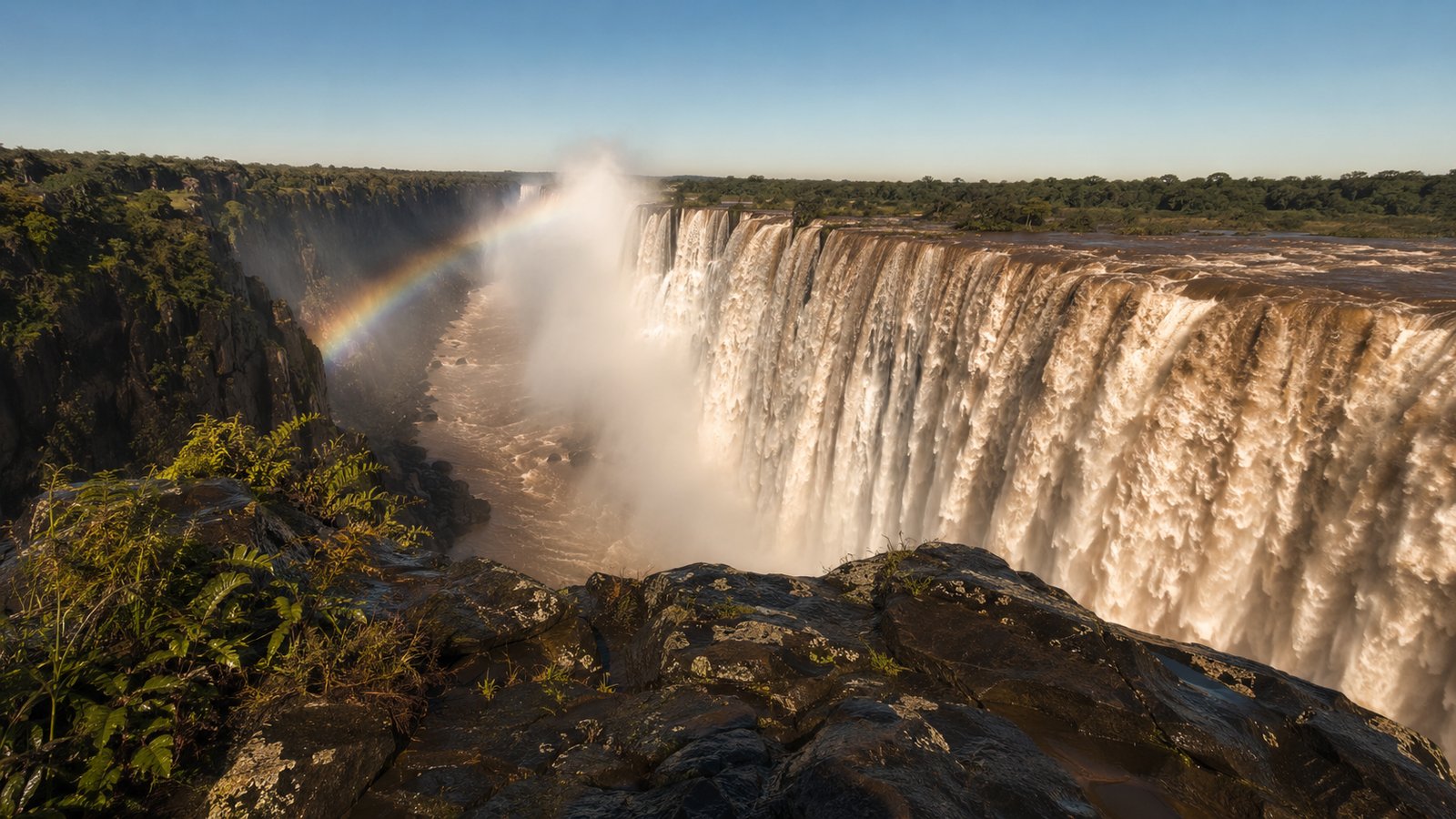
Two calendars run through a Zambia itinerary and they do not agree. UNESCO inscribed Mosi-oa-Tunya / Victoria Falls in 1989 as a World Heritage site shared with Zimbabwe: a sheet of water roughly 1,700 metres wide dropping about a hundred metres into a basalt gorge. What it is doing on the morning you arrive depends on the month — by late October the same lip is a set of separate channels with dry rock between them. Both versions are worth the flight, and almost nobody selling a Victoria Falls package says they are opposite trips.

The second calendar is the game one, and it runs the other way. Zambia's rains fall roughly November through April, the black-cotton roads in the Luangwa Valley go soft, and most seasonal bushcamps close outright. From June the water pulls back into the channels, the grass drops and the walking season opens — which is also when the Falls are draining away. Late June and early July is the compromise: enough water over the lip to be loud, bush open enough to walk.

Zambia is not the country to learn safari in. The camps are small, the vehicles go out with three or four guests rather than nine, and the walking is the point rather than an activity. That rewards someone who has already had a first safari; a first-timer is better served by Botswana's delta camps or the open plains of Kenya and Tanzania, where the density does the work. Come to Zambia second and give it ten days. Come with seven and a checklist and it will feel like a lot of small aircraft.
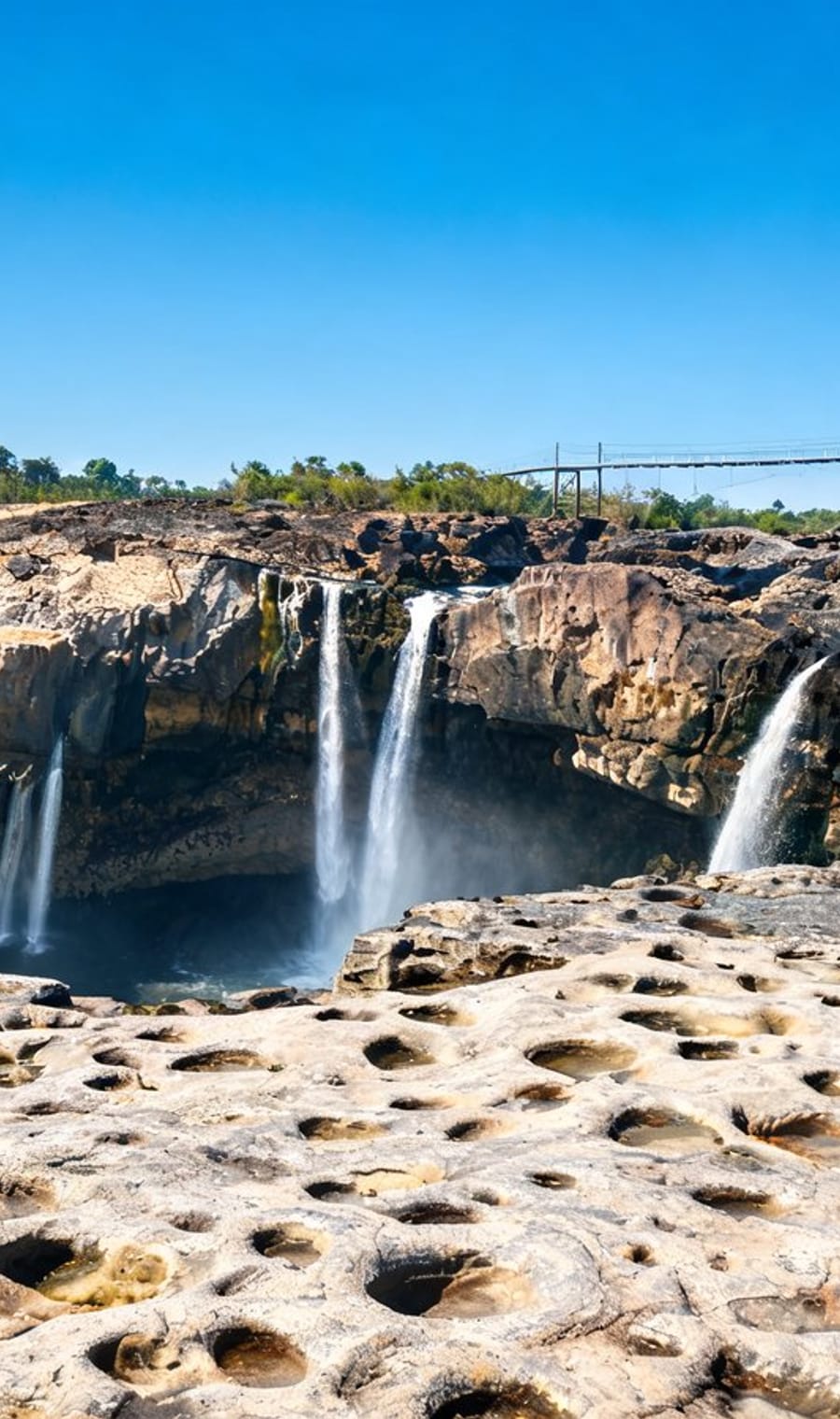
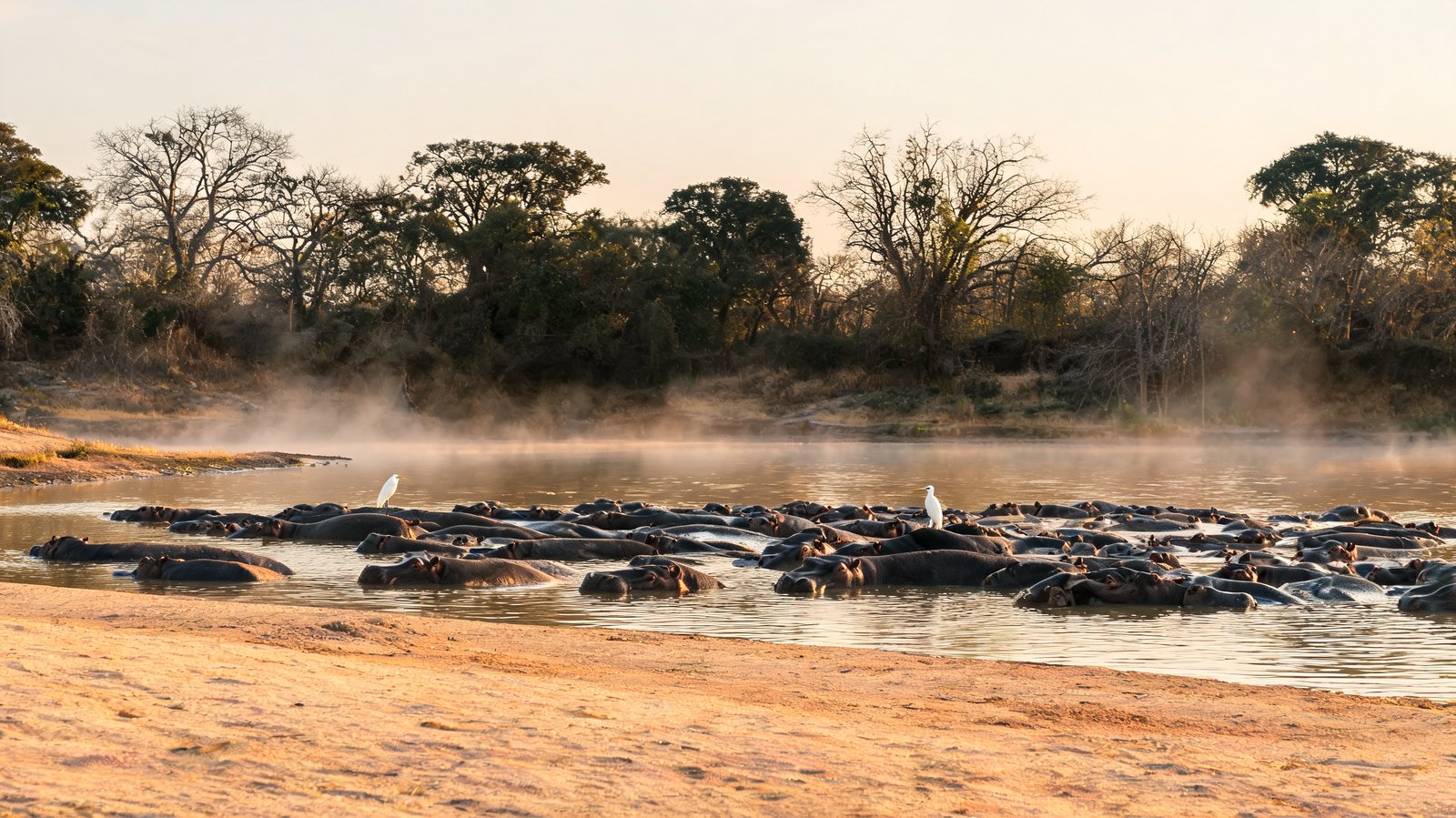
Water pouring over the lip of Victoria Falls beside the pitted rock shelf
Victoria Falls · Livingstone · Zambia
Where We Send Clients

Six Regions Worth Planning Properly

Zambia is landlocked by eight neighbours and its parks sit in the far corners of it. These six repay the internal flights, in roughly the order a trip should consider them.
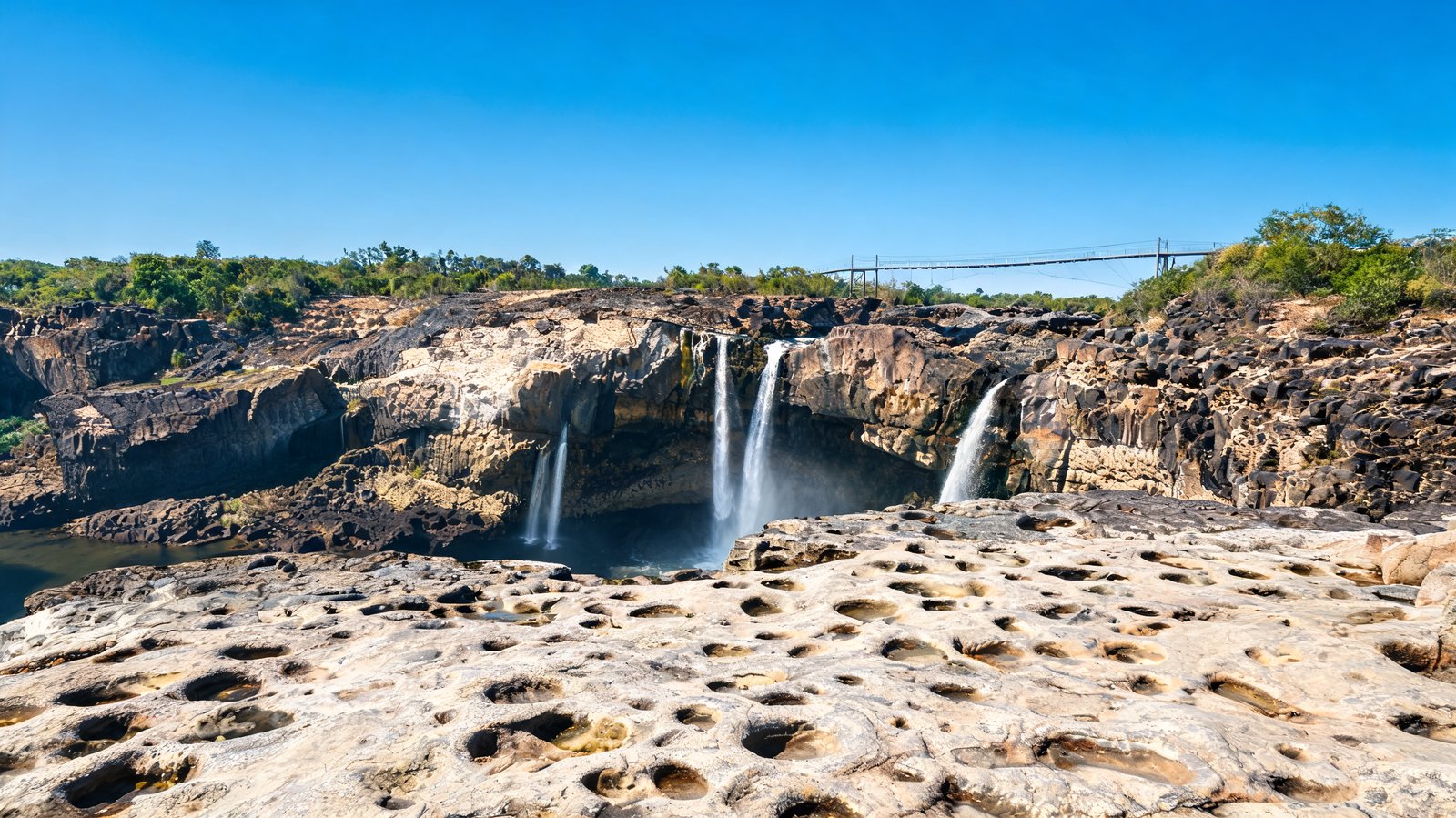
Victoria Falls & Livingstone, Southern Province
Southern Province
Victoria Falls & Livingstone
The Zambian side holds the eastern end of the face, the Knife-Edge Bridge and the lip itself. In flood you are soaked within a minute; in low water you walk out onto the rock at the top. Livingstone is the base, and the bridge to the Zimbabwean bank has stood since 1905.
Knife-Edge Bridge Livingstone Island Zambezi Sunset
Explore →
South Luangwa, Eastern Province
Eastern Province
South Luangwa
Roughly 9,050 square kilometres along the undammed Luangwa, and the valley where Norman Carr put clients on foot in the 1950s. Leopard density is the headline and the oxbow lagoons are the reason. Night drives are permitted here and not in most East African parks; Thornicroft's giraffe live nowhere else.
Walking Safari Leopard Night Drives
Explore →
Lower Zambezi, Lusaka Province
Lusaka Province
Lower Zambezi
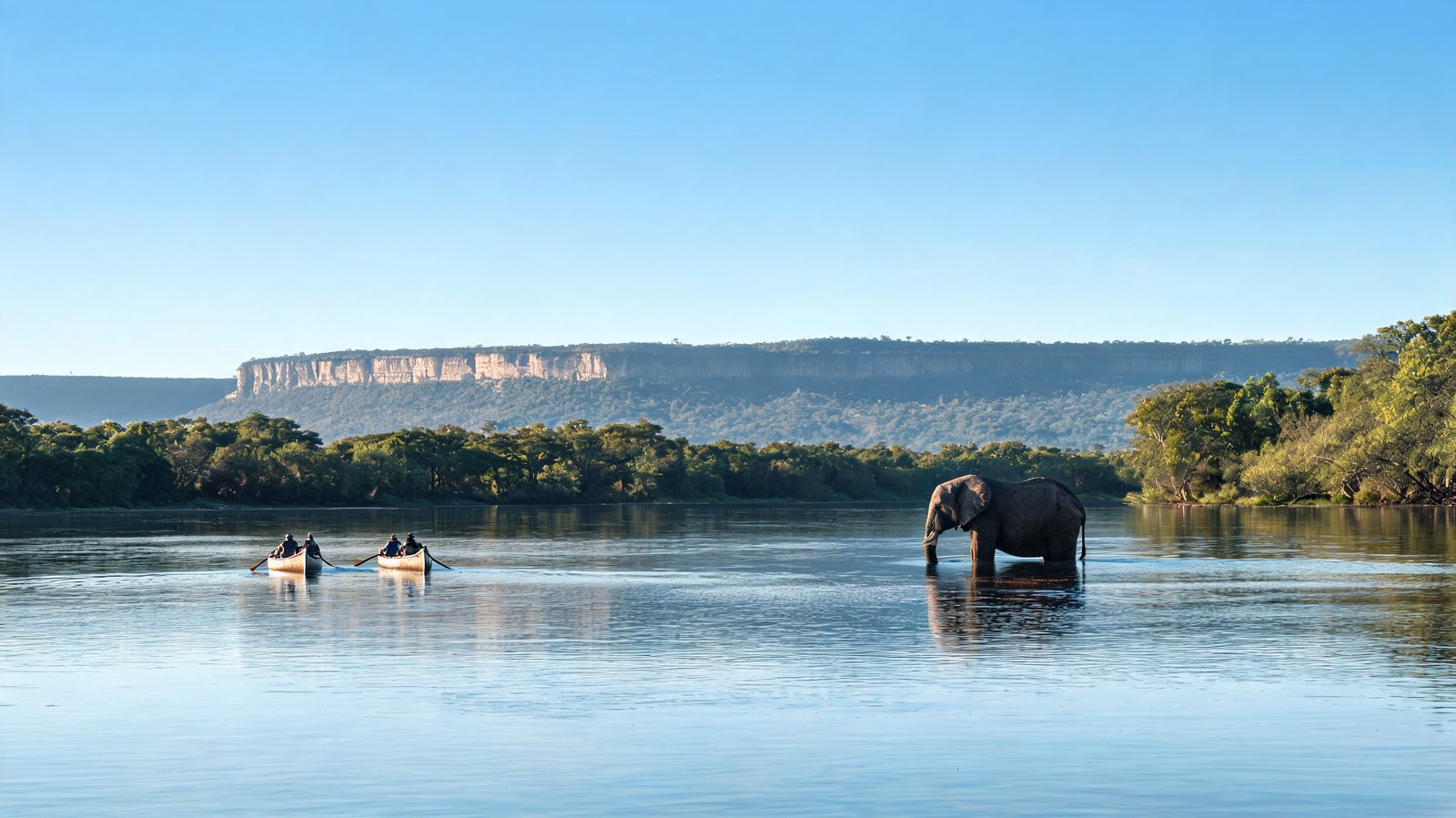
About 4,092 square kilometres of floodplain and escarpment facing Zimbabwe's Mana Pools across the river, and the one Zambian park where the water is the vehicle: canoes down the inside channels, motorboats along the bank. The escarpment behind holds the animals in a narrow, workable strip.
Canoe Safari Tiger Fishing Elephant
Explore →
Kafue & the Busanga Plains, North-Western Province
North-Western Province
Kafue & the Busanga Plains
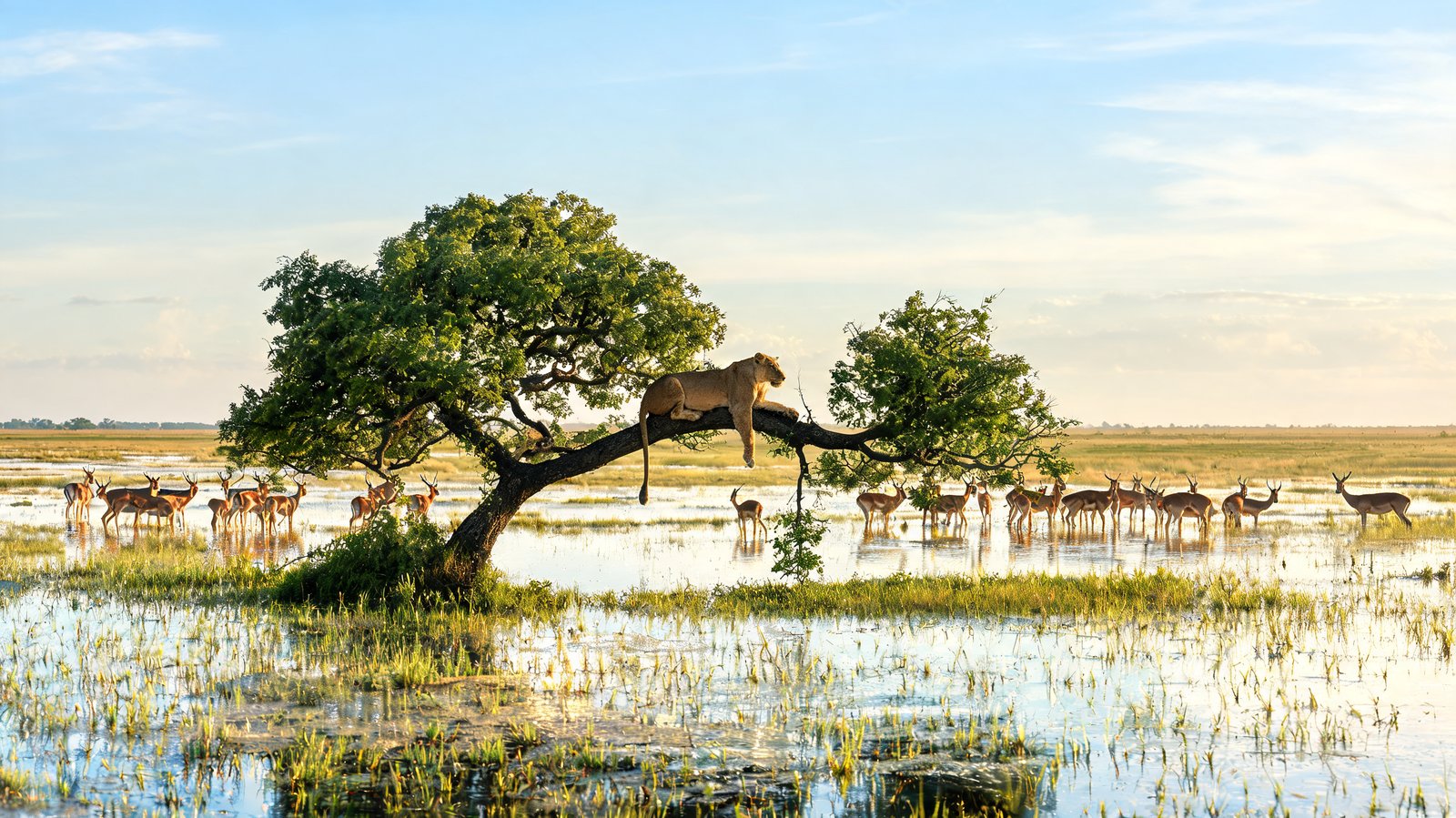
Zambia's largest park at roughly 22,400 square kilometres, and one of the least visited large parks in Africa. The Busanga Plains in the north are the reason to come: seasonally flooded grassland that dries late, red lechwe in numbers, lion that climb. The plains camps open late and close early.
Busanga Plains Red Lechwe Low Volume
Explore →
North Luangwa, Muchinga Province
Muchinga Province
North Luangwa
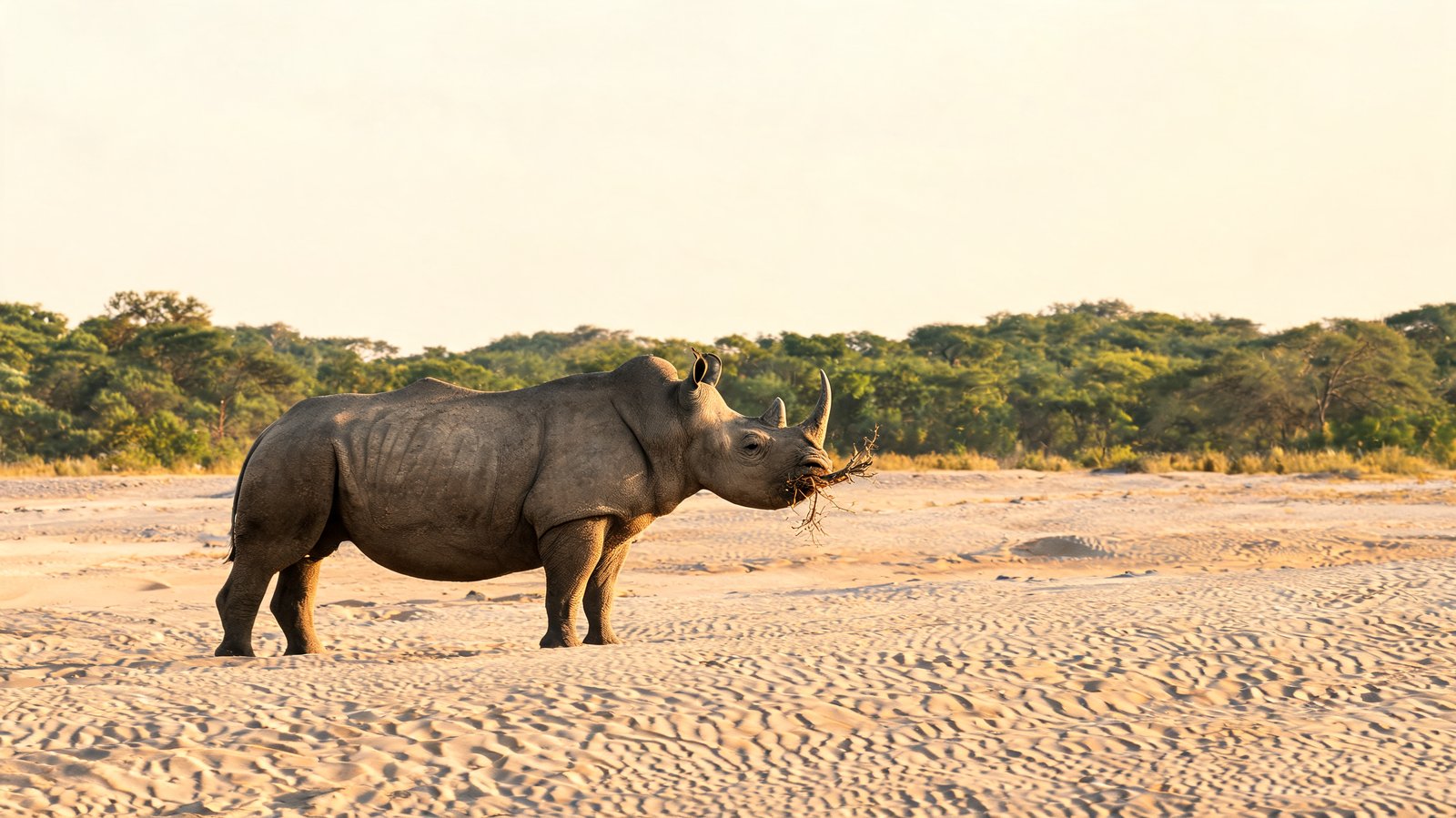
About 4,600 square kilometres with a handful of beds in the whole park, almost no roads, and access essentially on foot. Black rhino were reintroduced through the programme Frankfurt Zoological Society runs with the wildlife department, and this is the only place in Zambia they live. Not a first stop.
Walking Only Black Rhino Jun – Oct
Explore →
Liuwa Plain, Western Province
Western Province
Liuwa Plain
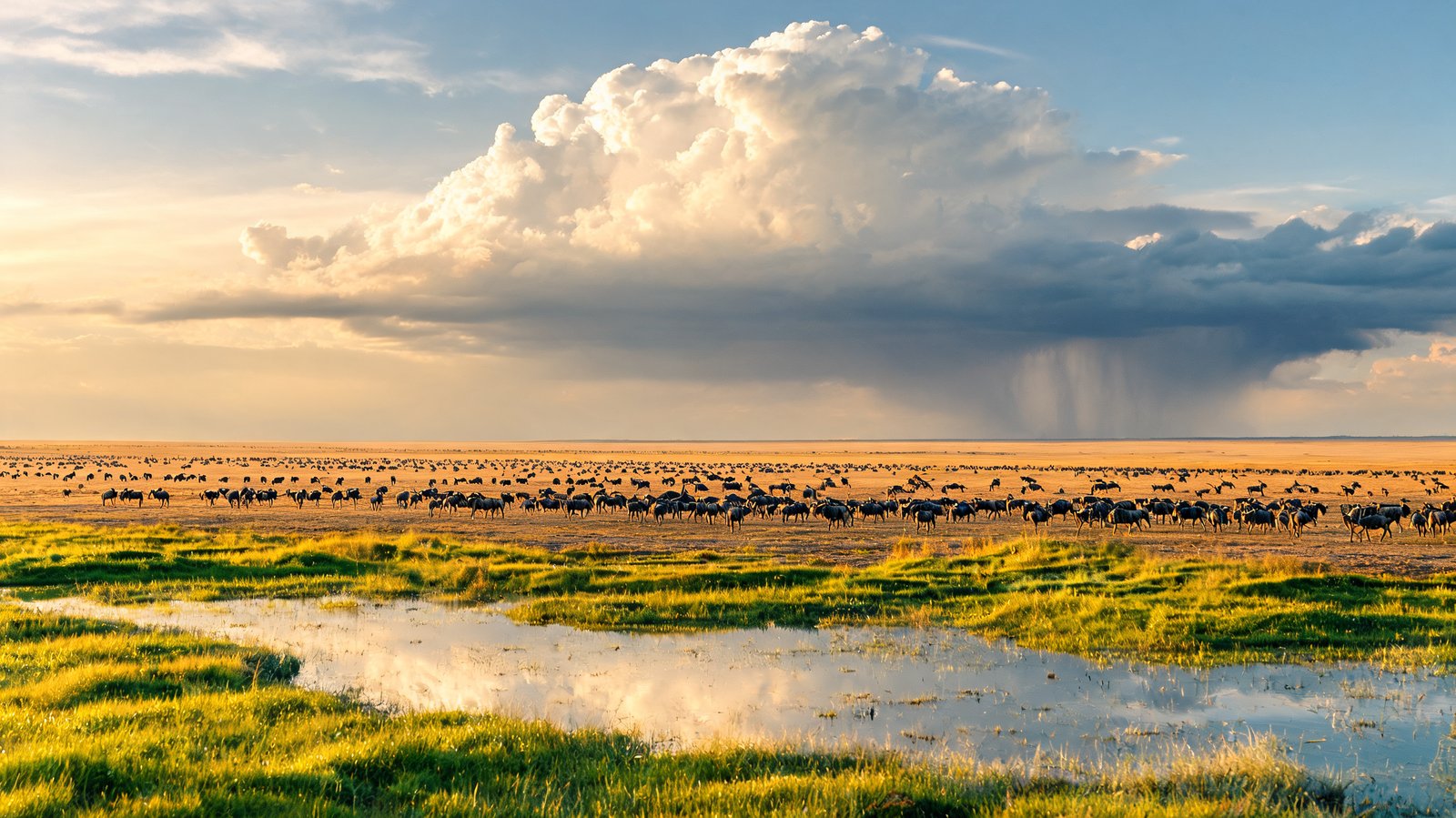
Roughly 3,660 square kilometres of open floodplain in the far west, managed by African Parks with the wildlife department since 2003. The wildebeest gathering here is usually described as the second largest in Africa, and it happens around November as the rains arrive — the opposite of everyone else's season.
Wildebeest Nov – Dec Remote
Explore →
Featured Itineraries

Trips We Plan Often

Zambia itineraries built around the camps that walk properly, the bushcamp seasons that open and close on the rains, and the light-aircraft schedule that decides how many parks a trip can honestly carry.
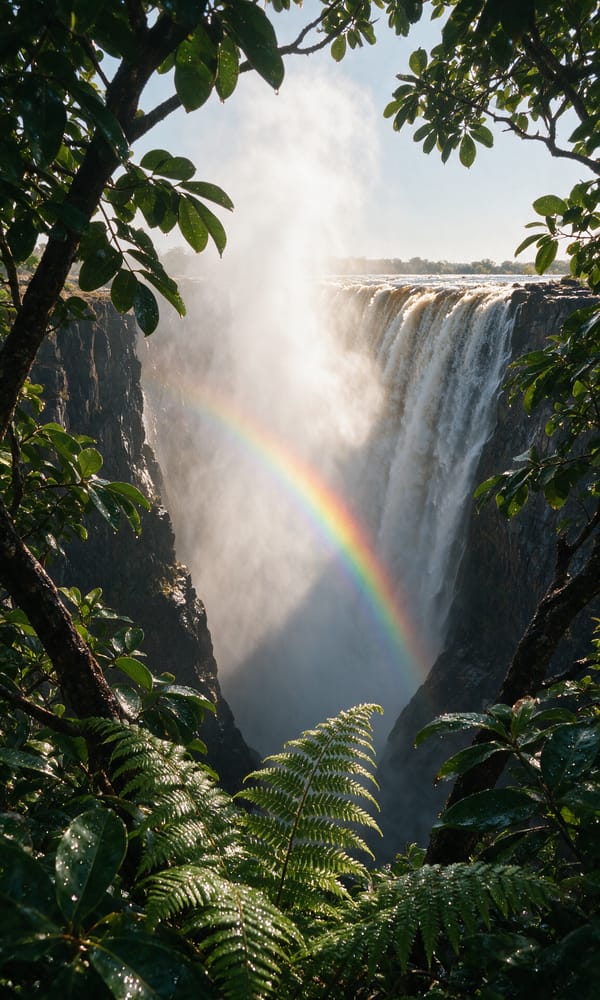
Spray and a rainbow rising from the Eastern Cataract of Victoria Falls above the basalt gorge
June – October · 9–11 Days
The Falls and South Luangwa
The pairing that makes a first Zambia trip work. Three nights in Livingstone — more than the Falls need, exactly what the arrival day needs — with the Zambian face on the first morning before the tour buses and a day crossing the bridge for the front-on view. Then east to Mfuwe for six nights in South Luangwa, split between a lodge on the river and two or three nights at a seasonal bushcamp inland. The lodge gives you vehicles, night drives and the leopards; the bushcamp gives you mornings on foot with a scout and a guide and nothing else. Nine days is tight; eleven is the version I would rather sell.
Zambia9–11 Days
Plan This Trip
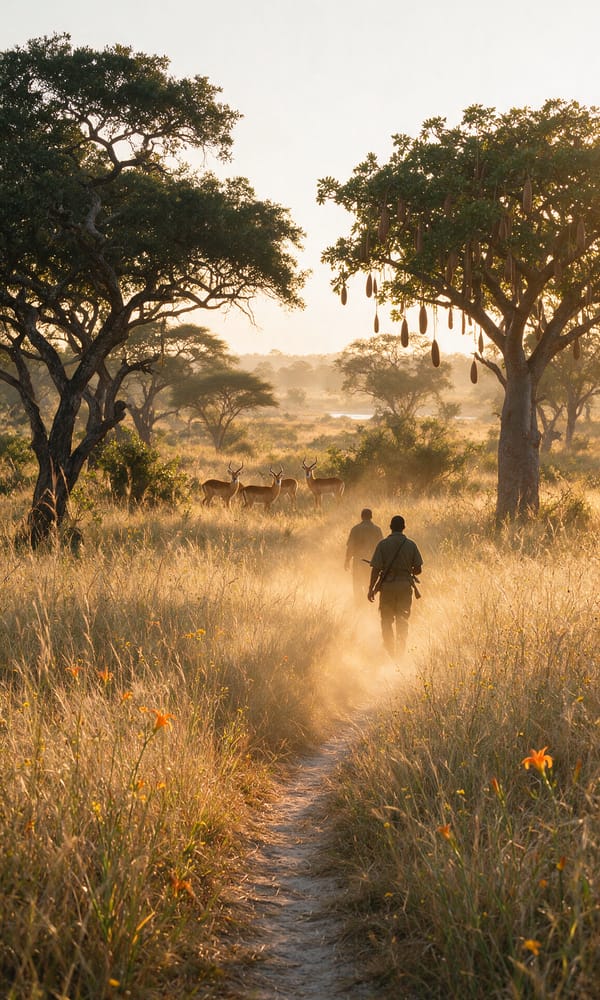
Two walkers seen from behind on a game path through dry grass under ebony trees at first light
June – October · 10–12 Days
The Walking Safari Circuit
South Luangwa on foot, and the trip almost nobody books on a first visit to Africa. Two nights at a river lodge, then a walking circuit between three seasonal bushcamps, each a morning's walk from the last, with the vehicle carrying the bags. Four or five hours out at first light, an armed wildlife-department scout ahead and a licensed walking guide beside you, back before the heat. What changes is scale: you stop cataloguing animals and start reading tracks, dung and the alarm calls that tell you what is standing fifty metres away. Finish with three nights at the Falls. Not the trip for anyone who wants a pool at two o'clock.
Zambia10–12 Days
Plan This Trip
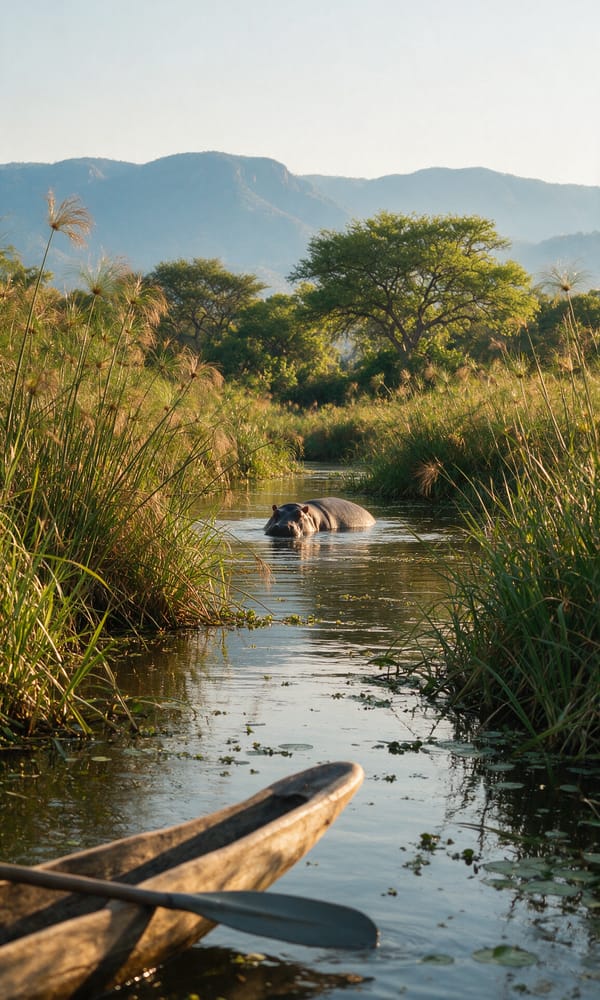
A canoe bow and paddle in a reed-lined Lower Zambezi channel with the escarpment behind
July – October · 13–15 Days
Three Rivers: Luangwa, Lower Zambezi and the Falls
The point at which Zambia stops being a two-stop itinerary. Five or six nights in South Luangwa for the leopards, the night drives and at least two mornings on foot. Then four nights in the Lower Zambezi, where the activity mix changes completely: canoeing the inside channels past hippo, motorboat game viewing late in the day, elephant crossing between the islands. Finish with three nights at the Falls rather than opening there, so the trip ends on the loudest thing in it. Fourteen days carries this comfortably; thirteen only if the sectors fall the right way, which we check before quoting.
Zambia13–15 Days
Plan This Trip
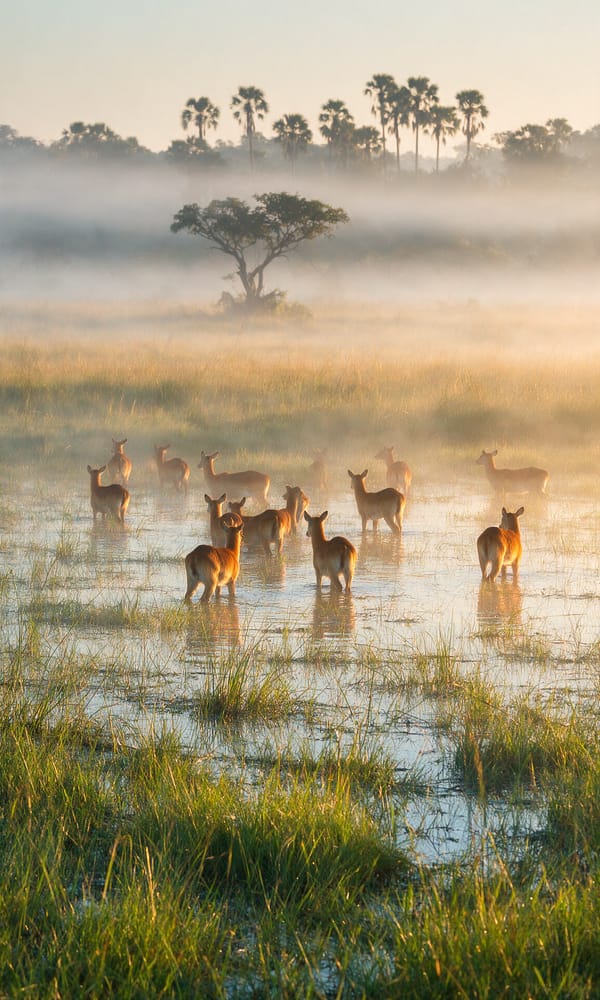
Red lechwe standing in shallow floodwater and mist on the Busanga Plains at sunrise
July – October · 11–13 Days
Kafue and the Busanga Plains
The return trip, for someone who has already had South Luangwa and wants the emptiest thing Zambia has. Four nights on the Busanga Plains in northern Kafue, where the seasonal flood dries back late and leaves grassland running to the horizon: red lechwe in numbers, cheetah on ground that suits them, lion that climb trees. Add three or four nights in the Kafue river sector to the south, then the Falls to close. Kafue takes a fraction of the visitors South Luangwa does, which is the attraction and also the warning: fewer camps, a shorter season, less margin if weather moves a flight.
Zambia11–13 Days
Plan This Trip
Why Plan With Us

What We Add to Zambia Planning

Zambia is the safari destination where the guide, the month and the camp calendar decide the trip, and where all three are settled long before a hotel is chosen.

⬡
Which Side of the Falls, and Which Month
Most Falls advice picks a side. The month decides it. In April the spray closes the Zambian viewpoints down to a wall of water and the front-on panorama from the Zimbabwean bank is the only view that survives; by September the panorama has thinned out and the Zambian lip walks and Livingstone Island are the reason to be there. The site is described by UNESCO and the river is measured by the Zambezi River Authority; levels move every year, so we check a current reading before committing a client's dates.
⬡
Walking Guides Are a Separate Qualification
Zambia licenses walking guides separately from driving guides, and a walking party goes out with an armed wildlife-department scout as well as the guide. That is the structural reason the walking here beats the walking sold as an add-on elsewhere. The gap between a guide who has walked the same stretch of the Luangwa for fifteen seasons and one in his second is not information; it is what he notices at forty metres. We ask for people by name, and we will move a client's dates before accepting a substitute — the same logic that runs through our safari and wildlife planning.
⬡
The Bushcamps Open and Close on a Calendar
Zambia's seasonal bushcamps are grass and thatch, taken down at the end of each season and rebuilt, and they exist only while the roads in are passable. In practice that is roughly June through October, with the exact dates set each year by the rains. They are tiny: four to six rooms is normal, and one group booking removes a camp from the map. So the bushcamp nights are what an itinerary is held around first; the lodge, the Falls and the flights fit behind them. Reversing that order is why a Zambia trip ends up as a vehicle safari with a walk in it.
⬡
The Order the Parks Go In
Zambia's parks are far apart and connected by light-aircraft schedules rather than roads anyone should drive, which makes sequence a real decision. We put the Falls at the end of most itineraries rather than the start, because arriving jet-lagged at the loudest thing on the trip wastes it. We keep three parks to trips of thirteen days or more and refuse a fourth. And we build slack around the thin sectors, because a missed connection here is not a delayed afternoon but a lost night in a camp already given away.
When to Go

Zambia by Season

Dry Season
June – October
The window that makes Zambia work as a wildlife destination. Game concentrates on the Luangwa and the Zambezi because there is nowhere else to drink, the seasonal bushcamps open, and South Luangwa's leopard viewing is at its most reliable. The trade is heat and the Falls: October on the low floor of the Luangwa Valley is punishing, and the Zambezi is at or near its annual low, with the eastern end of the Falls down to bare rock. June and July give you the best of both sides of that trade, which is why they book first.
Best Overall Window
The Flood Peak
March – May
The months when Victoria Falls is the largest thing you will ever stand next to, and the months when it hides itself. Peak flow usually lands around April, months behind the rain that produced it, and at that level the spray blots out the Zambian-side view almost entirely. Cross to the Zimbabwean bank for the panorama, and accept that the lip walks and Livingstone Island are closed. Game viewing is still poor: grass high, roads recovering, many Luangwa bushcamps not yet open. Come in April if the Falls are the point, not if you want both.
Emerald Season
November – February
The rains, and the season most of Zambia closes for. Bushcamps come down, the Luangwa's black-cotton roads turn impassable, and a large share of the country's beds are not available. What remains is specific: a few all-weather lodges in South Luangwa run boat safaris across plains that are drivable in July, the birding peaks with the migrants in, and the wildebeest gather on the Liuwa Plain around November. Rates fall accordingly. A photographer's and a returning traveller's season, and the wrong choice for a first safari.

Seasonal notes checked against UNESCO, the Zambezi River Authority and the Zambia Tourism Agency. River levels, camp opening dates and park access change every year; confirm before booking.

Ready When You Are

Plan a Zambia Trip
Around the Right Month

Tell me how many days you have, whether the Falls or the walking is the reason you are going, and whether this is your first safari or your fourth. I'll come back with a specific itinerary, the camps and walking guides I'd hold first, and the honest version of what each month gives up — within one business day.

Plan a Zambia Trip All Africa Destinations

No booking fees  ·  Response within 24 hours  ·  Fully bespoke

What It Costs

What Zambia Actually Costs

Sold per camp night, all-inclusive, or per hotel room
A South Luangwa bushcamp night is one all-inclusive figure covering meals, drinks, laundry, a licensed walking guide, an armed scout and the park fee, at a camp that only exists from about June to October, while a Livingstone hotel sells a room and leaves the Falls gate fee outside it.
What actually sets the number
  • South Luangwa's park fee, US$25 per person per day for non-residents
  • The June-to-October bushcamp season, with the exact dates set each year by the rains
  • Falls water against game season — April peaks the river, October empties the eastern cataract

Tell me the dates and the party and you get a real quote, not a range. Source: Zambia park-entry permit fees (DNPW).

Common Questions

Zambia & Victoria Falls — FAQ

The questions that come up most when planning a first Zambia trip — which month, which side of the Falls, what a walking safari involves, and whether Lower Zambezi and Kafue earn the extra days.

June through October for wildlife, and around April for Victoria Falls at full flood. Those are different trips and the calendar will not hand you both at their peak. Through the dry months the grass drops, the seasonal bushcamps open and the walking season runs, while the Zambezi drains toward its annual low. In April the reverse holds: the Falls are at maximum and the Luangwa is still recovering with many camps shut. If both matter, late June and early July is the compromise. Our African safari calendar sets out how this compares region by region.

Zambia is where you feel the Falls and Zimbabwe is where you see them. The Zambian bank holds the eastern end of the face, the Knife-Edge Bridge and the lip itself: drenched and deafened at high water, walking out onto the rock at low. The Zimbabwean bank looks straight across most of the curtain, which is the view that still works when spray has closed everything else down. The World Heritage listing covers both banks as one site, so this is a question about the day rather than the country. Base in Livingstone and cross the 1905 bridge for a day.

April, usually, with high water running roughly March through May. The lag surprises people: Zambia's rains fall from about November to April, but the Zambezi drains an enormous catchment upstream and the flood reaches the Falls months after the weather that made it. The low point comes at the other end of the year, generally late October into early December, when the eastern cataract on the Zambian side can drop to bare rock. River levels are measured by the Zambezi River Authority and vary year to year, so check a current reading rather than an average before fixing dates.

Only at low water, typically from around August into January, and only from the Zambian side. The pool is a rock basin at the very lip, reached by boat to Livingstone Island and a short guided swim, and it opens only while the river is low enough to be safe. The exact window is set by the water level each year, not by a fixed calendar: a September booking is usually reliable, a July one is not. It runs under a licensed operator with guides in the water, not something to attempt independently; confirm the current window and the safety rules with the operator before building a day around it.

A guided walk through big-game country with an armed park scout, and South Luangwa is the place to do it. The format was developed in the Luangwa Valley by Norman Carr in the 1950s, and Zambia still licenses walking guides as a separate qualification from driving guides. A morning walk runs roughly three to five hours from first light and covers a fraction of the ground a vehicle would: you stop counting species and start reading tracks, dung and alarm calls. It suits people fit enough for four hours on uneven ground in heat; most camps set a minimum age.

It is usually a better second safari than a first, and ten to twelve days is the honest minimum. Zambia's strengths are the ones a returning traveller values: small camps, walking as the core activity, and night drives most East African parks do not permit. Those are the wrong headline for someone who wants volume and certainty first time out, which Botswana and Kenya and Tanzania deliver more reliably. On days: seven covers the Falls plus one park at a rush, ten to twelve is comfortable for the Falls and South Luangwa, thirteen or more for a third park. Below ten days, cut a park rather than shortening the camps.

Lower Zambezi earns its days on almost any trip; Kafue earns them only past about twelve days. Lower Zambezi is roughly 4,092 square kilometres facing Zimbabwe's Mana Pools, and it justifies the sector because the activities are different from South Luangwa's: canoeing the inside channels, motorboat game viewing, elephant swimming between islands. Kafue is the bigger prize and the harder sell: around 22,400 square kilometres, with the Busanga Plains among the emptiest good game country left in Africa. But the plains camps open late and close early, the sectors are longer, and a shorter trip cannot absorb that without cutting something better.

Most visitors need a visa, and many nationalities can now apply online before travelling. A day crossing to the Zimbabwean side of the Falls is an international border, so it needs its own entry permission and a Zambian visa that allows you back in. A joint Zambia-and-Zimbabwe visa has been offered under the KAZA arrangement, but availability and eligible nationalities have changed more than once, so check rather than assume. The authoritative source is Zambia's Department of Immigration. Requirements verified ; categories, fees and border rules change without notice, so confirm before booking, and check your own government's advice — for US travellers, the State Department advisory for Zambia.
More questions answered on the Full FAQ Page
From the Journal

Read More on Planning Africa