
North Africa

A Country You Drive,
Not a City You Visit.

Morocco reads as two city breaks on a map and works as neither. Fez and Marrakech sit seven hours apart by train and a thousand years apart in temperament, and most of what earns the trip is on the road between them — the Tizi n'Tichka pass, the ksour of the south, the dunes past Merzouga. The medinas are also the one place where a licensed guide stops being a luxury.

Best Season
Oct – April
Best For
Medinas
& Desert Roads
The Country

Morocco Is a Driving Country,
Not a City Break.

Morocco's window is October through April, and the strongest ends of it are October–November and March–April. A first trip runs 10 to 14 days: Fez and Marrakech want three nights each, and the Sahara costs four days round-trip from Marrakech. Drive it one way instead and you buy two of those days back. All nine of Morocco's UNESCO sites are cultural, not natural.

The two medinas are why most people come and the part most trips get wrong. Fes el-Bali and the Marrakech medina are working cities rather than heritage quarters: no vehicle access, and a street plan that predates the idea of a street plan. UNESCO dates the Fez one to the ninth century and lists it among the largest car-free urban areas anywhere. All nine of Morocco's World Heritage sites are cultural inscriptions, which is the honest shape of the country: you come for what people built and kept using.

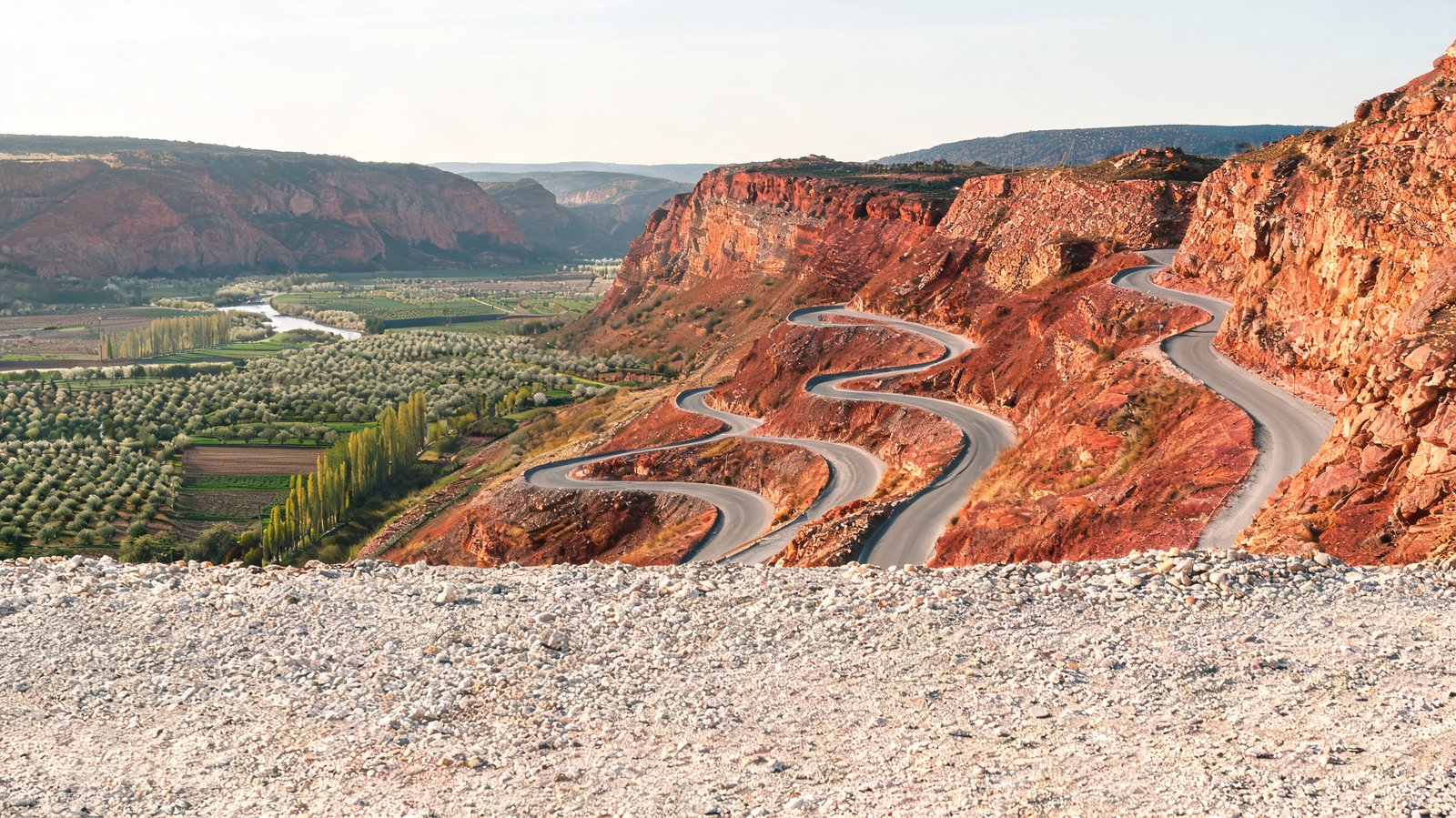
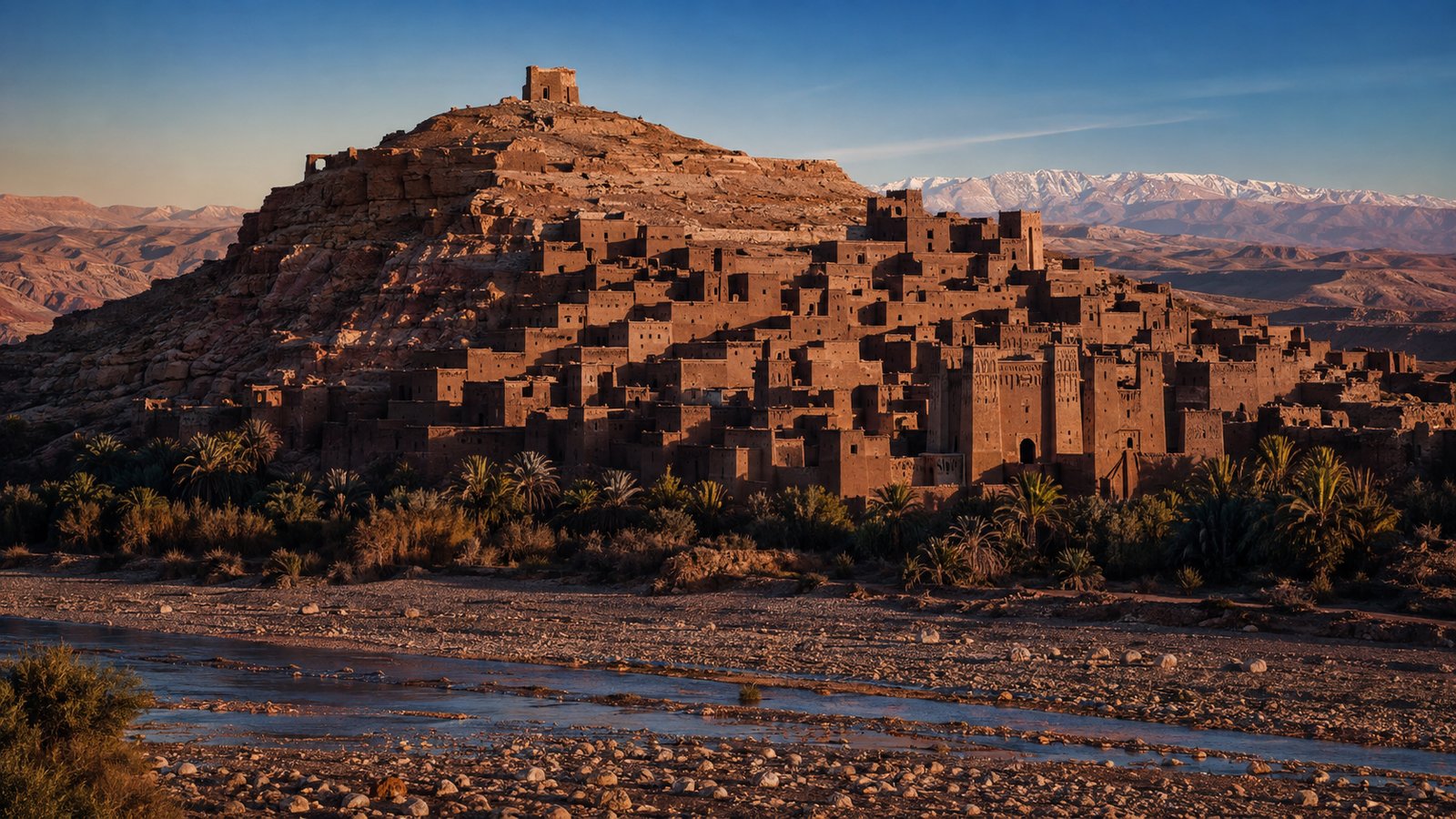
Everything between the two cities is the actual trip, and it is reached by road. The Tizi n'Tichka pass over the High Atlas, the earthen ksar at Aït Benhaddou, the gorges at Dades and Todra, the dunes at Merzouga — none of it is a day trip from anywhere. Road distance is the most underestimated thing about planning Morocco, and the fix is routing rather than speed: go one way, Marrakech to Fez or the reverse, and never drive the same pass twice.

The north is a separate decision, not a bolt-on. Tangier, Chefchaouen, the Roman city at Volubilis and the imperial walls at Meknès sit within a few hours of Fez, and they are the argument for twelve days rather than nine. One season rule overrides all of it: from July into September the interior is punishing and the Atlantic coast is not. WMO climate normals put Marrakech's July and August daily highs around 37°C, with Essaouira ten to fifteen degrees below that. High-summer Morocco is the coast and the mountains, not the medinas and certainly not the dunes.
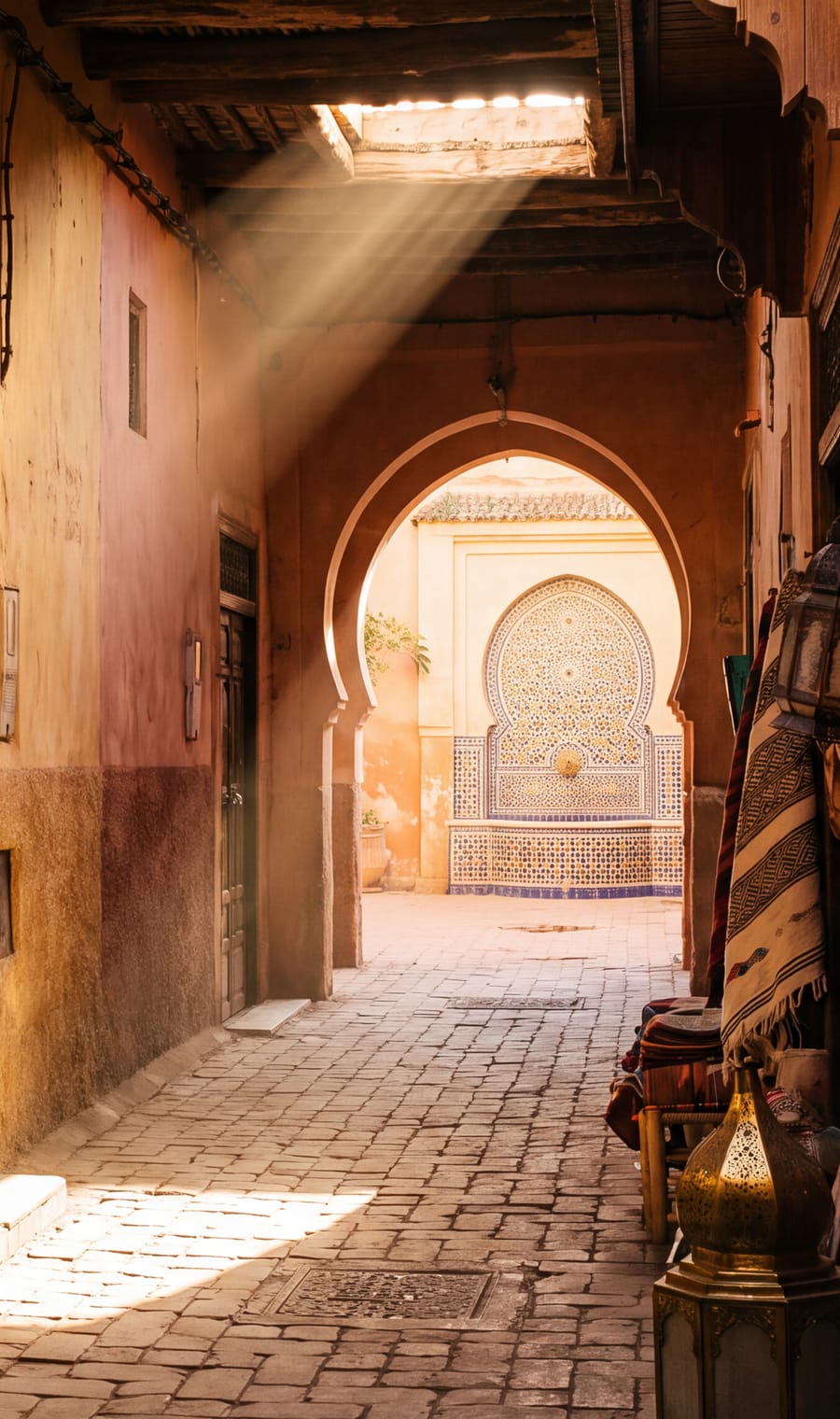
Light falling through a tiled passage in the medina at Fez
A medina passage · Fez · Morocco
Where We Send Clients

Six Places Worth the Driving Days

The map is deceptive. Fez and Marrakech look like a matched pair of city breaks and behave like opposites, and the passes, oasis valleys and dunes between them are where most of the trip actually happens. These six repay the road time.
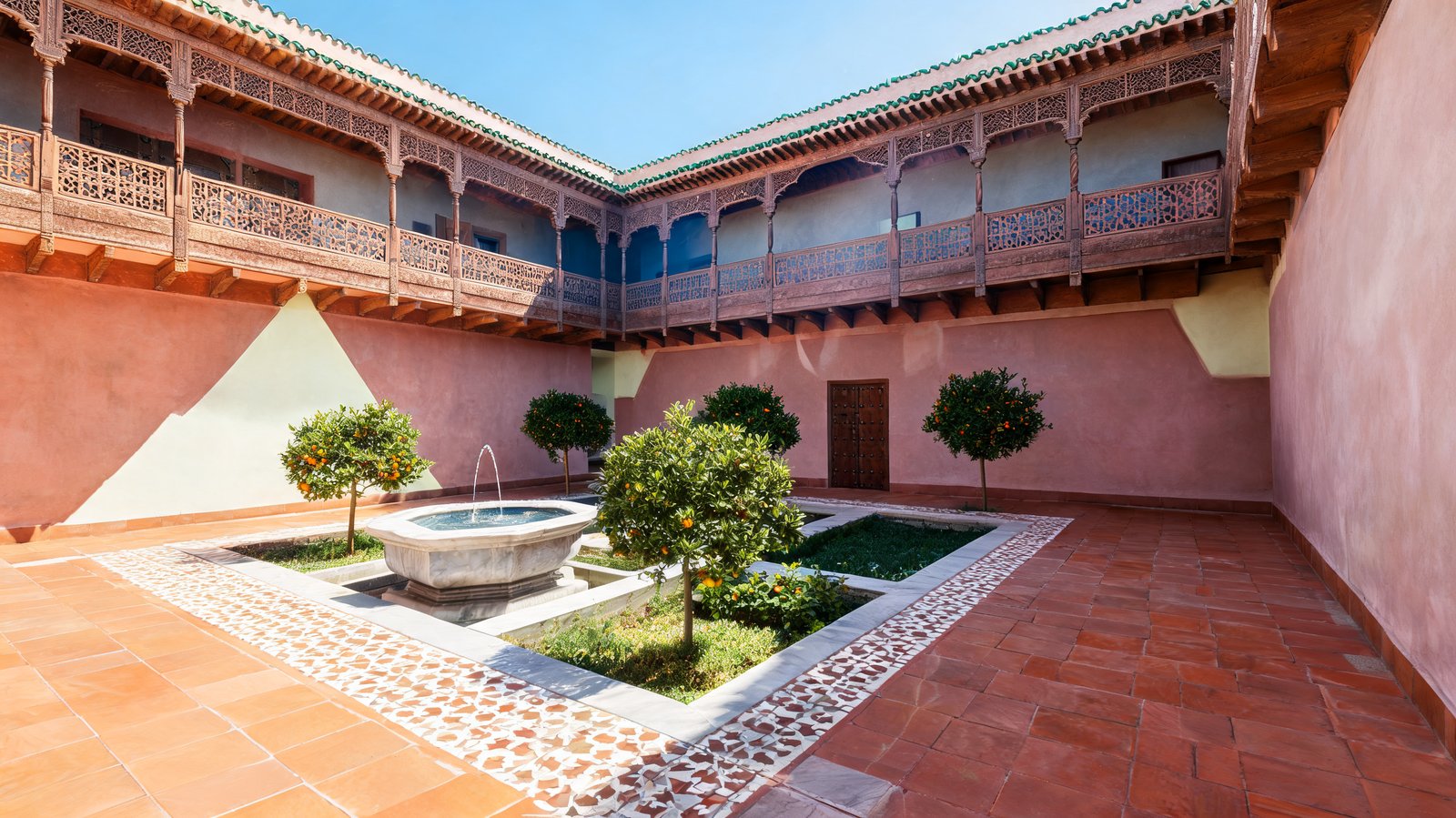
Fez, Fès-Meknès
Fès-Meknès
Fez
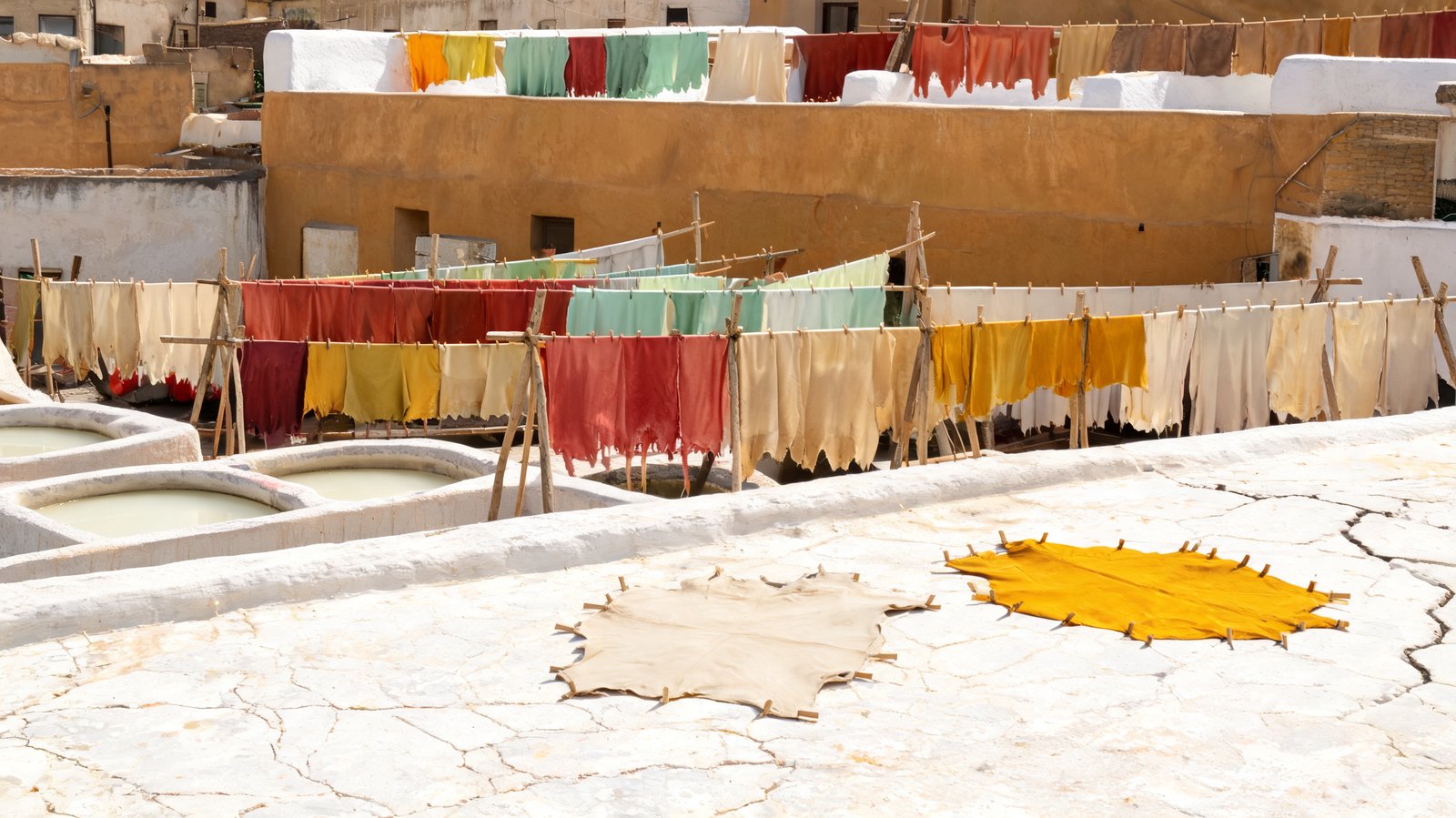
The older, denser and less commercial of the two great medinas, and the harder one to walk. The Qarawiyyin, founded in 859 and still teaching; the Bou Inania madrasa; the Chouara tannery from a terrace above the vats rather than through a shop. Take Fez early, while curiosity outruns fatigue.
Fes el-Bali Qarawiyyin Tanneries
Explore →
Marrakech
Marrakech-Safi
Marrakech
The country's front door and its most processed square kilometre, which is not the same as its least interesting. Jemaa el-Fna at dusk, the Saadian Tombs and Ben Youssef in the morning, Majorelle booked ahead rather than queued for. The riads inside the walls and the pools outside them serve different halves of the same trip.
Jemaa el-Fna Souks Riads
Explore →
The High Atlas, Al Haouz
Al Haouz
The High Atlas
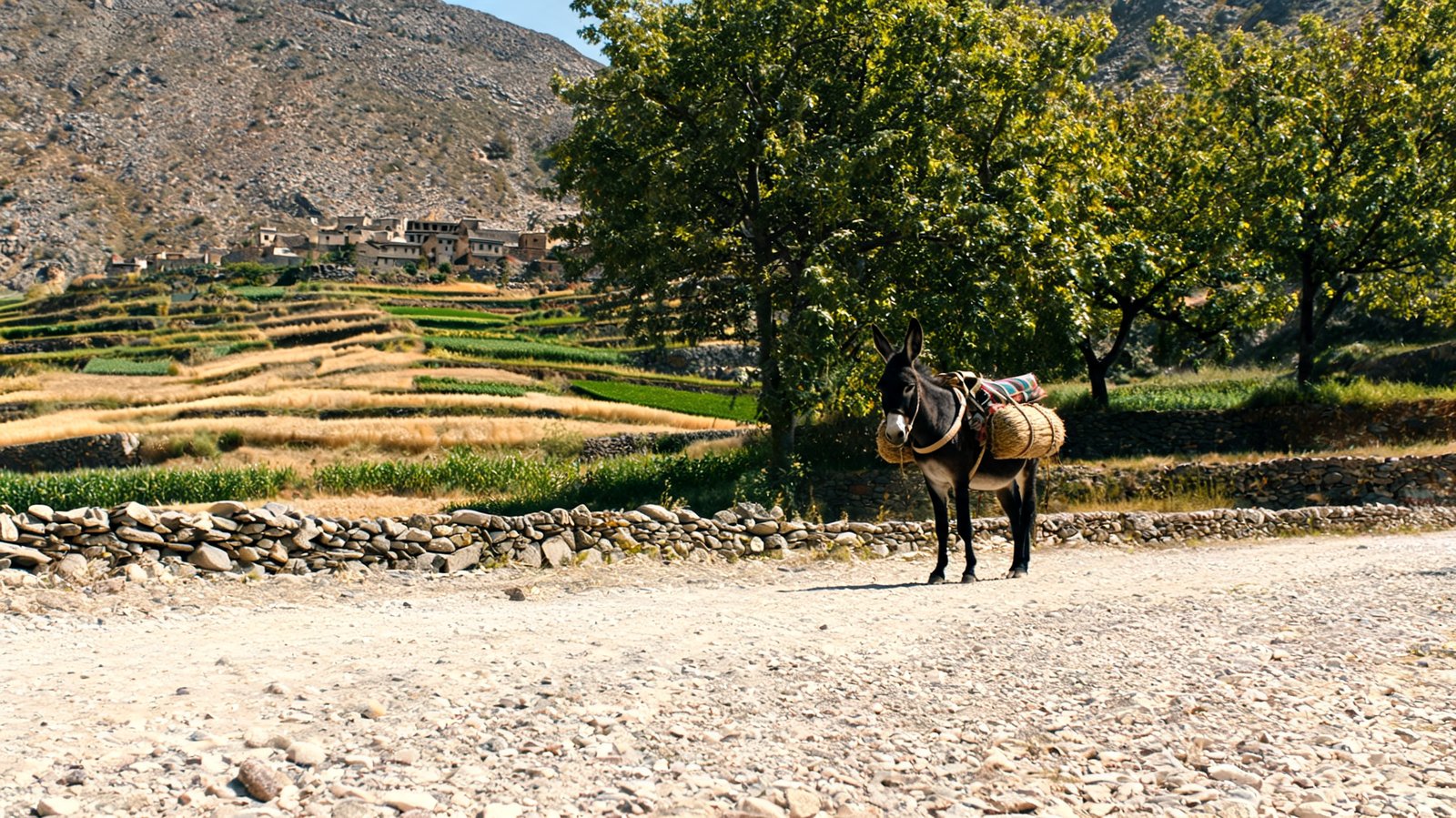
Ninety minutes from Marrakech and a different climate. Imlil and the valleys beneath Jebel Toubkal — at 4,167 metres the highest peak in North Africa — walk well in August when the city does not, and take snow in January. Berber villages, mule tracks, lodges you reach on foot for the last stretch.
Imlil Toubkal Village Walks
Explore →
Aït Benhaddou & the Valleys, Drâa-Tafilalet
Drâa-Tafilalet
Aït Benhaddou & the Valleys
The southern side of the Atlas, and the half of the Sahara road people forget to plan. A UNESCO-listed earthen ksar above the Ounila river, the kasbah trail through Skoura, then the Dades and Todra gorges where the road narrows to the river. Stay a night rather than driving through at speed.
Ksar Dades Gorge Todra
Explore →
Merzouga & Erg Chebbi, Drâa-Tafilalet
Drâa-Tafilalet
Merzouga & Erg Chebbi
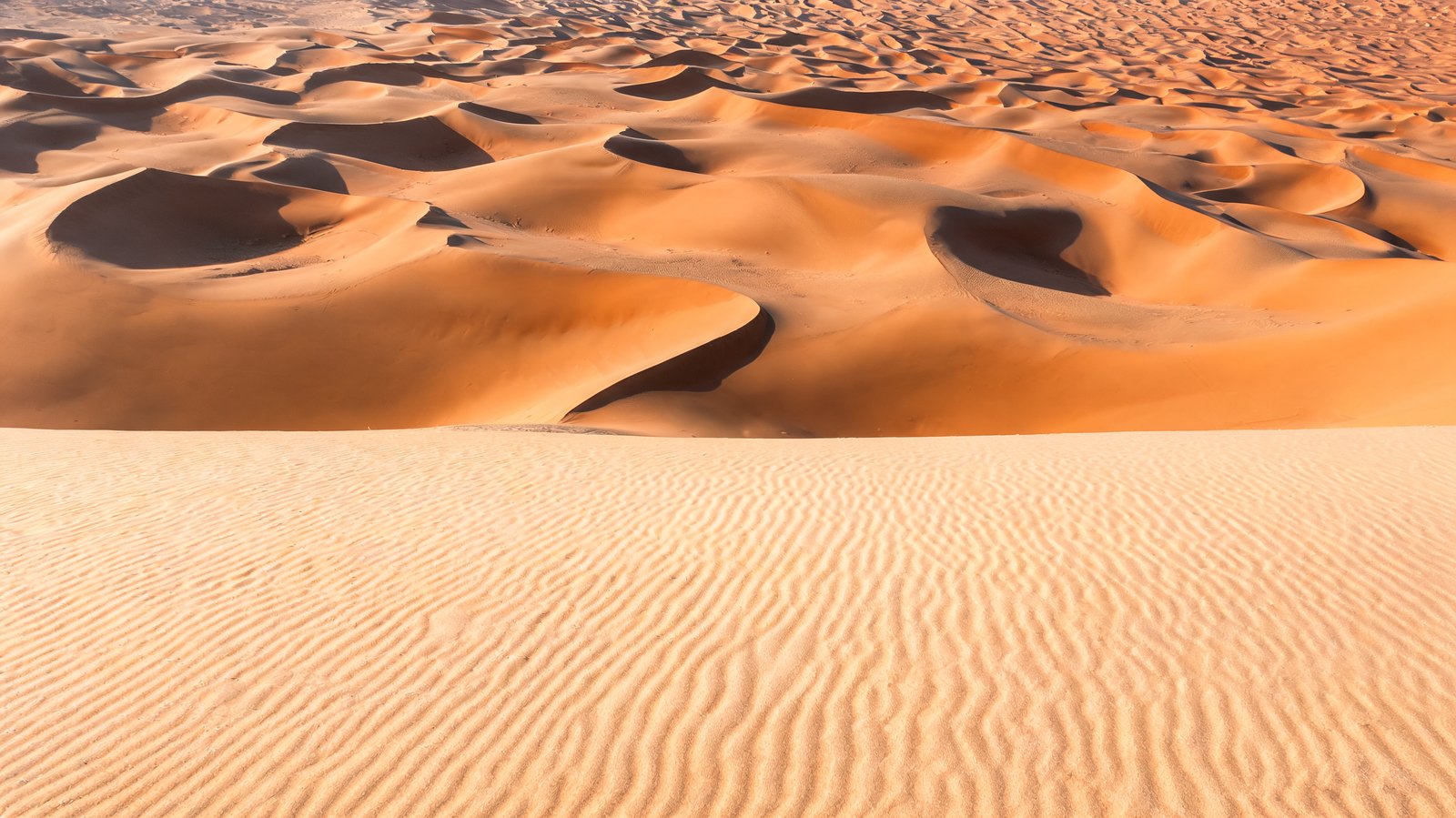
The dune field that justifies the drive, and the reason to choose Merzouga over the shorter run to Zagora, where the sand is thin and the photographs know it. One night in a camp, not three. October to April only: high summer here is an endurance exercise, and January nights drop close to freezing.
Erg Chebbi Desert Camp Oct – Apr
Explore →
Essaouira & the Coast, Atlantic Coast
Atlantic Coast
Essaouira & the Coast
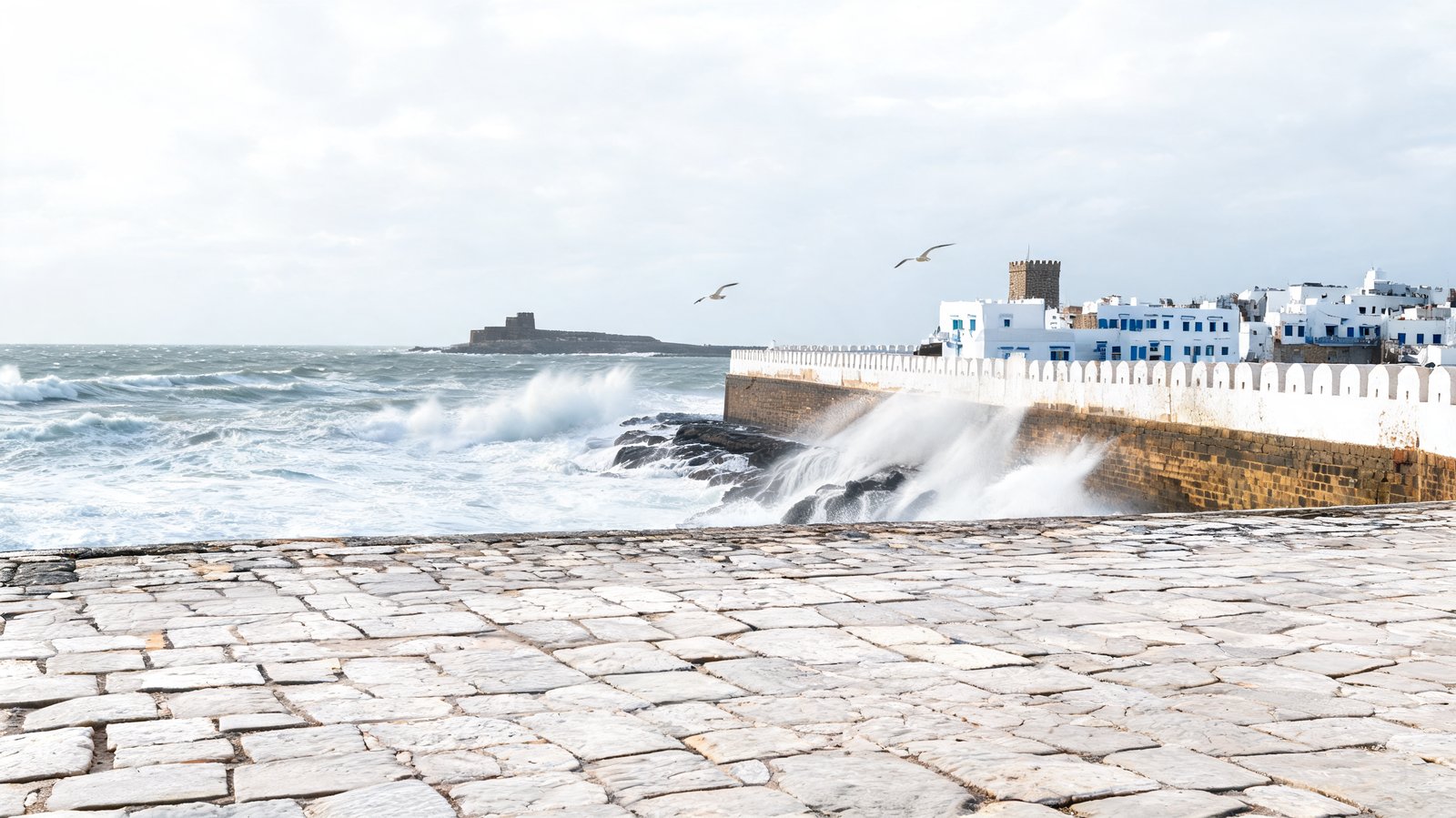
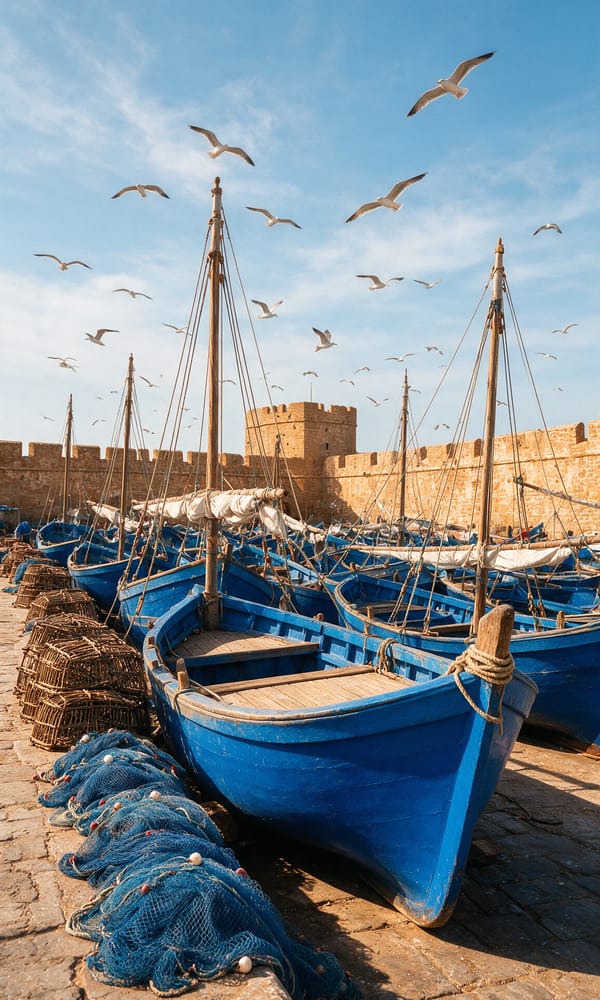
A walled Atlantic port three hours from Marrakech, and the answer to the two problems the interior creates: heat and pace. Ramparts, a working fishing harbour, Gnaoua music, and a trade wind that makes it a kitesurfing town rather than a swimming one. The right last nights of a Morocco trip.
Ramparts Gnaoua Summer Base
Explore →
Featured Itineraries

Trips We Plan Often

Morocco itineraries routed one way rather than out and back, built around a licensed guide in each medina, riads chosen room by room, and a driver who knows which of the mountain roads is worth the extra hour.
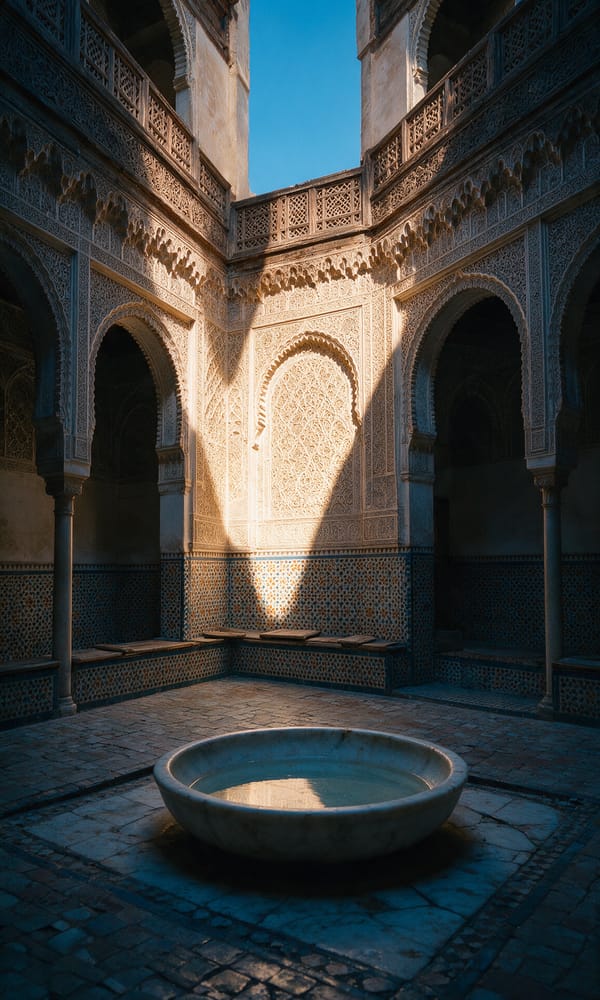
A zellij-tiled madrasa courtyard in old Fez with carved cedar walls and a sunlit marble basin
October – April · 10–12 Days
Fez First, Then Marrakech
The core Morocco trip, taken in the order that works. In through Casablanca, on to Fez by train, three nights there — a first day in Fes el-Bali with a licensed guide to learn the spine of it, a second walking it alone, a third for Volubilis and Meknès, which put a Roman city and an imperial capital in one afternoon. South by road through the Middle Atlas cedar forest, then three nights in Marrakech: the Saadian Tombs and Ben Youssef early, Jemaa el-Fna at dusk, one day held back. Finish with three nights at Essaouira or two in the Atlas at Imlil, then out of Marrakech. No leg driven twice.
Morocco10–12 Days
Plan This Trip
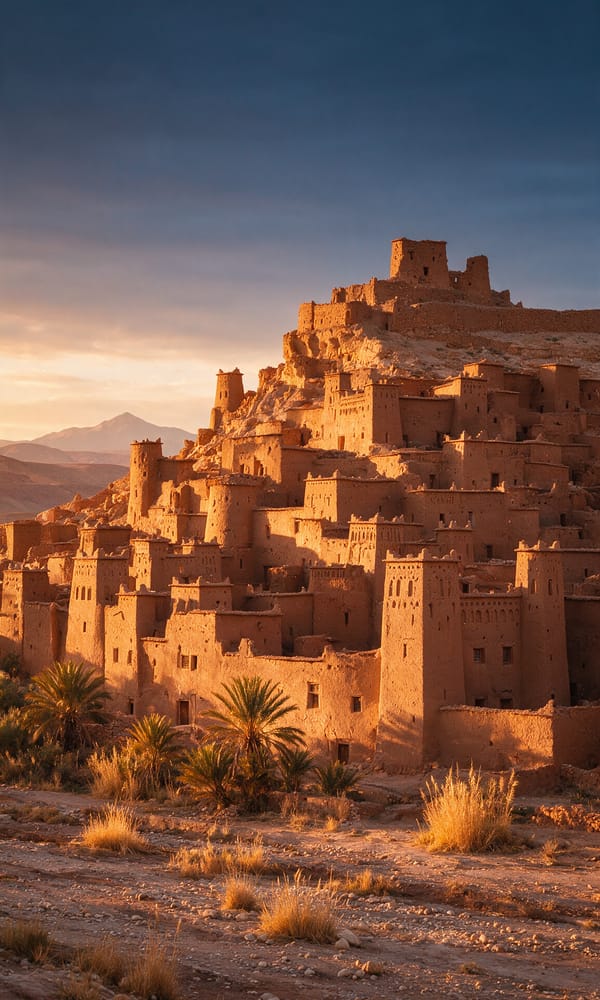
Mud-brick towers of Aït Benhaddou climbing a hillside above a dry riverbed in evening light
October – April · 12–14 Days
Marrakech to the Sahara, One Way
The desert done as a route rather than a round trip. Three nights Marrakech, then over the Tizi n'Tichka with a night at Aït Benhaddou instead of a photograph stop — the ksar empties in the late afternoon and the light on the earthen walls is the reason to stay. On through Skoura's kasbahs and the Dades and Todra gorges, a night in each rather than a windscreen tour, then Merzouga for one night on Erg Chebbi. North through the Ziz valley to Fez for three nights, home from Casablanca. Four genuinely different landscapes in two weeks, and not a kilometre of it repeated.
Morocco12–14 Days
Plan This Trip
Blue wooden fishing boats, nets and crab traps on the quay at Essaouira below the ramparts
June – September · 9–10 Days
The Coast and the Atlas in Summer
Morocco when the interior is closed to sensible people. Two nights in Marrakech with the medina taken at seven and left alone by eleven, then up into the High Atlas for three nights at Imlil, where altitude does what air conditioning cannot and the village walking is good all day. West to Essaouira for four nights: ramparts, the fish grills on the port, an argan co-operative that actually presses, and a trade wind holding the temperature ten to fifteen degrees under Marrakech. No Sahara, no gorges, no midday transfers. This is the July and August trip, and it beats the version people force.
Morocco9–10 Days
Plan This Trip
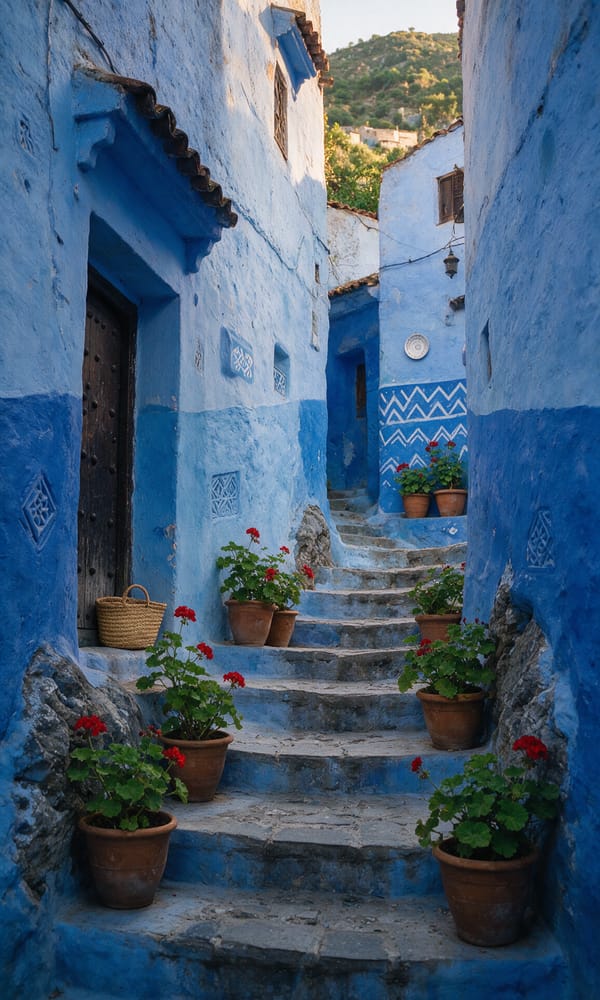
A blue-washed stepped lane in Chefchaouen with geraniums in terracotta pots along the steps
March – May · 8–10 Days
The North: Tangier, Chefchaouen, Volubilis
A second Morocco trip, or a first one for travellers who want cities and history rather than dunes. Two nights Tangier at the mouth of the Mediterranean, then south into the Rif for two nights in Chefchaouen — worth staying overnight rather than day-tripping, because the blue town empties at five and becomes a town again. On to Volubilis for the mosaics of the Roman capital of Mauretania Tingitana, a night behind the walls at Meknès, three nights in Fez. One stop in Casablanca on the way out: the Hassan II Mosque, whose 210-metre minaret stands over the Atlantic, and one of the very few working mosques here that admits non-Muslims.
Morocco8–10 Days
Plan This Trip
Why Plan With Us

What We Add to Morocco Planning

Two decisions decide most of how a Morocco trip feels: who guides you in each medina, and how the driving days are routed. Both are made months before departure and neither is visible on a booking site.

The Guide Is the Medina
Guiding is a licensed profession in Morocco, and the men working the medina gates offering to help are not licensed. Their route through the souks is a commission route: you will see four shops and think you saw a city. A licensed guide is there for access and refusal — which tannery terrace is working rather than staged, which madrasa is open that morning, which co-operative actually weaves. Jemaa el-Fna is on UNESCO's intangible heritage list for the storytellers and musicians who work it, the people a good guide can introduce you to.
Riads, Room by Room
A riad is a house built inward around a courtyard, usually five to ten rooms, and the variation inside one house is larger than the variation between two hotels. The courtyard rooms hear every conversation on the ground floor; the top-floor rooms are quiet and four flights up with no lift. There is no lobby, no midnight room service, and the arrival ends on foot or behind a handcart. That is the trade for sleeping inside the medina rather than beside it — right for two or three nights, wrong for a week. We book the specific room, not the property.
Driving Days, Honestly Counted
Morocco itineraries fail on arithmetic more than on taste. Marrakech to Merzouga is roughly 560 km over a mountain pass and through two gorges — nine to ten hours if you push it, two comfortable days if you stop where stopping is the point. Run it as a loop and four days of a ten-day trip go on a car to sleep one night on a dune. Route it one way and the same driving becomes the trip. We build the ground plan around that arithmetic first and fit the cities to it, which is why our Morocco itineraries have fewer days that feel like transfers.
Season by Latitude, Not by Country
Morocco does not have one climate and a good itinerary does not pretend it does. In the same August week, Marrakech sits near 37°C, a Merzouga camp is well past it, Imlil at altitude walks comfortably all day, and Essaouira needs a jacket after dark. In January the reverse applies: the southern light is the best of the year and the Atlas passes take snow. Which Morocco we plan starts with when someone can travel, and the honest July answer is a different country from the March one.
When to Go

Morocco by Season

The Travel Window
October – April
The whole country works at once, which is true in no other window. The medinas are walkable at midday, the Sahara nights are cold rather than dangerous, and the southern light through December and January is the best of the year. Two caveats: the High Atlas takes snow and a pass can close for a day, and desert nights in midwinter drop close to freezing, so a camp is chosen for its heating rather than its photographs. October–November and March–April are the strongest ends. Easter and the Christmas fortnight are when the good riads go six months ahead.
Best Overall Window
Late Spring
May – June
The last workable weeks inland and the best weeks in the mountains. Marrakech is hot by midday but manageable with early starts, the Atlas walking peaks as the snow line retreats towards Toubkal, and the coast is warming without the August wind at full strength. The desert is at the edge of sensible by late May and past it by mid-June. If the trip must fall here, front-load the medinas and the south, then climb or move west.
High Summer
July – September
Two different countries. Marrakech runs daily highs around 37°C and the desert is well beyond it, which makes the classic medina-and-dunes itinerary a bad idea rather than a hard one. The Atlantic coast is unaffected: Essaouira and the shore north of Agadir sit ten to fifteen degrees cooler under the Canary Current and the afternoon trade wind, and the High Atlas walks well all day. Planned as a coast-and-mountains trip with the medinas taken before nine, July is very good. Planned the other way it is the worst version of the country.
Ready When You Are

Plan a Morocco Trip
Routed the Right Way

Tell me how many days you have, whether the Sahara is non-negotiable, and how the party feels about stairs and early starts. I'll come back with a one-way route, the guides I'd use in Fez and Marrakech, and riad recommendations by room within one business day.

Plan a Morocco Trip All Africa Destinations

No booking fees  ·  Response within 24 hours  ·  Fully bespoke

What It Costs

What Morocco Actually Costs

Priced per room, and per vehicle on the road
The riads price per room and the Sahara leg prices per vehicle, so the same 4x4 and driver costs a couple exactly what it costs a family of four and the per-person figure halves without the trip changing at all.
What actually sets the number
  • Party size on the desert leg, because the vehicle costs the same for two as for four
  • Motorway tolls, billed by vehicle class rather than by passenger — 25, 36 or 43 dirhams for Casablanca to Rabat
  • The October-to-April window, and the Easter and Christmas fortnights when the good riads go six months ahead

Tell me the dates and the party and you get a real quote, not a range. Source: Morocco's motorway toll grid, by vehicle class.

Common Questions

Morocco — FAQ

The questions that come up most when planning a first Morocco trip — timing, which medina to start in, what the Sahara costs in days, and who should be doing the driving.

October through April, with the two strongest stretches falling October to November and March to April. Midwinter is the exception inside it: the High Atlas takes snow and a pass can close for a day, and a Sahara camp drops close to freezing after dark, so heating becomes a booking criterion. The compensation is the southern winter light, the best of the year. Ramadan moves roughly eleven days earlier each Gregorian year and drifts through the good months; the cities change rhythm rather than close, but medina restaurants keep shorter daytime hours. Check your own year's dates. Verified ; confirm before booking.

Fez first, then Marrakech. Fez has the older and denser medina — UNESCO dates its founding to the ninth century — and it asks more of you: more walking, more stairs, more disorientation. Take it on day two of the trip rather than day nine, while curiosity still outruns fatigue. Marrakech afterwards reads as manageable rather than overwhelming, and it sits closer to the two soft landings, Essaouira and the Atlas foothills. The practical version is an open-jaw booking: in through Casablanca or Fez, out of Marrakech. Reverse the order and Fez arrives as more of the same, only harder.

Four days from Marrakech and back, or two if you drive it one way and finish in Fez. Marrakech to Merzouga is roughly 560 km over the Tizi n'Tichka pass and down through the Dades and Todra gorges: nine to ten hours driven straight, and two comfortable days if you stop where stopping is the point. Route it one way — Marrakech, Atlas, ksour, Merzouga, then north through the Ziz valley to Fez — and the driving stops being a penalty and becomes the reason to go. Under nine days, skip the Sahara and take the High Atlas: Imlil is ninety minutes from Marrakech, not two days.

A riad in the medina for the medina nights, and a hotel outside the walls for the pool days. A riad is a house built inward around a courtyard, usually five to ten rooms, and the only way to sleep inside the medina rather than beside it. Expect stairs and no lift, rooms that vary enormously within one house — the courtyard ones hear everything, the top-floor ones are quiet and four flights up — and the last two hundred metres on foot, because no car reaches the door. If anyone has a bad knee or a stroller, split the trip: two or three riad nights, then a hotel with a pool.

In Fez and Marrakech, yes — a licensed one, for at least the first full day in each. Guiding is a licensed profession here; the men at the medina gates offering to help are not, and their route through the souks is a commission route — you will see four shops and believe you saw a city. A licensed guide is there for access and refusal: which tannery terrace is working rather than staged, which madrasa is open, which co-operative actually weaves. Take him for day one, then walk the medina alone. Getting lost in Fes el-Bali on day two is a good afternoon. Getting lost on day one is not.

Use a driver for the long routes and hire a car only for the coast — Marrakech to Essaouira, or north of Agadir. The motorway linking Casablanca, Rabat, Fez and Marrakech is modern and easy; the roads this trip is actually made of are not. The Tizi n'Tichka is a mountain pass above 2,200 metres carrying freight, the gorge roads narrow to the riverbed, and the last stretch into a desert camp is sand. A driver is the person who knows when to leave Merzouga to reach Fez before dark. For city-to-city legs, take the train: ONCF publishes the timetable, and the Al Boraq high-speed line covers Tangier to Casablanca in about two hours ten.

Most US, Canadian, UK, EU and Australian passport holders do not, for stays of up to 90 days. The exemption runs by nationality and it is not universal, so it needs checking against your own passport. Keep the entry stamp — it is what a riad or hotel checks at registration, and a missing one turns a two-minute check-in into a long conversation. The authoritative list sits with the Moroccan Ministry of Foreign Affairs, and the US State Department's Morocco page carries current entry, exit and safety information for American travellers. Both can change without notice, so confirm before booking flights. Verified .

Inland, yes; on the Atlantic coast, not at all. Marrakech averages daily highs around 37°C through July and August and the desert runs well beyond that. Essaouira and the shore north of Agadir sit ten to fifteen degrees cooler over the same weeks, held down by the cold Canary Current and an afternoon trade wind. The High Atlas is the other summer answer: Imlil and the valleys above it walk all day in August when Marrakech does not. So a July trip is real, but it is a coast-and-mountains trip with the medinas taken before nine. Climate normals from the WMO World Weather Information Service.
More questions answered on the Full FAQ Page
From the Journal

Read More on Planning Africa