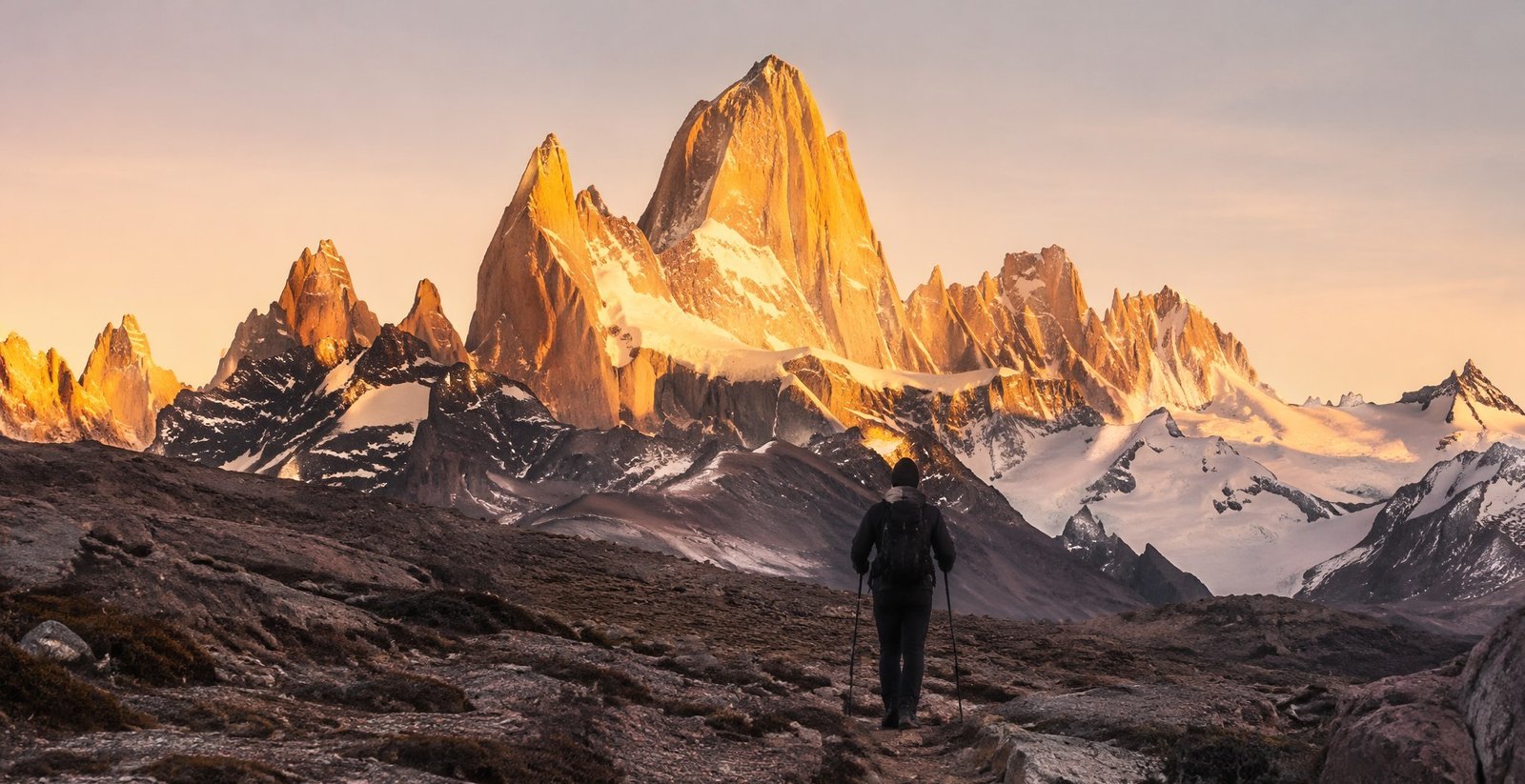


South America is the continent that travel writing has never quite captured accurately. The marquee images most travelers carry — Machu Picchu at dawn, the granite towers of Patagonia, Carnaval in Rio — are all real and all correct, but they represent a fraction of what the continent actually delivers at the luxury end of the market, and their familiarity has created a perception of the region as a set of two or three known quantities rather than a continent of genuine breadth. The Atacama Desert in northern Chile is the driest non-polar desert on earth — a moonscape of salt flats, geysers, and flamingo lagoons at 2,400 meters altitude — and has a small-lodge hospitality scene built specifically around its landscape that rivals anything in Jordan or Namibia. Lima's food culture is, by the current assessment of critics who follow these things, the most exciting in the Western Hemisphere. The Pantanal wetland in Brazil produces jaguar sightings with a reliability that the Masai Mara produces lion sightings, and the Pantanal is largely unknown to the US traveler market. The continent's luxury travel product has matured significantly over the past fifteen years and is genuinely underused — almost entirely because of a perception lag that has not kept pace with the reality on the ground.
The planning challenge in South America is different from every other region in this series. The seasonal logic is inverted — the continent is in the Southern Hemisphere, which means Patagonia's summer runs November through March, the opposite of what travelers from the Northern Hemisphere are accustomed to planning around. More significantly, the continent's best destinations have seasonal windows that don't align with each other: the Inca Trail and Galápagos diving are best in the dry season (May–October); Patagonia and Mendoza wine harvest are best in the austral summer (November–April); the Pantanal jaguars concentrate in July–October; Lima and Cartagena are year-round. A multi-destination South America trip requires more seasonal coordination than any other continent in this guide series, and the itineraries that ignore this tend to deliver a diluted version of every destination on the list.
This guide covers six South American regions — Argentina, Chile, Peru, the Galápagos, Colombia, and Brazil — that each represent a fundamentally different travel experience and each have a specific seasonal window worth respecting.
The Hemisphere Logic
The single most common South America planning mistake made by travelers from the US and Europe is booking Patagonia in July because July is summer at home. July is winter in Patagonia. The park roads are partly closed, the weather is at its most extreme, and the famous Torres del Paine circuit is inaccessible in sections. The correct Patagonia window is November through March, peaking in December and January — when the days are long, the wildflowers are out, and the glaciers calve with enough frequency that you can time a visit to a viewpoint and watch it happen. If the itinerary also includes Peru's Inca Trail, which closes in February for maintenance and is best in May–October's dry season, the logical structure is to bookend: Galápagos and Peru in May–October, Patagonia and Argentina in November–March, with the shoulder months of April and November serving as the connecting tissue where both windows have partial overlap.