

Destination Guide 15 min read

The South Pacific Guide: Six Regions and the Case for the Long Flight

French Polynesia, Fiji, New Zealand, Australia, the Cook Islands, and Melanesia — why the South Pacific rewards the traveler willing to commit to the distance, and why the lagoons, fjords, and private islands out here have no equivalent anywhere closer to home.

The South Pacific is the most physically remote luxury travel region in the world. The distances involved — eight hours from Los Angeles to Tahiti at the near end, fifteen hours to Sydney at the far end, with most of the good experiences requiring an additional domestic connection after that — are the single reason most people hesitate. This is, paradoxically, one of the best arguments for going. The distance is the filter that keeps these places from becoming what the Caribbean became when low-cost aviation made it accessible to everyone simultaneously: beautiful, crowded, and exhausted by the expectations placed on it.

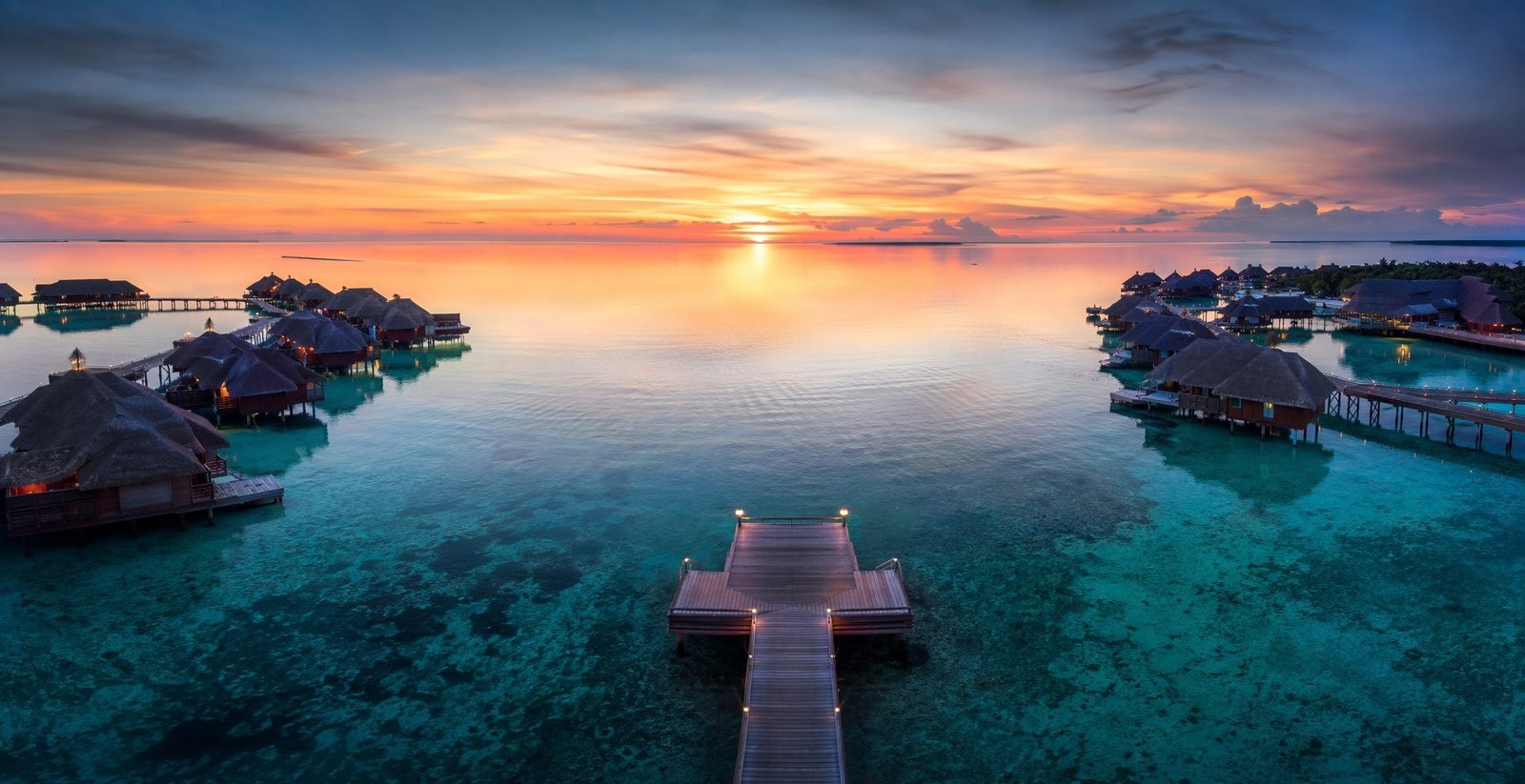
The South Pacific rewards the traveler willing to commit to the flight in a way that no closer destination can replicate. The lagoon color above a Polynesian atoll — the specific graduated aquamarine of shallow coral that transitions to the deep navy of the open ocean — has been photographed so many times that most travelers arrive already habituated to it, and are still surprised by the reality. The same is true of New Zealand's Fiordland, where the vertical rock walls and the silence of Milford Sound after the tourist day-boats leave produce a scale and quiet that no description or photograph has ever successfully conveyed. These are places where the physical reality outperforms the expectation even after the expectation has been calibrated by decades of photography. That is a rarer achievement than it sounds.

This guide covers six South Pacific regions — French Polynesia, Fiji, New Zealand, Australia, the Cook Islands, and Melanesia — that each represent a fundamentally different travel experience. Two of them are private-island destinations where detachment is the primary product. One is the finest adventure and landscape destination in the Southern Hemisphere. One pairs a world-class reef system with a desert interior that belongs in a different conversation entirely. The common thread is that all of them ask something of the traveler before they deliver — and all of them deliver.

The Distance Question

The most common South Pacific planning mistake is not choosing the wrong destination — it is allocating too little time. The flight to Bora Bora from the US East Coast involves a connection through Los Angeles and roughly sixteen hours of total travel time door to door. A four-night stay that most travelers would book for a Caribbean trip does not amortize that investment well. Seven nights is the floor. Ten nights is the right answer for French Polynesia, because the correct itinerary involves at least two islands — Tahiti or Moorea plus an outer island — and the outer atolls (the Tuamotu, the Marquesas) reward stays that most travelers only give themselves when they've been before and understand what they were rushing through the first time.

New Zealand and Australia justify three weeks if you're combining both, or ten to fourteen days each if you're choosing one and doing it properly. The traveler who gives New Zealand five days has visited the country and has not experienced it. The South Island alone — the fjords at Milford and Doubtful Sounds, the Aoraki / Mount Cook basin, the Otago Peninsula for wildlife, the Central Otago wine region — requires a week to see without rushing, and rushing is the wrong pace for a landscape that communicates in its own time.

"The distance is not the inconvenience — it is the product. The South Pacific consistently answers the question of what people mean when they say they want to be truly away."

Six Regions at a Glance

Below is a breakdown of each region — its character, who it's right for, when to go, and the specific properties worth knowing. A timing guide and property reference section follow.

Region Overview · South Pacific
The Numbers That Frame the Region
6
Distinct regions covered in this guide
May–Oct
Primary dry-season window across most of the South Pacific
8–18 hrs
Flight from US West Coast gateways to main hubs
Lagoon
Fjord
Reef
Primary experience types this guide covers
Six Regions. Six Different South Pacifics.
01
French Polynesia — Tahiti, Bora Bora & the Atolls
The Lagoon Overwater Private Atoll
Tahiti · Moorea · Bora Bora · Tetiaroa · Rangiroa · Fakarava · Marquesas
French Polynesia is where the overwater bungalow was invented — at the Bora Bora Lagoon Resort in 1967, a format that has since been copied on every ocean and failed to produce anything comparable in almost every instance, because what makes the overwater bungalow work is not the architecture but the specific aquamarine of a Polynesian volcanic lagoon and the silence above it before the day boats arrive. Bora Bora's Mount Otemanu is the reference image for the South Pacific: a basalt peak rising from a turquoise lagoon ringed by a necklace of motus (sand islets) that the resort properties sit on, separated from the main island by calm water that changes color with the light all day.

The itinerary that produces the best French Polynesia trip is not Bora Bora alone. Moorea — forty minutes from Papeete by ferry, largely undeserving of its secondary status — has a Cook's Bay and an interior that justify two nights before the connection west. For the traveler who wants to go further: Tetiaroa, Marlon Brando's private atoll purchased in 1967 and now operated as The Brando resort, sits forty-five minutes by light aircraft from Papeete in the middle of the open Pacific and has no scheduled tourism, no day visitors, and forty villas across an atoll of twelve islets that the nesting seabirds share with the guests. The Tuamotu atolls — Rangiroa and Fakarava — are among the finest drift-dive destinations in the world, and require a domestic flight from Papeete that a surprising number of French Polynesia visitors never take.
Best Season: May – October (dry season; trade winds; low humidity) Avoid: December – March (austral summer; higher humidity; cyclone risk in some years) Gateway: PPT (Papeete/Tahiti) — direct from LAX and SFO; connections to Bora Bora (BOB) and Tetiaroa Key Properties: The Brando (Tetiaroa Atoll), Four Seasons Bora Bora, Intercontinental Bora Bora Le Moana
02
Fiji — Private Islands & Outer Archipelagos
Private Island Melanesian Culture Dive
Mamanuca Islands · Yasawa Islands · Lau Group · Vanua Levu · Taveuni
Fiji is the South Pacific destination most often described as warm — in the cultural sense, not only the climatic one. The Melanesian culture that distinguishes Fiji from Polynesian French Polynesia expresses itself most clearly in the village relationships that the best Fijian resorts maintain: the sevusevu (kava ceremony), the talanoa (the culture of unhurried conversation), and the genuine communal quality of the welcome that Fijian hospitality has become known for. The difference is not performed — it is one of the few things in luxury travel that actually is what it presents itself as being.

The private island resorts in the outer Fijian archipelagos are among the finest in the world. Laucala Island — a 3,500-acre island purchased and developed by Red Bull founder Dietrich Mateschitz and operated as a 25-villa private island resort — has its own airstrip, a golf course, an organic farm that supplies the kitchens, and a level of privacy and physical scale that almost no other single-island property anywhere can match. Kokomo Private Island, in the Kadavu Group, sits at the northern edge of the Great Astrolabe Reef — one of the four largest barrier reef systems on earth — with access to dive sites that the vast majority of Fiji visitors never reach. Taveuni, the Garden Island, has the Rainbow Reef running along its western shore: a coral system of such density and health that dive operators rank it in the top five accessible reef dives in the world.
Best Season: May – October (dry season; reduced humidity; calmer seas) Wet Season: November – April (lush, green, fewer visitors, lower rates; cyclone risk Dec–Mar) Gateway: NAN (Nadi) — direct from LAX, SFO, SYD, AKL; seaplane or charter to outer islands Key Properties: Laucala Island, Kokomo Private Island (Kadavu Group), Yasawa Island Resort
03
New Zealand — Fiordland, the Wine Country & Beyond
Landscape Wine & Food Māori Culture
Fiordland · Queenstown · Central Otago · Hawke's Bay · Bay of Islands · Rotorua
New Zealand is the finest adventure and landscape destination in the Southern Hemisphere — and a destination that its own visitors frequently underplan, because the photographs of the South Island fjords give no accurate sense of their scale. Fiordland National Park, which contains Milford Sound and the less-visited but superior Doubtful Sound, is a World Heritage site of such physical extremity — vertical granite walls rising 1,200 meters from still black water, waterfalls appearing from nowhere after rain, fur seals and bottlenose dolphins in water cold enough to be perfectly clear — that the standard day-cruise experience (drive in, board the boat, drive out) is a category error. An overnight boat on Doubtful Sound, with the tourist traffic gone and the sounds entirely quiet, is one of the finest single experiences available in the South Pacific.

The North Island receives less attention and is worth more of it. The Māori cultural experience at Rotorua is the most accessible and least commodified indigenous cultural engagement in the Pacific — the geothermal landscape, the carved meeting houses, and the living marae (community meeting grounds) are not reconstructed for tourism but are functioning parts of an intact cultural practice. Hawke's Bay and Martinborough produce Chardonnay and Pinot Noir in a setting that looks like a gentler, sun-drenched version of Burgundy — the cellar doors are informal, the winemakers are available, and the food at the estate restaurants competes with anything in the country.
NZ Summer (Best): November – April (long days, accessible mountain passes, harvest season) Fiordland: Year-round; highest waterfalls in winter (more rain); quietest in April–May and September Gateway: AKL (Auckland) or CHC (Christchurch) — direct from LAX, SFO, SYD, MEL Key Properties: Huka Lodge (Taupō), The Farm at Cape Kidnappers (Hawke's Bay), Kauri Cliffs (Northland)
04
Australia — The Reef, the Red Centre & the Northwest
Great Barrier Reef Uluru Whale Sharks
Whitsunday Islands · Cairns · Ningaloo Reef · Uluru · Kimberley · Kangaroo Island
Australia contains two of the most remarkable natural sites on the planet — the Great Barrier Reef and Uluru — and the planning mistake is treating them as a single itinerary. They are separated by 3,000 kilometres and belong to different trips, different seasons, and different travel moods. The Great Barrier Reef is best experienced from the Whitsundays or from a live-aboard dive vessel out of Cairns, not from the mass-tourism infrastructure of the Hamilton Island resort strip — though qualia, on the northern tip of Hamilton, is the obvious exception. The outer reef sites accessible from Cairns, where the live-aboards operate, represent coral ecosystems of a density and health that even experienced divers find surprising.

Western Australia's Ningaloo Reef, on the remote northwest coast, is where whale sharks aggregate between March and July in numbers that no other accessible location on earth can match: the snorkelling interactions are guided, regulated, and extraordinary. The Kimberley region — the remote northwest coast of the continent, accessible only by small-ship expedition cruise or private charter — is one of the last genuinely wild and largely unvisited coastlines in the world. Uluru at dawn, watched from Longitude 131°'s dune walk with a glass of sparkling wine in hand as the rock cycles through forty shades of ochre in twenty minutes, belongs in a different category from the Great Barrier Reef entirely — but both justify the flight from the US.
Reef (Whitsundays / Cairns): June – October (dry season, calm seas, best visibility) Ningaloo Whale Sharks: March – July; coral spawning and manta rays October – December Uluru / Red Centre: April – September (avoid Dec–Feb; 45°C+ temperatures) Gateway: SYD or MEL direct from LAX, JFK, SFO, DFW; internal connections to CNS, ASP, PER Key Properties: Qualia (Hamilton Island), Longitude 131° (Uluru), Sal Salis (Ningaloo Reef)
05
The Cook Islands & Aitutaki
Best-Kept Secret Quieter Polynesia Lagoon Classic
Rarotonga · Aitutaki · Atiu · Palmerston Atoll
The Cook Islands are the South Pacific destination most consistently described by repeat visitors as the version of Polynesia that hasn't been overrun — and they are correct, for reasons that have as much to do with geography as anything else. There is no direct flight from the US mainland; the connection routes through Auckland, and the additional travel time creates a self-selecting traveler population that leans toward those who already know what they're looking for. The result is an archipelago that has absorbed far less tourism infrastructure than French Polynesia and retains a cultural character that the better-marketed destinations have largely traded away.

Aitutaki Lagoon is, by most measures, the most beautiful lagoon in the South Pacific — more intimate than Bora Bora, shallower, and accessible in its entirety on a single day-excursion by boat to One Foot Island at the lagoon's southern tip. The sand here is the fine white coral powder that photographs have conditioned you to expect in the South Pacific and that only a handful of locations actually deliver. Rarotonga, the main island, is walkable around its perimeter in a day and contains a level of life — markets, the harbor, the mountain interior — that gives the destination context beyond the beach. This is not a destination for the traveler who wants the most polished product. It is for the traveler who wants the real one.
Best Season: April – November (dry season; trade winds; most comfortable) Wet Season: December – March (warmer, wetter; cyclone risk; fewer visitors) Gateway: RAR (Rarotonga) via AKL (Auckland) — connections from LAX and SFO through Air New Zealand Key Properties: Pacific Resort Aitutaki, Aitutaki Lagoon Private Island Resort, Te Manava Luxury Villas (Rarotonga)
06
Melanesia & the Expedition Pacific
Vanuatu Solomon Islands Expedition-Level
Vanuatu · Solomon Islands · Papua New Guinea · Tonga · Samoa
Melanesia is the South Pacific for the traveler who has been to French Polynesia and Fiji and wants the next layer — and for whom "next layer" means the version of the Pacific that the tourist infrastructure hasn't yet reached. Vanuatu's Tanna Island has an active volcano, Yasur, that has been erupting almost continuously for at least eight hundred years and can be approached to the crater rim on a guided walk at night, when the lava illuminates the gas plume from below and the ground shakes with each eruption. The level of physical access here — standing at the edge of an active caldera — is not available at most comparable sites in the world, and Vanuatu has not closed it off.

The Solomon Islands contain some of the most significant Second World War dive sites in the Pacific — Iron Bottom Sound near Guadalcanal holds the wrecks of dozens of warships and aircraft from the 1942–1943 naval campaign, lying in shallow enough water for recreational divers to reach. The reef systems above these wrecks have colonized the structures over eight decades into formations that don't exist anywhere else. Tonga, from July through October, is where approximately half the world's humpback whale population calves and breeds in a protected marine area that offers in-water encounters with no hard cap on vessel numbers. Swimming with a mother and calf in clear Pacific water is one of the most extraordinary wildlife experiences available outside of a safari. Papua New Guinea is expedition travel in its most committed form — extraordinary biodiversity, intact tribal culture in the highlands, and an infrastructure level that requires preparation and a specific kind of traveler.
Tonga Whale Season: July – October (humpback breeding and calving; swim-with encounters) Vanuatu Best: April – October (dry season; Yasur accessible year-round) Solomons Diving: Year-round; April – November optimal visibility Gateway: Port Vila (Vanuatu) via SYD or BNE; Honiara (Solomons) via BNE; Nukualofa (Tonga) via NAN or AKL Key Properties: Ratua Private Island (Vanuatu), Havannah Vanuatu, Aqua Resort (Tonga)
When to Go — by Season and by Region
May – Oct
Dry Season Peak
The primary travel window for French Polynesia, Fiji, and the Cook Islands — trade winds moderate the heat, seas are calmer, visibility for diving and snorkeling is at its best. New Zealand and Australia's southeast are in their cooler winter; Uluru and the outback are most comfortable. Tonga's humpback whale season runs July–October. Book 6–9 months ahead for the best properties.
Best Window
Nov – Apr
NZ & Australia Summer
New Zealand's summer — the season for the South Island mountain passes, wine harvest (February–April), long days, and the full Fiordland experience. Australia's east coast beaches and tropical north are at their most accessible and appealing. Ningaloo whale shark encounters run March–July. French Polynesia shoulder season: warmer, higher humidity, slightly lower rates. Cyclone risk increases for Fiji and French Polynesia December–March.
NZ & Australia
Jul – Sep
Whale Season
Tonga's humpback breeding season peaks July–September, when approximately half the world's southern humpback population concentrates in the warm shallows of the Ha'apai and Vava'u Groups. Swim-with interactions are conducted from small vessels with licensed operators. New Zealand's winter is mild enough in the north island for comfortable travel. Fiji and French Polynesia are in peak dry season — best diving conditions of the year.
Dec – Mar
Wet Season / Cyclone Risk
The austral summer brings increased humidity to French Polynesia and Fiji, and cyclone risk to the northern South Pacific. Most private island resorts in Fiji close for two to four weeks in January–February for maintenance; confirm operational status when planning. Rates drop significantly — 20–40% at some properties. New Zealand's high summer (December–February) is peak season; book early. Australia's tropical north (Cairns, Darwin, Kimberley) enters monsoon season.
Eight Properties That Earn Their Rates
Not a comprehensive list — these are the specific resorts and lodges across the South Pacific that consistently deliver what they promise, from a private Polynesian atoll to a cliffside New Zealand estate to a desert camp above Uluru at dawn.
The Brando
Private Atoll
Tetiaroa Atoll · French Polynesia
Forty villas across twelve islets on the private atoll that Marlon Brando purchased in 1967 and that opened as a resort in 2014 with an environmental mandate as central to its identity as the accommodation itself. No day visitors, ever. The Richard H. Bailey Research Station on the island conducts active coral reef and lagoon ecology research that guests can participate in. The carbon footprint — solar power, coconut oil fuel, a desalination plant that eliminated mainland water imports — is the most comprehensively offset of any resort in the South Pacific. The villas are large enough that the atoll's twelve islets never feel crowded. The access flight from Papeete (forty-five minutes in an ATR-72) is the last transfer. After that, there is no noise.
Laucala Island
Private Island
Laucala Island · Cakaudrove Province · Fiji
Twenty-five villas on a 3,500-acre private island in the northeast Fijian archipelago, purchased by the late Dietrich Mateschitz (Red Bull) and developed as a resort that does not publish room rates publicly because the rates are high enough that the information functions as a qualifier rather than a selling point. The island has its own airstrip (direct charter from Nadi), an 18-hole golf course, an organic farm, a Fijian village of 300 permanent residents, and a dive operation with access to reef systems in the Ringgold Isles that almost no other operator reaches. The scale — 3,500 acres for twenty-five villas — means that the vast majority of the island on any given day contains no guests. That ratio is not accidental.
Huka Lodge
River Lodge
Taupō · Waikato River · New Zealand
Twenty suites on the Waikato River, fifty meters from the Huka Falls, an hour south of Auckland by light aircraft. The lodge has operated since 1924 and has hosted more heads of state, royalty, and world leaders than any comparable property in New Zealand — a guest register that reflects less the vanity of the property and more the straightforward reality that Huka has been the finest small lodge in the country for a century. The trout fishing on the Taupō River system is among the best in the world; the lodge's guides work specific beats on specific rivers and the arrangement is not that different from a well-managed Scottish highland river. The kitchen produces a set menu that changes nightly and competes with Auckland's best restaurants. A three-night minimum does the place justice.
Qualia
Reef Retreat
Hamilton Island · Whitsunday Islands · Queensland · Australia
Sixty pavilions on the northern tip of Hamilton Island, positioned so that the sight lines from the infinity pool and the majority of rooms face the Coral Sea rather than the resort village at the island's southern end. The property is deliberately adults-only and restricts access to guests — no day visitors from the ferry, no through-traffic from the rest of the island. The Great Barrier Reef's outer pontoons are accessible by charter from the Hamilton Island marina, and the Whitsunday passage sailing — particularly Whitehaven Beach, whose silica sand is fine enough to be used in watch manufacturing — is available from the same quay. The Great Barrier Reef has been damaged significantly by coral bleaching events; the outer reef sites north of Cairns have recovered better than the inner reef areas, and a liveaboard addition to the Qualia stay addresses this directly.
The Farm at Cape Kidnappers
Clifftop Estate
Te Awanga · Hawke's Bay · New Zealand
Twenty-two suites and villas on a 6,000-acre working sheep and cattle farm above the Cape Kidnappers headland, with views across Hawke's Bay that on clear days extend to the Mahia Peninsula forty kilometres north. The property sits at the top of dramatic coastal cliffs that host the world's largest mainland gannet colony — 20,000 birds nesting between October and April in a colony accessible by tractor-drawn tour across the farm. The lodge is Robertson Lodges' flagship New Zealand property; the golf course, designed by Tom Doak, is consistently ranked among the top twenty courses in the world by major publications. The Hawke's Bay wine region — Craggy Range, Te Mata, Black Barn — is fifteen minutes away by car.
Longitude 131°
Desert Camp
Yulara · Uluru-Kata Tjuta National Park · Northern Territory · Australia
Fifteen tented pavilions elevated on a red sand dune above the spinifex plain, with unobstructed views of Uluru across ten kilometres of open desert. The dune walk at dawn — when Uluru cycles through its colour range as the sun rises, from deep purple to red to ochre to gold in the space of twenty minutes — is the single best way to experience the rock, and Longitude 131° is the only property close enough to do it with a glass of sparkling wine and no coach buses in the sightline. The Anangu traditional owners who co-manage the national park lead cultural experiences from the property; the stories attached to the rock's specific formations are the difference between looking at a large geological feature and understanding it.
Pacific Resort Aitutaki
Lagoon Classic
Aitutaki · Cook Islands
Twenty-seven bungalows and villas on Aitutaki's main island, with direct lagoon access and the only overwater bungalows in the Cook Islands. The property is the reference hotel for the Aitutaki experience: the lagoon excursions to One Foot Island depart from the resort jetty, the snorkelling on the fringing reef is accessible without a boat, and the scale — twenty-seven villas across a small property — keeps the atmosphere closer to a private home than a resort. The Cook Islands' low development and the absence of direct US flights keeps Aitutaki at a volume that allows the lagoon to be largely empty most mornings. The trade winds that arrive mid-morning are reliable enough that kite-surfing conditions develop daily on the lagoon's eastern edge.
Kokomo Private Island
Outer Reef
Kadavu Group · Fiji
Twenty-one villas on a 140-acre island at the edge of the Great Astrolabe Reef — one of the world's four largest barrier reef systems, rarely dived and rarely written about because reaching it requires a seaplane from Nadi or a charter vessel from Suva. The reef sites accessible from Kokomo include walls, passes, and bommies (coral pinnacles) that dive operators who know the Astrolabe consider among the finest reef diving in the Pacific. The island is adult-only and limits guest numbers so that the dive sites are accessed by small groups from a single property. The turtles and sharks and manta rays that use the Astrolabe are habituated to the absence of crowds in a way that the high-traffic reef sites in the Mamanucas are not.
Plan Your Trip

The full destination overview for the South Pacific — including island-by-island itineraries and the properties we recommend most often by travel style — is on the South Pacific Destination Page.

If you're planning a beach and island-focused South Pacific trip and want to understand the tradeoffs between French Polynesia, Fiji, and the Cook Islands, the Beach & Island Escapes experience page covers how we approach these decisions in detail. For adventure-focused travel — the Fiordland, the Kimberley, the Tonga whale season — the Adventure & Active page outlines the operators and timing windows worth building a trip around.

Tell me which region draws you — or whether it's the lagoon, the fjords, the reef, or the private island experience you're actually after — and I'll come back with a specific itinerary and property recommendation within one business day.

Plan a South Pacific Trip
Worth the Flight

Tell me which experience draws you — the lagoon, the fjords, the reef, the private island, the wildlife — and I'll come back with the right region, the right property, the right season, and the itinerary that actually justifies the distance.

Start Planning
May – October (dry season for French Polynesia, Fiji, Cook Islands)
7 nights (the flight demands it); 10–14 for multi-island itineraries
LAX or SFO → PPT (Tahiti), NAN (Fiji), AKL (Auckland), SYD (Sydney)
Tonga: July – October; Ningaloo whale sharks: March – July
6–9 months for Laucala and The Brando; 3–6 months for most others
Mark Sole
Founder & Travel Director

The South Pacific is the region that most consistently requires more time than travelers allocate and returns more than they expected. The properties in this guide were selected for the same reason I recommend any property: they deliver what they describe, at a level that justifies the journey to reach them.

About Mark