
Eastern Caribbean · Windward Islands

Two Pitons, Two Airports,
One Decision About
Where to Sleep.

St. Lucia is 27 miles long, and long-haul flights land at Hewanorra on its southern tip. Soufrière, under the Pitons, and the north around Rodney Bay are two different holidays, and the island's winding roads make choosing between them the first decision.

Best Season
December – April
Best For
Couples
& Honeymoons
The Island

The Pitons Are in the South.
So Is the Airport.

St. Lucia's dry season runs December to April, with May as the shoulder; the Atlantic hurricane season runs June 1 to November 30. Long-haul flights land at Hewanorra in the far south, about 90 minutes by road from the north. Choose the base first: Soufrière for the Pitons and small view-led hotels, or the north for long beaches and larger resorts.

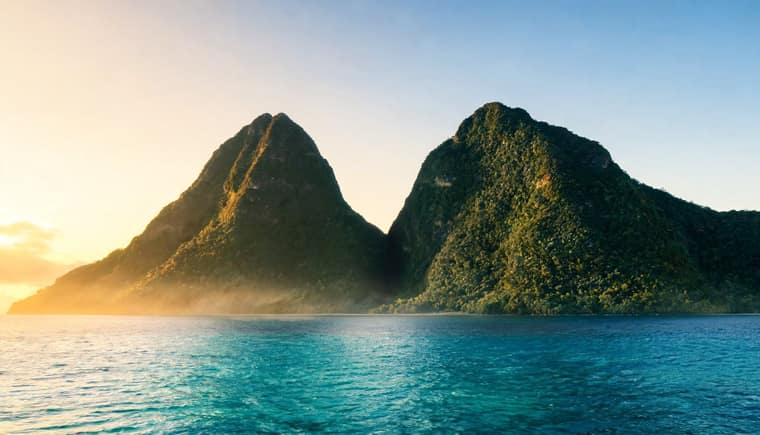
The island is 27 miles long and 14 wide (Britannica), but the distances read shorter than they drive. The two Pitons rise side by side from the sea at Soufrière on the southwest coast, inside the Pitons Management Area, which UNESCO inscribed in 2004. That is where the view is, and where most of St. Lucia's small, view-led hotels sit, many of them on steep hillsides with open-walled rooms facing the peaks. The north, around Rodney Bay, Gros Islet and Cap Estate, is flatter and busier, with Reduit Beach, the marinas, restaurants and nightlife that the Saint Lucia Tourism Authority lists for the region, and the larger beachfront resorts, many on all-inclusive plans.

So the first question is not which hotel but which half of the island. A couple who want the Pitons from the bed and a boat to the beach belong in Soufrière. A couple who want to walk into calm water from a sun lounger, with dinner choices on foot, usually belong in the north. A week split between the two is common, and it is the format that makes the most of the 90-minute drive the arrival already demands.

St. Lucia is also the island most often paired with Barbados, whose flight schedule it lacks. That two-island trip has its own page: pairing St. Lucia with Barbados. This page is the single-island week. Seasons, entry rules and transfer times here were checked ; they change, so confirm before booking.
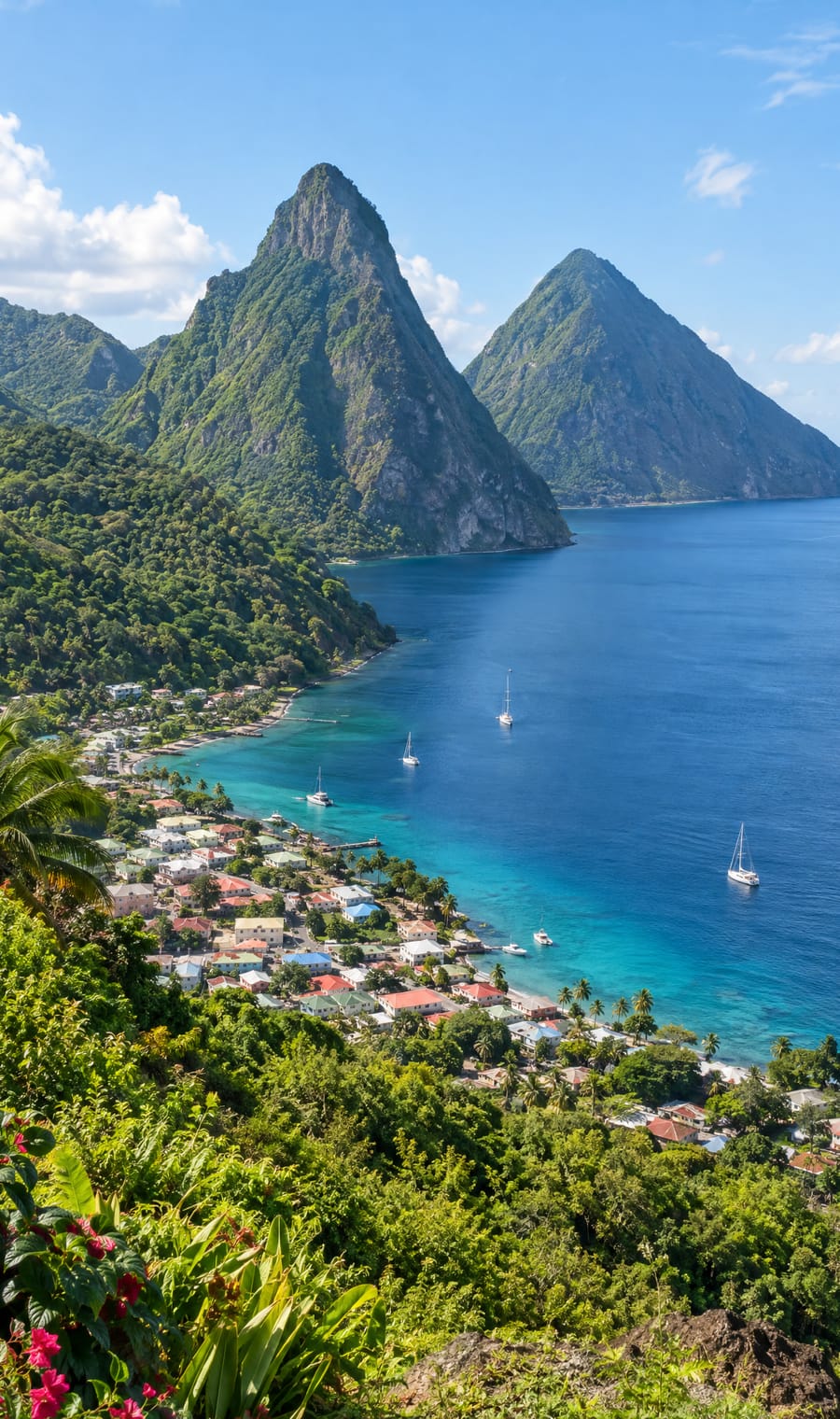
The twin Pitons rising from the sea beyond a small town of colored roofs on a turquoise bay, with yachts at anchor
The Pitons above Soufrière · St. Lucia
Where to Stay

Five Parts of St. Lucia Worth Knowing

Two bases in the southwest, two in the north, and the interior between them. Site facts are from UNESCO and the Saint Lucia Tourism Authority, checked .
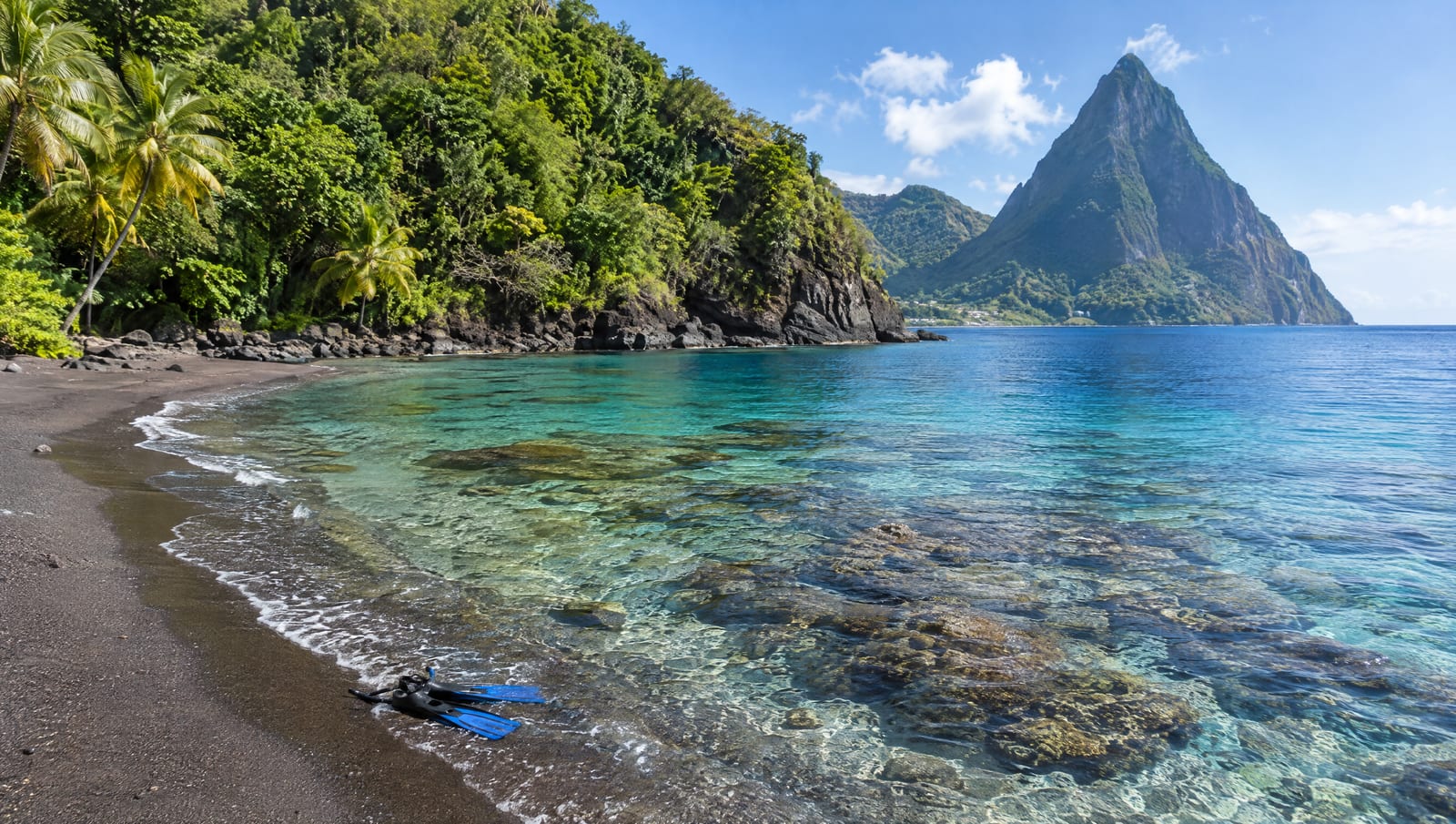
A dark-sand cove with clear water over a shallow reef, snorkel fins on the shore and a forested volcanic peak beyond
Southwest Coast
Soufrière, the Pitons & Anse Chastanet
Gros Piton (770 m) and Petit Piton (743 m) anchor a 2,909-hectare World Heritage site of land and sea, inscribed in 2004. North of the town, the dark-sand cove at Anse Chastanet is sheltered by cliffs and is one of the island's best snorkeling sites, with the reef starting a few strokes from shore.
UNESCO 2004 Reef Snorkeling Honeymoons
See the weeks →
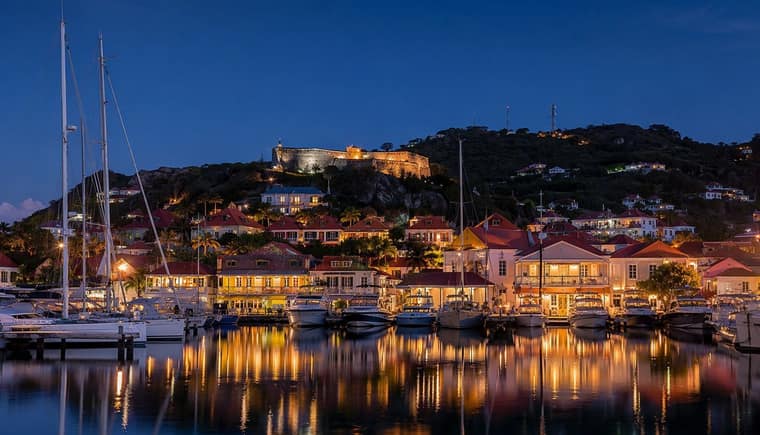
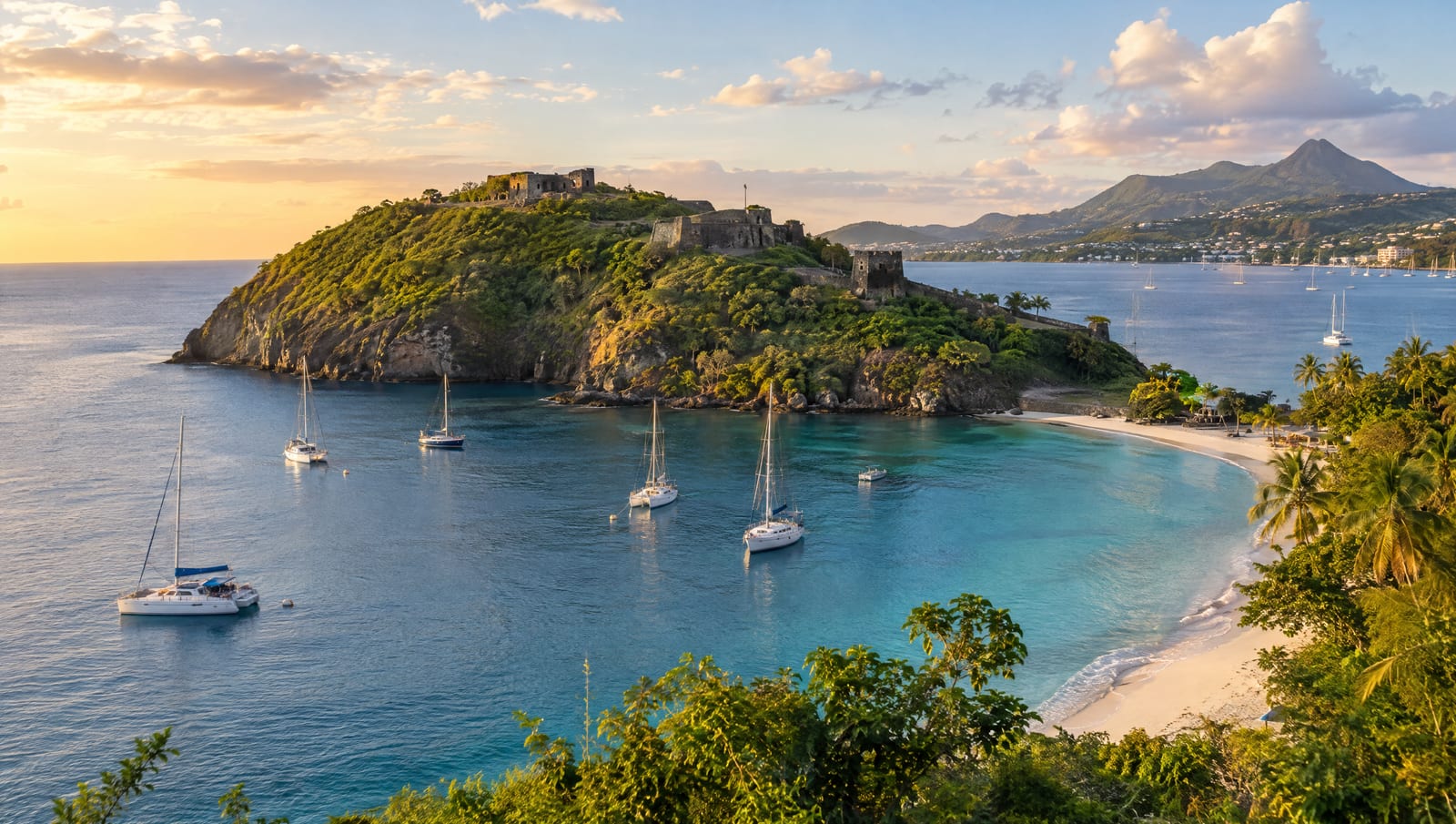
A green headland topped with stone fort ruins above a bay of anchored sailing yachts and a curve of pale sand at sunset
North Coast
Rodney Bay & Pigeon Island
The island's busiest resort area: Reduit Beach, Rodney Bay Marina and the Friday-night street party in Gros Islet. At the bay's northern end, Pigeon Island National Landmark keeps the ruins of Fort Rodney and walking trails above the water; it has been joined to the mainland by a causeway since 1972.
Reduit Beach Fort Rodney Nightlife
See the weeks →
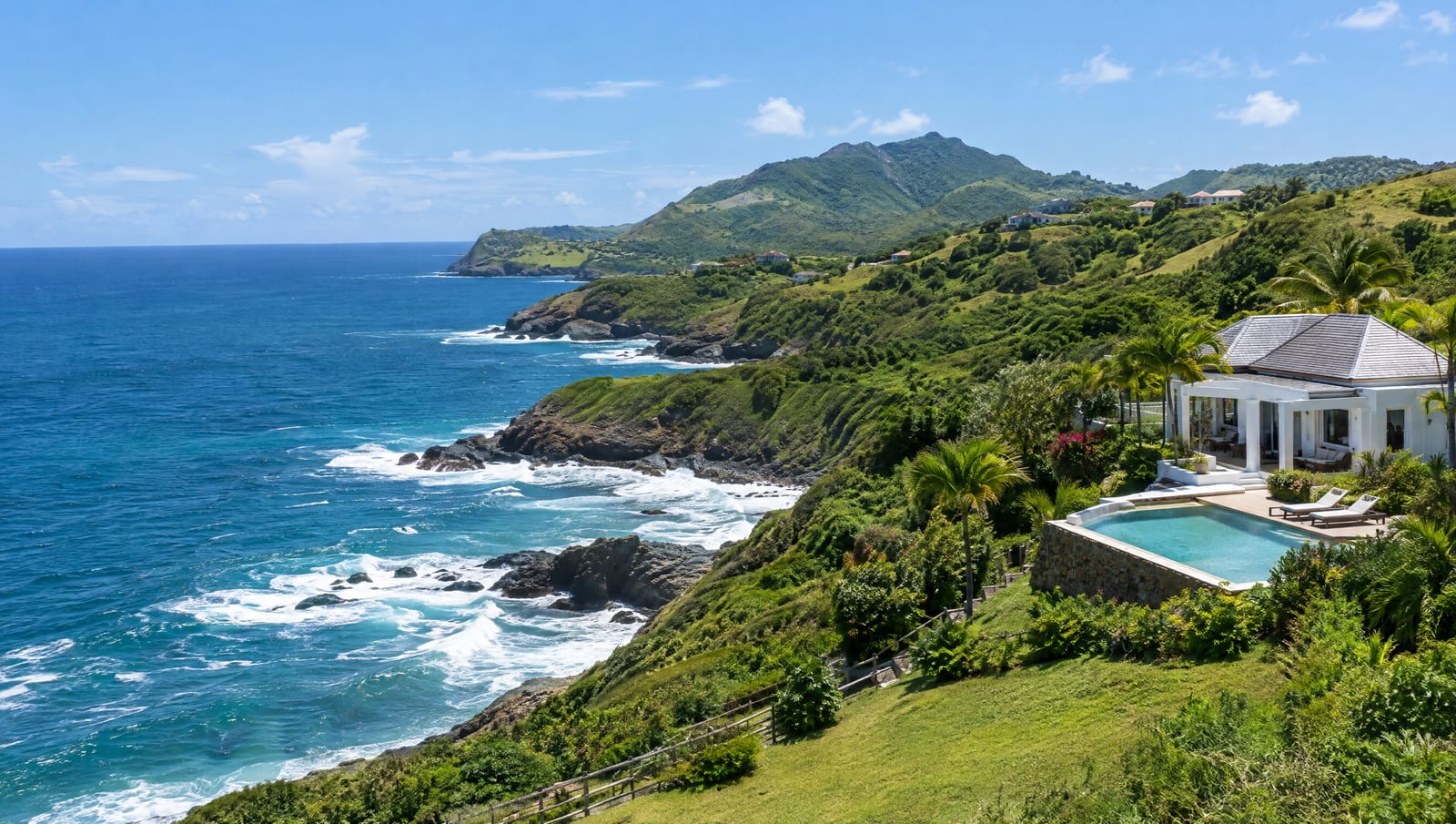
A white villa with a pool on a green hillside above a rocky coast and rolling Atlantic surf
Northern Tip
Cap Estate
A former sugar estate north of Pigeon Island, now villas, golf and a handful of resorts, where the Caribbean and the Atlantic meet. The windward side is wild and surf-washed; Cas en Bas on the Atlantic coast is a kite-surfing beach. It suits travelers who want quiet, villa space and a short drive to Rodney Bay's restaurants.
Villas Golf Atlantic Coast
Explore →
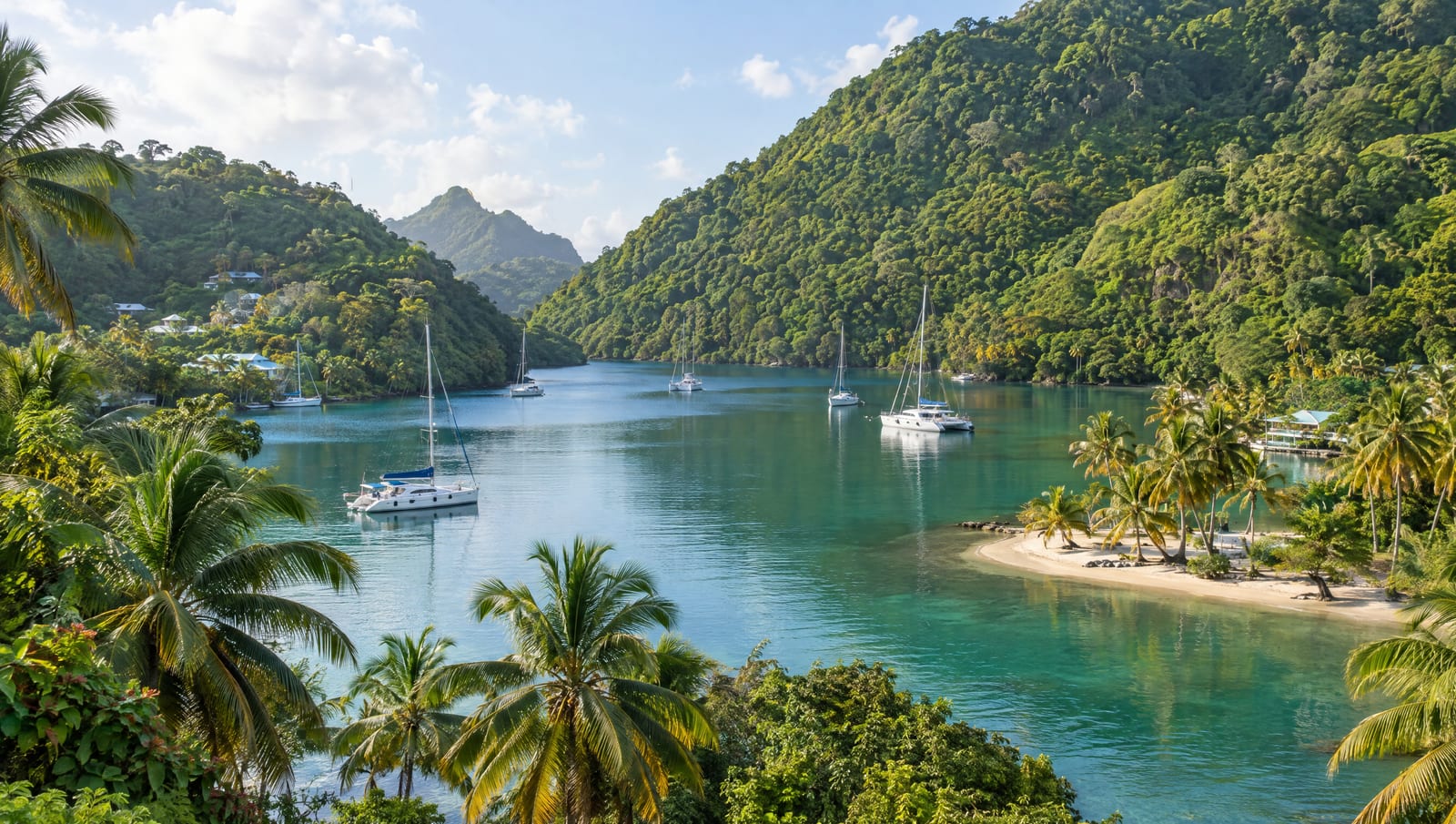
A narrow, sheltered bay ringed by rainforest hills, with moored yachts and a small palm-lined spit of sand
West Coast
Marigot Bay
A deep, green-walled inlet on the west coast between Castries and Soufrière. Its inner harbour, the Hurricane Hole, is protected by steep hills and a narrow entrance, and the marina brings waterfront restaurants. A middle base that shortens the drive to both ends of the island.
Marina Hurricane Hole Middle Base
Explore →
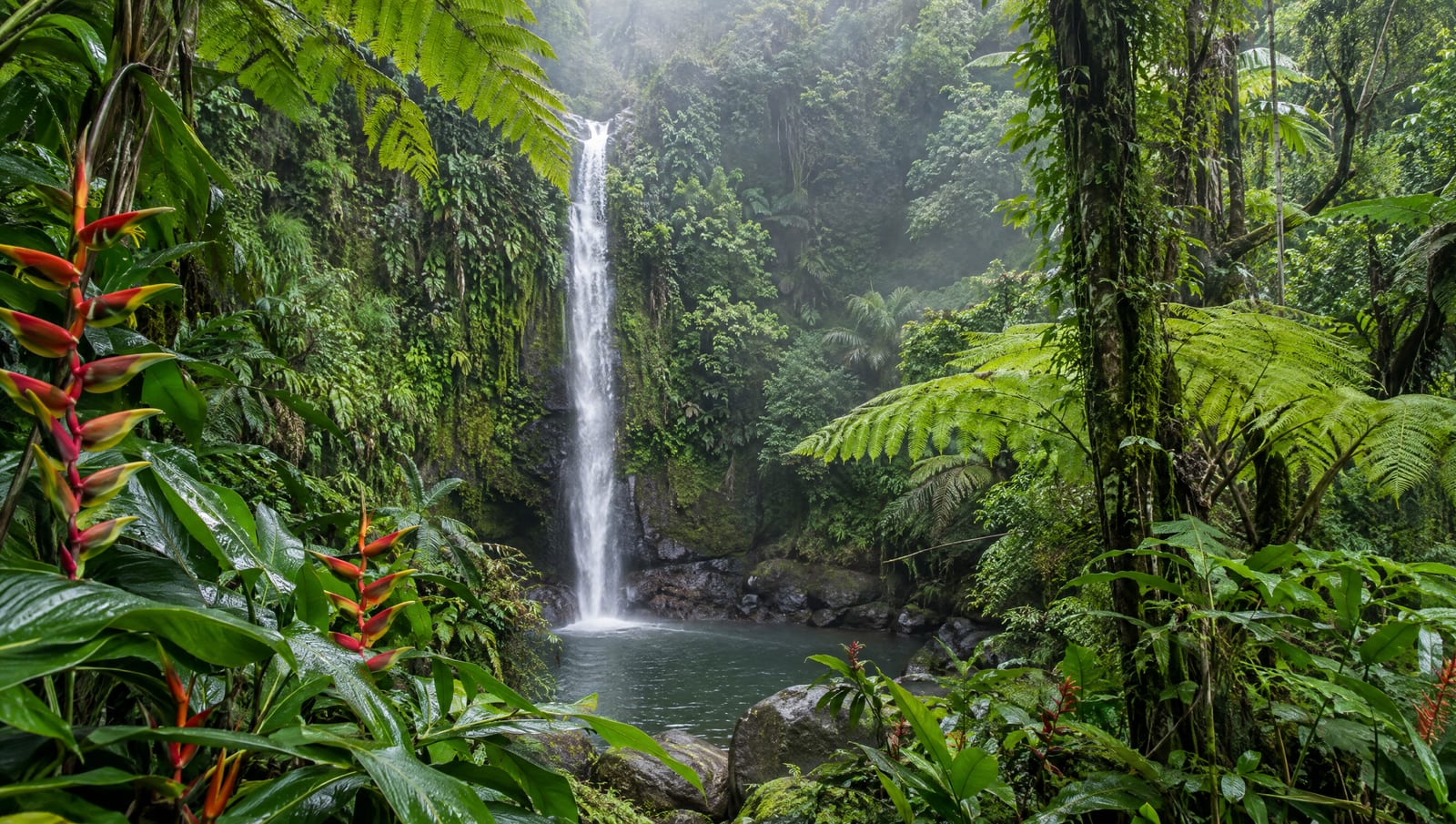
A tall waterfall falling into a rainforest pool, framed by tree ferns and red heliconia
Inland from Soufrière
The Rainforest Interior
The mountainous centre of the island, with guided trails through the Edmund Forest Reserve to the Enbas Saut waterfalls. Closer to Soufrière are the Diamond Falls gardens and Sulphur Springs, billed as the Caribbean's only drive-in volcano, with steaming vents, bubbling mud pools and warm mineral mud baths.
Waterfalls Sulphur Springs Guided Trails
See the weeks →
Trip Formats

Three Ways to Shape a St. Lucia Week

One base in the south, one in the north, or both. All three run best in the December–April dry season, with May as the shoulder.
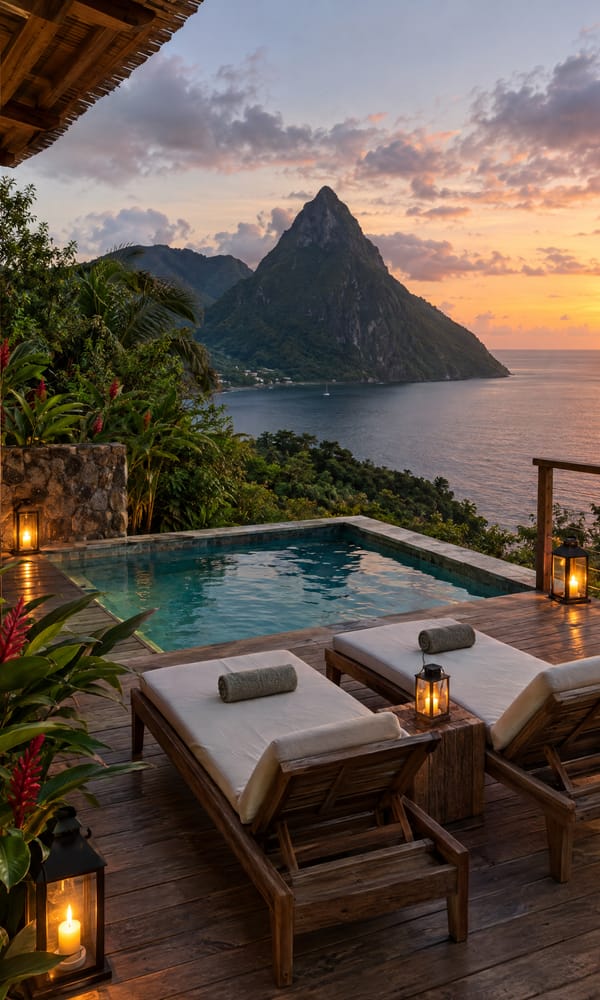
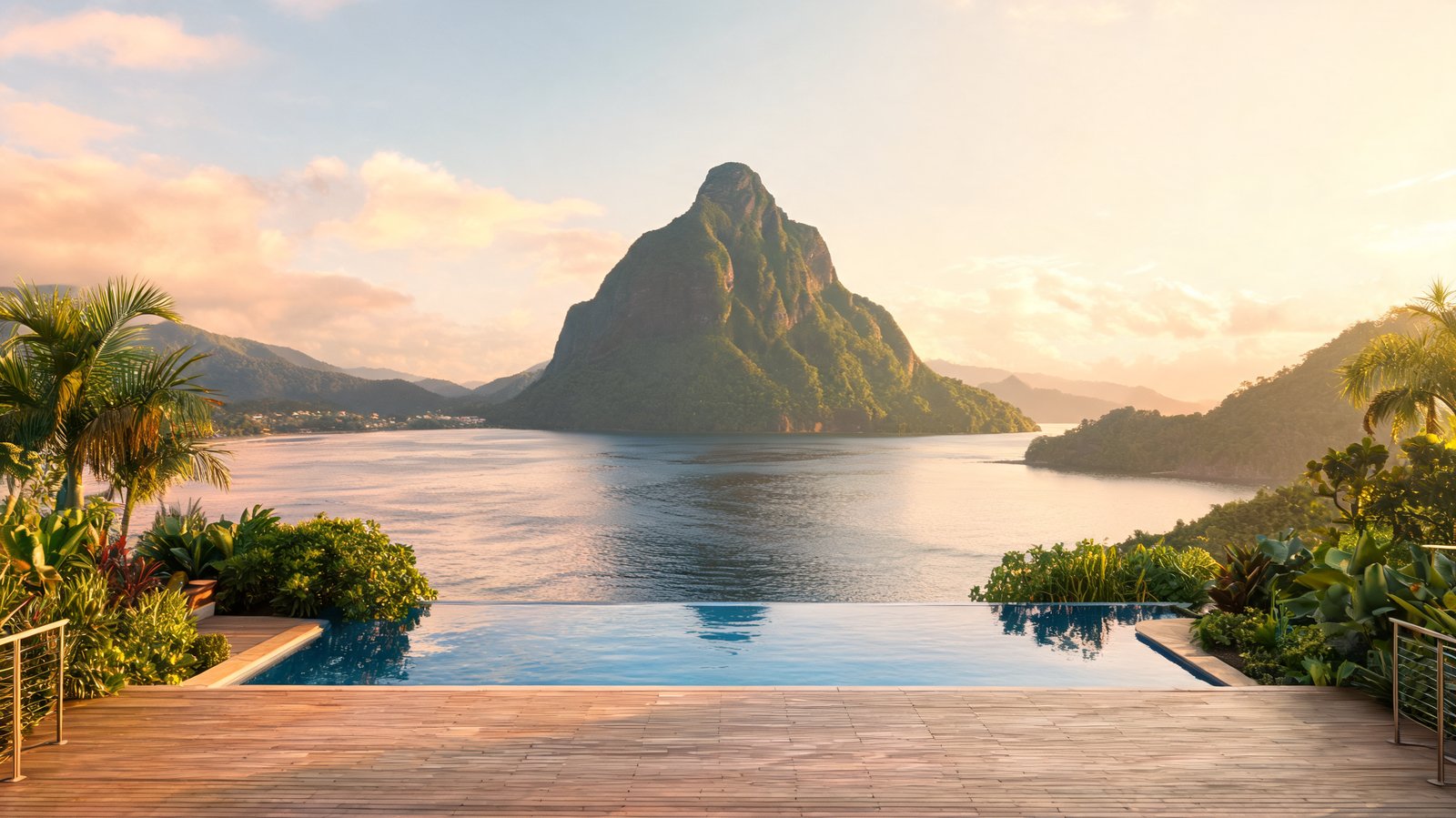
Two cushioned loungers and lanterns beside a terrace plunge pool facing a forested volcanic peak at dusk
December – April · 7 Days
Soufrière Honeymoon Week
Seven nights in one room with a Pitons view, which is the point of staying here. Arrive at Hewanorra and drive up the southwest coast, or take the helicopter if the flight lands late. The days build around the water: a boat along the coast to Anse Chastanet for the reef, a morning at Sulphur Springs and the mud baths, an afternoon at the Diamond Falls gardens, and one early start for the guided Gros Piton climb if both of you want it. Evenings stay on the terrace. For the celebration side of the trip, see how honeymoons and anniversaries are planned.
Soufrière7 Days
Plan This Trip
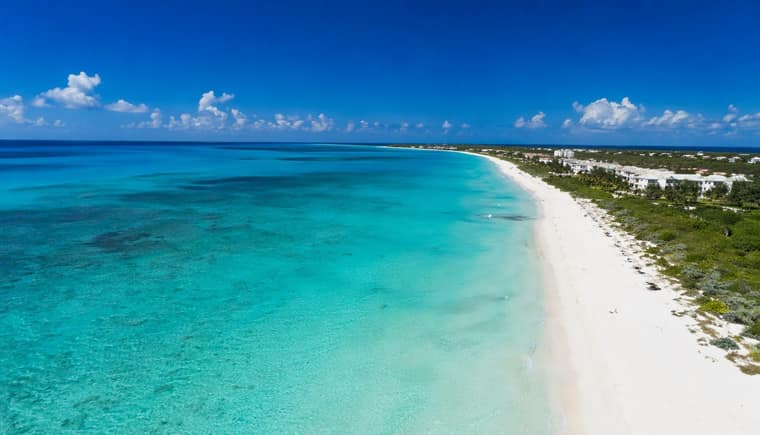
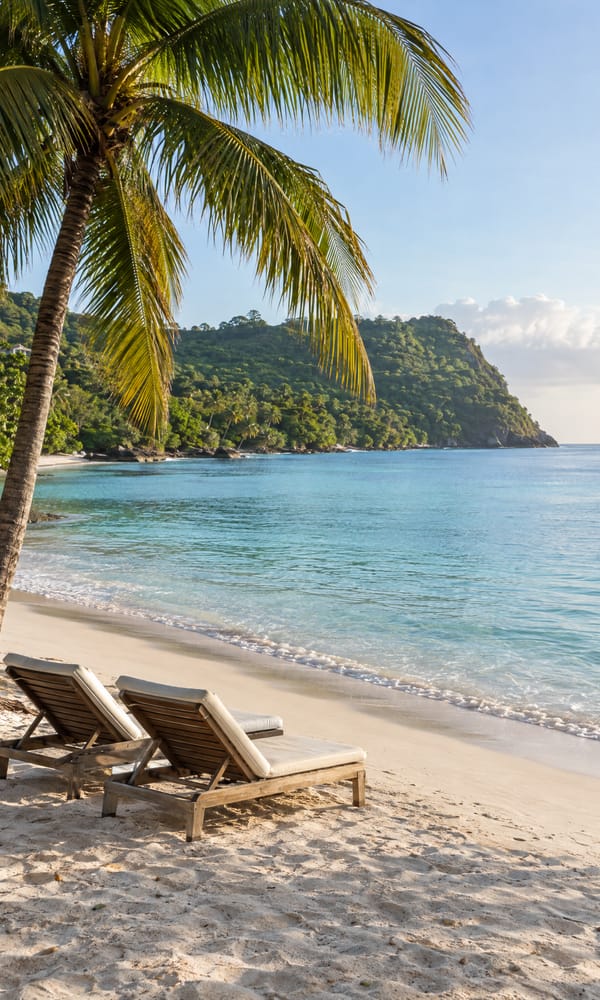
Two wooden loungers under a leaning palm on a quiet white-sand beach with calm turquoise water and a green headland
December – April · 5–7 Days
St. Lucia All-Inclusive Week
A north-coast resort on a meal-plan rate, chosen for beach, adults-only or family rules, and how many restaurants the week actually needs. The setting is the draw: few all-inclusive islands have a landscape like this, and the property market is small enough that quality differences are easy to see. Plan one day trip south by boat to see the Pitons and Soufrière from the water, and one evening at the Gros Islet street party. May is the shoulder month if the dates are flexible. More on the format in how an all-inclusive gets chosen.
Rodney Bay · Cap Estate5–7 Days
Plan This Trip
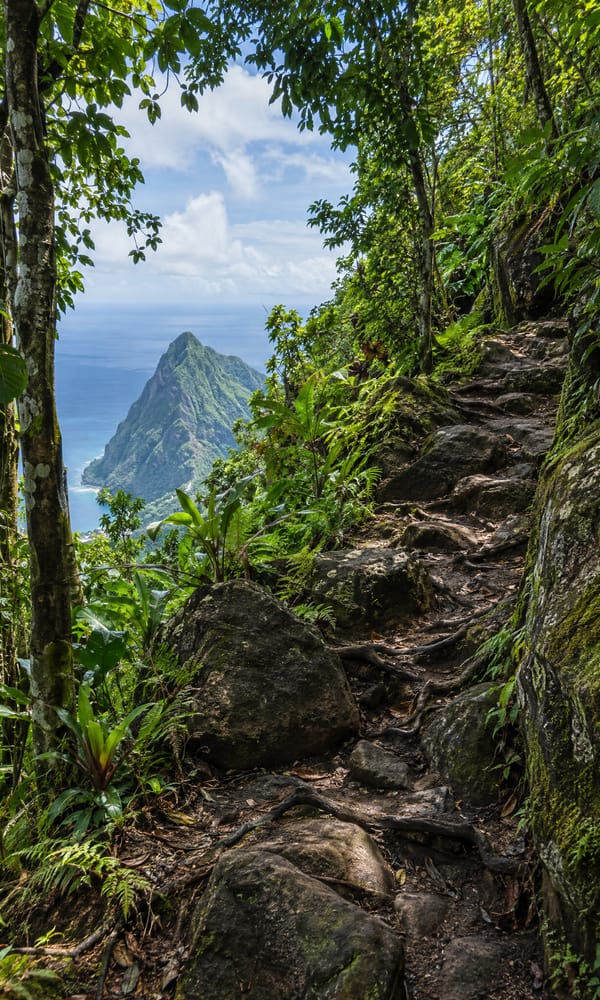
A steep, rocky rainforest trail climbing a volcanic peak, with a second forested spire and the sea visible through the trees
December – April · 8–9 Days
Split Stay: North, Then Soufrière
Four nights in the north for the beach, Pigeon Island and an easy start, then four or five under the Pitons for the active half: the guided Gros Piton trail from Fond Gens Libre, a rainforest walk toward the Enbas Saut falls, and a dive or snorkel on the Soufrière coast. The order matters. Ending in Soufrière puts the last night closer to Hewanorra for the flight home, and the move between bases can go by road or by boat down the west coast.
North · Soufrière8–9 Days
Plan This Trip
Planning Decisions

What Planning Changes on a St. Lucia Trip

Four decisions shape a St. Lucia week, and the first one is made at the airline booking, before any hotel is chosen.

⬡

Which Airport, Which Transfer

Long-haul flights from the US, Canada and Europe use Hewanorra (UVF) at Vieux Fort, on the southern tip. George F. L. Charles (SLU), beside Castries in the north, mostly handles inter-island flights. The Saint Lucia Tourism Authority puts the road between the two at 90 minutes and the helicopter at under 15. For a north-coast hotel, that drive decides whether a late arrival is worth it; Soufrière is closer to Hewanorra.
⬡

View or Beachfront

Around Soufrière the land rises steeply from the sea, so the hotels that face the Pitons are mostly on hillsides, often reached by steep drives and steps, with the beach a shuttle or a boat away. Beachfront rooms with a Pitons view are few. Travellers with mobility limits, or who want to walk straight onto sand, should weigh that before booking the view.
⬡

Boutique or All-Inclusive

The north holds most of the large resorts and most of the all-inclusive rates, including adults-only and family properties. Soufrière's hotels are smaller and mostly sell rooms with breakfast or half board, with meals at the hotel or in town. Neither is better; the choice follows how much the trip should be about the setting and how much about not thinking about the bill. What hotel descriptions actually mean helps when comparing the marketing.
⬡

Booking the Dry Season

December to April is when the Tourism Authority describes the island as driest and busiest, and the holiday weeks from Christmas to New Year fill first. Pitons-view rooms are a small share of the island's inventory, so dates in that window are best fixed early, with the room category chosen before the flights.
When to Go

St. Lucia by Season

Dry Season
December – April
The driest, sunniest and busiest months, per the Saint Lucia Tourism Authority. Trails are firmer for the Gros Piton climb and the sea is usually calm on the west coast. The Christmas and New Year weeks carry the highest rates and the longest minimum stays.
Best Overall Window
Shoulder
May
Still largely dry, quieter and easier to book than the winter months. The Saint Lucia Jazz & Arts Festival ran from April 30 to May 10 in 2026, with open-air stages at Pigeon Island. The argument for these weeks is in the case for shoulder season.
Wet & Hurricane Season
June – November
The National Hurricane Center dates the Atlantic season June 1 to November 30, with the climatological peak around September 10 and most activity from mid-August to mid-October. Showers are heavier in the rainforest than on the coast. Saint Lucia Carnival ran July 1 to 22 in 2026. Flexible bookings and travel insurance matter in these months.
Ready When You Are

Plan a St. Lucia Trip
Around the Right Base

Send your dates, your arrival airport if the flights are already booked, and whether the week is about the Pitons, the beach or both. The reply is a specific base, room category and transfer plan within one business day.

Plan a St. Lucia Trip All Caribbean & Mexico

No booking fees  ·  Response within one business day  ·  Fully bespoke

What It Costs

What St. Lucia Actually Costs

Priced per room night, by season, view and meal plan
A Soufrière room priced with breakfast and a north-coast all-inclusive rate that covers every meal are different units, and both move sharply between the dry season and the rest of the year, so no single band describes the island.
What actually sets the number
  • Dates inside the December–April dry season, and above all the Christmas and New Year weeks
  • Pitons-view or beachfront category, and boutique room rate against an all-inclusive rate
  • Arrival transfer: a 90-minute road trip from Hewanorra to the north, or a helicopter in under 15 minutes

Send the dates and the party for a real quote, not a range. Source: Saint Lucia Tourism Authority, helicopter transfers.

Common Questions

St. Lucia — FAQ

Where to base, which airport, honeymoons, all-inclusives, the Gros Piton climb, entry rules and money. Sources checked .

Soufrière is better for the Pitons, small hotels and the rainforest; Rodney Bay is better for beaches, restaurants and resorts. Soufrière's hotels mostly sit on hillsides with the view as the main event. The north has the long, calm Reduit Beach, the marinas and the Gros Islet Friday street party. A split week gives both.

Most travelers from the US, Canada and Europe have no choice: long-haul flights land at Hewanorra (UVF) in the south. George F. L. Charles (SLU), next to Castries, mainly handles regional flights, so it suits arrivals connecting through Barbados or another island to a north-coast hotel. Both are run by the Saint Lucia Air and Sea Ports Authority.

Hewanorra to the Castries area is about 90 minutes by road and under 15 minutes by helicopter. Those are the Saint Lucia Tourism Authority's figures. The road is winding and slow after a long flight, so a helicopter earns its cost most on a late-afternoon arrival to a north-coast hotel. Soufrière is closer to Hewanorra, and most travelers go by road.

Yes, and Soufrière is the side that suits most honeymoons, for the Pitons view and the small, private hotels. The north works for couples who want a beach resort and more to do in the evenings. The other two Caribbean honeymoon islands worth comparing are St. Barth's for food and privacy and Turks & Caicos for the beach; beach and island escapes covers the wider field.

Yes, for setting; Jamaica and the Dominican Republic offer far more resorts to choose from. St. Lucia's all-inclusives are fewer and mostly in the north, so the shortlist is short and the Pitons are a day trip rather than the view. Jamaica and the Dominican Republic each have many more resorts to compare, which suits a group that wants a specific beach, price point or kids' program more than a landscape.

December to April is the best time: it is the dry season, with May as a quieter shoulder. The National Hurricane Center dates the Atlantic hurricane season June 1 to November 30, peaking around September 10. Trips in those months are workable with flexible bookings and travel insurance, but the dry season is the safer plan for a fixed-date trip such as a honeymoon.

Yes, with a licensed local guide, which is required; it is a steep, rocky climb for reasonably fit hikers. The trail starts at Fond Gens Libre at the base of the peak, and the Saint Lucia Tourism Authority describes a guided route through rainforest to views over Petit Piton. Allow roughly four to six hours there and back, start early to avoid the midday heat, and carry plenty of water.

Seven nights suits one base; eight or nine allows a split between the north and Soufrière. The long-haul arrival and the 90-minute drive make shorter stays feel rushed. Pairing with Barbados works well because Barbados has the wider flight schedule; that two-island trip is laid out on the Barbados and Eastern Caribbean page.

US travelers need a passport but no visa for a tourist stay. Saint Lucia's Department of External Affairs asks visitors for a passport valid for six months and a return ticket. The US State Department's Saint Lucia page also tells travelers to complete an online pre-arrival authorization before flying, and requires a notarized consent letter when a child travels with one parent.

The currency is the Eastern Caribbean dollar, fixed at EC$2.70 to US$1. The Eastern Caribbean Central Bank has held that peg since July 7, 1976. US dollars are widely taken at hotels and in tourist areas, but change usually comes back in EC dollars, so carry some local currency for taxis, markets and the street party.
More questions answered on the Full FAQ Page
From the Journal

Read More on St. Lucia